What are Neurodegenerative Disorders? - Science And Technology | UPSC Learning
Topics
0 topics • 0 completed
🔍
No topics match your search
What are Neurodegenerative Disorders?
Medium⏱️ 7 min read
science and technology
📖 Introduction
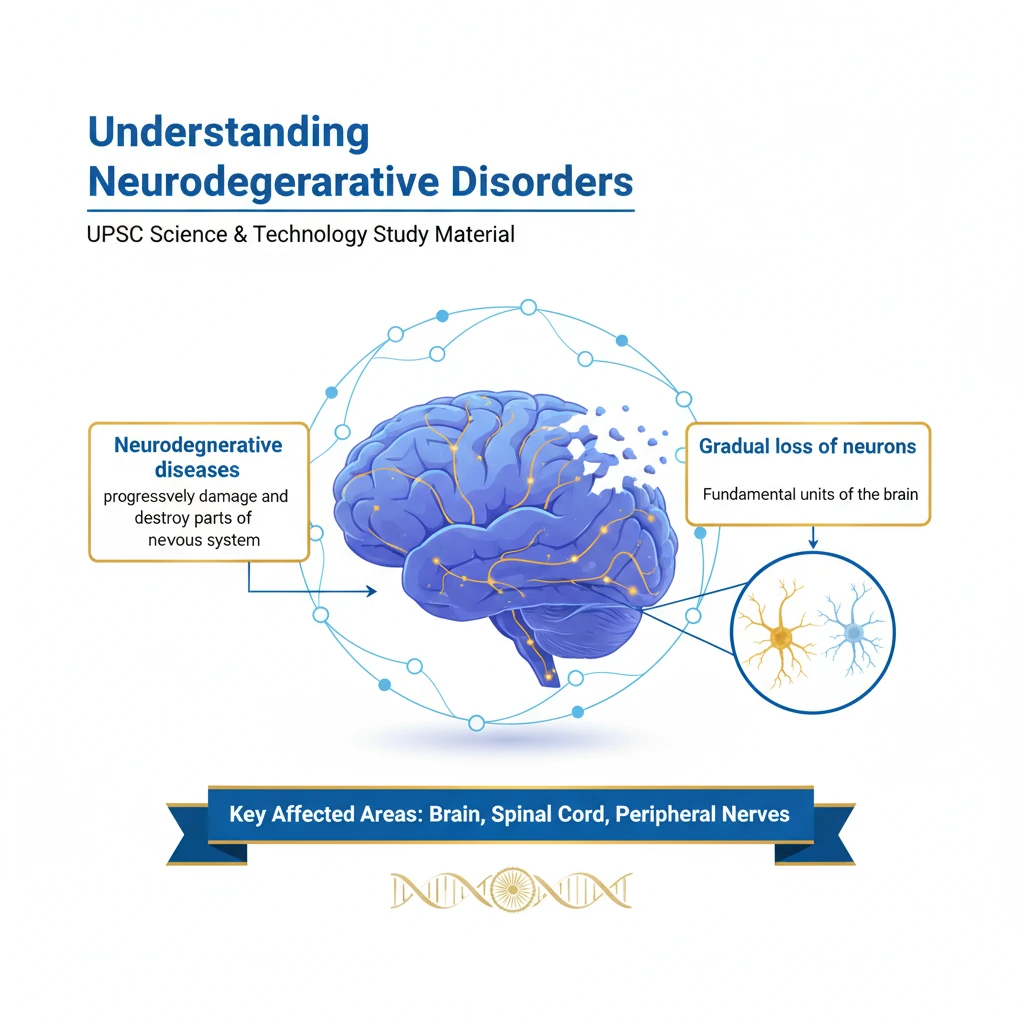
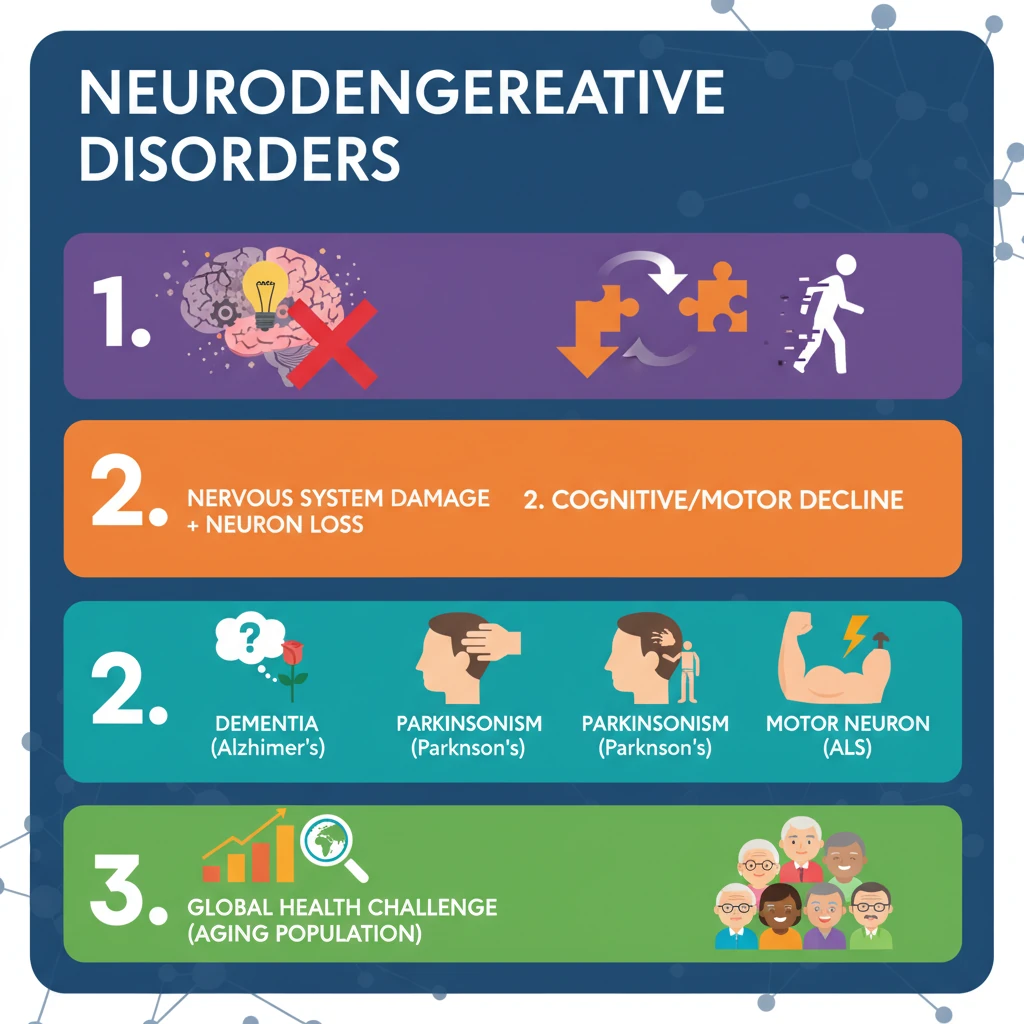
<h4>Understanding Neurodegenerative Disorders</h4><p><strong>Neurodegenerative diseases</strong> are a group of debilitating conditions that progressively damage and destroy parts of the <strong>nervous system</strong>. These disorders primarily affect areas of the <strong>brain</strong>, leading to a gradual decline in cognitive and motor functions.</p><div class='info-box'><p>These conditions are characterized by the <strong>gradual loss of neurons</strong>, which are the fundamental units of the brain and nervous system. This neuronal damage is typically irreversible and worsens over time.</p></div><div class='key-point-box'><p>The term "neurodegenerative" signifies the progressive nature of these diseases, where neural structures and functions deteriorate over time, leading to significant impairments.</p></div><h4>Main Categories of Neurodegenerative Disorders</h4><p>Neurodegenerative disorders are broadly categorized based on the primary areas of the brain affected and the resulting symptoms. The source material highlights three main types, each with distinct characteristics and examples.</p><ul><li><strong>Dementia-type diseases</strong></li><li><strong>Parkinsonism-type diseases</strong></li><li><strong>Motor neuron diseases</strong></li></ul><h4>Dementia-Type Diseases</h4><p>This category encompasses conditions that cause widespread and progressive damage to various regions of the brain. The hallmark of these diseases is the death of neurons in multiple brain areas, leading to a decline in cognitive abilities.</p><div class='info-box'><p>Common examples include <strong>Alzheimer's disease</strong>, <strong>frontotemporal dementia</strong>, <strong>chronic traumatic encephalopathy (CTE)</strong>, and <strong>Lewy body dementia</strong>. These conditions primarily manifest as memory loss, impaired judgment, and personality changes.</p></div><div class='exam-tip-box'><p>For UPSC, understanding the distinctions between different types of dementia (e.g., Alzheimer's vs. Lewy Body) can be crucial for mains answers, especially in <strong>GS Paper 2 (Health)</strong> or <strong>GS Paper 3 (Science & Technology)</strong>.</p></div><h4>Parkinsonism-Type Diseases</h4><p>These diseases result from specific damage to particular brain neurons that are vital for coordination and muscle control. The degeneration of these neurons leads to characteristic motor symptoms.</p><div class='info-box'><p>The most prominent example is <strong>Parkinson's disease</strong> itself, along with other similar conditions that present with symptoms like tremors, rigidity, slow movement (bradykinesia), and postural instability.</p></div><h4>Motor Neuron Diseases (MNDs)</h4><p>Motor neuron diseases are a group of progressive neurological disorders that selectively affect motor neurons. These are the nerve cells that control voluntary muscle movements.</p><div class='info-box'><p>When these <strong>motor neurons die off</strong>, the brain loses its ability to initiate and control muscle movement. A well-known example is <strong>amyotrophic lateral sclerosis (ALS)</strong>, also known as Lou Gehrig's disease.</p></div>
💡 Key Takeaways
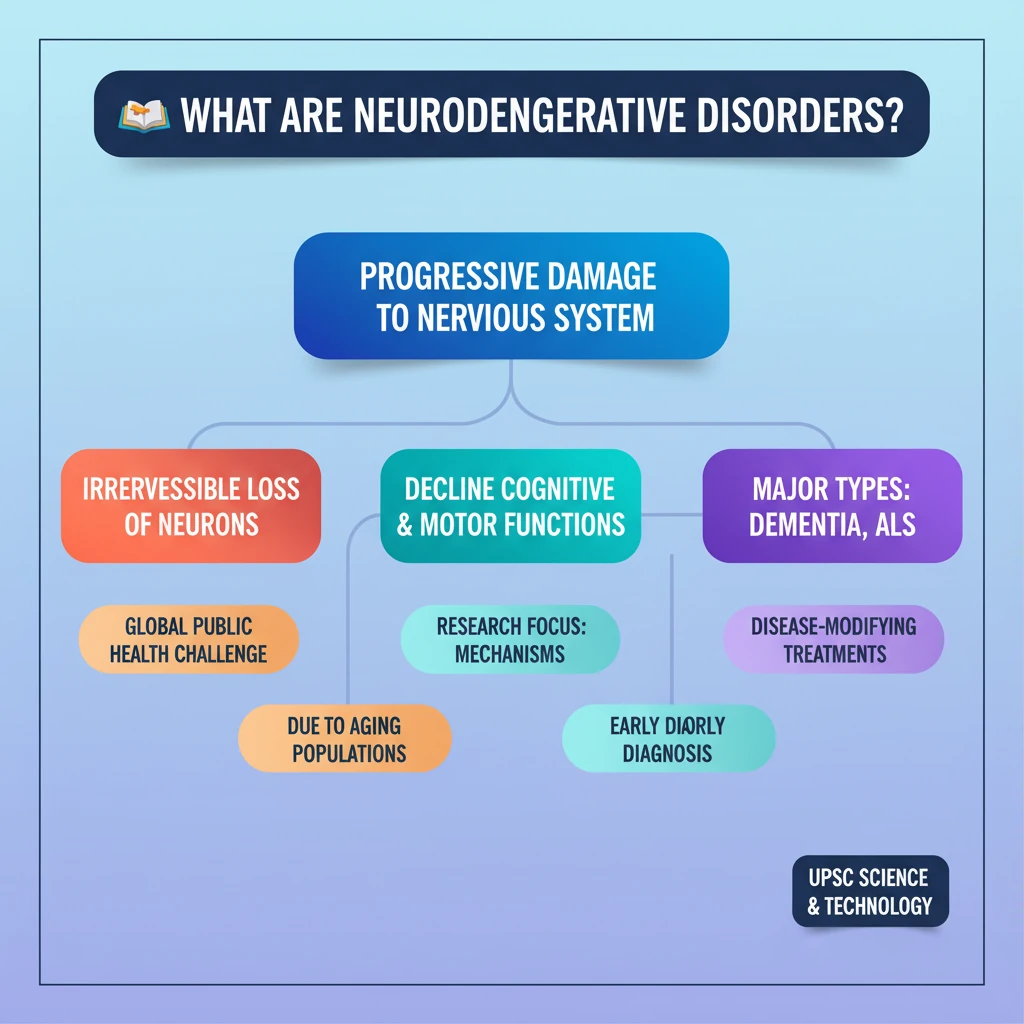
- •Neurodegenerative disorders progressively damage the nervous system, especially the brain.
- •They lead to irreversible loss of neurons and decline in cognitive or motor functions.
- •Major types include Dementia (e.g., Alzheimer's), Parkinsonism (e.g., Parkinson's), and Motor Neuron Diseases (e.g., ALS).
- •These conditions pose a significant and growing global public health challenge due to aging populations.
- •Research focuses on understanding mechanisms, early diagnosis, and developing disease-modifying treatments.
🧠 Memory Techniques
95% Verified Content
📚 Reference Sources
•WHO Fact Sheets (General knowledge on disease prevalence and types)
•National Institute of Neurological Disorders and Stroke (NINDS)