What are the Challenges Associated with LEO? - Science And Technology | UPSC Learning
Topics
0 topics • 0 completed
🔍
No topics match your search
What are the Challenges Associated with LEO?
Medium⏱️ 8 min read
science and technology
📖 Introduction
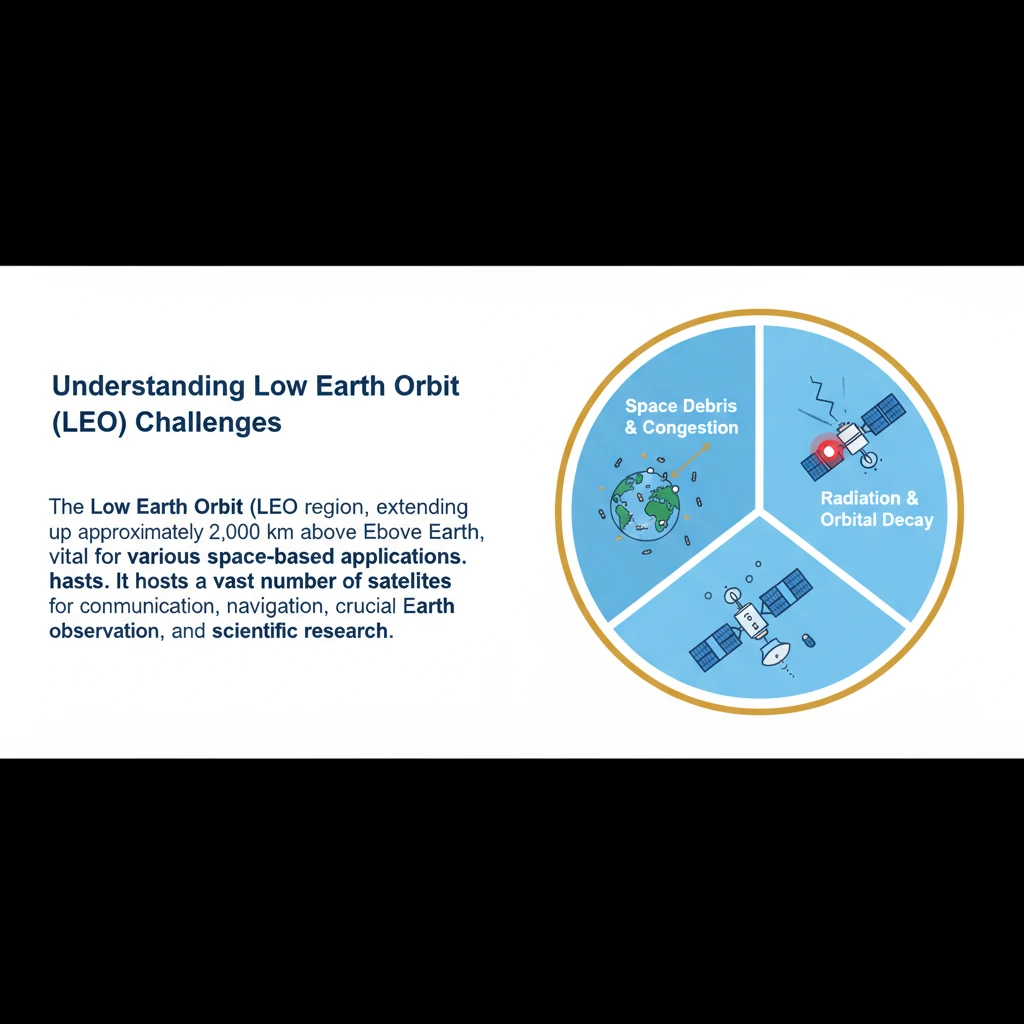
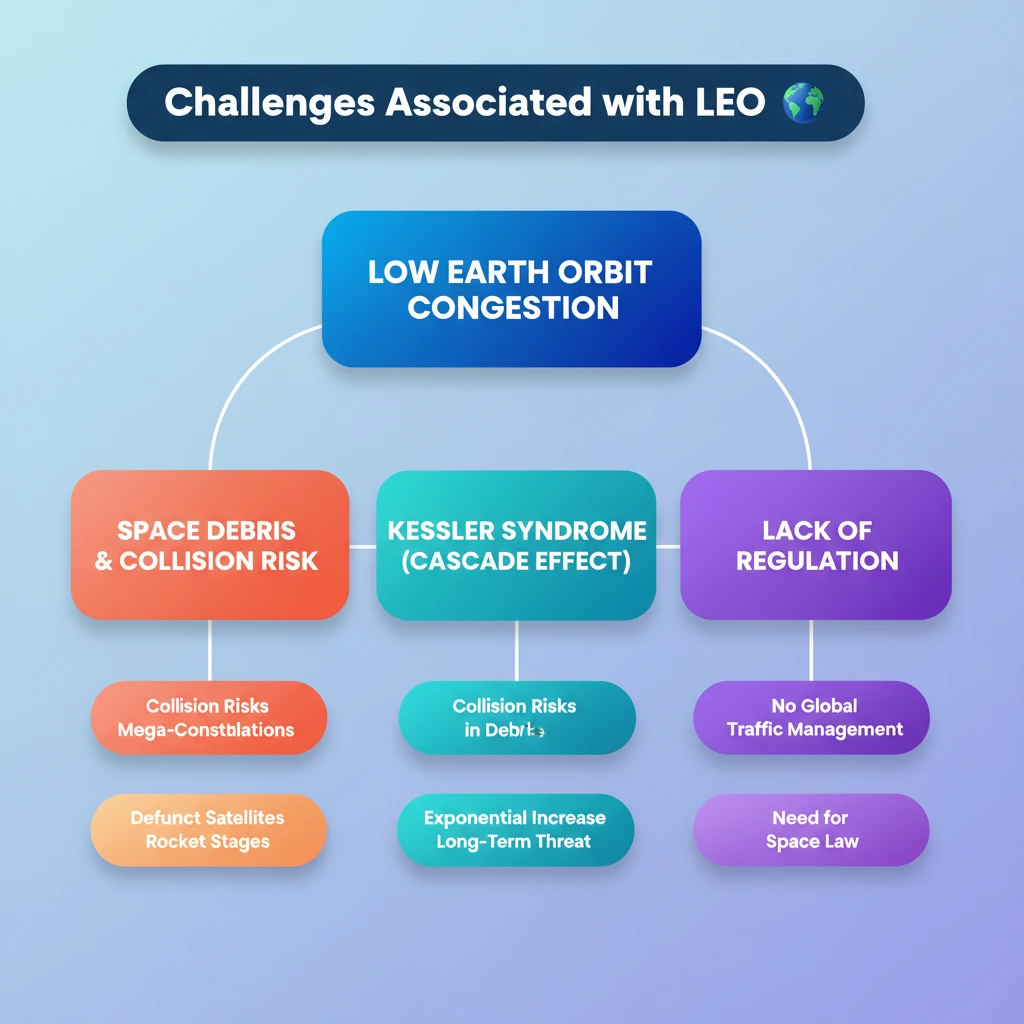
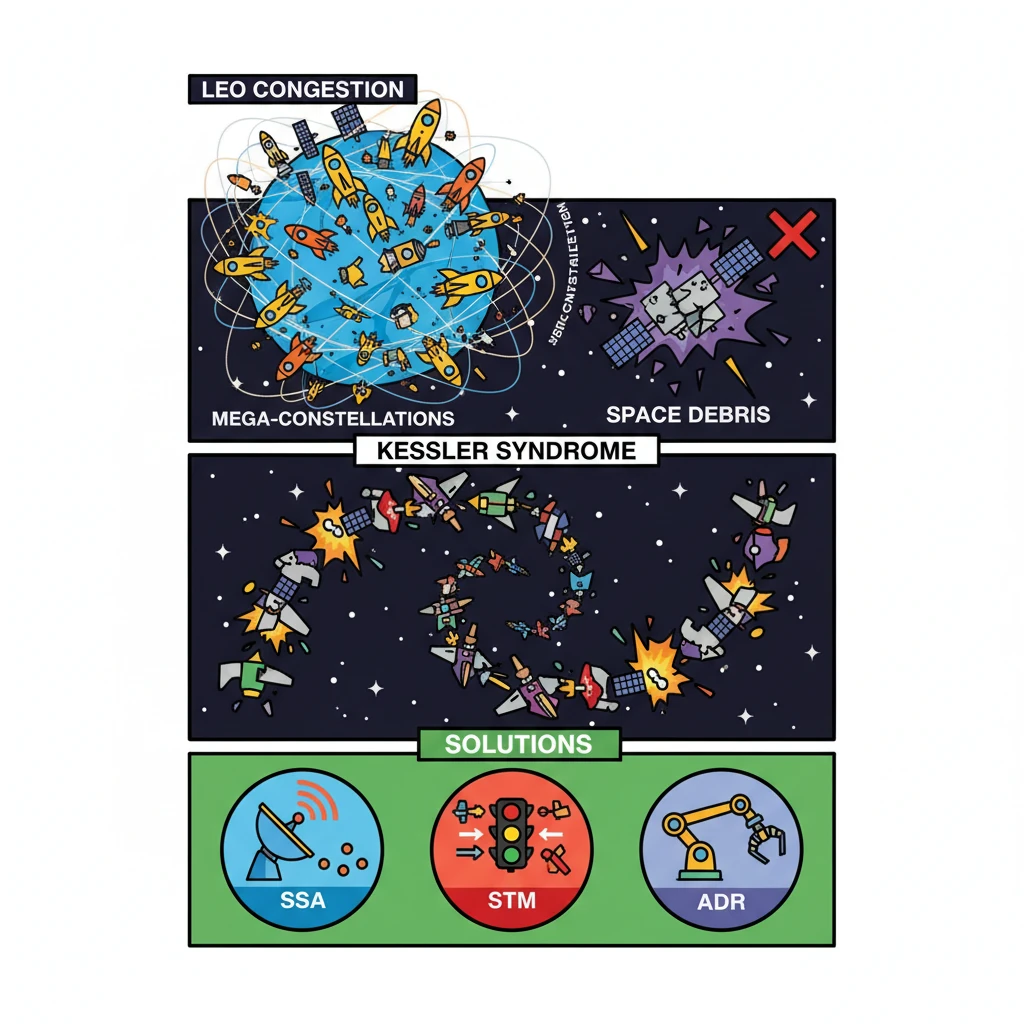
<h4>Introduction to Low Earth Orbit Challenges</h4><p>The <strong>Low Earth Orbit (LEO)</strong> region, crucial for modern satellite operations, is facing significant challenges due to increasing congestion and the proliferation of <strong>space debris</strong>. This orbital space is vital for communication, navigation, and Earth observation.</p><p>The rapid growth in satellite deployment, particularly <strong>mega-constellations</strong>, has intensified competition for orbital slots. This situation demands effective regulation and robust international collaboration to ensure sustainable use of LEO.</p><h4>Overview of LEO Congestion</h4><p>Currently, over <strong>14,000 satellites</strong> orbit in <strong>LEO</strong>. A significant portion of these, approximately <strong>3,500</strong>, are now <strong>inactive</strong>. In addition to functional and defunct satellites, LEO is cluttered with an estimated <strong>120 million debris fragments</strong>, posing a severe threat to operational spacecraft.</p><div class='info-box'><p><strong>LEO Congestion Statistics:</strong></p><ul><li>Total Satellites in LEO: <strong>>14,000</strong></li><li>Inactive Satellites: <strong>~3,500</strong></li><li>Estimated Debris Fragments: <strong>~120 million</strong></li></ul></div><h4>Space Debris Threat</h4><p>Recent incidents have underscored the escalating danger posed by <strong>space debris</strong>. These events contribute to a cascade effect, where collisions generate more debris, increasing the risk of further impacts. Such incidents threaten not only satellites but also human missions, including astronauts aboard the <strong>International Space Station (ISS)</strong>.</p><div class='key-point-box'><p><strong>Key Debris Incidents:</strong></p><ul><li>Explosion of a <strong>Chinese rocket</strong> (likely <strong>Chang Zheng 4C</strong> upper stage).</li><li>Collision involving a <strong>defunct Russian satellite</strong> (e.g., <strong>Kosmos-2251</strong>).</li></ul><p>These events significantly increase the amount of unmanageable debris.</p></div><h4>Collision Risk in LEO</h4><p>The increased congestion in <strong>LEO</strong> directly translates to a heightened <strong>collision risk</strong>. This risk has substantial financial implications, with potential damages estimated to be in the hundreds of millions of dollars over the next few years.</p><div class='info-box'><p><strong>Projected Collision Impact:</strong></p><ul><li>Estimated Damages (2024-2029): <strong>USD 556 million</strong></li><li>Overall Collision Probability: <strong>3.13%</strong></li><li>Increase in Close Encounters (Past Year): <strong>17% per satellite</strong></li></ul></div><div class='exam-tip-box'><p><strong>UPSC Insight:</strong> Questions on <strong>space debris</strong> and <strong>LEO congestion</strong> often appear in <strong>Science & Technology</strong> (GS Paper 3). Focus on both the technical challenges and policy implications, including international cooperation and mitigation strategies.</p></div><h4>Orbital Saturation and Mega-Constellations</h4><p>The rapid proliferation of <strong>satellite constellations</strong> is a primary driver of <strong>orbital saturation</strong>. Companies like <strong>SpaceX</strong>, with its <strong>Starlink</strong> project, are deploying thousands of satellites, drastically altering the LEO environment. This exponential growth demands urgent attention to regulatory frameworks.</p><div class='info-box'><p><strong>Starlink's Contribution to LEO:</strong></p><ul><li>Number of Starlink Satellites: <strong>>6,764</strong> (as of recent data, constantly increasing)</li><li>Impact: Significant increase in active objects and potential for future debris.</li></ul></div><p>The intensification of competition for finite orbital space makes effective <strong>regulation</strong> and robust <strong>international collaboration</strong> absolutely crucial for the long-term sustainability of space activities.</p>
💡 Key Takeaways
- •LEO is severely congested with over 14,000 satellites and 120 million debris fragments.
- •Recent incidents (Chinese rocket, Russian satellite) highlight the increasing threat of space debris and collision risk.
- •A 3.13% collision probability and USD 556 million in potential damages underscore the economic threat.
- •Mega-constellations like SpaceX's Starlink are rapidly saturating LEO, intensifying competition for orbital space.
- •Effective regulation, international collaboration, and new technologies are crucial for sustainable LEO management.
🧠 Memory Techniques
95% Verified Content