High Altitude Pathogens - Science And Technology | UPSC Learning
Topics
0 topics • 0 completed
🔍
No topics match your search
High Altitude Pathogens
Medium⏱️ 6 min read
science and technology
📖 Introduction
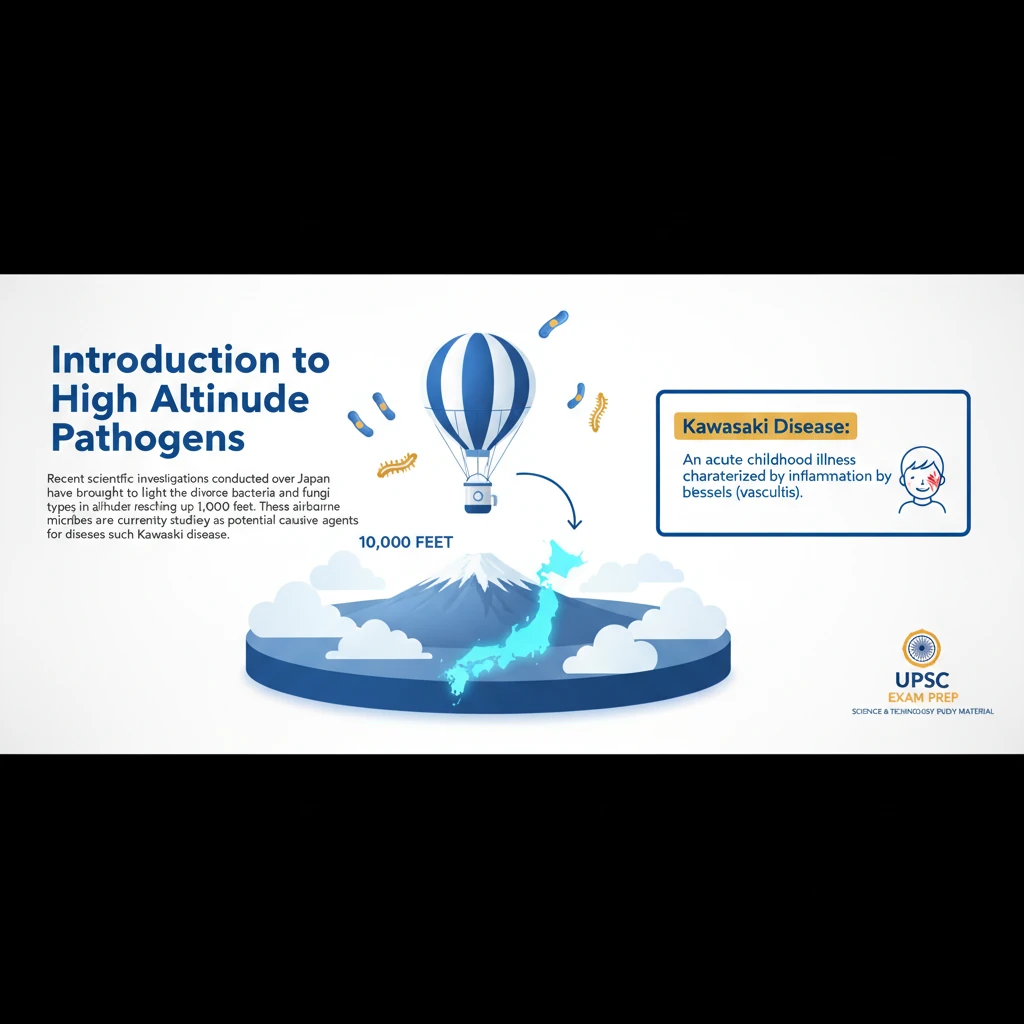
<h4>Introduction to High Altitude Pathogens</h4><p>Recent scientific investigations conducted over <strong>Japan</strong> have brought to light the presence of diverse <strong>bacteria</strong> and <strong>fungi</strong> types in the air at altitudes reaching up to <strong>10,000 feet</strong>. These airborne microbes are currently being studied as potential causative agents for diseases such as <strong>Kawasaki disease</strong>.</p><div class='info-box'><p><strong>Kawasaki Disease:</strong> An acute febrile illness of unknown cause that primarily affects children under five years of age. It is a leading cause of acquired heart disease in developed countries.</p></div><p>The study of <strong>airborne microbes</strong> is not a new endeavor. Scientists have been actively researching and capturing various biological particles, including <strong>spores</strong>, floating in the atmosphere since the <strong>1970s</strong>. This ongoing research helps us understand their distribution and potential impact on health.</p><h4>Key Findings from the Japan Study</h4><p>The recent research specifically involved conducting specialized flights to collect airborne particles. These sampling missions were carried out over the <strong>Sea of Japan</strong>.</p><div class='key-point-box'><p>A crucial aspect of the study was its focus on analyzing <strong>air masses originating from China</strong>. This suggests an interest in understanding transboundary atmospheric transport of microbes and their potential health implications across regions.</p></div><div class='exam-tip-box'><p>For <strong>UPSC Mains (GS Paper III - Science & Technology, Environment)</strong>, understanding the methodology of such studies (e.g., air sampling, focus on air masses) and their implications for public health and environmental monitoring is vital. Be prepared to discuss the challenges and significance of studying airborne pathogens.</p></div>
💡 Key Takeaways
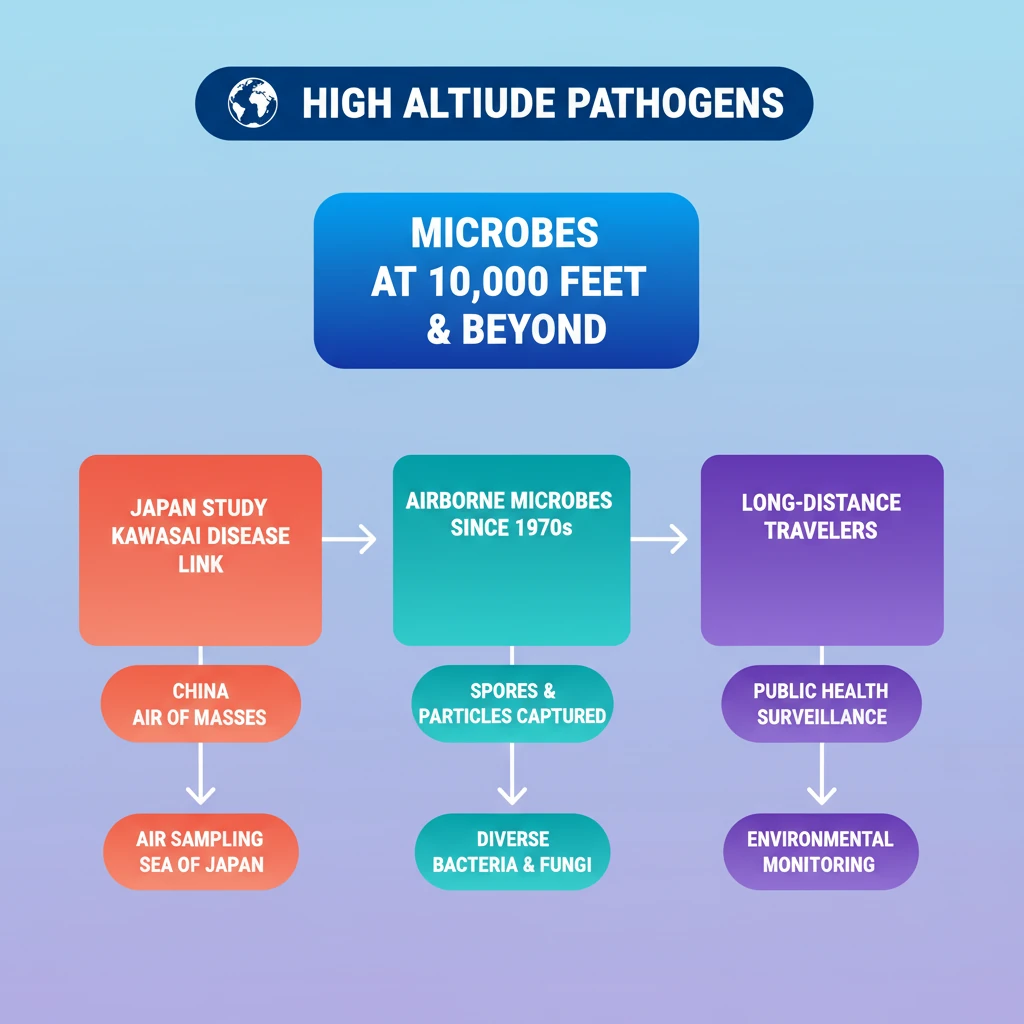
- •Recent studies over Japan found diverse bacteria and fungi at 10,000 feet, potentially linked to Kawasaki disease.
- •Scientists have been studying airborne microbes since the 1970s, capturing spores and biological particles.
- •The Japan study involved air sampling over the Sea of Japan, focusing on air masses from China.
- •High-altitude pathogens are microbes capable of surviving and traveling long distances in the upper atmosphere.
- •Understanding airborne pathogen transport is crucial for public health, disease surveillance, and environmental monitoring.
🧠 Memory Techniques
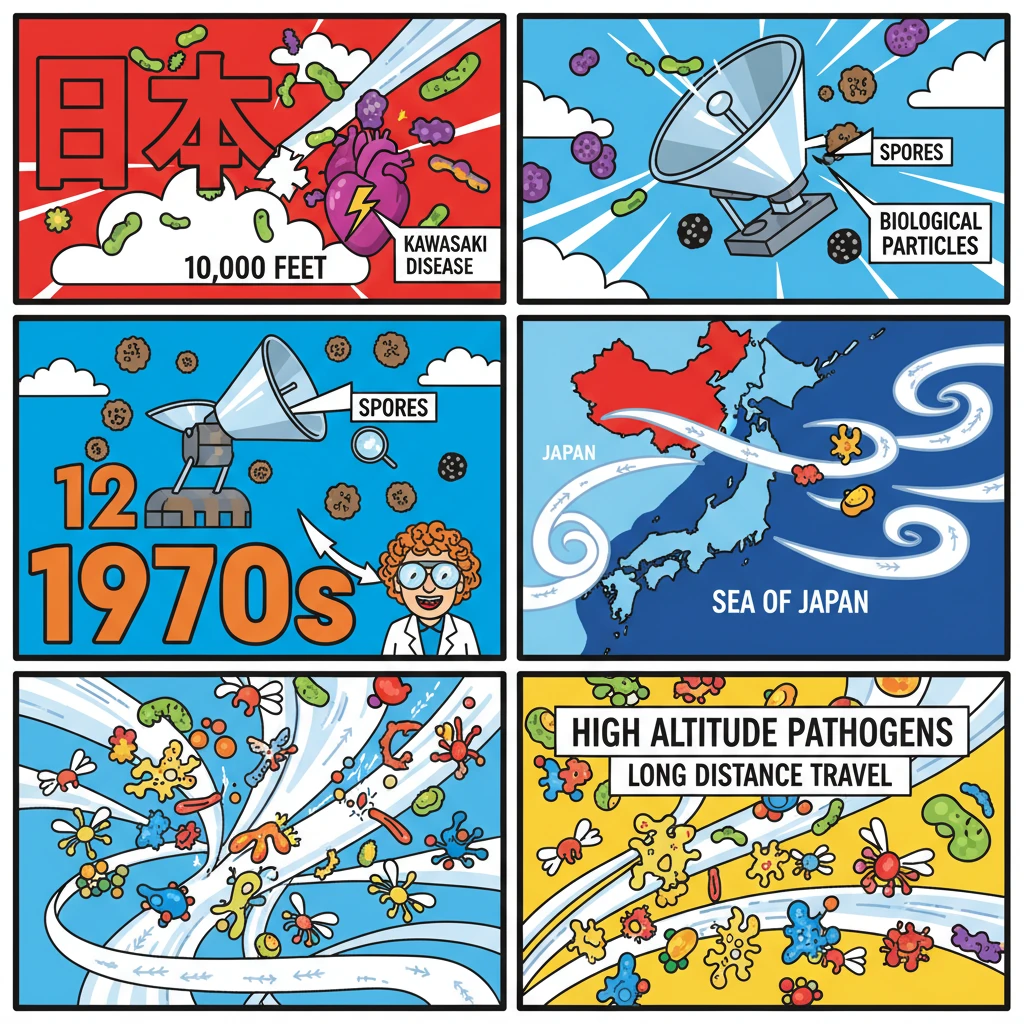
95% Verified Content
📚 Reference Sources
•General scientific literature on aerobiology and airborne pathogen research