What are the Key Facts About Tuberculosis? - Science And Technology | UPSC Learning
Topics
0 topics • 0 completed
🔍
No topics match your search
What are the Key Facts About Tuberculosis?
Medium⏱️ 7 min read
science and technology
📖 Introduction
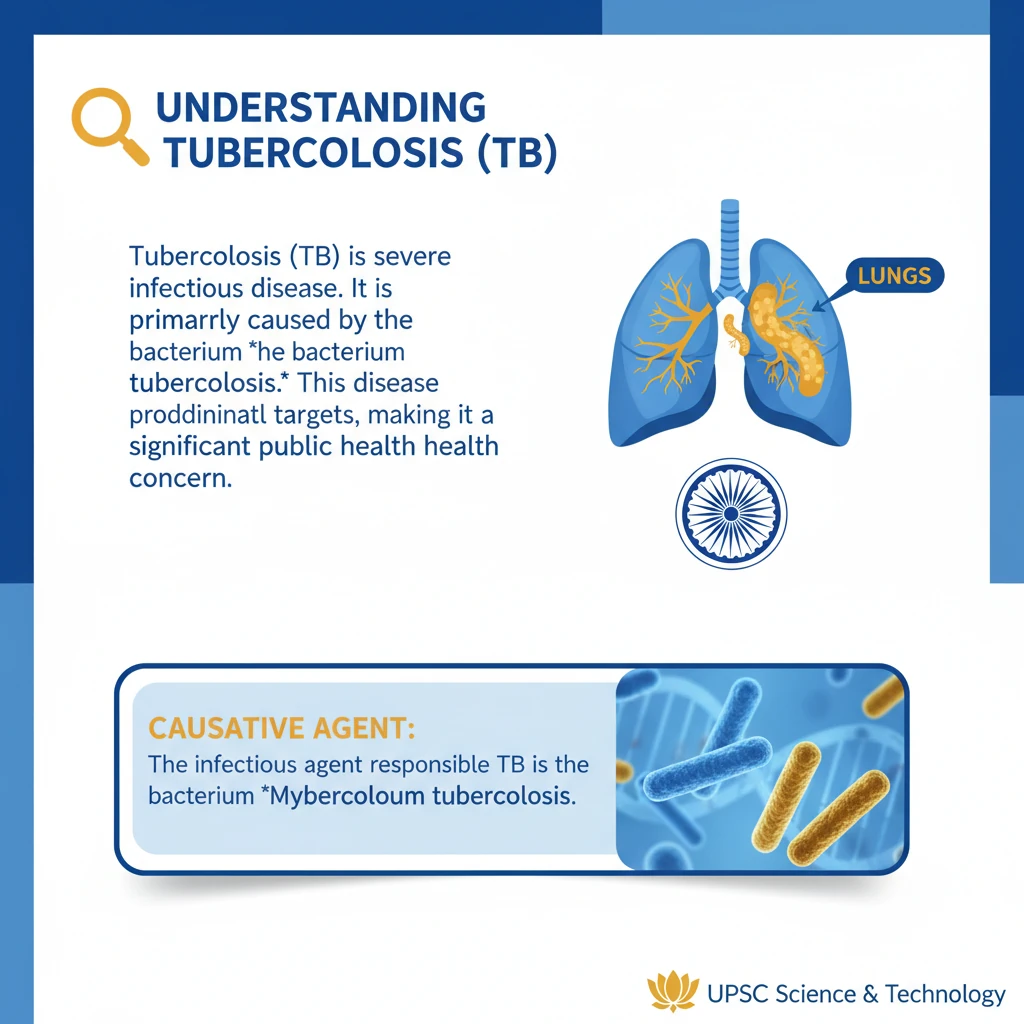
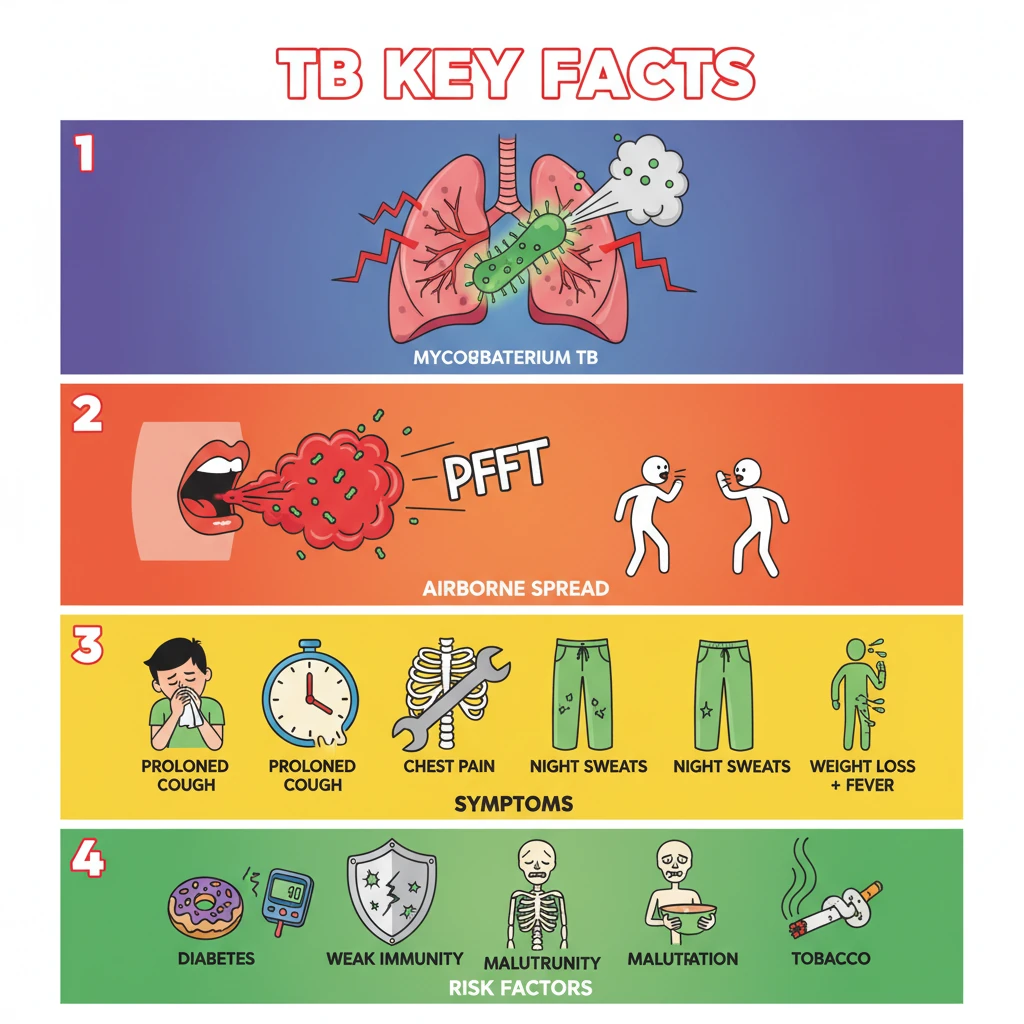
<h4>Understanding Tuberculosis (TB)</h4><p><strong>Tuberculosis (TB)</strong> is a severe infectious disease. It is primarily caused by the bacterium <strong><em>Mycobacterium tuberculosis</em></strong>. This disease predominantly targets the <strong>lungs</strong>, making it a significant public health concern.</p><div class='info-box'><p><strong>Causative Agent:</strong> The infectious agent responsible for TB is the bacterium <strong><em>Mycobacterium tuberculosis</em></strong>.</p></div><h4>Transmission of TB</h4><p>TB spreads through the air, making it highly contagious. When an infected individual performs actions like <strong>coughing</strong>, <strong>sneezing</strong>, or <strong>spitting</strong>, tiny droplets containing the bacteria are released into the atmosphere, which can then be inhaled by others.</p><h4>Common Symptoms of Tuberculosis</h4><p>The symptoms of TB can vary but often include a range of debilitating signs. Recognizing these symptoms is crucial for early diagnosis and treatment.</p><ul><li><strong>Prolonged cough:</strong> A persistent cough lasting for several weeks is a hallmark symptom.</li><li><strong>Chest pain:</strong> Discomfort or pain in the chest area.</li><li><strong>Weakness and fatigue:</strong> General feelings of malaise and lack of energy.</li><li><strong>Weight loss:</strong> Unexplained and significant reduction in body weight.</li><li><strong>Fever:</strong> Elevated body temperature, often low-grade.</li><li><strong>Night sweats:</strong> Excessive sweating during sleep.</li></ul><h4>Risk Factors for TB Disease</h4><p>Certain conditions and lifestyle choices can significantly increase an individual's susceptibility to developing active TB disease after exposure to the bacteria.</p><ul><li><strong>Diabetes:</strong> Compromises the immune system.</li><li><strong>Weakened immune system:</strong> Conditions like HIV/AIDS or immunosuppressive therapy.</li><li><strong>Malnutrition:</strong> A poor nutritional state weakens the body's defenses.</li><li><strong>Tobacco use:</strong> Damages lung health and overall immunity.</li></ul><h4>Prevention Strategies for Tuberculosis</h4><p>Effective prevention involves a multi-pronged approach, focusing on early detection and vaccination.</p><ul><li><strong>Seek medical attention:</strong> Prompt consultation for persistent symptoms.</li><li><strong>Get tested if at risk:</strong> Regular screening for individuals in high-risk groups.</li><li><strong>Early treatment:</strong> Initiating therapy immediately upon diagnosis prevents further spread.</li></ul><div class='info-box'><p><strong>BCG Vaccine:</strong> The <strong>Bacille Calmette-Guérin (BCG) vaccine</strong> is crucial for preventing severe forms of TB, particularly in children. It primarily helps prevent <strong>TB outside the lungs</strong> (e.g., TB meningitis, disseminated TB) but offers limited protection against <strong>pulmonary TB</strong> in adults.</p></div><h4>Prevalence and Treatment of Tuberculosis</h4><p>Tuberculosis remains a global health challenge due to its widespread prevalence and the complexities of its treatment.</p><div class='info-box'><p><strong>Global Prevalence:</strong> Approximately <strong>25% of the global population</strong> is estimated to be infected with TB bacteria. Out of these, about <strong>5-10%</strong> of infections typically progress to active TB disease.</p></div><div class='key-point-box'><p><strong>Curability:</strong> Despite its severity, TB is both <strong>preventable and curable</strong>. Treatment involves a regimen of specific antibiotics.</p></div><p>Standard treatment for active TB disease involves a combination of antibiotics, typically administered over several months to ensure complete eradication of the bacteria.</p><div class='info-box'><p><strong>First-line Anti-TB Drugs:</strong> The primary antibiotics used in standard TB treatment include <strong>isoniazid</strong>, <strong>rifampin</strong>, <strong>pyrazinamide</strong>, <strong>ethambutol</strong>, and sometimes <strong>streptomycin</strong>.</p></div><h4>Understanding Multidrug-Resistant TB (MDR-TB)</h4><p>A significant challenge in TB control is the emergence of drug-resistant strains, particularly <strong>Multidrug-resistant TB (MDR-TB)</strong>.</p><div class='info-box'><p><strong>MDR-TB Definition:</strong> <strong>MDR-TB</strong> is a form of tuberculosis caused by bacteria that are resistant to at least the two most potent first-line anti-TB drugs: <strong>isoniazid</strong> and <strong>rifampin</strong>.</p></div><p>Treating MDR-TB is considerably more complex and resource-intensive. It requires the use of <strong>second-line drugs</strong>, which are often more costly, have more severe side effects, and require longer treatment durations.</p>
💡 Key Takeaways
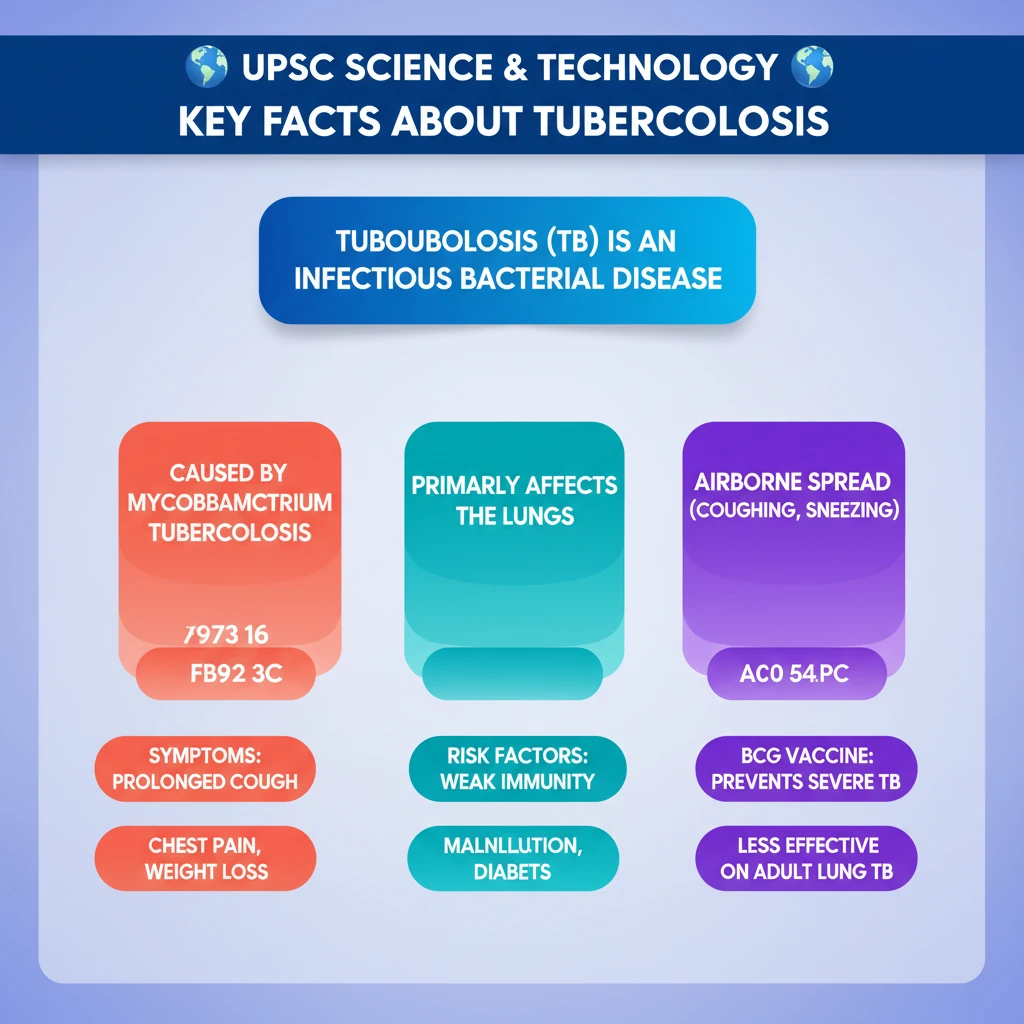
- •Tuberculosis (TB) is an infectious disease caused by Mycobacterium tuberculosis, primarily affecting the lungs.
- •It spreads through airborne droplets from coughing, sneezing, or spitting.
- •Common symptoms include prolonged cough, chest pain, weight loss, fever, and night sweats.
- •Risk factors include diabetes, weakened immune system, malnutrition, and tobacco use.
- •The BCG vaccine prevents severe forms of TB outside the lungs but is less effective against adult pulmonary TB.
- •TB is preventable and curable with a multi-drug antibiotic regimen, typically lasting 6-9 months.
- •Multidrug-resistant TB (MDR-TB) is a serious challenge, requiring longer and more toxic second-line treatments.
🧠 Memory Techniques
95% Verified Content
📚 Reference Sources
•World Health Organization (WHO) - Global Tuberculosis Report
•Ministry of Health & Family Welfare, Government of India - National TB Elimination Programme (NTEP) guidelines
•Centers for Disease Control and Prevention (CDC) - About TB