How does Wolbachia Help in Controlling Mosquito Populations? - Science And Technology | UPSC Learning
Topics
0 topics • 0 completed
🔍
No topics match your search
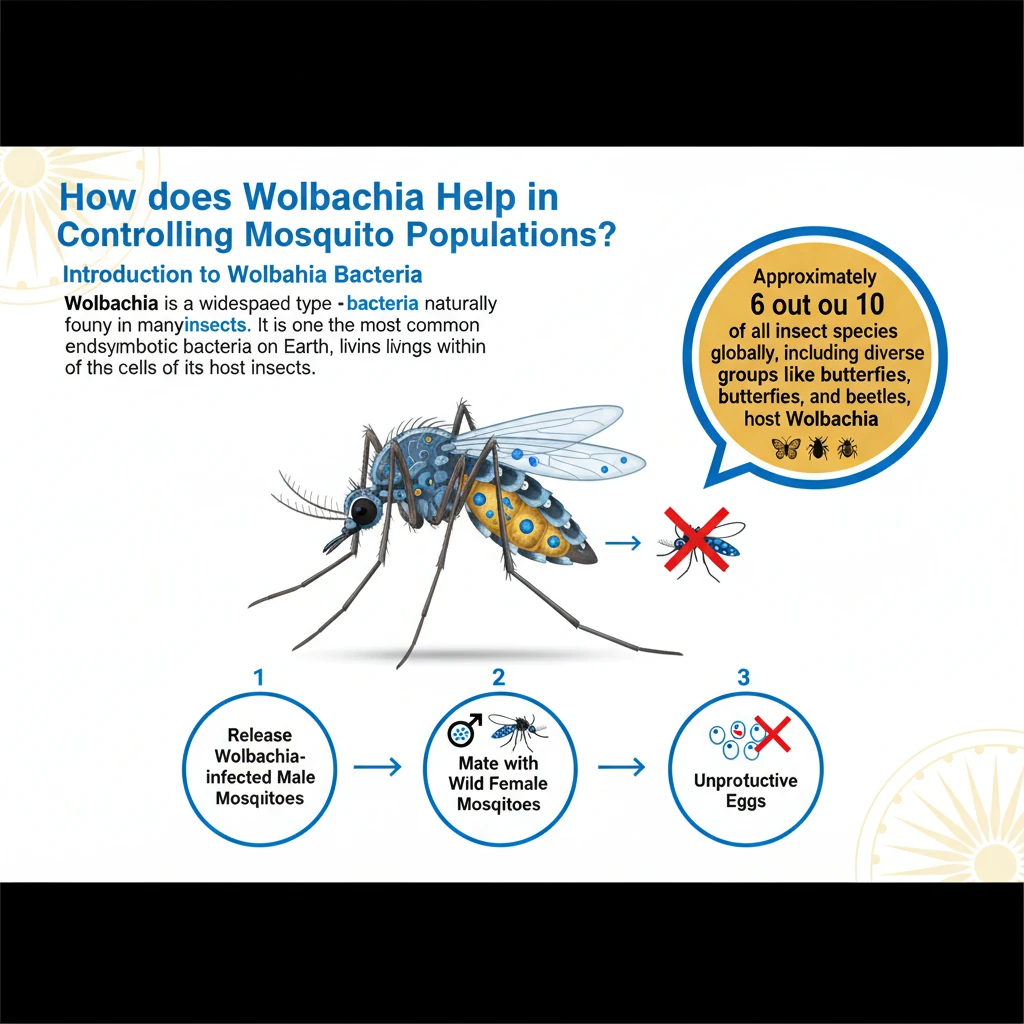
How does Wolbachia Help in Controlling Mosquito Populations?
Medium⏱️ 8 min read
science and technology
📖 Introduction
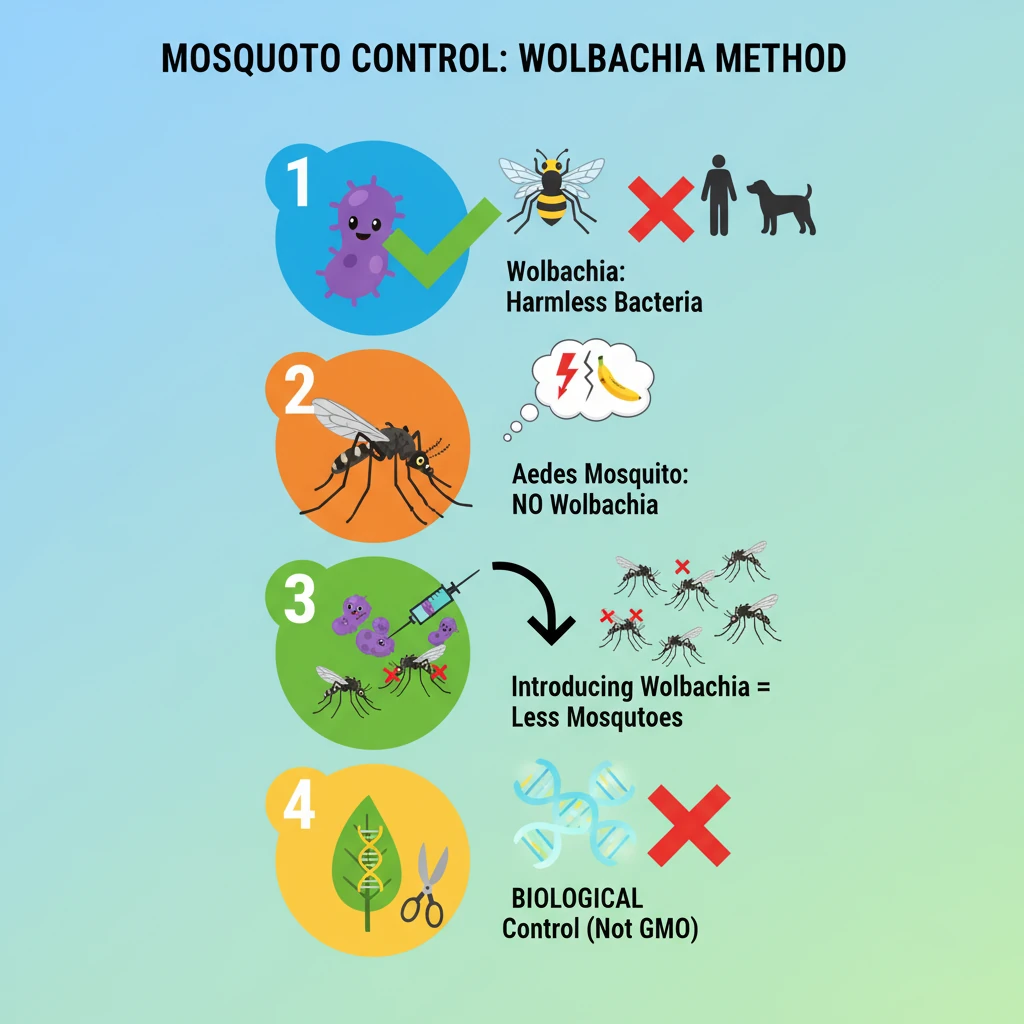
<h4>Introduction to Wolbachia Bacteria</h4><p><strong>Wolbachia</strong> is a widespread type of <strong>bacteria</strong> naturally found in many <strong>insects</strong>. It is one of the most common endosymbiotic bacteria on Earth, living within the cells of its host insects.</p><div class='info-box'><p>Approximately <strong>6 out of 10</strong> of all insect species globally, including diverse groups like <strong>butterflies</strong>, <strong>bees</strong>, and <strong>beetles</strong>, host <strong>Wolbachia</strong> bacteria.</p></div><p>Importantly, <strong>Wolbachia bacteria</strong> are not known to cause illness in <strong>humans</strong> or other <strong>animals</strong>. This includes pets, fish, and birds, making it a safe candidate for biological control methods.</p><h4>Wolbachia and Aedes Aegypti Mosquitoes</h4><p>Unlike many other insect species, the <strong>Aedes Aegypti mosquito</strong> population does not naturally carry <strong>Wolbachia bacteria</strong>. This absence is a crucial factor in its application for disease control.</p><div class='info-box'><p>The <strong>Aedes Aegypti mosquito</strong> is a primary vector responsible for transmitting several severe <strong>viral diseases</strong>. These include <strong>dengue</strong>, <strong>Zika</strong>, and <strong>chikungunya</strong>, posing significant global public health challenges.</p></div><h4>Mechanism of Population Control</h4><p>The strategic introduction of <strong>Wolbachia</strong> into <strong>Aedes Aegypti mosquitoes</strong> offers a novel approach to control their populations. This method leverages the bacteria's natural reproductive manipulation.</p><div class='key-point-box'><p>When <strong>Aedes Aegypti mosquitoes</strong> are infected with <strong>Wolbachia</strong>, they can be effectively used to reduce the overall number of the target mosquito species. This leads to a decrease in disease transmission.</p></div><p>It is vital to note that mosquitoes carrying <strong>Wolbachia</strong> through this method are <strong>not genetically modified organisms (GMOs)</strong>. The bacteria are naturally occurring and are introduced through specific breeding programs, not genetic engineering.</p>
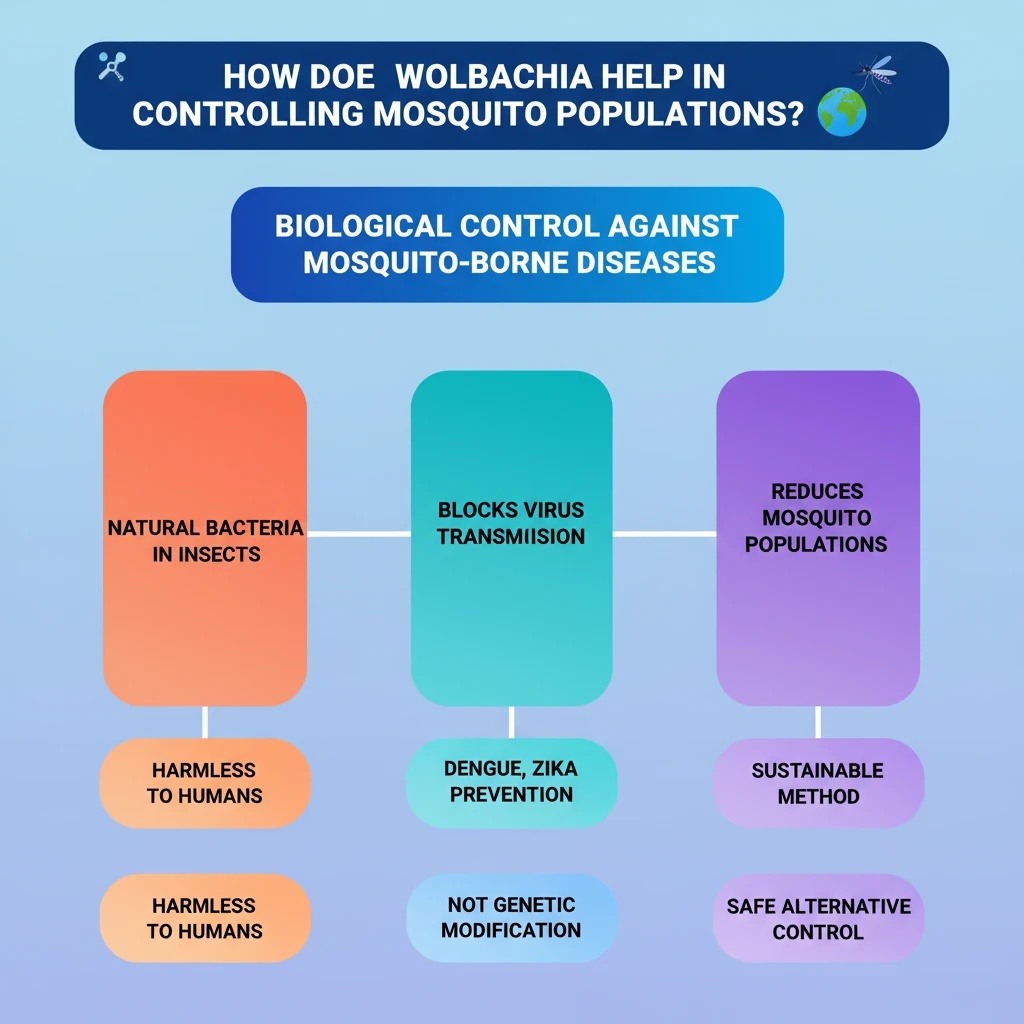
💡 Key Takeaways
- •Wolbachia is a common, naturally occurring bacteria in insects, harmless to humans and animals.
- •Aedes Aegypti mosquitoes, vectors for dengue/Zika, do not naturally carry Wolbachia.
- •Introducing Wolbachia into Aedes Aegypti helps reduce their population and disease transmission.
- •This method is a biological control, not genetic modification.
- •Wolbachia offers a safe, sustainable alternative for vector-borne disease control.
🧠 Memory Techniques
98% Verified Content
📚 Reference Sources
•World Mosquito Program official website (worldmosquitoprogram.org)
•Scientific publications on Wolbachia and Aedes Aegypti control (e.g., Nature, The Lancet Infectious Diseases)