Parkinson’s Disease - Science And Technology | UPSC Learning
Topics
0 topics • 0 completed
🔍
No topics match your search
Parkinson’s Disease
Medium⏱️ 5 min read
science and technology
📖 Introduction
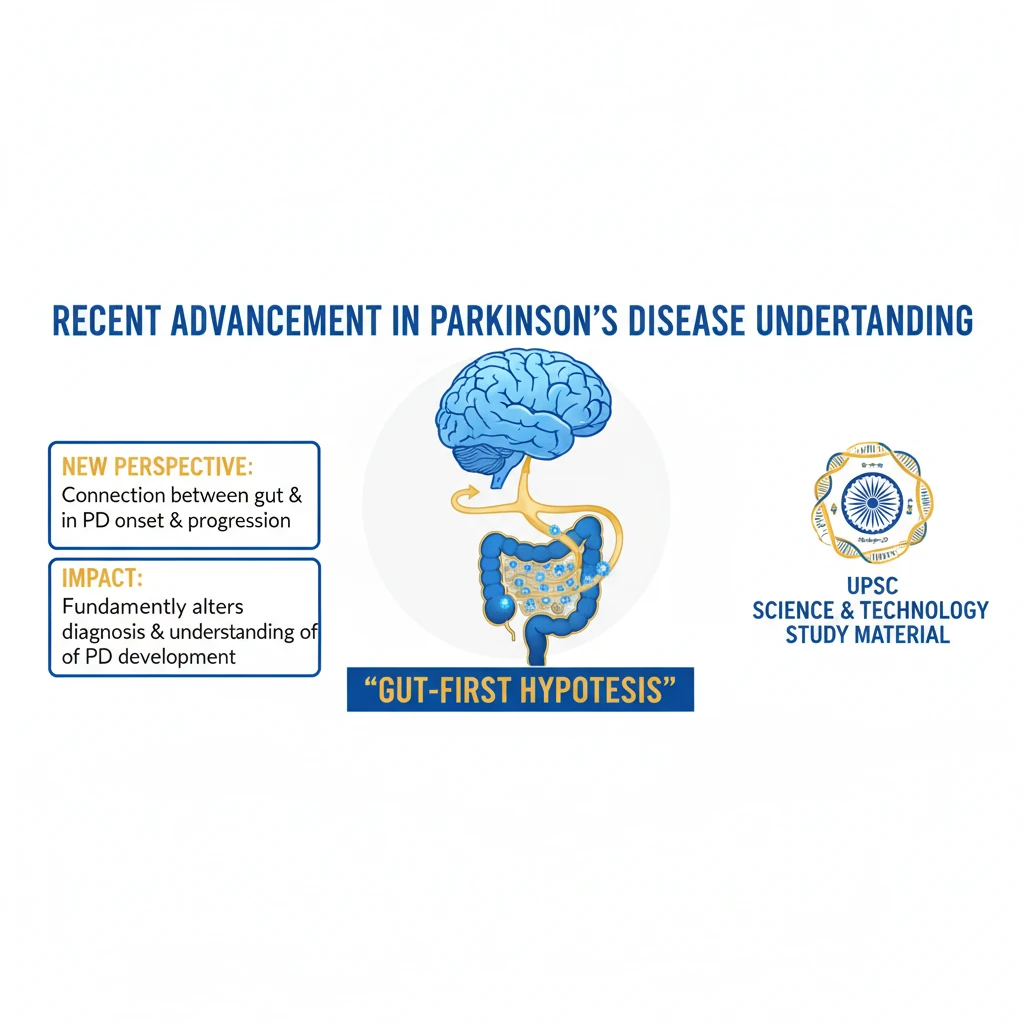
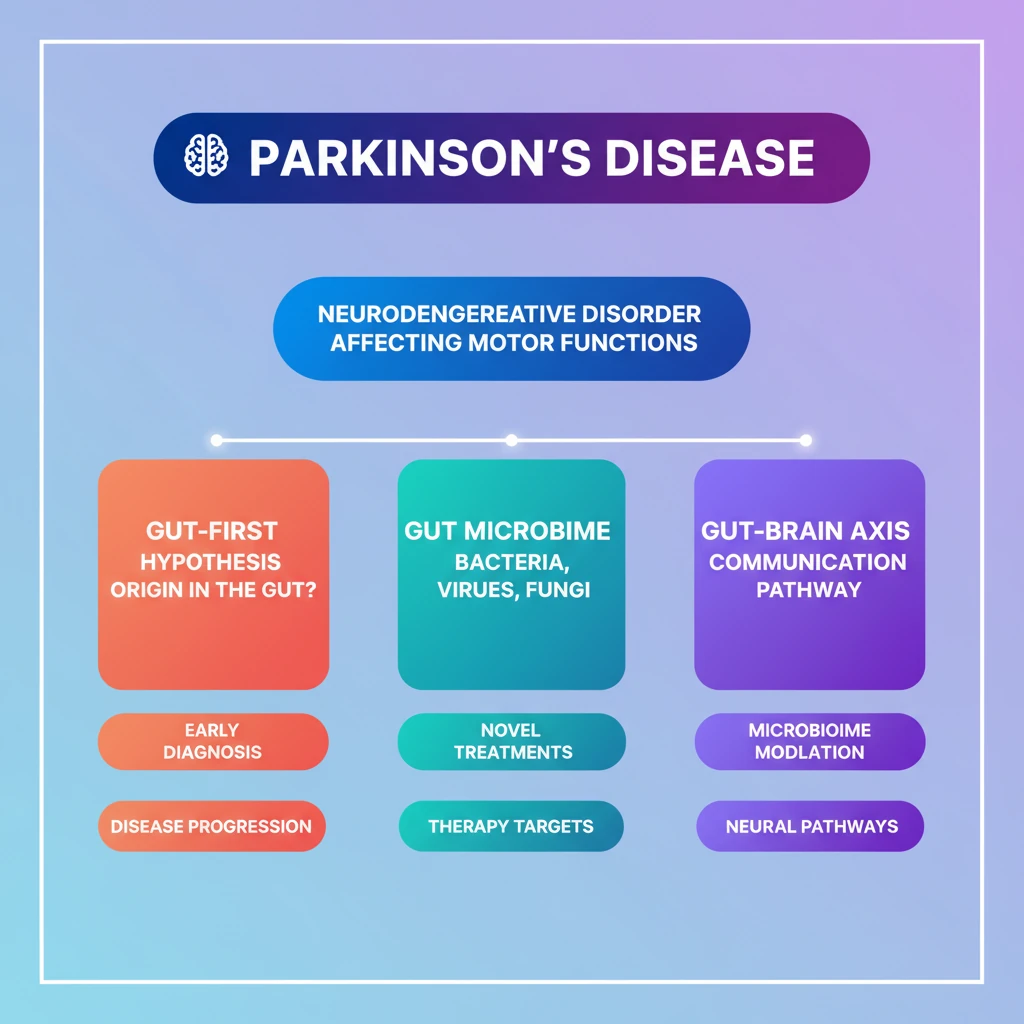
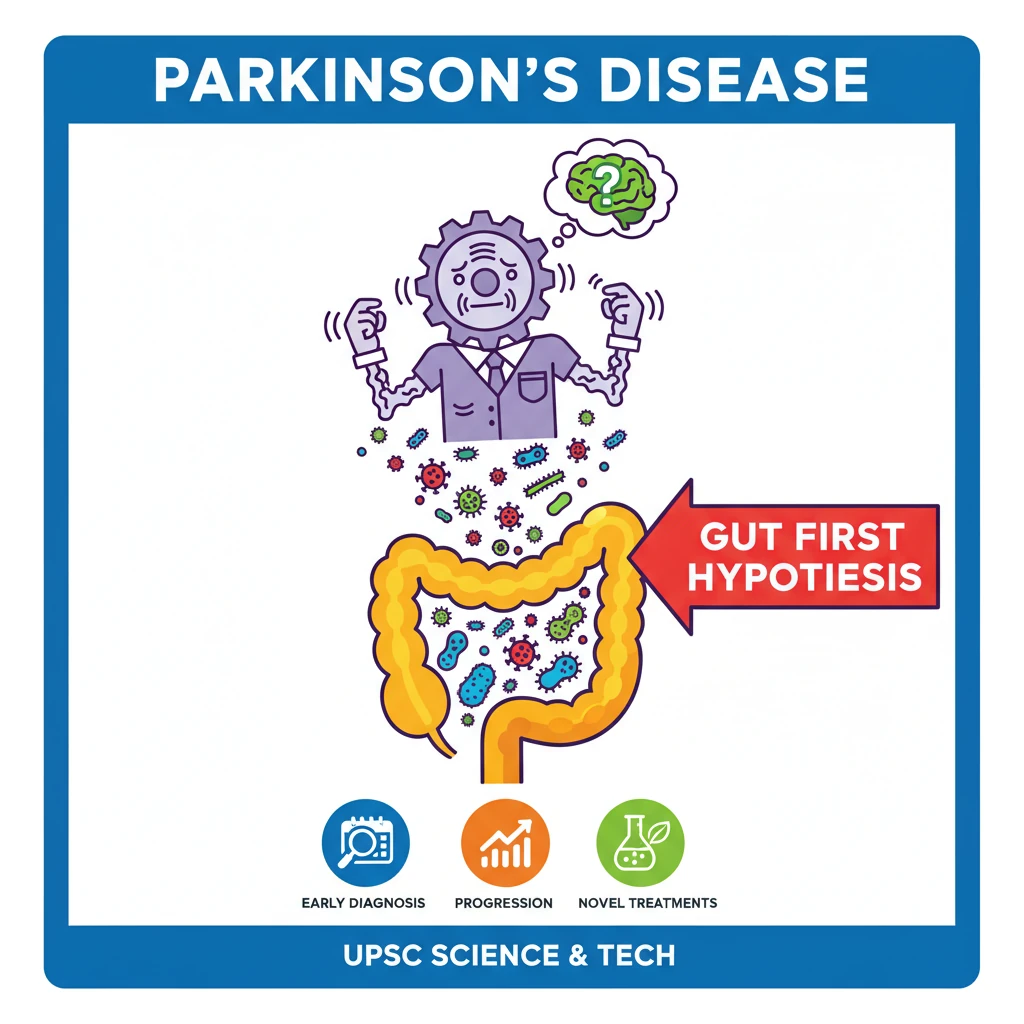
<h4>Understanding Parkinson's Disease: A New Perspective</h4><p><strong>Parkinson's Disease (PD)</strong> is a progressive neurodegenerative disorder affecting millions globally. Recent research has proposed a significant shift in understanding <strong>PD</strong> through the <strong>“gut-hypothesis”</strong>.</p><p>This hypothesis suggests a crucial <strong>gut-brain connection</strong> in its onset and progression.</p><div class='key-point-box'><p>The research is pivotal as it may fundamentally alter the understanding of <strong>diagnosis</strong>, <strong>disease development</strong>, and <strong>therapeutic strategies</strong> for this complex neurodegenerative disorder.</p></div><h4>The "Gut-First Hypothesis" in Focus</h4><p>The <strong>“gut-first hypothesis”</strong> suggests that <strong>Parkinson's Disease</strong> may actually begin in the <strong>gut</strong>.</p><p>This perspective has profound implications for understanding the entire <strong>disease progression</strong> and developing more effective <strong>therapeutic strategies</strong>.</p><h4>Role of the Gut Microbiome</h4><p>A central component of this hypothesis is the <strong>gut microbiome</strong>.</p><div class='info-box'><p>The <strong>gut microbiome</strong> is the vast network of <strong>microorganisms</strong>—including <strong>bacteria, viruses, fungi</strong>, and their collective genetic material—that resides within the intestinal tract, spanning from the mouth to the colon.</p></div><h4>Early Signs and Diagnostic Implications</h4><p>The research identifies specific <strong>gastrointestinal symptoms</strong>, such as <strong>constipation</strong>, as potential <strong>early signs</strong> of <strong>PD</strong>.</p><p>Recognizing these symptoms early could significantly reshape current <strong>diagnostic approaches</strong> and lead to earlier intervention strategies.</p><h4>Abnormal Protein Aggregates: Lewy Bodies</h4><p>A key finding supporting the gut-first hypothesis is the presence of <strong>abnormal protein aggregates</strong>, known as <strong>Lewy bodies</strong>, in both the <strong>gut</strong> and the <strong>brain</strong> of individuals with <strong>PD</strong>.</p><p>This dual presence indicates a complex and intricate interplay between these two systems in the overall development of the disease.</p><div class='info-box'><p><strong>Lewy bodies</strong> are primarily composed of <strong>alpha-synuclein</strong>, a protein that undergoes <strong>misfolding</strong> and <strong>clumping together</strong>. This aggregation is a major factor contributing to the death of <strong>dopamine-producing neurons</strong> in the brain, which is a hallmark of <strong>Parkinson's Disease</strong>.</p></div>
💡 Key Takeaways
- •Parkinson's Disease (PD) is a progressive neurodegenerative disorder primarily affecting dopamine-producing neurons.
- •The 'gut-first hypothesis' suggests PD may originate in the gut, highlighting a crucial gut-brain connection in its onset.
- •Early gastrointestinal symptoms, such as constipation, are identified as potential initial indicators of PD.
- •Abnormal protein aggregates called Lewy bodies (composed of misfolded alpha-synuclein) are found in both the gut and brain.
- •This research could significantly shift diagnostic and therapeutic approaches for PD, moving towards earlier intervention and novel gut-targeted treatments.
🧠 Memory Techniques
95% Verified Content
📚 Reference Sources
•General scientific understanding of Parkinson's Disease and the gut-brain axis