Earth’s Ancient Magnetic Field - Science And Technology | UPSC Learning
Topics
0 topics • 0 completed
🔍
No topics match your search
Earth’s Ancient Magnetic Field
Medium⏱️ 6 min read
science and technology
📖 Introduction
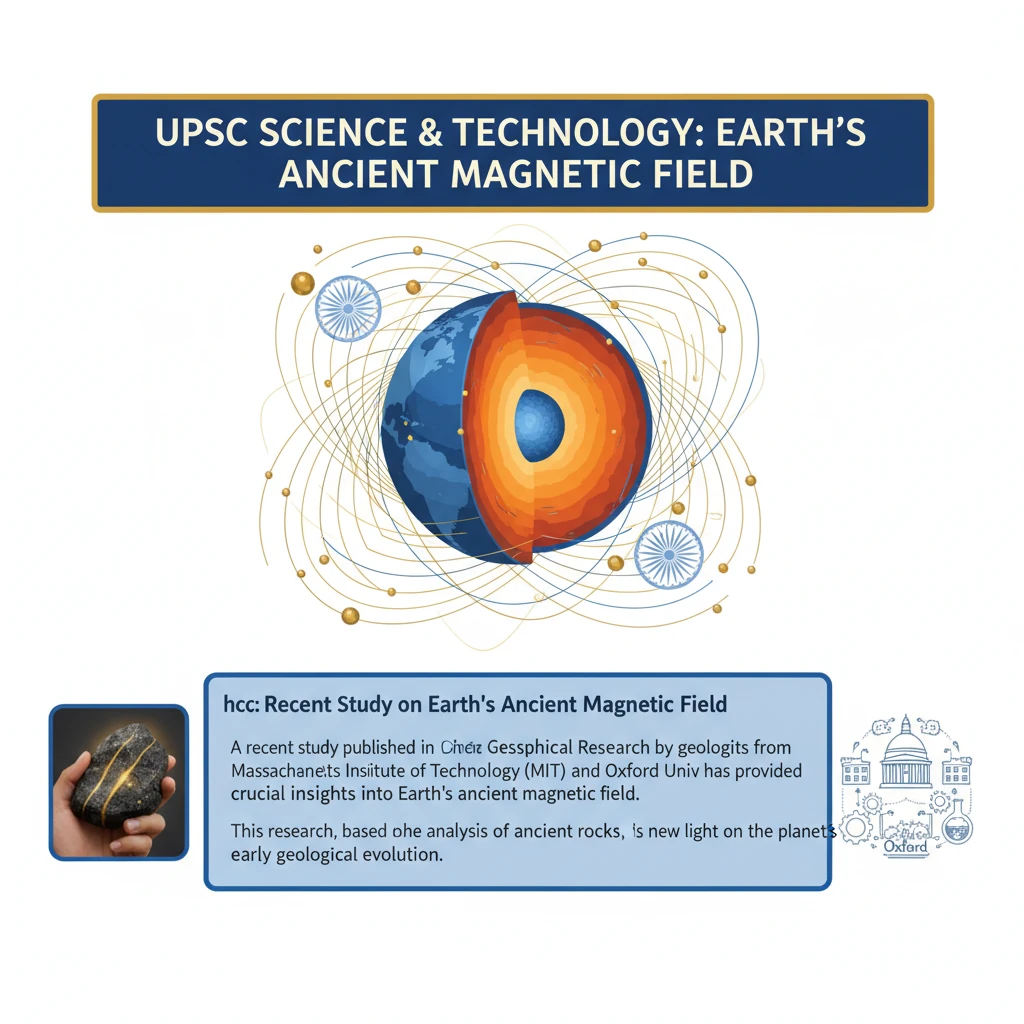
<h4>Recent Study on Earth's Ancient Magnetic Field</h4><p>A recent study published in the <strong>Journal of Geophysical Research</strong> by geologists from the <strong>Massachusetts Institute of Technology (MIT)</strong> and <strong>Oxford University</strong> has provided crucial insights into <strong>Earth's ancient magnetic field</strong>.</p><p>This research, based on the analysis of <strong>ancient rocks</strong>, sheds new light on the planet's <strong>early geological evolution</strong>.</p><div class='info-box'><p><strong>Source:</strong> Journal of Geophysical Research<br><strong>Researchers:</strong> Geologists from MIT and Oxford University</p></div><h4>Key Findings of the Study</h4><h5>Strength of the Magnetic Field</h5><p>Geologists discovered ancient rocks within the <strong>Isua Supracrustal Belt</strong> in <strong>Southwestern Greenland</strong>.</p><p>These rocks date back approximately <strong>3.7 billion years</strong> and contain the oldest known remnants of <strong>Earth's early magnetic field</strong>.</p><div class='info-box'><p><strong>Location:</strong> Isua Supracrustal Belt, Southwestern Greenland<br><strong>Age of Rocks:</strong> Approximately 3.7 billion years</p></div><p>The signatures in these rocks indicate a magnetic field strength of at least <strong>15 microtesla</strong>.</p><p>This strength is comparable in magnitude to <strong>Earth's magnetic field today</strong>, which is around <strong>30 microtesla</strong>.</p><div class='key-point-box'><p><strong>Ancient Field Strength:</strong> At least 15 microtesla (roughly half of today's strength)</p></div><h5>Extended Lifetime of the Magnetic Field</h5><p>Previous studies had suggested the presence of a magnetic field on Earth dating back at least <strong>3.5 billion years</strong>.</p><p>The new study significantly extends this known lifetime by an additional <strong>200 million years</strong>, pushing it back to <strong>3.7 billion years</strong>.</p><p>Researchers used <strong>uranium-lead ratio analysis</strong> to estimate the age of the magnetised minerals in the rocks, confirming their age at approximately <strong>3.7 billion years</strong>.</p><div class='exam-tip-box'><p><strong>UPSC Relevance:</strong> Understanding dating methods like <strong>Uranium-Lead dating</strong> is crucial for <strong>GS Paper 1 (Geology)</strong> and <strong>GS Paper 3 (Science & Technology)</strong>.</p></div><h4>Potential Role in Earth's Habitability</h4><p>The existence of an early magnetic field may have played a <strong>critical role</strong> in establishing and maintaining <strong>Earth's habitability</strong>.</p><p>It is believed to have helped in retaining a <strong>life-sustaining atmosphere</strong> by preventing atmospheric stripping by solar winds.</p><p>Crucially, it shielded the planet from harmful and <strong>damaging solar radiation</strong>, creating a more conducive environment for the emergence and evolution of life.</p><div class='key-point-box'><p><strong>Magnetic Field's Role:</strong><br><ul><li>Retention of <strong>life-sustaining atmosphere</strong></li><li>Shielding from <strong>damaging solar radiation</strong></li></ul></p></div>
💡 Key Takeaways
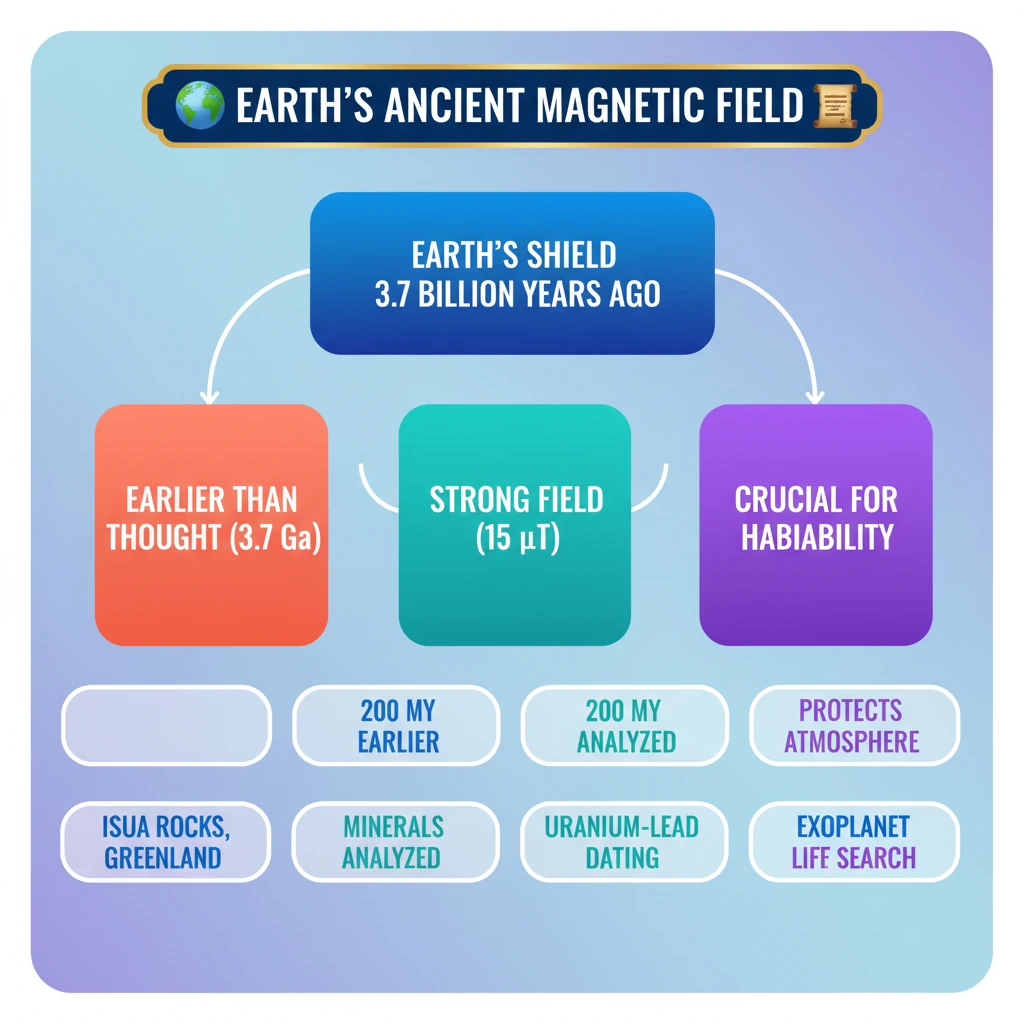
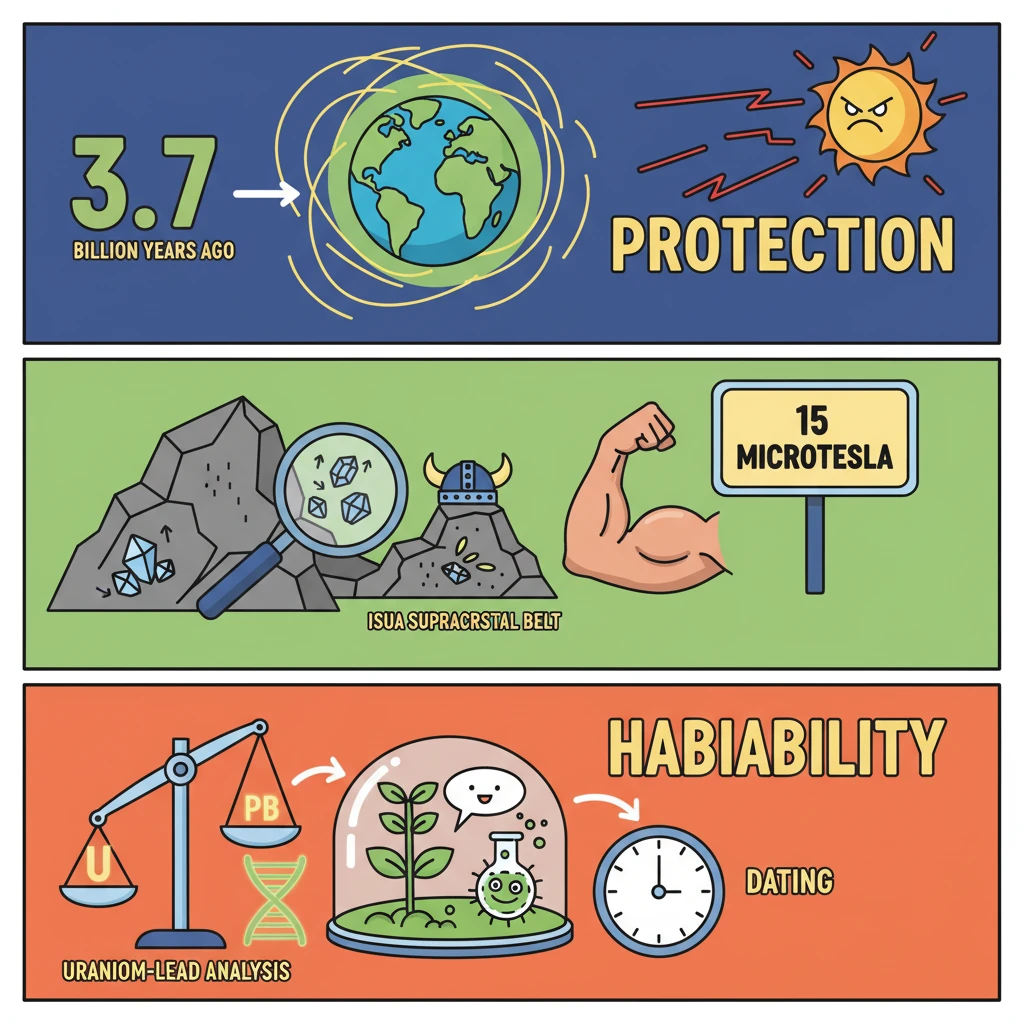
- •Earth's magnetic field existed at least 3.7 billion years ago, 200 million years earlier than previously thought.
- •Ancient rocks from the Isua Supracrustal Belt in Greenland revealed a field strength of at least 15 microtesla.
- •This early magnetic field was crucial for Earth's habitability, protecting its atmosphere and shielding from solar radiation.
- •The study used uranium-lead ratio analysis to date the magnetized minerals in the rocks.
- •Understanding ancient magnetic fields is vital for studying planetary evolution and the search for life on exoplanets.
🧠 Memory Techniques
95% Verified Content
📚 Reference Sources
•Massachusetts Institute of Technology (MIT) research
•Oxford University research summaries