Geopolitical Tensions - Science And Technology | UPSC Learning
Topics
0 topics • 0 completed
🔍
No topics match your search

Geopolitical Tensions
Medium⏱️ 8 min read
science and technology
📖 Introduction
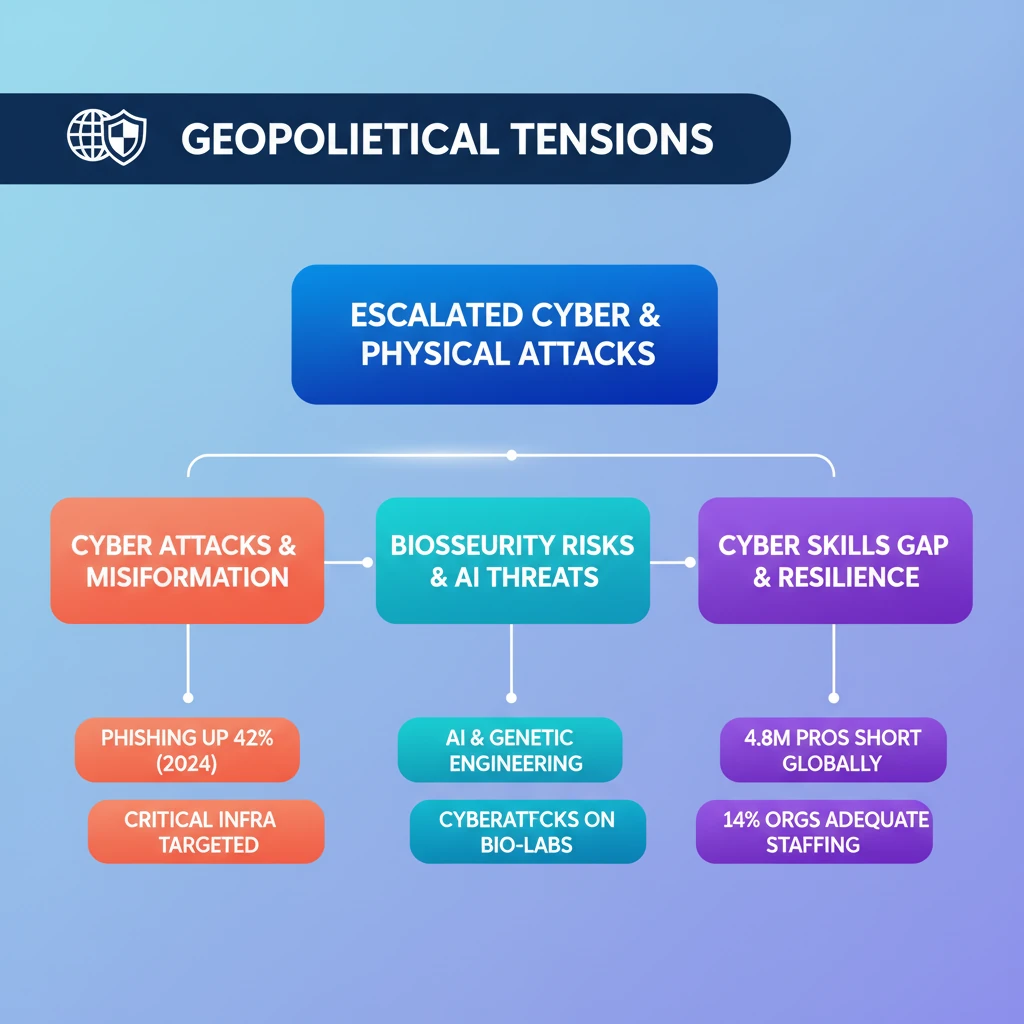
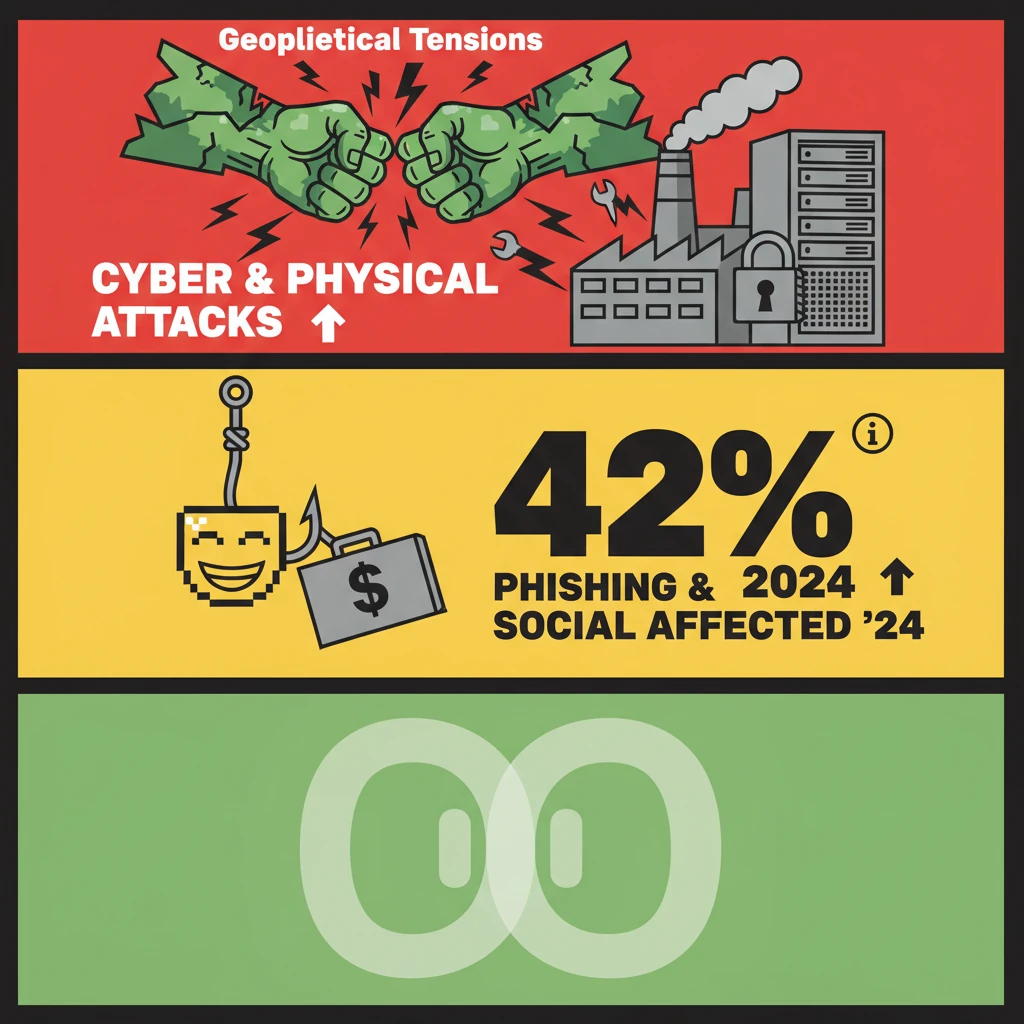
<h4>Cyber Threats to Operational Technology and Data Flow</h4><p><strong>Cybercriminals</strong> and <strong>state actors</strong> are increasingly targeting <strong>operational technology (OT)</strong>, including vital infrastructure like <strong>undersea cables</strong>. This poses a significant and growing risk to the integrity of <strong>global data flow</strong> and communication networks.</p><div class='info-box'><p>In <strong>2024</strong>, there was a notable surge in <strong>phishing</strong> and <strong>social engineering attacks</strong>. A substantial <strong>42%</strong> of organizations reported falling victim to such incidents, highlighting pervasive vulnerabilities.</p></div><h4>Geopolitical Conflicts and Critical Infrastructure</h4><p>Recent <strong>geopolitical conflicts</strong>, such as the <strong>Russia-Ukraine war</strong>, have led to a marked escalation in both <strong>cyber</strong> and <strong>physical attacks</strong>. These attacks specifically target critical sectors vital for national functioning and public safety.</p><p>Key sectors under threat include <strong>energy</strong>, <strong>telecommunications</strong>, and <strong>water treatment facilities</strong>. An example in <strong>2024</strong> saw a cyberattack disrupt operations at a <strong>US water utility</strong>, exposing vulnerabilities in essential services.</p><div class='key-point-box'><p>A significant majority, nearly <strong>60%</strong> of organizations, acknowledge that <strong>geopolitical tensions</strong> have directly influenced and necessitated changes in their <strong>cybersecurity strategy</strong>.</p></div><p>Organizations have responded to these heightened tensions by implementing various strategic modifications:</p><ul><li>Many have modified their <strong>insurance policies</strong> to cover evolving cyber risks.</li><li>A considerable number have changed or are actively changing their <strong>vendors</strong> to enhance security.</li><li>Some organizations have ceased doing business or conducting operations in <strong>certain countries</strong> due to increased risk.</li><li>Others have adjusted their <strong>trading or operating policies</strong> to mitigate exposure to geopolitical cyber threats.</li></ul><h4>Biosecurity Threats in the Age of AI</h4><p>Rapid advancements in fields like <strong>Artificial Intelligence (AI)</strong>, <strong>genetic engineering</strong>, and <strong>biotechnology</strong> have introduced new dimensions to <strong>biosecurity risks</strong>. The potential for misuse or accidental release of dangerous agents is growing.</p><p><strong>Cyberattacks on bio-laboratories</strong> now represent a critical threat, potentially compromising sensitive research, data integrity, and essential safety protocols, with far-reaching consequences.</p><div class='info-box'><p>The <strong>World Health Organization (WHO)</strong> has issued stark warnings regarding these emerging dangers. This concern was underscored by reported attacks in <strong>2024</strong> on bio-labs located in <strong>South Africa</strong> and the <strong>UK</strong>.</p></div><h4>The Critical Cybersecurity Skills Gap</h4><p>A significant global challenge is the pervasive <strong>cybersecurity skills gap</strong>. There is an estimated shortage of up to <strong>4.8 million professionals</strong> worldwide, severely impacting organizational defense capabilities.</p><div class='info-box'><p>Approximately <strong>two-thirds</strong> of organizations globally are grappling with notable skills gaps in their cybersecurity teams. Only a mere <strong>14%</strong> possess the required skilled personnel to effectively manage the complexities of the current cyber landscape.</p></div><h4>Challenges in Cyber Resilience</h4><p>Many organizations, particularly smaller entities, express concerns about their ability to withstand cyberattacks. About <strong>35%</strong> of <strong>small organizations</strong> feel their <strong>cyber resilience</strong> is insufficient.</p><p><strong>Public-sector organizations</strong> face even greater hurdles in building robust defenses. A significant <strong>38%</strong> report low resilience, and a staggering <strong>49%</strong> lack adequate <strong>cybersecurity talent</strong>, marking a <strong>33% rise</strong> from <strong>2024</strong> figures.</p><h4>Regional Disparities in Cybersecurity Preparedness</h4><p>The report highlights substantial <strong>global cybersecurity disparities</strong>, indicating an uneven distribution of capabilities and confidence in incident response across different regions.</p><div class='info-box'><p>Confidence in effective <strong>incident response</strong> varies significantly: from <strong>15%</strong> in <strong>Europe/North America</strong>, it drops to <strong>36%</strong> in <strong>Africa</strong>, and further to <strong>42%</strong> in <strong>Latin America</strong>, indicating regional vulnerabilities.</p></div><h4>Economic Impact of Cybercrime</h4><p><strong>Cybercrime</strong> has evolved into a highly lucrative and low-risk venture for perpetrators. It often entails minimal operational costs while promising potentially high financial returns.</p><div class='info-box'><p>The <strong>US Federal Bureau of Investigation (FBI)</strong> estimated that financial losses stemming from cybercrime exceeded <strong>USD 12.5 billion</strong> in <strong>2023</strong> alone, underscoring its significant economic toll.</p></div>
💡 Key Takeaways
- •Geopolitical tensions significantly escalate cyber and physical attacks on critical infrastructure.
- •Phishing and social engineering attacks are sharply increasing, with 42% of organizations affected in 2024.
- •Biosecurity risks are heightened by AI and genetic engineering, with cyberattacks targeting bio-labs.
- •A severe global cybersecurity skills gap exists, with 4.8 million professionals short and only 14% of organizations having adequate staff.
- •Cyber resilience is low, especially in small and public-sector organizations, with significant regional disparities.
- •Cybercrime is a highly profitable venture, causing over USD 12.5 billion in losses in 2023 (FBI estimate).
🧠 Memory Techniques
95% Verified Content
📚 Reference Sources
•US Federal Bureau of Investigation (FBI) - for cybercrime loss estimates
•World Health Organization (WHO) - for warnings on biosecurity threats