Health and Diseases - Science And Technology | UPSC Learning
Topics
0 topics • 0 completed
🔍
No topics match your search
Health and Diseases
Easy⏱️ 5 min read
science and technology
📖 Introduction
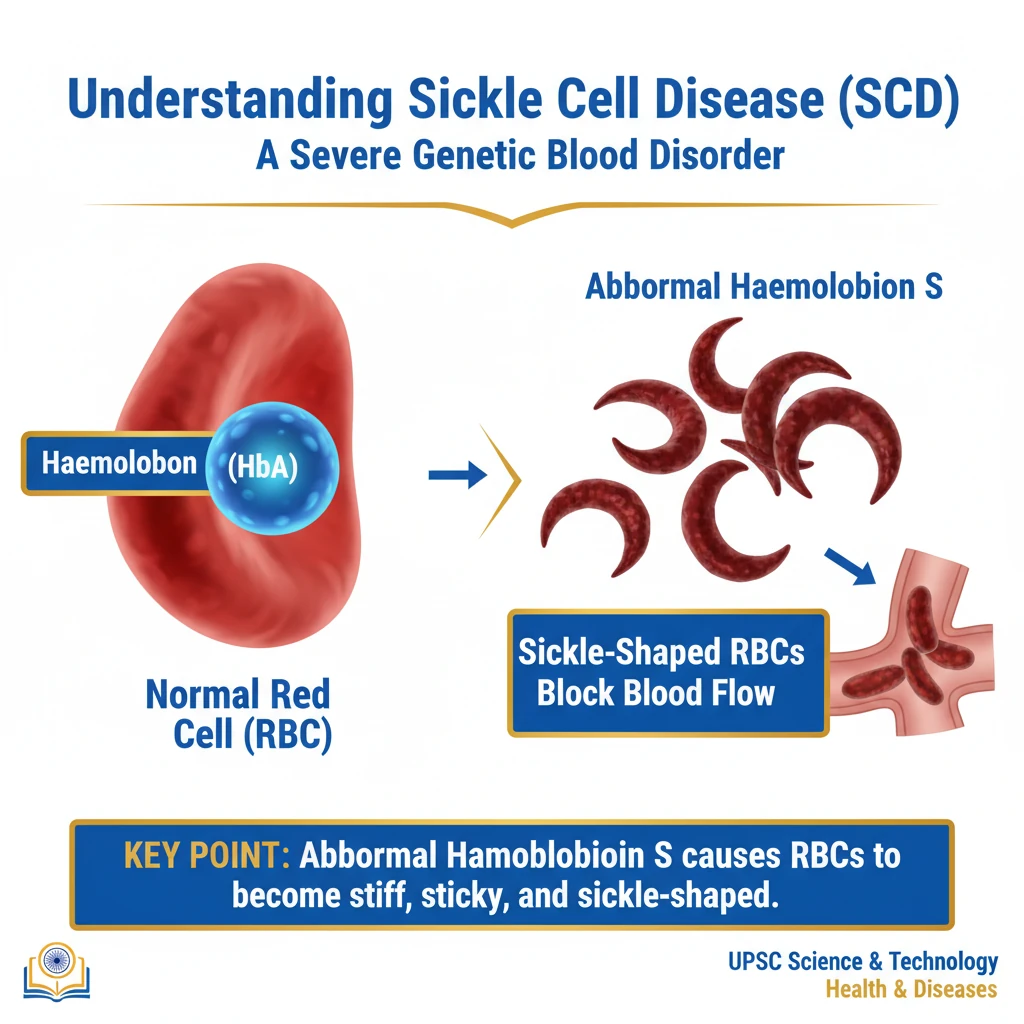
<h4>Understanding Sickle Cell Disease (SCD)</h4><p><strong>Sickle Cell Disease (SCD)</strong> is a severe <strong>genetic blood disorder</strong> that affects millions globally. It is characterized by an abnormality in <strong>haemoglobin</strong>, the vital protein responsible for carrying oxygen throughout the body.</p><div class='key-point-box'><p>The core issue in <strong>SCD</strong> is the production of abnormal <strong>haemoglobin S</strong>, which causes red blood cells (RBCs) to become rigid and take on a characteristic <strong>sickle or crescent shape</strong>, especially under low oxygen conditions.</p></div><h4>Nature of Sickle Cell Disease</h4><p>Unlike healthy, flexible red blood cells, the <strong>sickle-shaped cells</strong> are stiff and sticky. This abnormal shape prevents them from flowing smoothly through small blood vessels, leading to blockages.</p><p>These blockages impede blood flow to various organs and tissues, causing a range of severe complications and symptoms. The disease is hereditary, meaning it is passed down through families.</p><h4>Impact on the Body</h4><p>The consequences of <strong>SCD</strong> are profound and systemic. Blocked blood flow leads to a lack of oxygen in tissues, causing intense pain and organ damage over time. It significantly reduces the life expectancy of affected individuals.</p><div class='info-box'><p>The <strong>Ministry of Health and Family Welfare (MoHFW)</strong> tribal health expert committee has specifically identified <strong>Sickle Cell Disease</strong> as one of the <strong>ten major health issues</strong> predominantly affecting <strong>tribal communities</strong> in India.</p></div><h4>Key Symptoms of SCD</h4><p>Individuals suffering from <strong>Sickle Cell Disease</strong> experience a variety of debilitating symptoms, which can vary in severity and frequency. These symptoms are a direct result of the abnormal red blood cells and their impact on circulation.</p><ul><li><strong>Chronic Anaemia:</strong> A persistent lack of healthy red blood cells leads to symptoms such as extreme <strong>fatigue</strong>, general <strong>weakness</strong>, and noticeable <strong>paleness</strong> of the skin.</li><li><strong>Painful Episodes (Sickle Cell Crisis):</strong> These are sudden, severe, and intense bouts of pain. They can occur in the <strong>bones</strong>, <strong>chest</strong>, <strong>back</strong>, <strong>arms</strong>, and <strong>legs</strong>, caused by blood vessel blockages.</li><li><strong>Delayed Growth and Puberty:</strong> Children and adolescents with <strong>SCD</strong> often experience slower physical development compared to their peers due to the chronic stress on their bodies.</li></ul><div class='exam-tip-box'><p>For UPSC, understand <strong>SCD</strong> not just as a disease, but as a significant <strong>public health challenge</strong>, especially concerning <strong>vulnerable populations</strong> like tribal communities. Be ready to discuss its genetic basis and socio-economic impact.</p></div>
💡 Key Takeaways
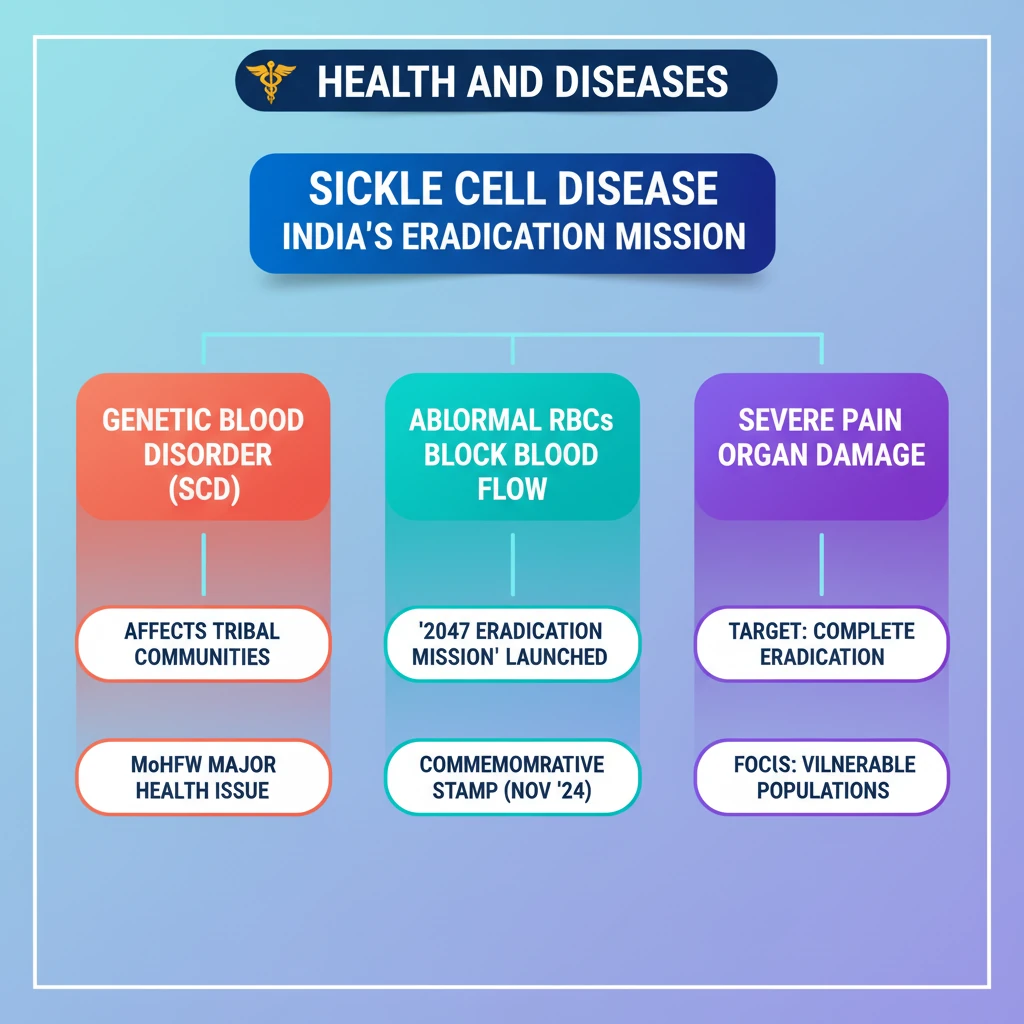
- •Sickle Cell Disease (SCD) is a genetic blood disorder causing abnormal, sickle-shaped red blood cells.
- •It leads to blocked blood flow, severe pain (sickle cell crisis), organ damage, and reduced life expectancy.
- •SCD disproportionately affects tribal communities in India, identified as a major health issue by MoHFW.
- •India has launched the 'Sickle Cell Eradication - 2047' mission, marked by a commemorative stamp on 15th Nov 2024.
- •The 2047 target aims for complete eradication of sickle cell anaemia, focusing on vulnerable populations.
🧠 Memory Techniques
98% Verified Content