Deep-Sea Mining: India's Interests, Exploration, and Environmental Concerns - Science And Technology | UPSC Learning
Topics
0 topics • 0 completed
🔍
No topics match your search
Deep-Sea Mining: India's Interests, Exploration, and Environmental Concerns
Medium⏱️ 7 min read
science and technology
📖 Introduction
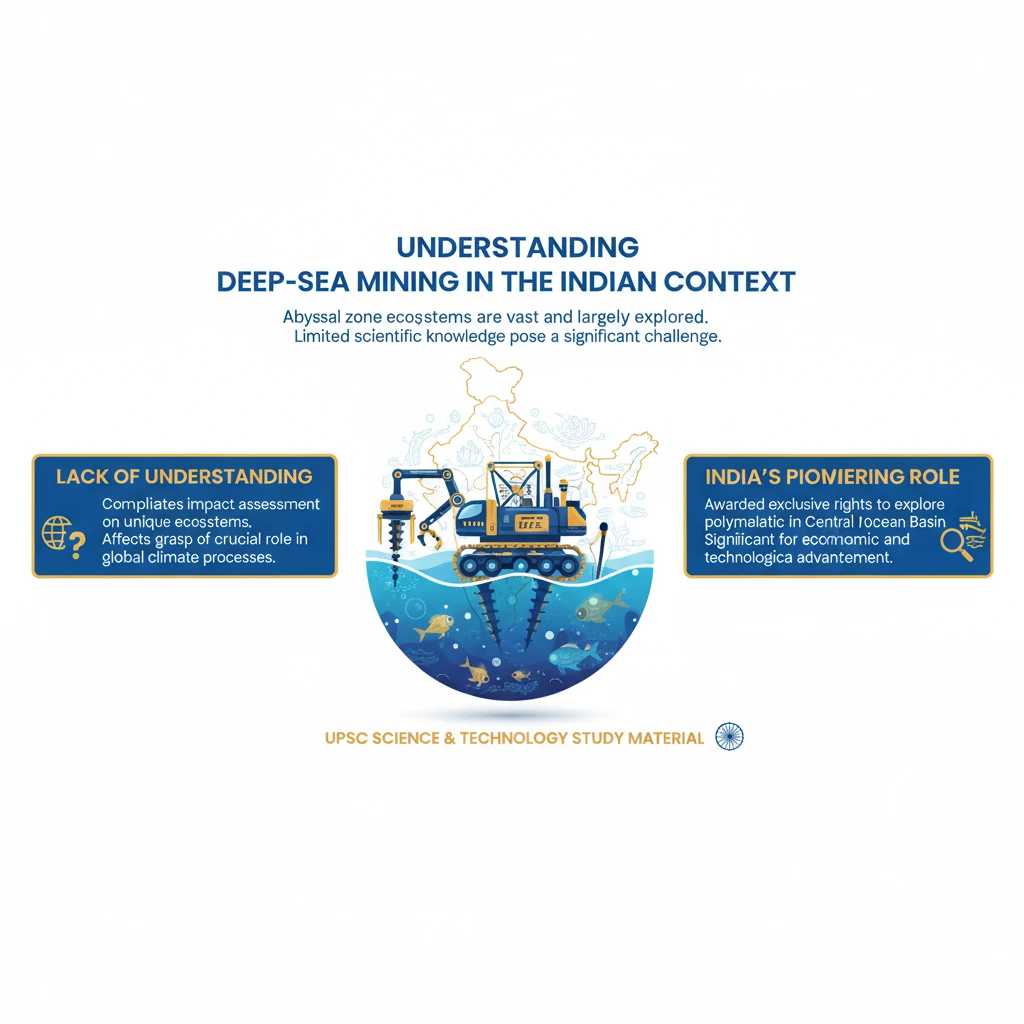
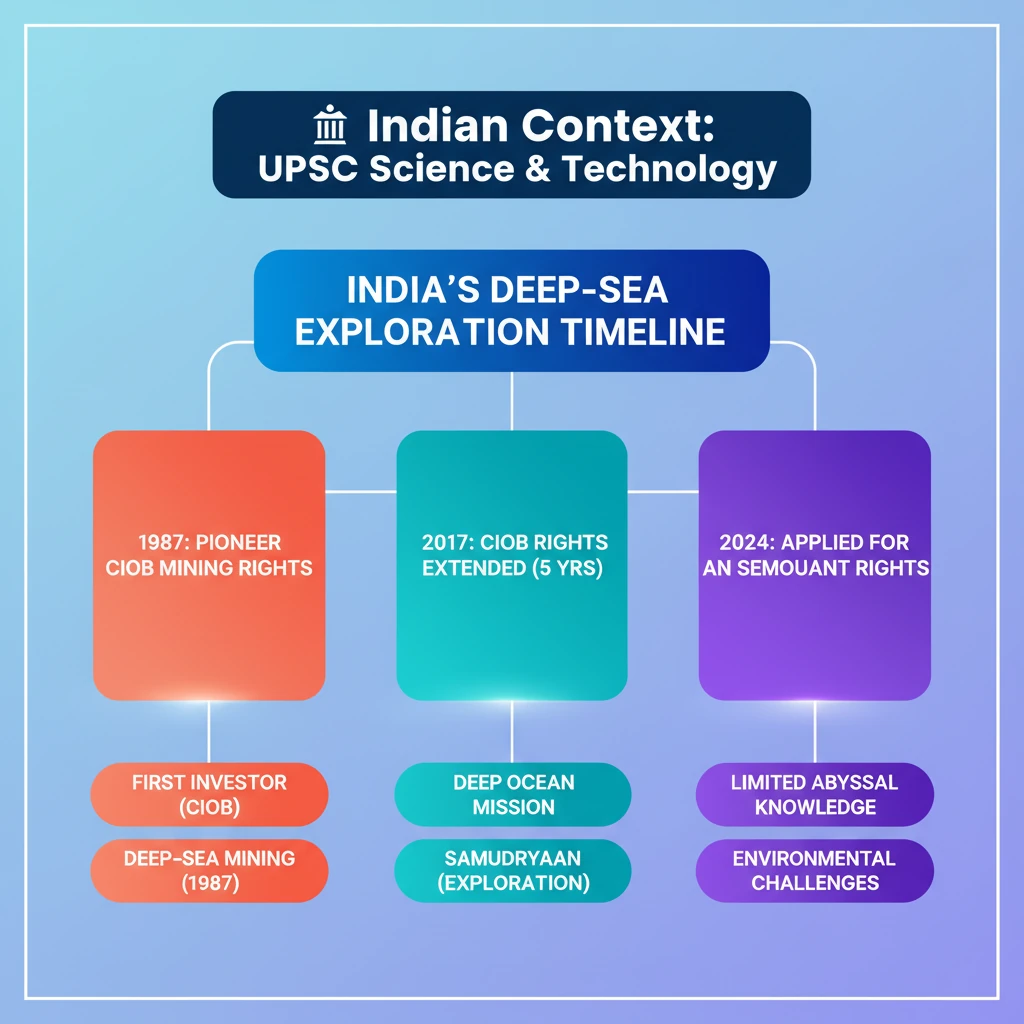
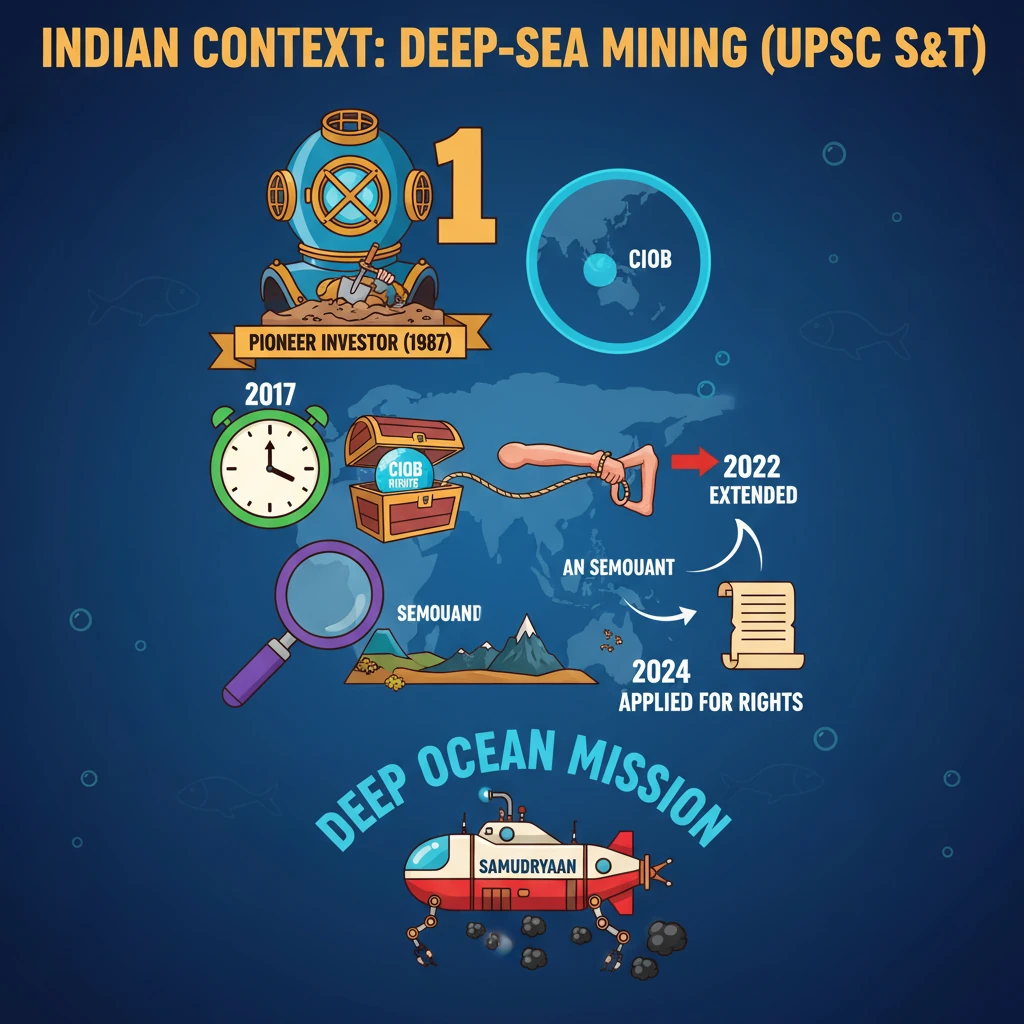
<h4>Understanding Deep-Sea Mining in the Indian Context</h4><p>The <strong>abyssal zone ecosystems</strong> are vast and largely unexplored. Our limited scientific knowledge of these deep-sea environments poses a significant challenge.</p><p>This lack of understanding complicates efforts to assess the potential impact of <strong>deep-sea mining</strong> on these unique ecosystems. It also affects our grasp of their crucial role in <strong>global climate processes</strong>.</p><h4>India's Pioneering Role in Deep-Sea Exploration</h4><p>India has been a proactive player in the realm of deep-sea exploration. The nation holds a distinguished position in the global deep-sea mining landscape.</p><div class='info-box'><p>India was the <strong>first country</strong> to receive the status of a <strong>‘Pioneer Investor’</strong> in <strong>1987</strong>. This recognition was granted by the <strong>International Seabed Authority (ISA)</strong>.</p></div><p>Following this status, India was allocated an extensive area of approximately <strong>75,000 sq. km</strong> in the <strong>Central Indian Ocean Basin (CIOB)</strong>. This area was designated specifically for <strong>polymetallic nodule exploration</strong>.</p><p>India's exclusive rights to explore <strong>polymetallic nodules</strong> from the seabed in the <strong>Central Indian Ocean Basin</strong> were subsequently extended. The most recent extension was in <strong>2017</strong> for a period of <strong>five years</strong>.</p><h4>Expanding Horizons: Recent Initiatives and Future Plans</h4><p>India continues to expand its deep-sea exploration footprint. There are plans to apply for licenses to explore deep-sea minerals in the <strong>Pacific Ocean</strong>, indicating a broader strategic interest.</p><div class='info-box'><p>In <strong>2024</strong>, India officially applied for rights to explore the <strong>Indian Ocean Seabed beyond its national jurisdiction</strong>. This includes the strategically important <strong>Cobalt-Rich Afanasy Nikitin Seamount (AN Seamount)</strong>.</p></div><p>These applications underscore India's commitment to securing critical mineral resources for its future economic and industrial needs.</p><h4>Deep Ocean Mission and Samudrayaan Project</h4><p>The <strong>Ministry of Earth Sciences</strong> is spearheading the ambitious <strong>‘Deep Ocean Mission’</strong>. This mission aims to explore and utilize ocean resources sustainably.</p><div class='key-point-box'><p>A key component of this mission is the development of a manned submersible vehicle, known as the <strong>Samudrayaan Mission</strong>. This vehicle is designed to search for and mine similar deep-sea resources in the <strong>Indian Ocean</strong>.</p></div><p>The <strong>Samudrayaan project</strong> signifies India's advanced technological capabilities and its resolve to become a leader in deep-sea technology and resource management.</p>
💡 Key Takeaways
- •India was the first 'Pioneer Investor' in deep-sea mining (1987) with rights in CIOB.
- •India's CIOB polymetallic nodule exploration rights were extended in 2017 for five years.
- •In 2024, India applied for rights to explore the Indian Ocean Seabed, including AN Seamount.
- •The 'Deep Ocean Mission' includes the 'Samudrayaan Mission' for deep-sea resource exploration.
- •Limited scientific knowledge of abyssal ecosystems poses a significant challenge to deep-sea mining.
🧠 Memory Techniques
95% Verified Content
📚 Reference Sources
•Ministry of Earth Sciences (MoES) official reports on Deep Ocean Mission
•International Seabed Authority (ISA) publications regarding Pioneer Investors