What are the Key Facts About Leptospirosis? - Science And Technology | UPSC Learning
Topics
0 topics • 0 completed
🔍
No topics match your search
What are the Key Facts About Leptospirosis?
Medium⏱️ 8 min read
science and technology
📖 Introduction
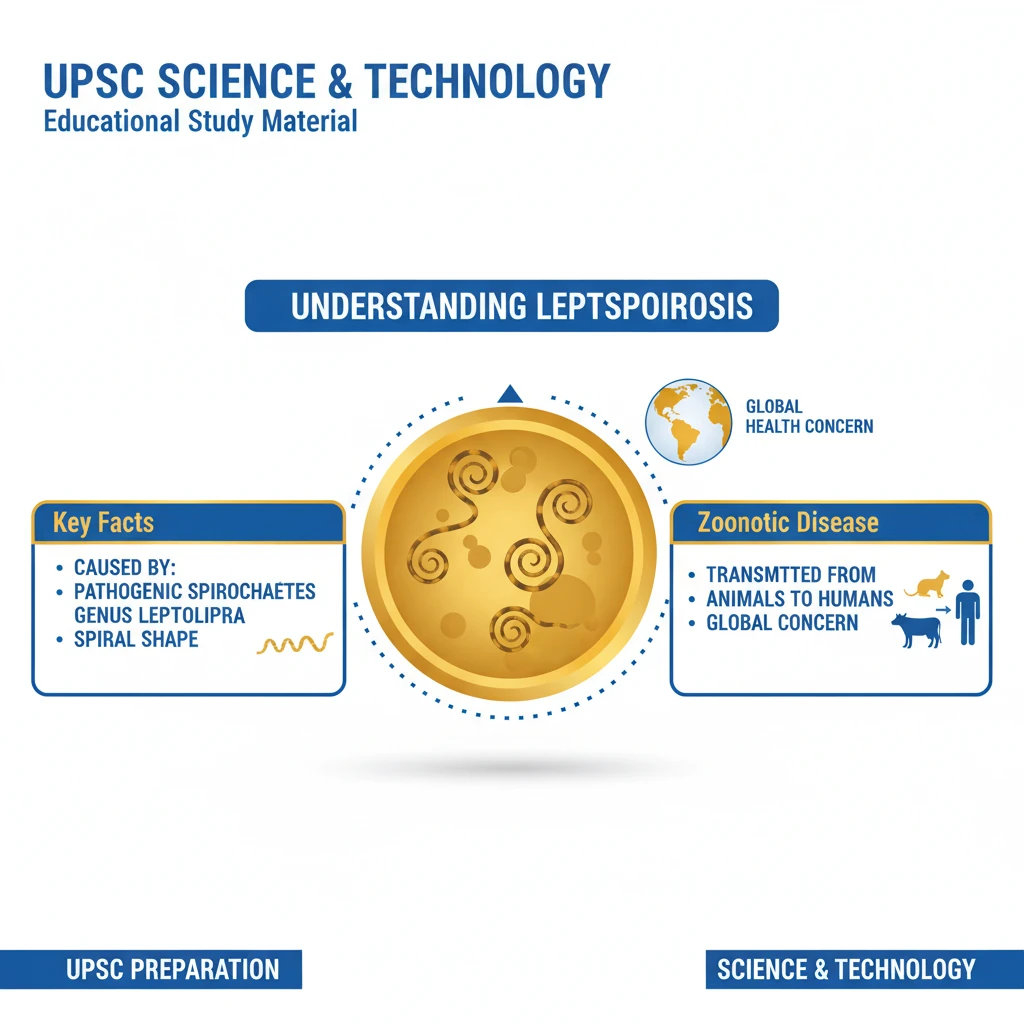
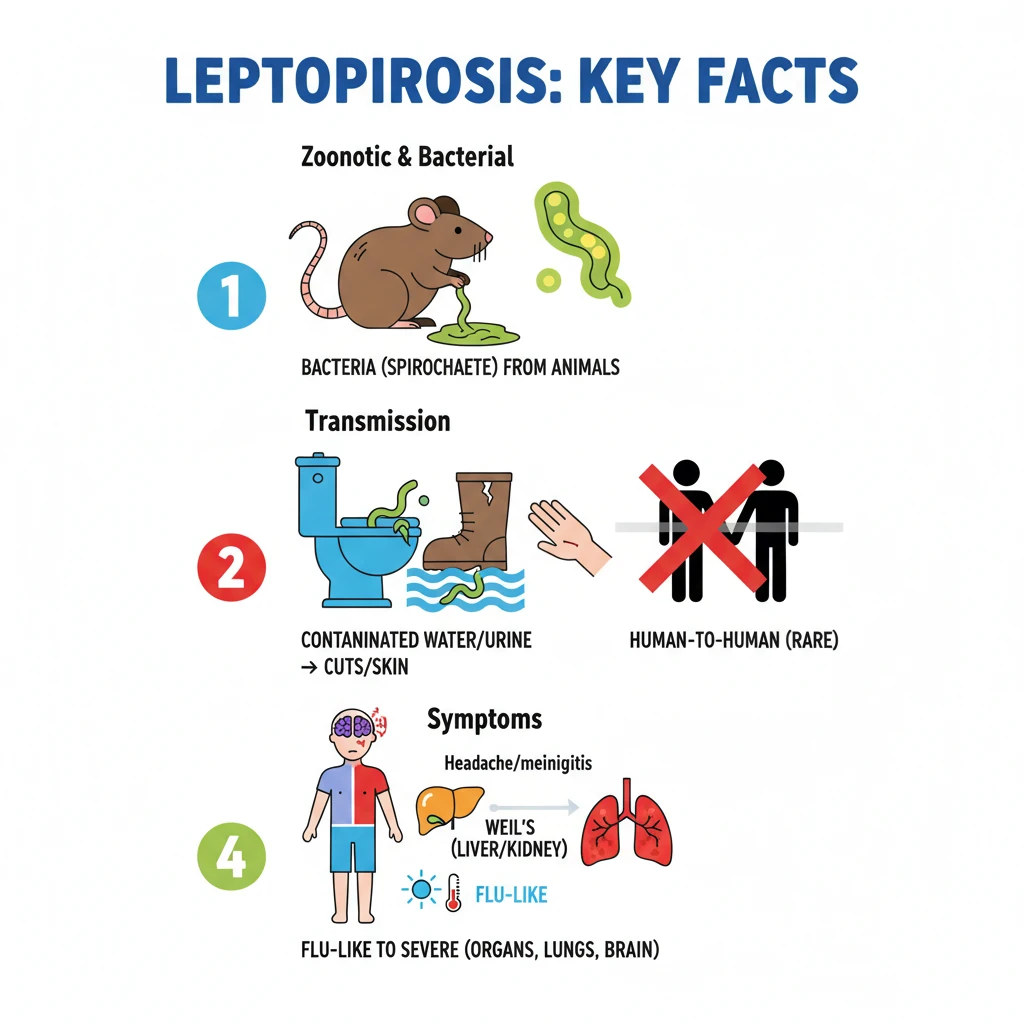
<h4>Understanding Leptospirosis</h4><p><strong>Leptospirosis</strong> is a significant <strong>zoonotic disease</strong> caused by specific bacteria. It is a global health concern, particularly in certain regions.</p><div class='info-box'><p>It is caused by <strong>pathogenic spirochaetes</strong> belonging to the genus <strong>Leptospira</strong>. These bacteria are characterized by their spiral shape.</p></div><p>The term <strong>zoonotic</strong> means that the disease is naturally transmissible from <strong>animals to humans</strong>. This highlights the importance of animal health in preventing human infections.</p><h4>The Causative Agent: Leptospira Bacteria</h4><p>The specific bacteria responsible for <strong>Leptospirosis</strong> are <strong>leptospires</strong>. Not all leptospires are pathogenic, but certain strains can cause severe illness.</p><p>These <strong>pathogenic leptospires</strong> reside primarily in the <strong>kidneys</strong> and <strong>genital tracts</strong> of infected animals. This is crucial for understanding the transmission cycle.</p><div class='key-point-box'><p>They are the direct cause of <strong>leptospirosis</strong> in humans, underscoring the animal-human interface of the disease.</p></div><h4>Primary Reservoirs of Infection</h4><p>Many <strong>mammalian species</strong> can harbor <strong>leptospires</strong> within their kidneys. These animals act as natural hosts and reservoirs for the bacteria.</p><p>Common reservoirs include <strong>rodents</strong>, <strong>cattle</strong>, <strong>pigs</strong>, and <strong>dogs</strong>. Understanding these reservoirs is vital for disease control strategies.</p><div class='info-box'><p><strong>Rodents</strong> are particularly significant reservoirs. They can excrete <strong>leptospires</strong> in their urine throughout their entire lifespan without showing any symptoms themselves.</p></div><p>It is important to note that not all infected animals exhibit symptoms. Natural hosts often show no or few ill effects, though they may develop illness if infected with a different <strong>serovar</strong> (a distinct variation within a species of bacteria).</p><h4>Modes of Transmission to Humans</h4><p>The disease is primarily transmitted through direct contact with the <strong>urine of infected animals</strong>. This is the most common pathway for human infection.</p><p>Indirect transmission also occurs through contact with environments contaminated with infected animal urine. This includes <strong>water</strong>, <strong>soil</strong>, or <strong>food</strong>.</p><p>The bacteria can enter the human body through various entry points:</p><ul><li><strong>Cuts</strong> or abrasions on the skin.</li><li><strong>Mucous membranes</strong>, such as those in the eyes, nose, or mouth.</li><li><strong>Waterlogged skin</strong>, which can become permeable to the bacteria.</li></ul><div class='key-point-box'><p>Human-to-human transmission of <strong>Leptospirosis</strong> is extremely rare. The disease cycle predominantly involves animals and environmental factors.</p></div><h4>Diverse Symptoms and Clinical Manifestations</h4><p><strong>Leptospirosis</strong> presents with a wide spectrum of symptoms, ranging from mild to severe. This makes diagnosis challenging.</p><p>Mild cases often resemble a <strong>flu-like illness</strong>, characterized by general malaise, fever, and headache.</p><p>Severe conditions can include:</p><ul><li><strong>Weil’s syndrome</strong>: A severe form involving dysfunction of the <strong>kidneys</strong> and <strong>liver</strong>, leading to jaundice.</li><li><strong>Meningitis</strong>: Inflammation of the membranes surrounding the brain and spinal cord.</li><li><strong>Pulmonary hemorrhage</strong>: Bleeding in the lungs, which can be life-threatening.</li></ul><div class='info-box'><p>The typical <strong>incubation period</strong> for <strong>Leptospirosis</strong> is <strong>7-10 days</strong>. Common initial symptoms include <strong>fever</strong>, <strong>headache</strong>, and <strong>jaundice</strong>.</p></div><div class='exam-tip-box'><p><strong>Leptospirosis</strong> is often <strong>underdiagnosed</strong> due to its wide range of symptoms that mimic other diseases. Additionally, limited access to diagnostic tests in many affected regions contributes to this challenge. This is a crucial point for UPSC mains answers on public health challenges.</p></div><h4>Epidemiology and Global Distribution</h4><p><strong>Leptospirosis</strong> is a <strong>global disease</strong>, meaning it occurs worldwide. However, its prevalence is not uniform across all regions.</p><p>It is most common in <strong>tropical and subtropical regions</strong>. These areas typically experience <strong>high rainfall</strong>, which facilitates the spread of the bacteria through contaminated water and soil.</p><div class='info-box'><p>Environmental factors like flooding and poor sanitation significantly contribute to the epidemiological pattern of <strong>Leptospirosis</strong> in these vulnerable regions.</p></div>
💡 Key Takeaways
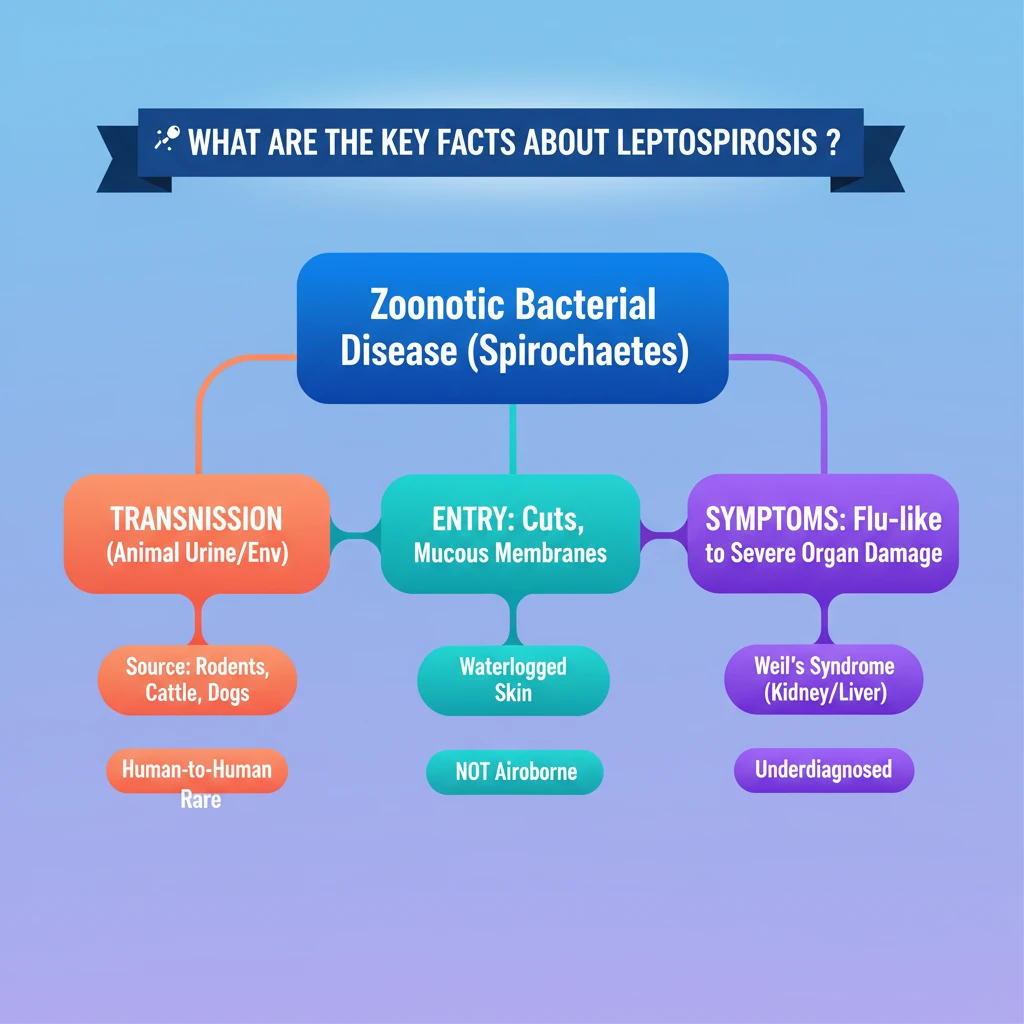
- •Leptospirosis is a zoonotic bacterial disease caused by pathogenic Leptospira spirochaetes.
- •It is primarily transmitted from animals (especially rodents, cattle, pigs, dogs) to humans via contaminated urine or environment.
- •Entry into humans occurs through cuts, mucous membranes, or waterlogged skin; human-to-human transmission is rare.
- •Symptoms range from mild flu-like illness to severe conditions like Weil’s syndrome (kidney/liver dysfunction), meningitis, and pulmonary hemorrhage.
- •It is often underdiagnosed due to varied symptoms mimicking other diseases and limited diagnostic access.
- •Most prevalent in tropical and subtropical regions with high rainfall and frequent flooding.
🧠 Memory Techniques
98% Verified Content
📚 Reference Sources
•World Health Organization (WHO) fact sheets on Leptospirosis
•Centers for Disease Control and Prevention (CDC) information on Leptospirosis