What are the Key Findings of the Study? - Science And Technology | UPSC Learning
Topics
0 topics • 0 completed
🔍
No topics match your search
What are the Key Findings of the Study?
Medium⏱️ 6 min read
science and technology
📖 Introduction
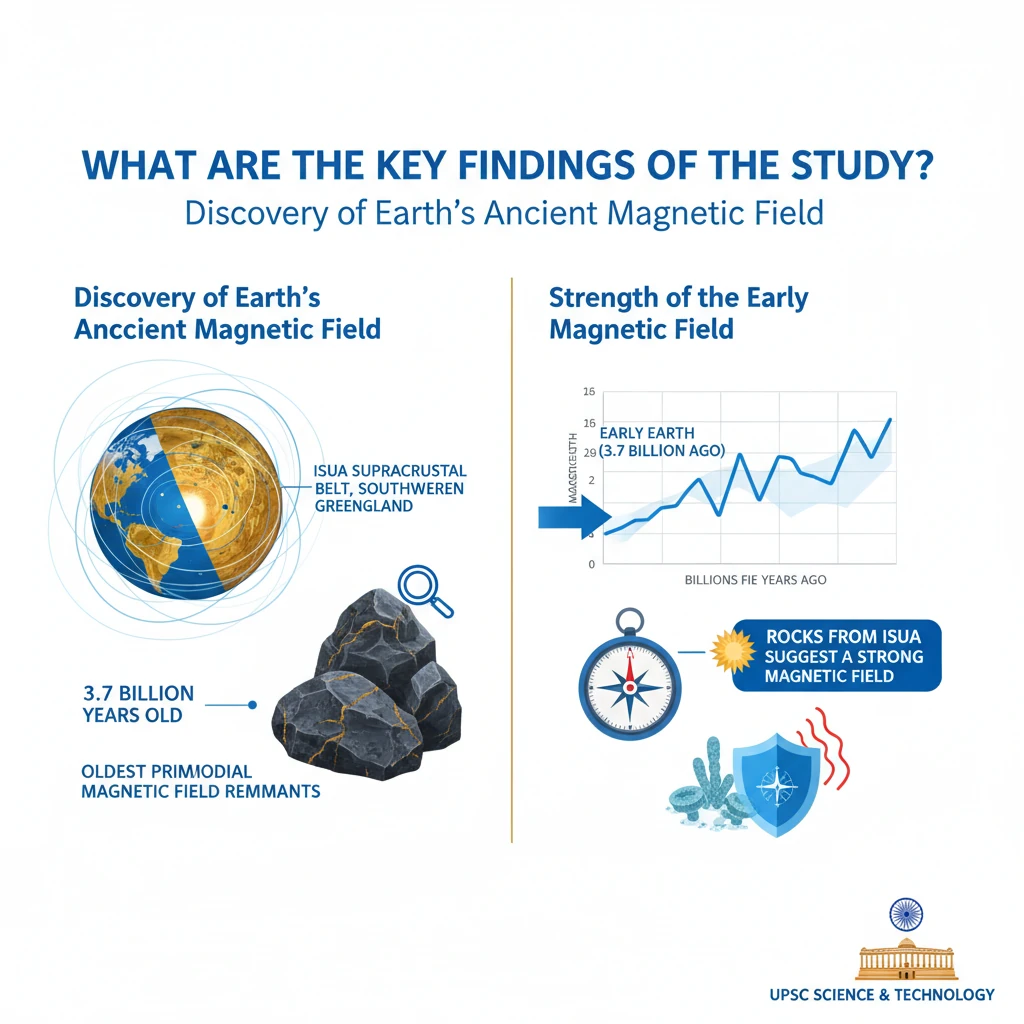
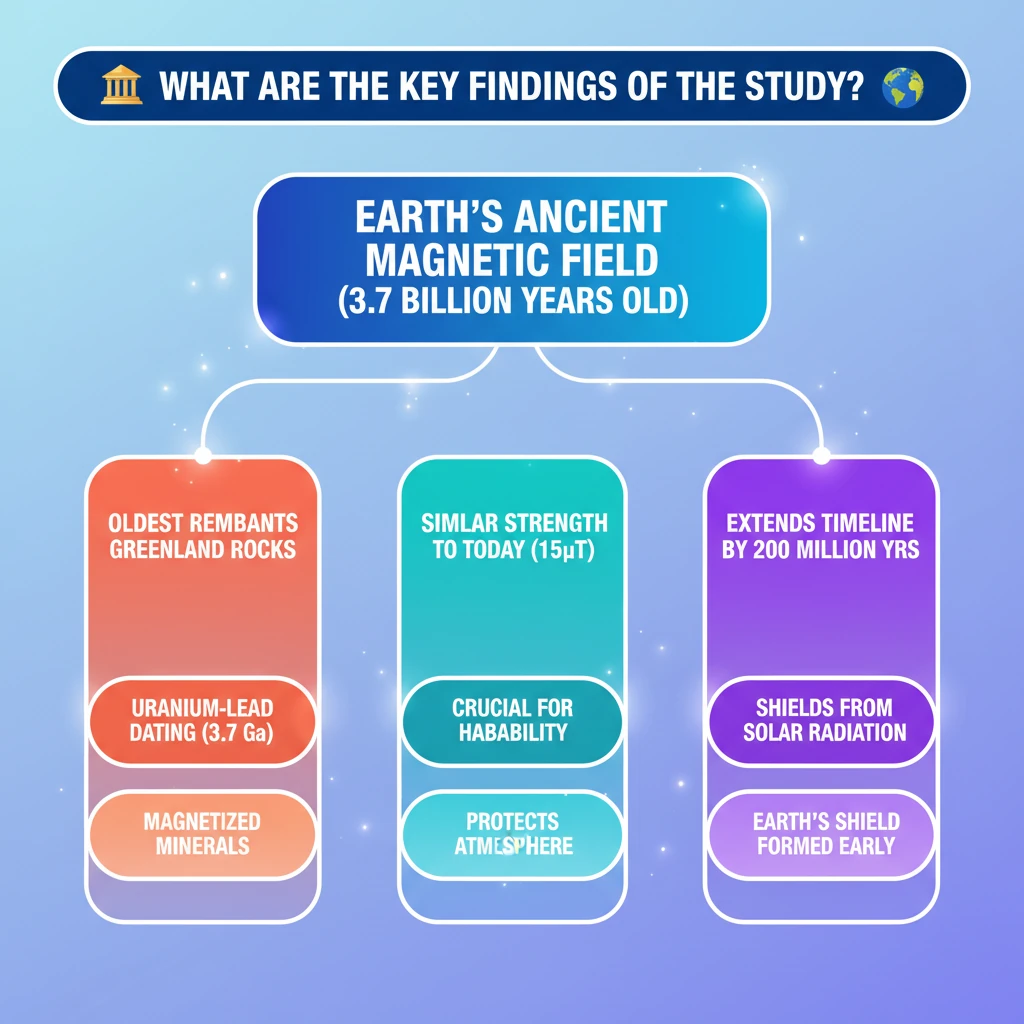
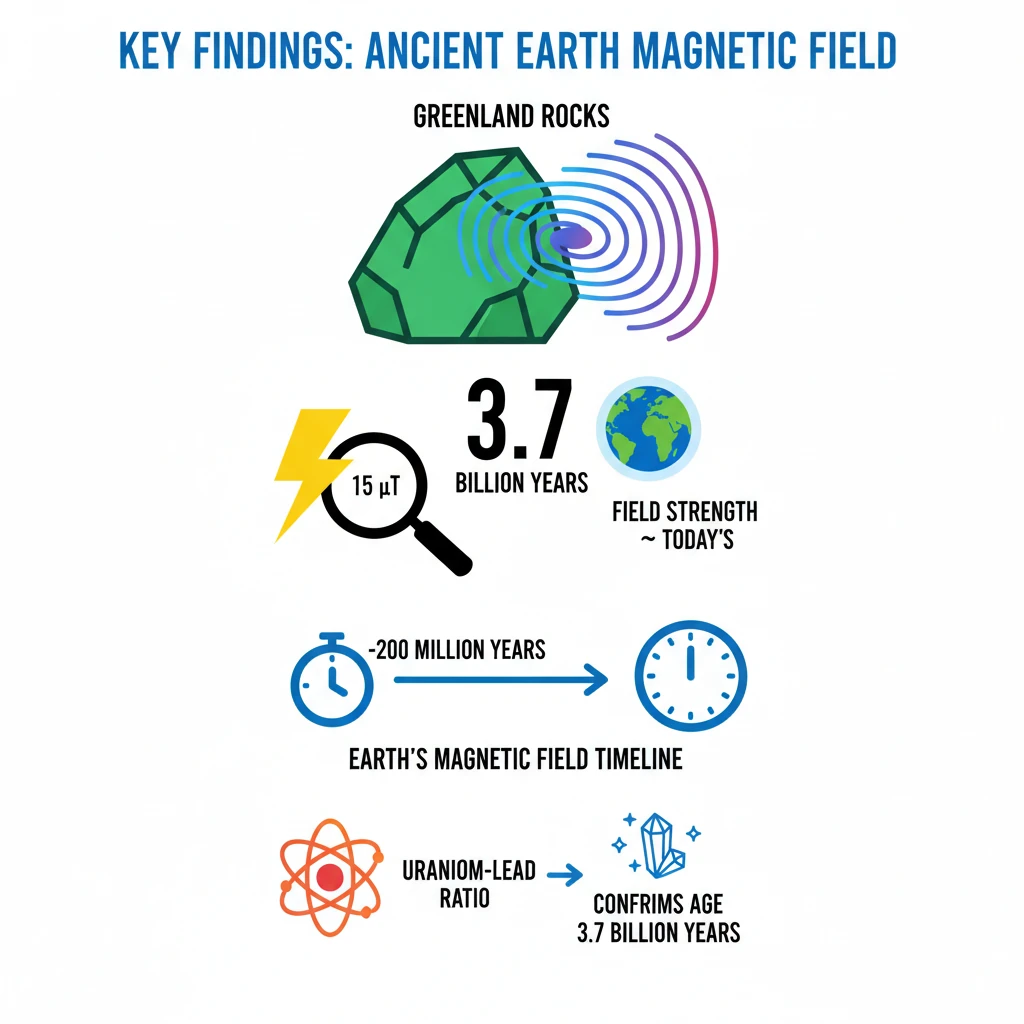
<h4>Discovery of Earth's Ancient Magnetic Field</h4><p>Scientists have made a significant discovery regarding Earth's early history. They found ancient rocks in the <strong>Isua Supracrustal Belt</strong>, located in <strong>Southwestern Greenland</strong>.</p><p>These geological formations date back approximately <strong>3.7 billion years</strong>. They contain the oldest known remnants of Earth’s primordial magnetic field.</p><h4>Strength of the Early Magnetic Field</h4><p>The rocks from the <strong>Isua Supracrustal Belt</strong> bear clear signatures of an ancient magnetic field. This field possessed a strength of at least <strong>15 microtesla</strong>.</p><div class='info-box'><p><strong>Comparison:</strong> The strength of this ancient field (<strong>15 microtesla</strong>) is notably similar in magnitude to Earth's magnetic field today, which is approximately <strong>30 microtesla</strong>.</p></div><h4>Extending the Magnetic Field's Timeline</h4><p>Previous scientific investigations had indicated the presence of a magnetic field on Earth dating back at least <strong>3.5 billion years</strong>. This new study significantly extends that timeline.</p><p>The latest findings push the confirmed existence of Earth's magnetic field back by an additional <strong>200 million years</strong>.</p><div class='info-box'><p><strong>Dating Method:</strong> Researchers utilized <strong>uranium-lead ratio analysis</strong> to determine the age of the magnetised minerals within the rocks. This method confirmed their age to be approximately <strong>3.7 billion years</strong>.</p></div><h4>Role in Earth's Habitability</h4><div class='key-point-box'><p>The presence of an early magnetic field is considered a <strong>critical factor</strong> in making Earth a habitable planet. It played a fundamental role in shaping our world's conditions.</p></div><p>This protective field likely enabled the planet to retain a <strong>life-sustaining atmosphere</strong>. It prevented the atmospheric gases from being stripped away by solar winds.</p><p>Furthermore, the magnetic field acted as a shield, protecting the planet's surface from harmful and <strong>damaging solar radiation</strong>, which is crucial for the emergence and sustenance of life.</p>
💡 Key Takeaways
- •Oldest magnetic field remnants found in Greenland rocks, dating back 3.7 billion years.
- •Early magnetic field strength was at least 15 microtesla, comparable to today's field.
- •Study extends the known timeline of Earth's magnetic field by 200 million years.
- •Uranium-lead ratio analysis confirmed the 3.7 billion-year age of magnetized minerals.
- •The early magnetic field was crucial for Earth's habitability, protecting the atmosphere and shielding from solar radiation.
🧠 Memory Techniques
95% Verified Content
📚 Reference Sources
•General scientific literature on Earth's magnetic field and paleomagnetism
•Research articles related to the Isua Supracrustal Belt and early Earth studies