Pradhan Mantri Matsya Kisan Samridhi Sah-Yojana - Polity And Governance | UPSC Learning
Topics
0 topics • 0 completed
🔍
No topics match your search
Pradhan Mantri Matsya Kisan Samridhi Sah-Yojana
Medium⏱️ 9 min read
polity and governance
📖 Introduction
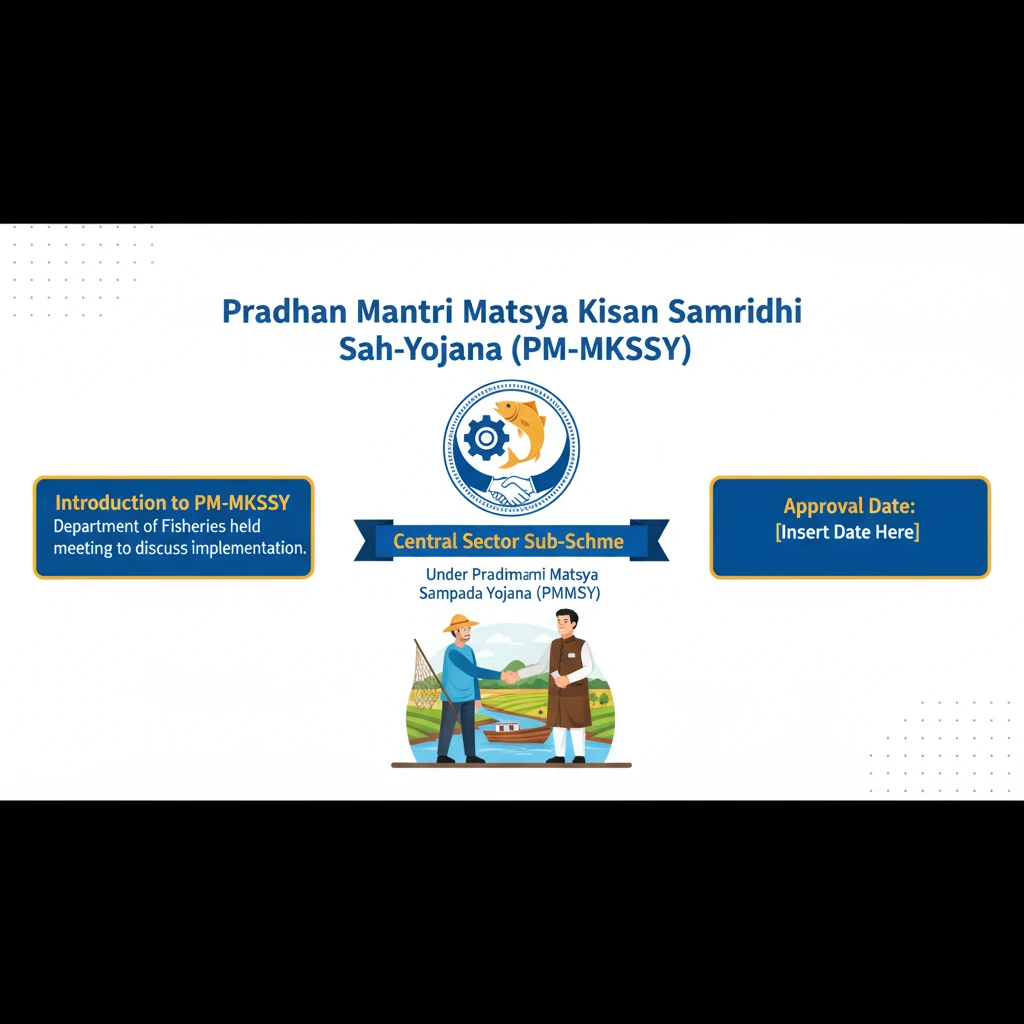
<h4>Introduction to Pradhan Mantri Matsya Kisan Samridhi Sah-Yojana (PM-MKSSY)</h4><p>The <strong>Department of Fisheries</strong> recently held a meeting to discuss the implementation of the <strong>Pradhan Mantri Matsya Kisan Samridhi Sah-Yojana (PM-MKSSY)</strong>.</p><p>This scheme is a crucial <strong>Central Sector sub-scheme</strong> operating under the broader umbrella of the <strong>Pradhan Mantri Matsya Sampada Yojana (PMMSY)</strong>.</p><div class='info-box'><p><strong>Approval Date:</strong> <strong>February 2024</strong></p><p><strong>Duration:</strong> Four years (<strong>FY 2023-24 to FY 2026-27</strong>)</p><p><strong>Nature:</strong> Central Sector Sub-scheme</p></div><h4>Key Objectives of PM-MKSSY</h4><p>One primary objective is the <strong>gradual formalization</strong> of the currently unorganized fisheries sector in India.</p><p>This formalization will be achieved through the creation of <strong>work-based digital identities</strong> for beneficiaries under the <strong>National Fisheries Digital Platform (NFDP)</strong>.</p><p>The scheme aims to facilitate <strong>greater access to institutional finance</strong> for individual fish farmers and various micro and small enterprises within the sector.</p><p>It also promotes the widespread adoption of <strong>insurance for aquaculture activities</strong>, which significantly helps in reducing financial risks for farmers.</p><p>Furthermore, <strong>traceability mechanisms</strong> are being integrated into supply chains to ensure better quality assurance for fishery products.</p><h4>Understanding Pradhan Mantri Matsya Sampada Yojana (PMMSY)</h4><p>The <strong>Pradhan Mantri Matsya Sampada Yojana (PMMSY)</strong> is the flagship scheme of the <strong>Department of Fisheries</strong>, designed to bring about a <strong>Blue Revolution</strong> in India.</p><p>It focuses on the <strong>sustainable and responsible development</strong> of India's vast fisheries sector, while simultaneously ensuring the holistic welfare of fishers.</p><div class='info-box'><p><strong>Implementation Period:</strong> 5 years (<strong>FY 2020-21 to FY 2024-25</strong>)</p><p><strong>Coverage:</strong> All <strong>States and Union Territories</strong> of India</p></div><h4>Overarching Objectives of PMMSY</h4><p><strong>PMMSY</strong> was launched to address critical gaps across the entire fisheries value chain, including issues in <strong>fish production, productivity, and quality</strong>.</p><p>A major focus is on improving <strong>post-harvest infrastructure</strong> and reducing significant post-harvest losses, which currently stand at <strong>20-25%</strong>.</p><p>The scheme also prioritizes the <strong>socio-economic welfare</strong> of fishers and fish farmers, aiming to double their incomes.</p><h4>Key Targets of PMMSY</h4><p><strong>Fish Production and Productivity:</strong></p><ul><li>Increase <strong>fish production</strong> to <strong>22 million metric tons</strong> by <strong>2024-25</strong> (from <strong>13.75 million metric tons</strong> in <strong>2018-19</strong>).</li><li>Enhance <strong>aquaculture productivity</strong> to <strong>5 tons per hectare</strong> (from a national average of <strong>3 tons</strong>).</li><li>Augment <strong>domestic fish consumption</strong> from 5 kg to <strong>12 kg per capita</strong>.</li></ul><p><strong>Economic Value Addition:</strong></p><ul><li>Increase the fisheries sector's contribution to <strong>Agriculture Gross Value Added (GVA)</strong> to about <strong>9%</strong> by <strong>2024-25</strong> (from <strong>7.28%</strong> in <strong>2018-19</strong>).</li><li>Double <strong>export earnings</strong> to <strong>Rs. 1,00,000 crores</strong> by <strong>2024-25</strong> (from <strong>Rs. 46,589 crores</strong> in <strong>2018-19</strong>).</li><li>Facilitate greater <strong>private investment</strong> and foster entrepreneurship in the sector.</li><li>Reduce <strong>post-harvest losses</strong> from <strong>20-25%</strong> to approximately <strong>10%</strong>.</li></ul><p><strong>Income and Employment Generation:</strong></p><ul><li>Generate <strong>55 lakh direct and indirect employment opportunities</strong> across the entire fisheries value chain.</li><li>Aim to <strong>double the incomes</strong> of both fishers and fish farmers.</li></ul><div class='exam-tip-box'><p><strong>UPSC Insight:</strong> Understanding the sub-scheme (<strong>PM-MKSSY</strong>) in the context of the parent scheme (<strong>PMMSY</strong>) is crucial. Note the specific objectives and targets of each, especially for <strong>Prelims</strong> factual questions and <strong>Mains</strong> answer structuring.</p></div>
💡 Key Takeaways
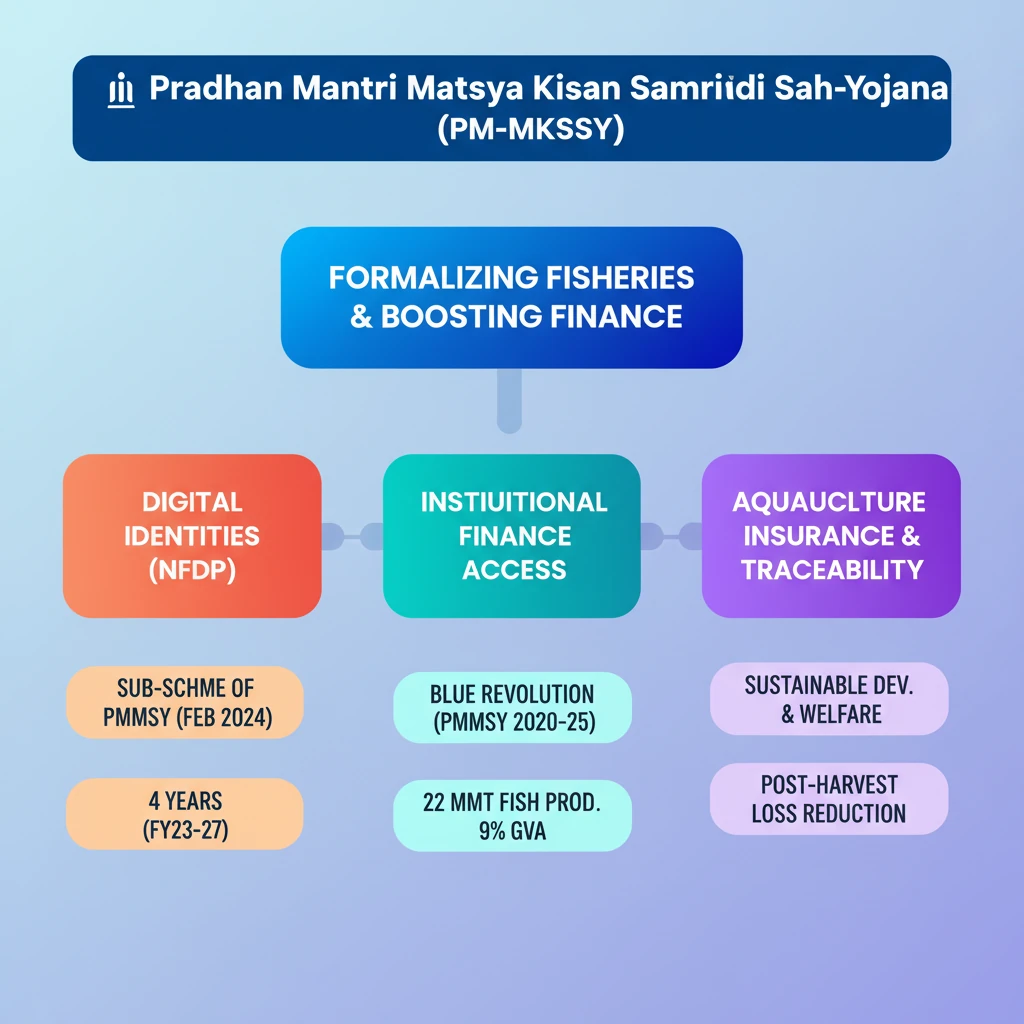
- •PM-MKSSY is a sub-scheme of PMMSY, approved in Feb 2024 for 4 years (FY 2023-24 to FY 2026-27).
- •Its main goals are formalizing the unorganized fisheries sector via digital identities (NFDP) and improving access to institutional finance.
- •It also promotes aquaculture insurance and traceability for quality assurance.
- •PMMSY (2020-25) aims for a 'Blue Revolution' with targets like 22 MMT fish production, 9% GVA contribution, and doubling export earnings.
- •Both schemes collectively focus on sustainable development, post-harvest loss reduction, and socio-economic welfare of fishers.
🧠 Memory Techniques
95% Verified Content
📚 Reference Sources
•Press Information Bureau (PIB) - Ministry of Fisheries, Animal Husbandry & Dairying notifications
•Official PMMSY and PM-MKSSY documents