Curative Petition - Polity And Governance | UPSC Learning
Topics
0 topics • 0 completed
🔍
No topics match your search
Curative Petition
Medium⏱️ 7 min read
polity and governance
📖 Introduction
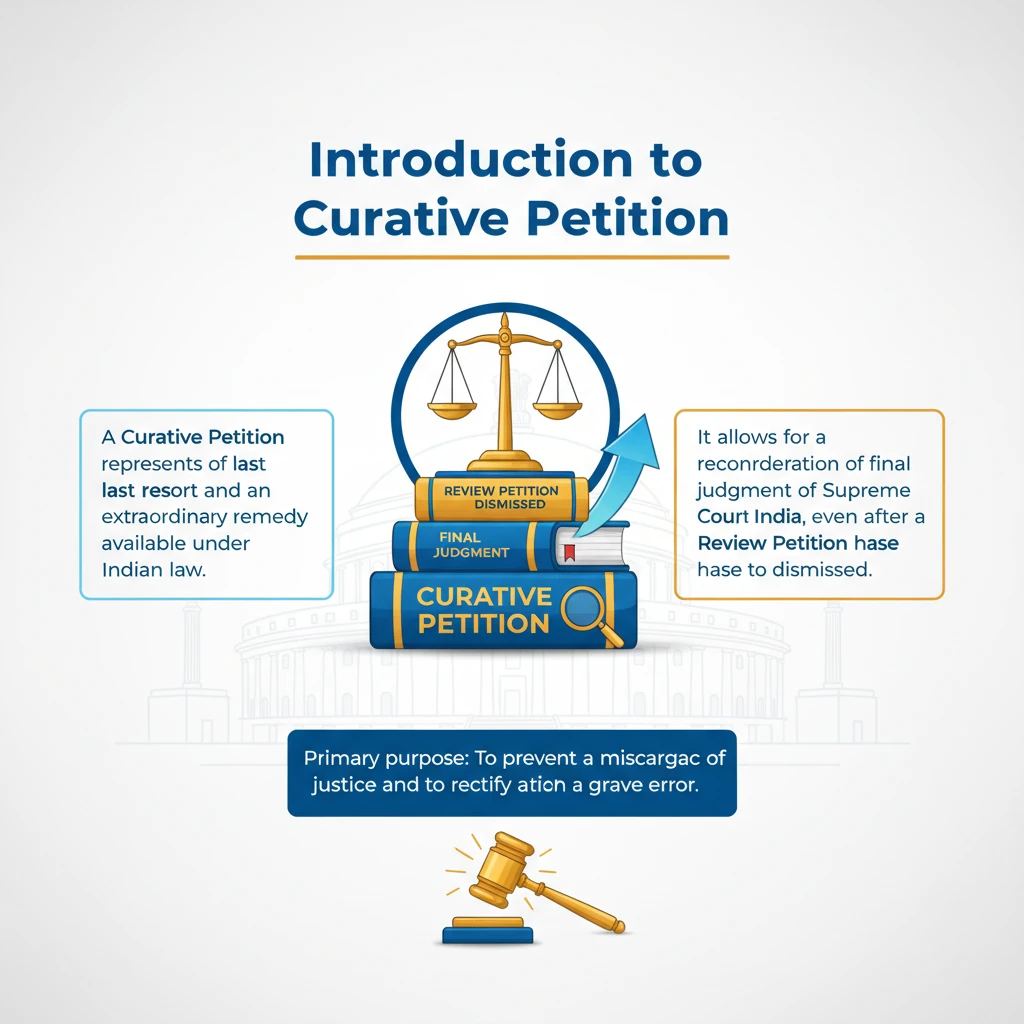
<h4>Introduction to Curative Petition</h4><p>A <strong>Curative Petition</strong> represents the <strong>last resort</strong> and an extraordinary legal remedy available under Indian law. It allows for a reconsideration of a final judgment of the <strong>Supreme Court of India</strong>, even after a <strong>Review Petition</strong> has been dismissed.</p><p>Its primary purpose is to prevent a <strong>miscarriage of justice</strong> and to rectify a grave error that might have occurred in the earlier judgments. This power underscores the Supreme Court's commitment to ensuring justice.</p><h4>Why in News?</h4><p>The <strong>Supreme Court of India</strong> recently exercised its <strong>extraordinary powers</strong> by admitting and acting upon a <strong>curative petition</strong>. This significant move led to the overturning of its own previous judgment from <strong>2021</strong>.</p><div class='exam-tip-box'><p><strong>UPSC Insight:</strong> The recent event highlights the practical application and the immense power vested in the Supreme Court through the <strong>Curative Petition</strong>. Understanding its scope and limitations is crucial for both Prelims and Mains, especially in <strong>GS Paper II (Polity)</strong>.</p></div><h4>Nature and Scope</h4><p>The <strong>Curative Petition</strong> is not a regular appeal. It is an exceptional remedy, invoked only in rare circumstances where a fundamental error or injustice is apparent, and all other remedies have been exhausted.</p><p>It emphasizes the principle that no person should suffer due to an error of the court, even if that error was made by the highest court in the land.</p><div class='key-point-box'><p><strong>Key Point:</strong> The concept of <strong>Curative Petition</strong> evolved to ensure the absolute finality of justice, not just the finality of litigation. It acts as a safeguard against judicial errors that might lead to a gross injustice.</p></div>
💡 Key Takeaways
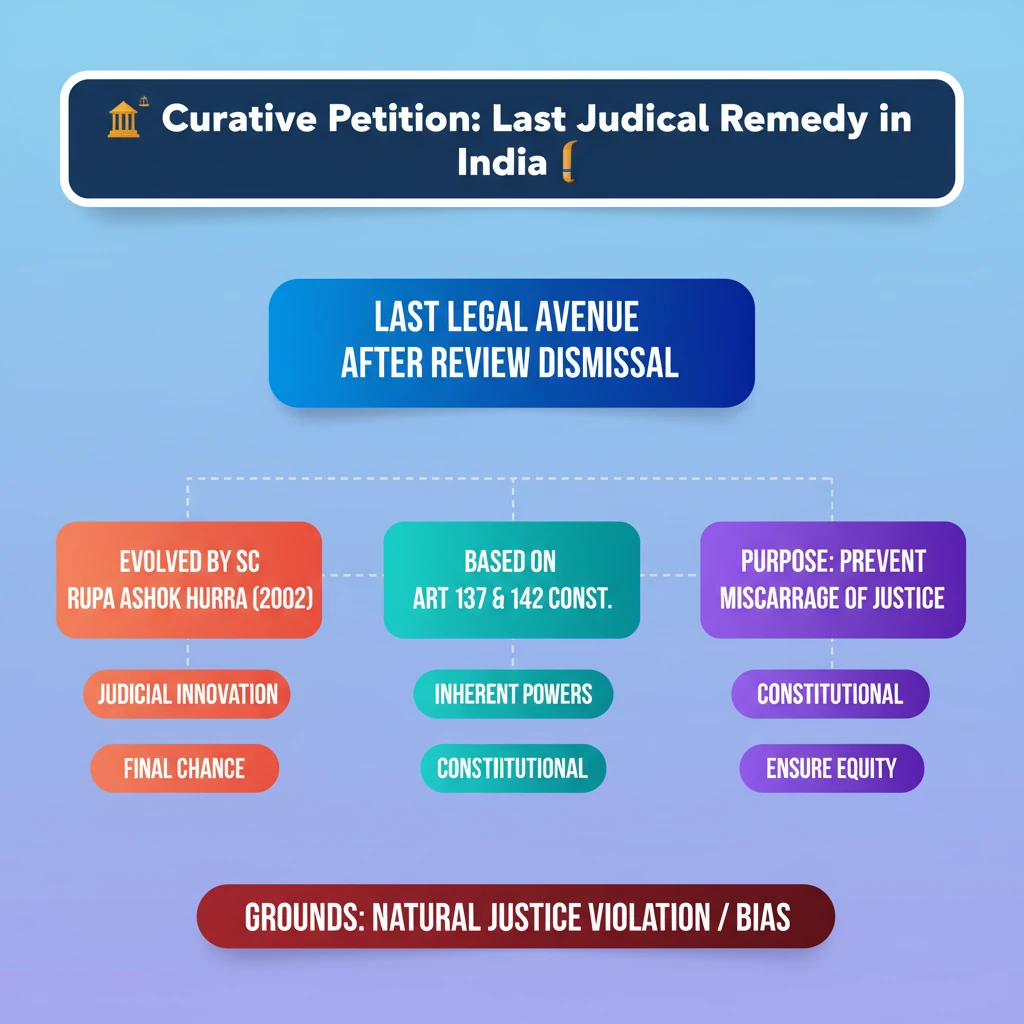
- •Curative Petition is the last judicial remedy in India, after a Review Petition is dismissed.
- •It was evolved by the Supreme Court in the 2002 Rupa Ashok Hurra case.
- •Based on inherent powers under Article 137 and Article 142 of the Constitution.
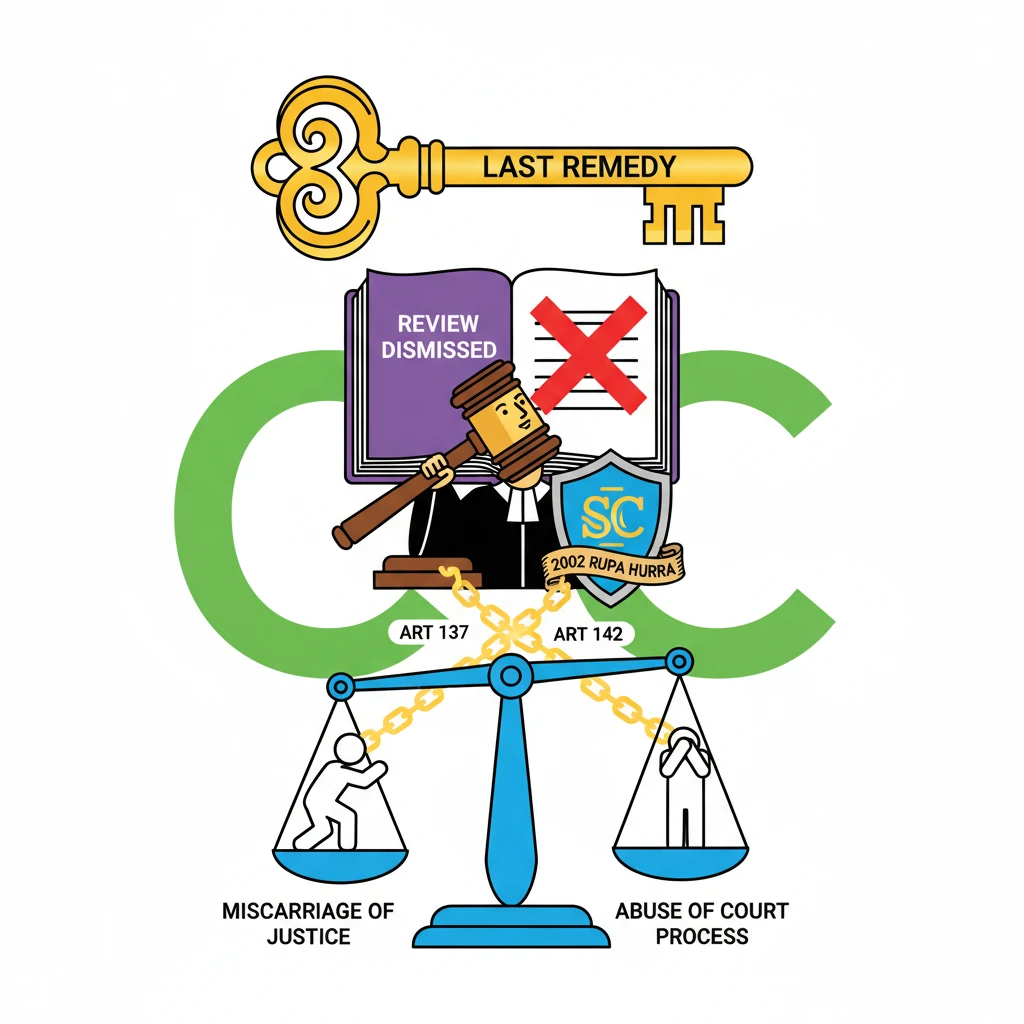
- •Purpose is to prevent miscarriage of justice and abuse of court process.
- •Grounds are extremely narrow: violation of natural justice or apprehension of bias.
- •Recent SC action (overturning 2021 judgment) highlights its extraordinary nature.
🧠 Memory Techniques
98% Verified Content
📚 Reference Sources
•The Constitution of India (Articles 137, 142)
•Supreme Court of India judgment: Rupa Ashok Hurra v. Ashok Hurra and Anr. (2002)
•Standard Indian Polity textbooks (e.g., M. Laxmikanth)