Centre Scrapped “No Detention Policy” - Polity And Governance | UPSC Learning
Topics
0 topics • 0 completed
🔍
No topics match your search
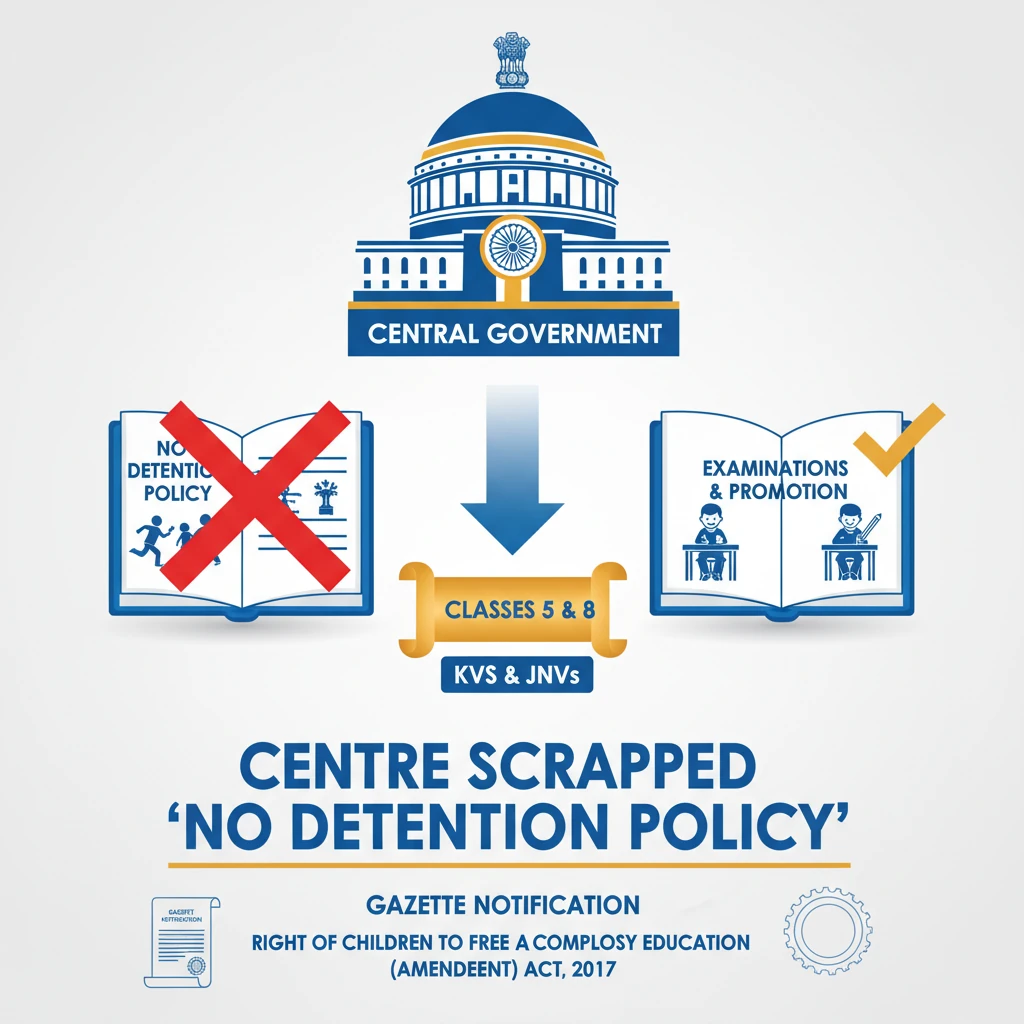
Centre Scrapped “No Detention Policy”
Medium⏱️ 7 min read
polity and governance
📖 Introduction
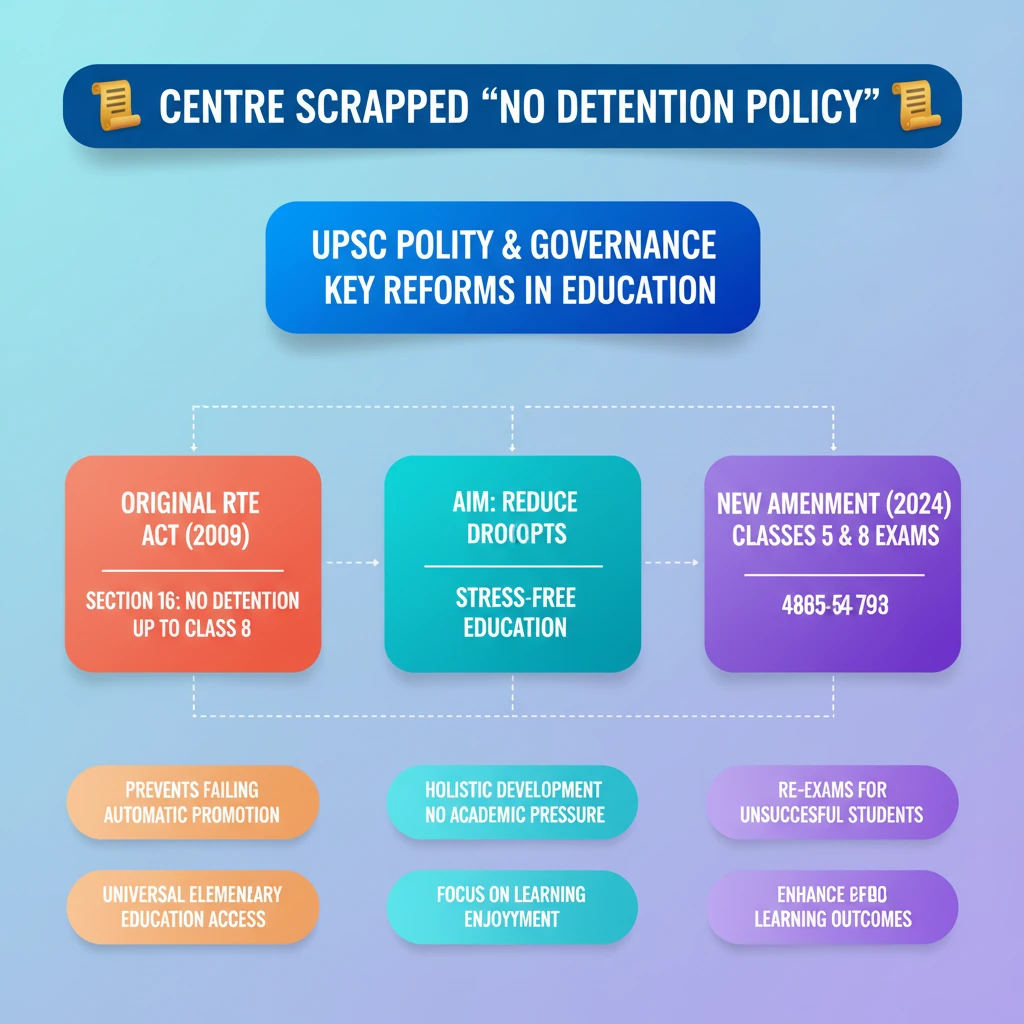
<h4>Introduction to the Scrapping of No Detention Policy</h4><p>The <strong>Central Government</strong> recently announced the scrapping of the <strong>“no-detention policy”</strong> for students in <strong>Classes 5 and 8</strong>. This significant change applies to schools under its direct governance, including <strong>Kendriya Vidyalayas</strong> and <strong>Jawahar Navodaya Vidyalayas</strong>.</p><p>This decision was formalized through a <strong>gazette notification</strong> titled <strong>“Right of Children to Free and Compulsory Education (Amendment) Rules, 2024”</strong>. The amendment empowers schools to detain students who do not meet the specified promotion criteria.</p><div class='info-box'><p><strong>Key Change:</strong> Schools can now hold back students in <strong>Classes 5 and 8</strong> if they fail examinations, marking a departure from the previous policy.</p></div><h4>Understanding the No Detention Policy (NDP)</h4><p>The <strong>No Detention Policy (NDP)</strong> was a crucial component introduced under <strong>Section 16</strong> of the <strong>Right to Education Act (RTE), 2009</strong>. Its primary aim was to ensure that children received elementary education without the fear of failure.</p><p>The policy sought to reduce dropout rates and promote a stress-free learning environment for students up to <strong>Class 8</strong>. It focused on continuous and comprehensive evaluation rather than annual exams.</p><div class='key-point-box'><p><strong>Core Objective of NDP:</strong> To ensure universal elementary education by preventing expulsion and retention, thereby fostering an inclusive learning atmosphere.</p></div><h4>Provisions of Section 16 of the RTE Act</h4><p><strong>Section 16</strong> of the <strong>Right to Education Act (RTE)</strong> originally stipulated two fundamental provisions concerning elementary education:</p><ul><li><strong>No Expulsion:</strong> No child receiving <strong>elementary education</strong> shall be expelled from school for any reason.</li><li><strong>No Retention:</strong> No child shall be retained or held back in any class up to <strong>Class 8</strong>, regardless of their academic performance.</li></ul><p>These provisions collectively formed the basis of the <strong>no-detention policy</strong>, aiming to guarantee every child's right to complete elementary schooling.</p><div class='exam-tip-box'><p><strong>UPSC Insight:</strong> Questions on <strong>education policy reforms</strong>, <strong>child rights</strong>, and the <strong>RTE Act</strong> are common in <strong>GS Paper II (Polity & Governance)</strong> and <strong>GS Paper I (Social Issues)</strong>. Understanding the rationale behind both the original policy and its scrapping is vital.</p></div>
💡 Key Takeaways
- •Centre scrapped 'No Detention Policy' for Classes 5 and 8 in central schools via 'Right of Children to Free and Compulsory Education (Amendment) Rules, 2024'.
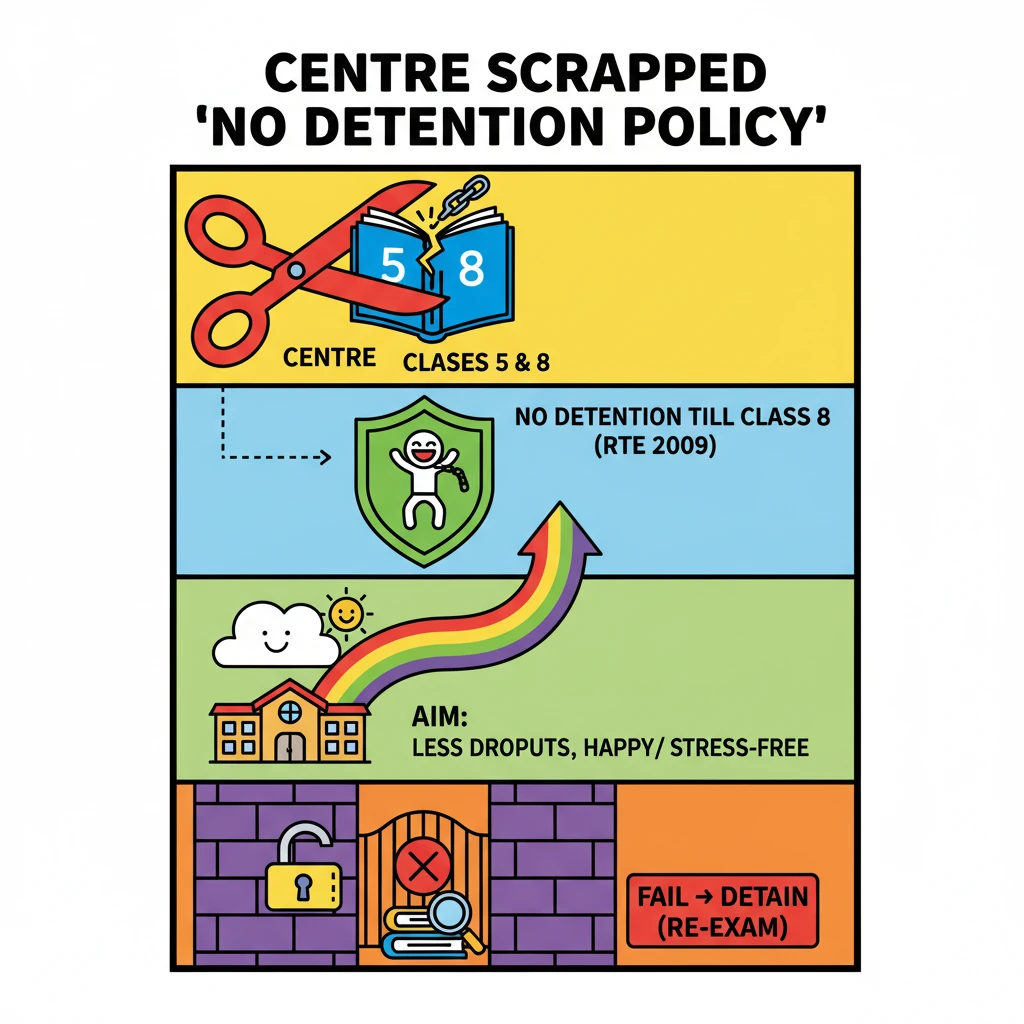
- •The original policy, under Section 16 of the RTE Act (2009), prohibited detaining or expelling students up to Class 8.
- •NDP aimed to reduce dropout rates and provide stress-free elementary education.
- •Scrapping allows schools to detain students who fail to meet promotion criteria after re-examination.
- •The move seeks to address concerns about declining learning outcomes and enhance accountability.
🧠 Memory Techniques
98% Verified Content
📚 Reference Sources
•Right of Children to Free and Compulsory Education Act, 2009
•Right of Children to Free and Compulsory Education (Amendment) Rules, 2024 (Gazette Notification)