DPDP Act 2023 and the Issue of Personal Consent - Polity And Governance | UPSC Learning
Topics
0 topics • 0 completed
🔍
No topics match your search
DPDP Act 2023 and the Issue of Personal Consent
Medium⏱️ 8 min read
polity and governance
📖 Introduction
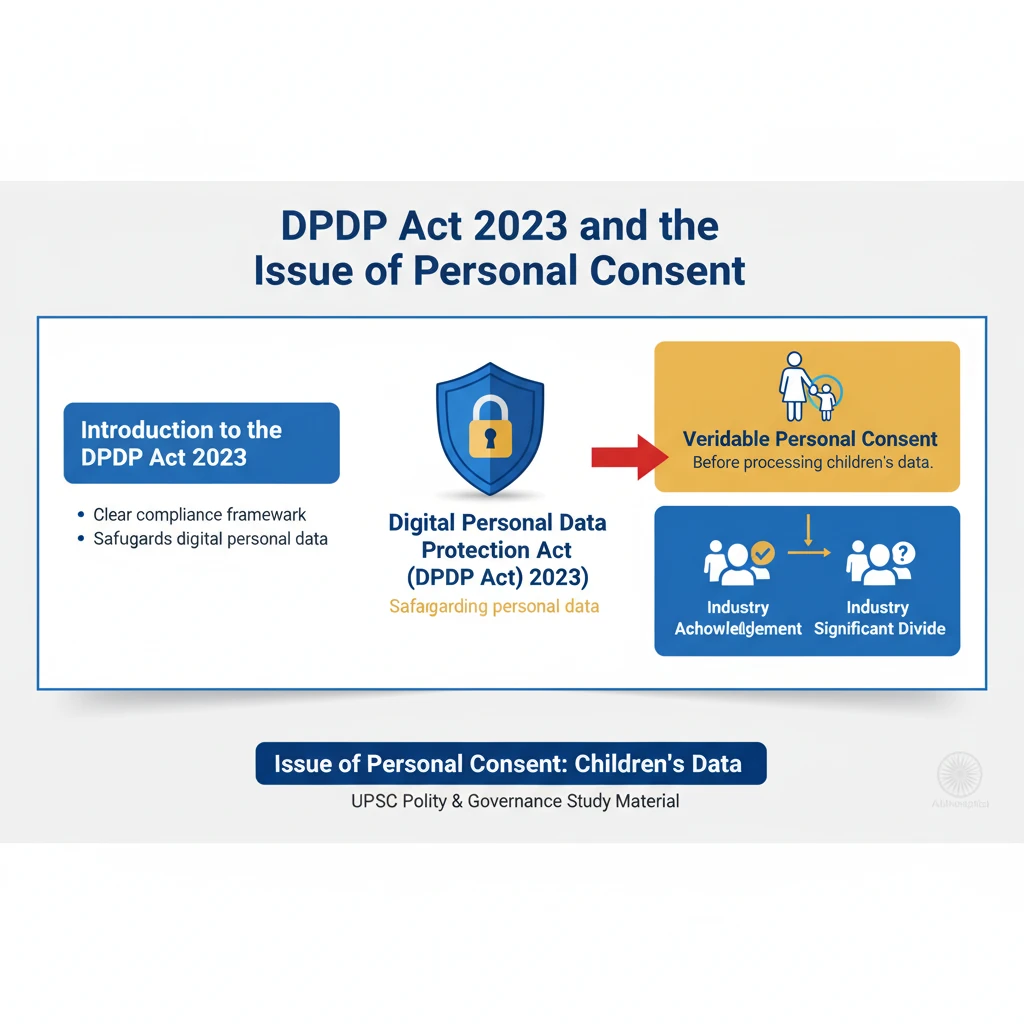
<h4>Introduction to the DPDP Act 2023</h4><p>The <strong>Digital Personal Data Protection Act (DPDP Act) 2023</strong> has been widely acknowledged by the industry for its clear compliance framework. This legislation aims to safeguard the personal data of individuals in the digital realm.</p><p>However, a specific provision concerning the requirement for <strong>verifiable personal consent</strong> before processing <strong>children's data</strong> has created a significant divide. This has led to discussions between industry stakeholders and the government.</p><h4>Right to Data Protection</h4><p>The DPDP Act 2023 significantly empowers individuals, known as <strong>Data Principals</strong>, with robust rights over their personal data. These rights ensure greater control and transparency regarding how their information is handled.</p><div class='key-point-box'><p>Key rights include the ability to <strong>access</strong>, <strong>correct</strong>, and demand the <strong>erasure</strong> of their personal data. This provides citizens with substantial authority over their digital footprint.</p></div><h4>Data Processing and Consent</h4><p>A cornerstone of the Act is the mandatory requirement for <strong>explicit consent</strong> from an individual before any personal data can be processed. This ensures that data collection is always consensual and transparent.</p><div class='info-box'><p>Organizations, referred to as <strong>Data Fiduciaries</strong>, must provide <strong>clear and specific consent forms</strong>. They are legally obligated to obtain this consent unequivocally before commencing any data collection activities.</p></div><h4>Data Localisation</h4><p>The Act includes provisions for <strong>data localisation</strong>, which stipulates that certain categories of <strong>sensitive personal data</strong> must be stored and processed exclusively within India's geographical boundaries.</p><div class='key-point-box'><p>This measure is designed to bolster <strong>data security</strong> and streamline the enforcement of data protection laws. It aims to prevent data from being subject to foreign jurisdictions without adequate safeguards.</p></div><h4>Regulatory Authority: Data Protection Board of India (DPBI)</h4><p>To ensure effective oversight and grievance redressal, the DPDP Act 2023 establishes a dedicated regulatory body: the <strong>Data Protection Board of India (DPBI)</strong>.</p><div class='info-box'><p>The <strong>DPBI</strong> is tasked with monitoring compliance, adjudicating disputes, and imposing appropriate penalties for any violations of the Act's provisions. It acts as the primary enforcement agency.</p></div><h4>Data Breach Notification</h4><p>A critical aspect of the Act is the mandate for organizations to promptly notify both affected individuals and the <strong>Data Protection Board of India (DPBI)</strong> in the event of any <strong>data breaches</strong>.</p><div class='key-point-box'><p>This provision promotes transparency and facilitates swift action to mitigate potential harm arising from data leaks or compromises of personal information.</p></div><h4>Fines and Penalties</h4><p>The DPDP Act 2023 prescribes stringent <strong>fines and penalties</strong> for non-compliance. These penalties are designed to be substantial, serving as a strong deterrent against violations.</p><div class='exam-tip-box'><p>UPSC candidates should note that the emphasis on significant penalties underscores the government's commitment to robust data protection. This can be a key point in answers related to <strong>governance and accountability</strong> (<strong>GS-II</strong>).</p></div>
💡 Key Takeaways
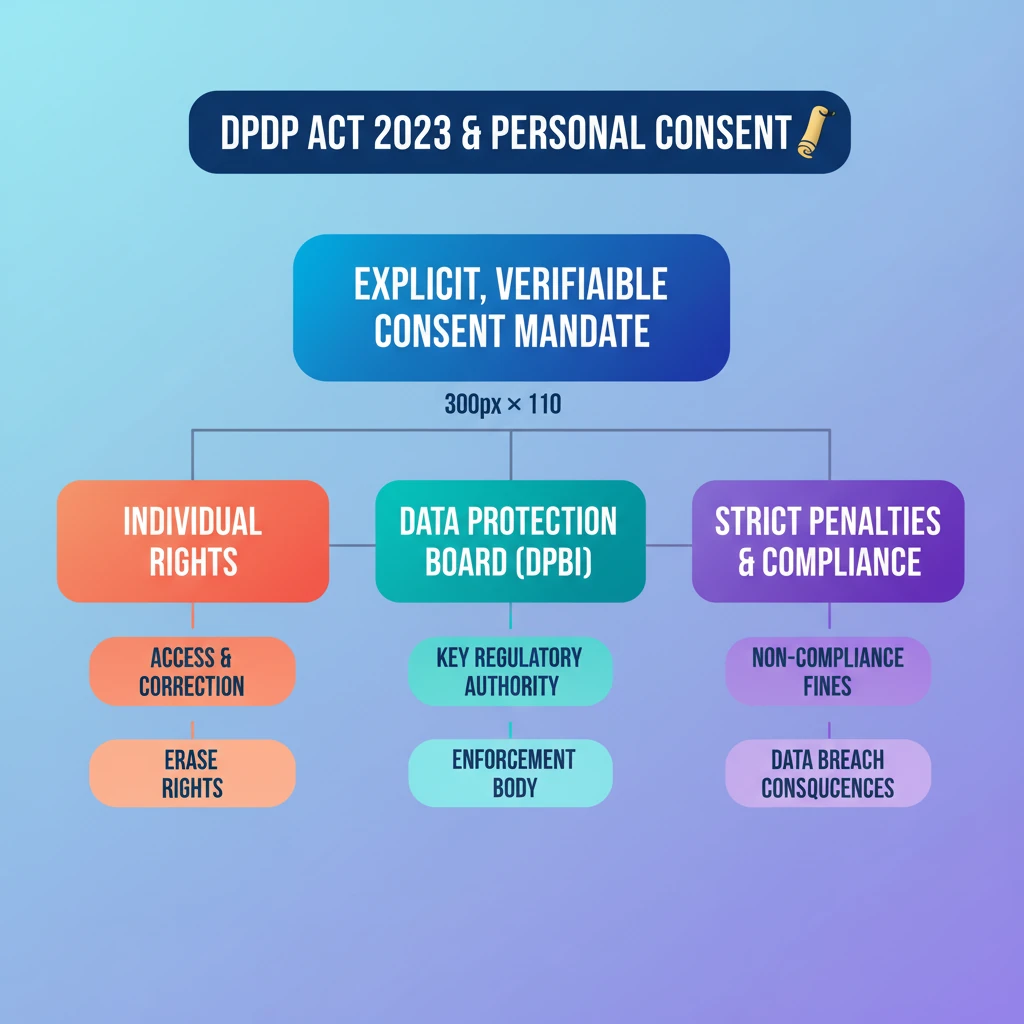
- •DPDP Act 2023 mandates explicit, verifiable consent for personal data processing.
- •It grants individuals rights to access, correct, and erase their data.
- •Data localisation is required for certain sensitive personal data.
- •The Data Protection Board of India (DPBI) is the key regulatory authority.
- •Strict penalties are imposed for non-compliance and data breaches.
- •The verifiable consent for children's data is a significant point of contention.
🧠 Memory Techniques

95% Verified Content
📚 Reference Sources
•The Digital Personal Data Protection Act, 2023 (Official Gazette)
•PRS Legislative Research - Bill Summaries