What is the Information Technology Amendment Rules 2023? - Polity And Governance | UPSC Learning
Topics
0 topics • 0 completed
🔍
No topics match your search
What is the Information Technology Amendment Rules 2023?
Medium⏱️ 7 min read
polity and governance
📖 Introduction
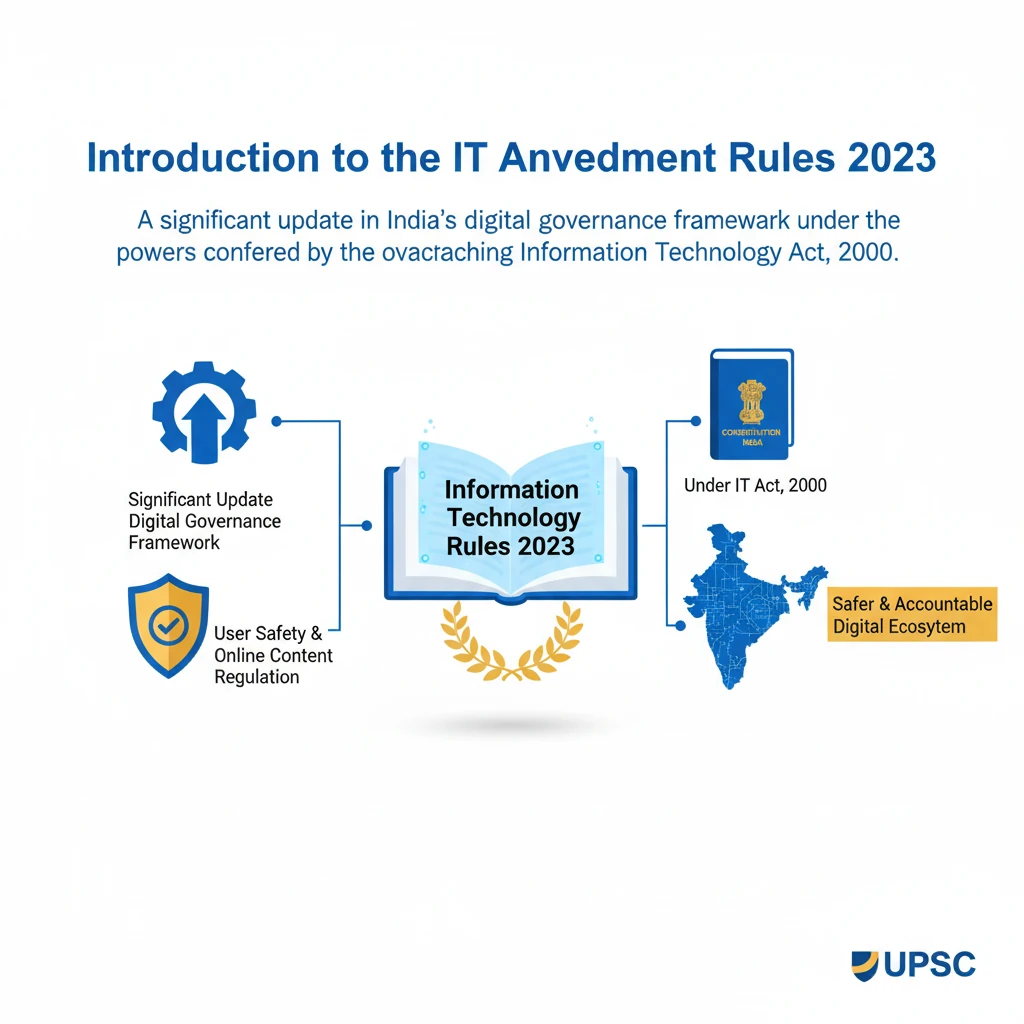
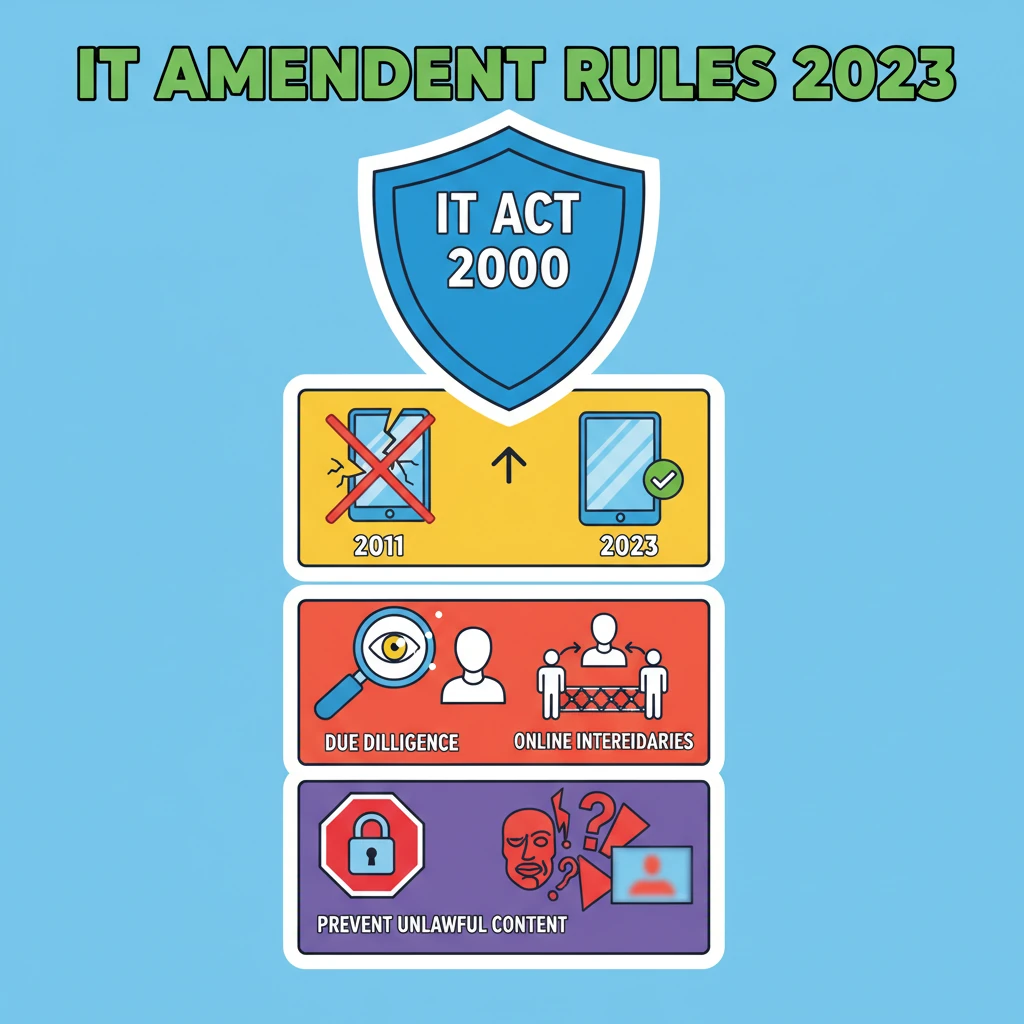
<h4>Introduction to the IT Amendment Rules 2023</h4><p>The <strong>Information Technology Amendment Rules 2023</strong> represent a significant update in India's digital governance framework. These rules were established under the powers conferred by the overarching <strong>Information Technology Act, 2000</strong>.</p><p>They aim to regulate online content and enhance user safety across various digital platforms. The amendments reflect the government's commitment to creating a safer and more accountable internet ecosystem.</p><div class='info-box'><p><strong>Key Fact:</strong> The <strong>IT Amendment Rules 2023</strong> superseded the earlier <strong>Information Technology (Intermediaries Guidelines) Rules, 2011</strong>, bringing in updated provisions for digital intermediaries.</p></div><h4>Due Diligence by Intermediaries</h4><p>A central tenet of the new rules is the enhanced requirement for <strong>due diligence</strong> by online intermediaries. This mandates platforms to be more proactive in managing content and user conduct.</p><p>Intermediaries are now obligated to prominently display their <strong>rules, regulations, privacy policies</strong>, and <strong>user agreements</strong> on their platforms. This ensures transparency and informs users of their responsibilities and rights.</p><div class='key-point-box'><p><strong>Core Obligation:</strong> Intermediaries must take active steps to prevent the publishing of <strong>unlawful content</strong>. This includes material deemed obscene, defamatory, or misleading, thereby fostering a more responsible online environment.</p></div><h4>Grievance Redressal Mechanism</h4><p>To address user concerns effectively, the rules mandate the establishment of robust <strong>Grievance Redressal Mechanisms</strong>. This provides a structured channel for users to report issues and seek resolutions.</p><p>Intermediaries are required to set up accessible systems to handle user complaints promptly and efficiently. This ensures accountability and builds trust between users and digital platforms.</p><div class='exam-tip-box'><p><strong>UPSC Insight:</strong> Understanding the evolution from <strong>IT Act 2000</strong> to <strong>IT Rules 2011</strong> and now <strong>IT Amendment Rules 2023</strong> is crucial for questions on digital governance and online content regulation in <strong>GS-II Polity and Governance</strong>.</p></div>

💡 Key Takeaways
- •IT Amendment Rules 2023 replaced IT (Intermediaries Guidelines) Rules, 2011.
- •Established under the Information Technology Act, 2000.
- •Mandates enhanced due diligence by online intermediaries.
- •Requires intermediaries to prevent unlawful content (obscene, defamatory, misleading).
- •Stipulates establishment of robust Grievance Redressal Mechanisms by platforms.
🧠 Memory Techniques
98% Verified Content
📚 Reference Sources
•The Information Technology Act, 2000 (India)
•The Information Technology (Intermediaries Guidelines) Rules, 2011 (India)
•The Information Technology (Intermediaries Guidelines and Digital Media Ethics Code) Amendment Rules, 2023 (India)