APAAR: One Nation One Student ID Card - Polity And Governance | UPSC Learning
Topics
0 topics • 0 completed
🔍
No topics match your search

APAAR: One Nation One Student ID Card
Medium⏱️ 8 min read
polity and governance
📖 Introduction
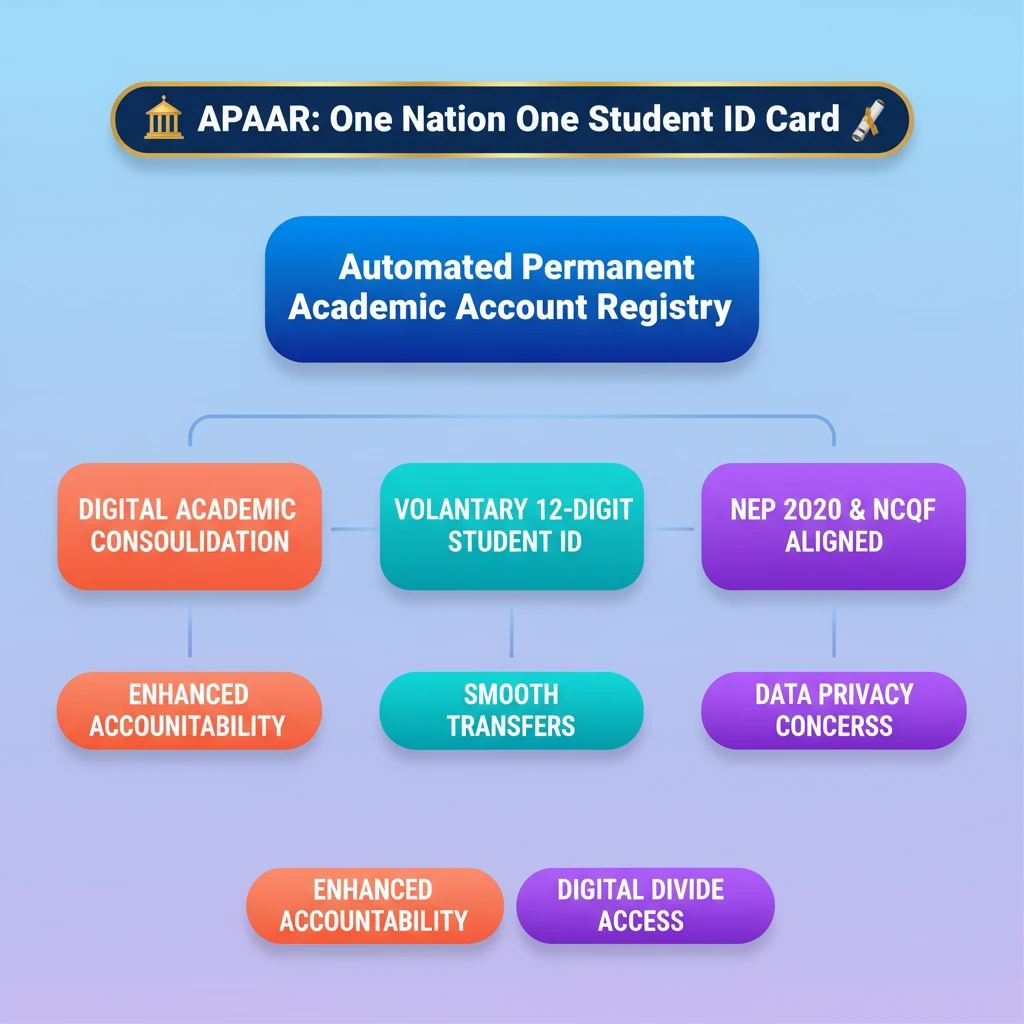
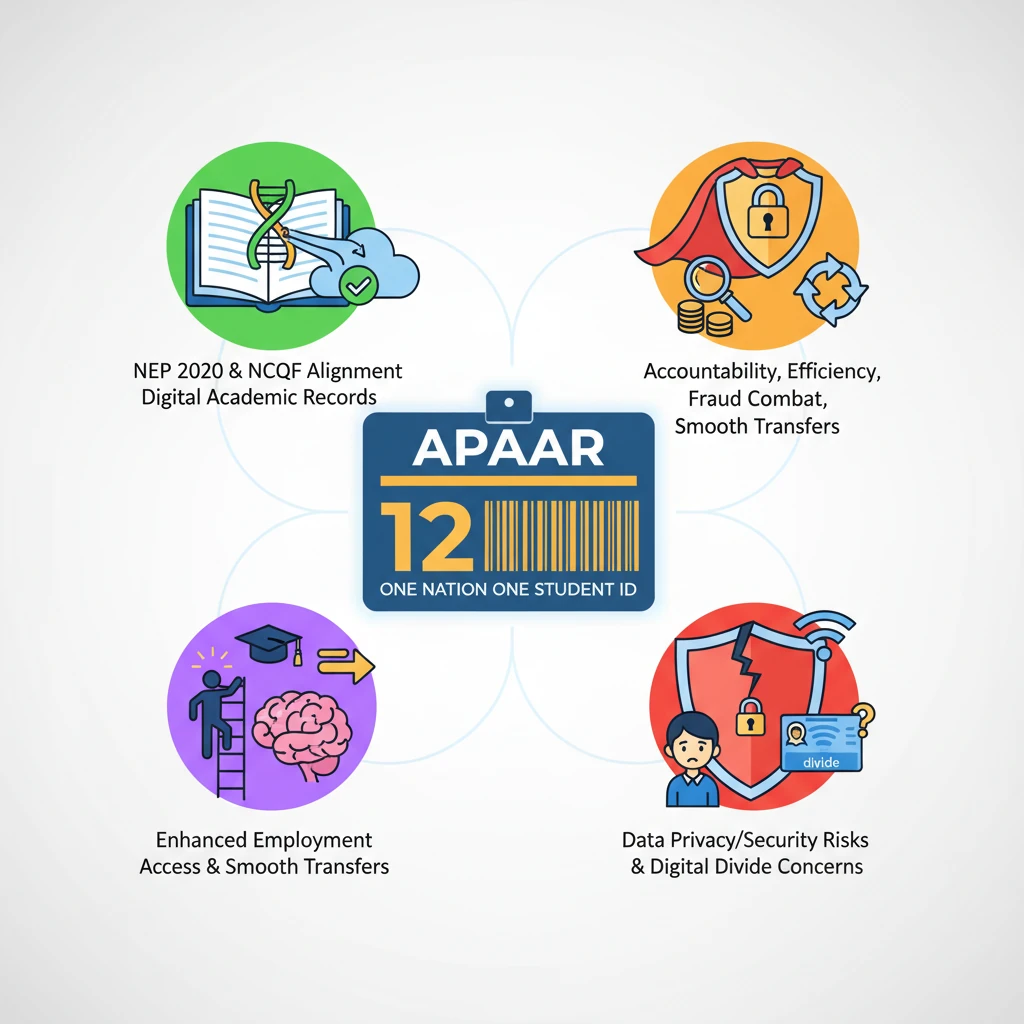
<h4>Introduction: The APAAR Initiative</h4><p>The <strong>National Conference on APAAR: One Nation One Student ID Card</strong> was recently convened in <strong>New Delhi</strong>, bringing this significant educational reform into focus.</p><div class='key-point-box'><p>This initiative aims to create a unified digital identity for students across India, aligning with the broader goals of the <strong>National Education Policy (NEP) 2020</strong>.</p></div><h4>What is APAAR?</h4><p><strong>APAAR</strong> stands for <strong>Automated Permanent Academic Account Registry</strong>. It is a specialized identification system designed for every student in India, from early childhood.</p><div class='info-box'><p>The APAAR ID is a <strong>unique and permanent 12-digit identification number</strong> assigned to each student.</p></div><p>It is conceptualized under the framework of the <strong>National Education Policy (NEP) 2020</strong> and the <strong>National Credit and Qualifications Framework (NCQF)</strong>.</p><p>Crucially, registration for an <strong>APAAR ID</strong> is entirely <strong>voluntary</strong>, not mandatory, ensuring student autonomy.</p><h4>Core Objectives of APAAR</h4><p>The primary objective of APAAR is to <strong>streamline and enhance the academic experience</strong> for students nationwide.</p><p>By consolidating all academic records onto a <strong>single, accessible digital platform</strong>, APAAR aims to simplify educational processes.</p><div class='key-point-box'><p>It is envisioned as a vital tool for tracking the educational progress of over <strong>260 million students</strong> in India, serving as an aspirational and globally recognized academic document.</p></div><h4>Key Benefits of APAAR</h4><ul><li><strong>Accountability & Transparency:</strong> APAAR tracks student progress, ensuring greater accountability and transparency in the education system.</li><li><strong>Efficiency & Fraud Combat:</strong> It enhances administrative efficiency, helping to combat academic fraud and ensure genuine record-keeping.</li><li><strong>Holistic Development:</strong> The system includes records of <strong>co-curricular achievements</strong>, promoting a holistic view of student development.</li><li><strong>Smooth Transfers:</strong> APAAR facilitates a seamless transfer process for students moving between institutions or states.</li><li><strong>Data-Driven Decisions:</strong> It provides valuable data for educational institutions to make informed, data-driven decisions.</li><li><strong>Employment Access:</strong> Students can easily share their verified academic records, potentially enhancing access to employment opportunities.</li></ul><h4>Associated Concerns and Challenges</h4><p>Despite its benefits, the APAAR initiative raises several important concerns that require careful consideration and robust solutions.</p><div class='exam-tip-box'><p>UPSC often asks about the pros and cons of digital initiatives. Be prepared to discuss both sides comprehensively.</p></div><ul><li><strong>Privacy Concerns:</strong> Consolidating sensitive academic records into a centralized database raises significant questions about the <strong>privacy and security of student data</strong>.</li><li><strong>Data Security Risks:</strong> The widespread adoption of <strong>APAAR IDs</strong> could increase the risk of <strong>identity theft</strong> or fraudulent activities, necessitating robust cybersecurity measures.</li><li><strong>Digital Divide:</strong> There is a risk that students from <strong>marginalized or remote communities</strong> may lack equal access to the necessary digital infrastructure, potentially exacerbating existing educational disparities.</li></ul>
💡 Key Takeaways
- •APAAR is a voluntary, 12-digit Automated Permanent Academic Account Registry for all Indian students.
- •It aligns with NEP 2020 and NCQF, aiming to consolidate academic records digitally.
- •Benefits include enhanced accountability, efficiency, fraud combat, smooth transfers, and improved employment access.
- •Key concerns are student data privacy, security risks, and the potential widening of the digital divide.
- •Successful implementation requires robust security, digital literacy, and inclusive access strategies.
🧠 Memory Techniques
95% Verified Content
📚 Reference Sources
•National Education Policy 2020 (NEP 2020) document
•National Credit and Qualifications Framework (NCQF) document