Simultaneous Elections: 'One Nation, One Election' Plan & Implications - Polity And Governance | UPSC Learning
Topics
0 topics • 0 completed
🔍
No topics match your search
Simultaneous Elections: 'One Nation, One Election' Plan & Implications
Medium⏱️ 8 min read
polity and governance
📖 Introduction
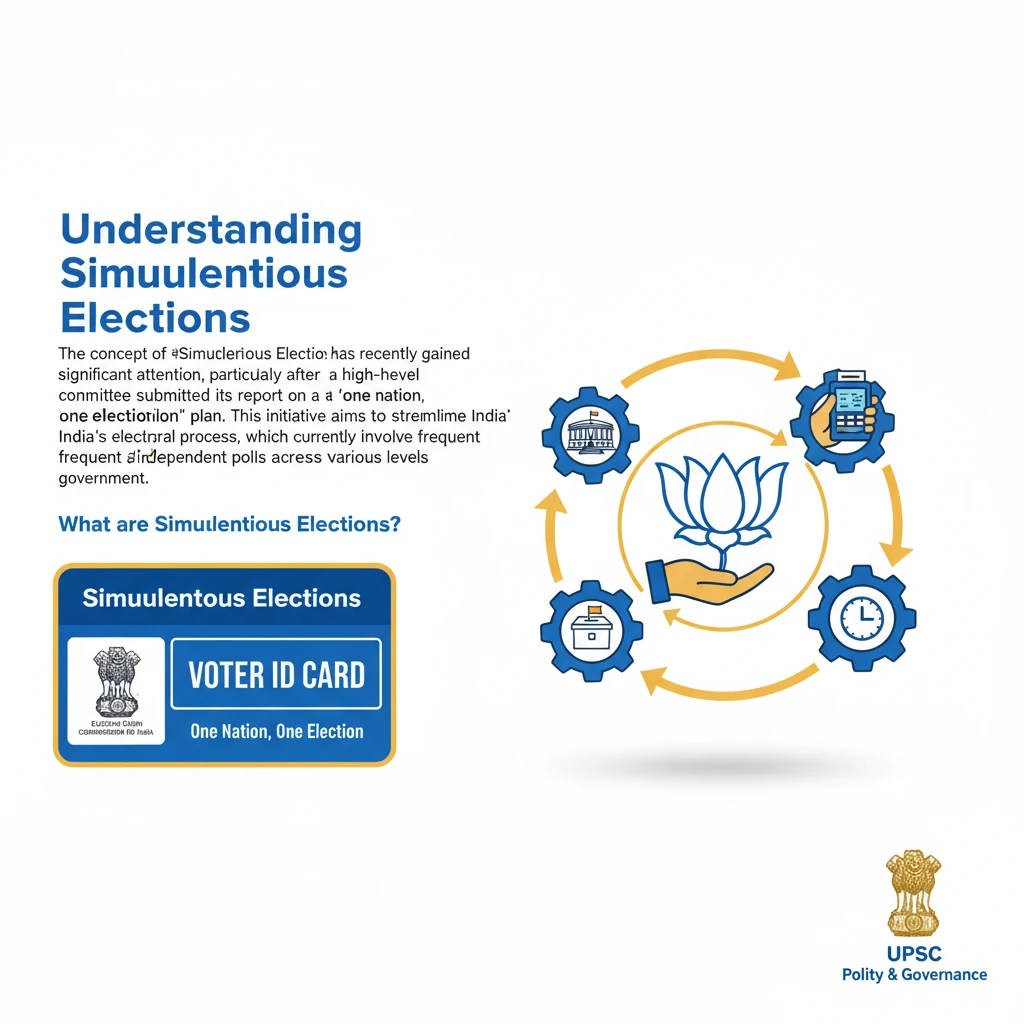
<h4>Understanding Simultaneous Elections</h4><p>The concept of <strong>Simultaneous Elections</strong> has recently gained significant attention, particularly after a high-level committee submitted its report on the <strong>'one nation, one election'</strong> plan.</p><p>This initiative aims to streamline India's electoral process, which currently involves frequent and independent polls across various levels of government.</p><h4>What are Simultaneous Elections?</h4><div class='info-box'><p><strong>Definition:</strong> <strong>Simultaneous Elections</strong> refer to the practice of holding elections for the <strong>House of the People (Lok Sabha)</strong>, all <strong>State Legislative Assemblies</strong>, and <strong>local bodies</strong> (Municipalities and Panchayats) together.</p><p>Essentially, a voter would cast their vote for electing representatives across all three tiers of government on a single day or within a synchronized phased manner.</p></div><p>Currently, these elections are conducted independently, following schedules determined by the terms of each individual elected body. This leads to a continuous cycle of elections throughout the year.</p><div class='key-point-box'><p>It is important to note that <strong>Simultaneous Elections</strong> do not necessarily mean that voting for Lok Sabha and State Assemblies must occur nationwide on a single calendar day. The process can be conducted in a <strong>phase-wise manner</strong>, similar to how general elections are often spread out.</p></div><h4>The 'One Nation, One Election' Initiative</h4><p>The idea of <strong>Simultaneous Elections</strong> is popularly known as <strong>'One Nation, One Election'</strong>. It represents a significant electoral reform proposal aimed at addressing various challenges posed by the current fragmented election cycle.</p><h4>Union Cabinet Approval and Kovind Committee Report</h4><p>Recently, the <strong>Union Cabinet</strong> approved a proposal for <strong>Simultaneous Elections</strong> across the country. This approval signifies a major step towards aligning polls for the <strong>Lok Sabha</strong>, <strong>State Assemblies</strong>, and <strong>local bodies</strong>.</p><p>This decision followed the submission of a comprehensive report by a high-level committee, chaired by former President <strong>Ram Nath Kovind</strong>. The committee was tasked with examining the feasibility and implications of the <strong>'one nation, one election'</strong> plan.</p><h4>Key Recommendation: Constitutional Amendments</h4><div class='key-point-box'><p>One of the primary recommendations of the <strong>Kovind Committee</strong> is that the <strong>Constitution of India</strong> should be amended to enable <strong>Simultaneous Elections</strong>. These amendments would likely be introduced through <strong>two separate bills</strong>.</p></div><div class='exam-tip-box'><p>For UPSC, understanding the <strong>constitutional provisions</strong> that would need amendment (e.g., Articles related to the term of Lok Sabha and State Assemblies, dissolution) is crucial. Also, be aware of the <strong>federal implications</strong>.</p></div>
💡 Key Takeaways
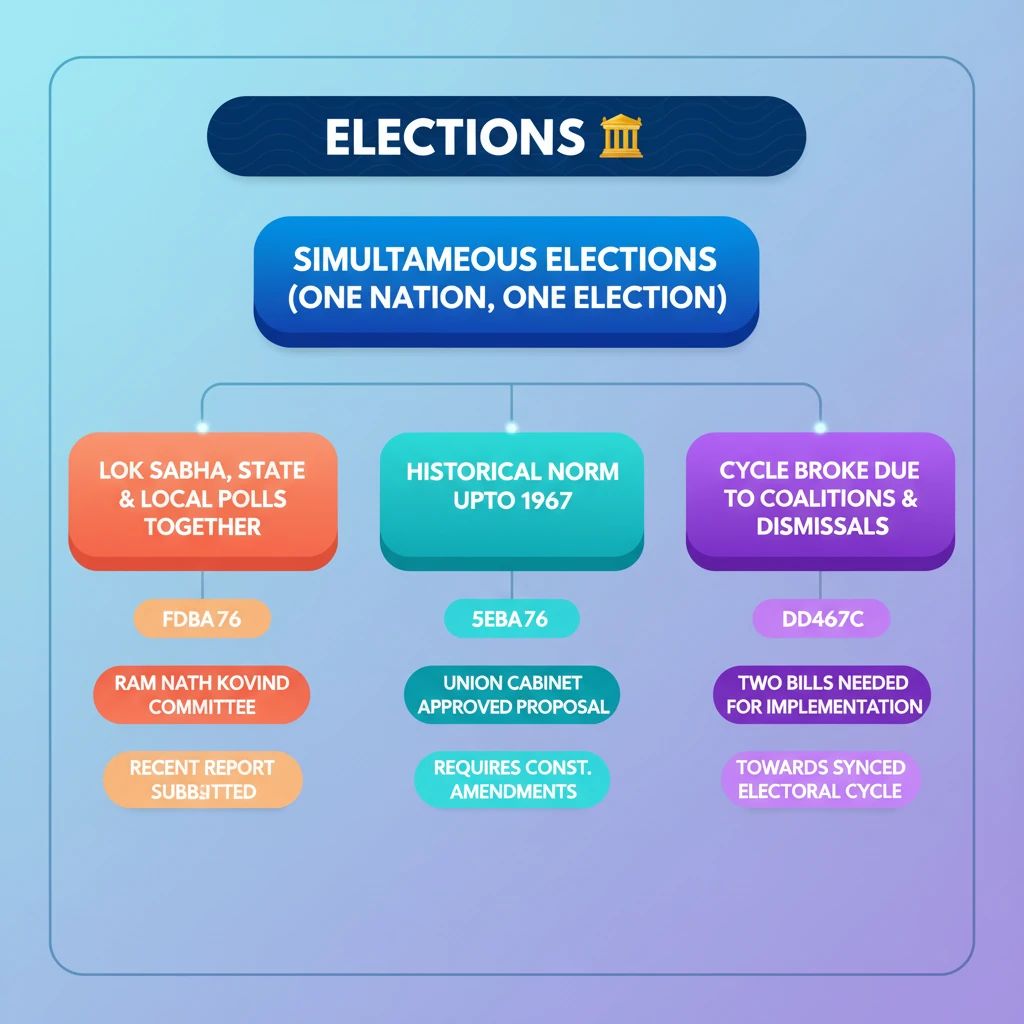
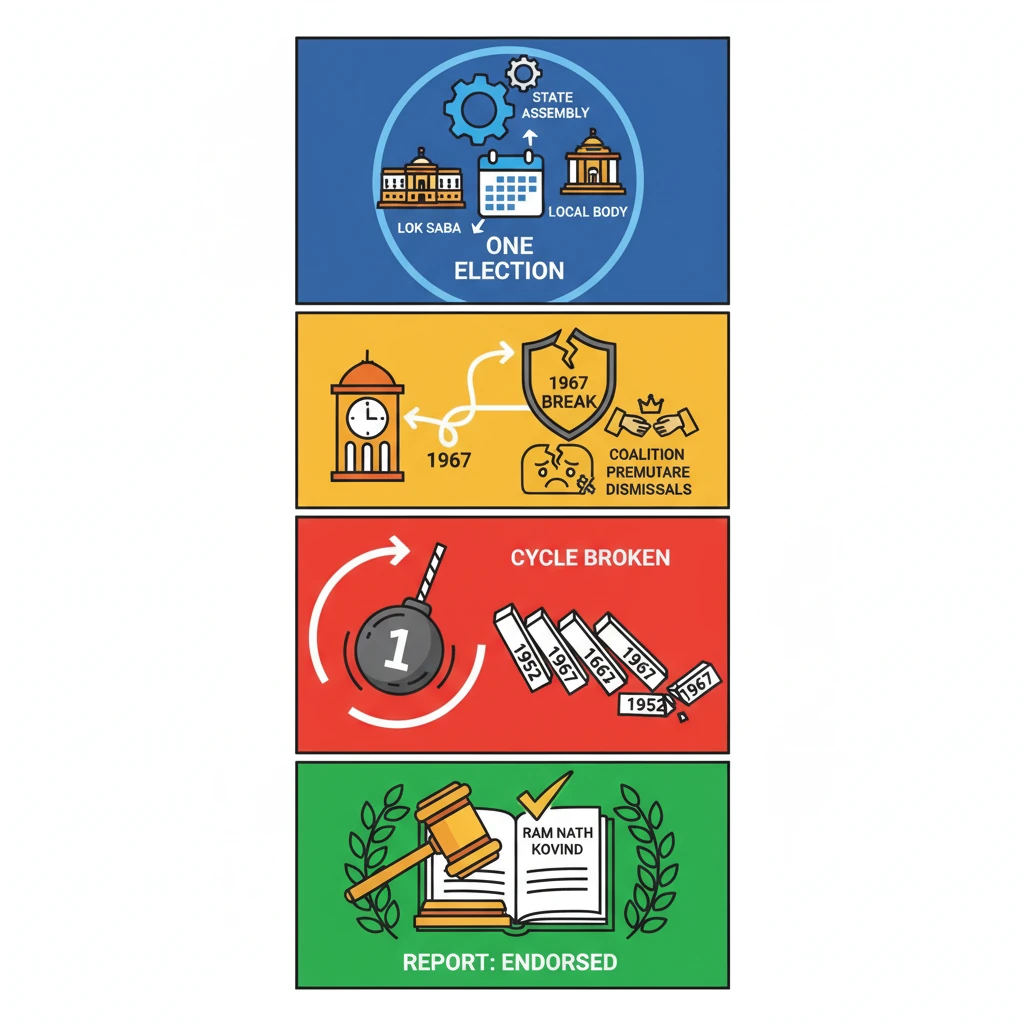
- •Simultaneous Elections (One Nation, One Election) mean holding Lok Sabha, State Assembly, and local body polls together.
- •Historically, India largely practiced simultaneous elections until 1967.
- •The cycle broke due to premature dismissals of state governments and collapse of coalition governments.
- •The Ram Nath Kovind Committee recently submitted a report endorsing the 'one nation, one election' plan.
- •The Union Cabinet has approved the proposal, necessitating constitutional amendments via two bills.
🧠 Memory Techniques
95% Verified Content
📚 Reference Sources
•Report of the High-Level Committee on One Nation, One Election (Chaired by Ram Nath Kovind)
•The Constitution of India
•Election Commission of India reports