IT Rules, 2021: Due Diligence for Significant Intermediaries - Polity And Governance | UPSC Learning
Topics
0 topics • 0 completed
🔍
No topics match your search
IT Rules, 2021: Due Diligence for Significant Intermediaries
Medium⏱️ 8 min read
polity and governance
📖 Introduction
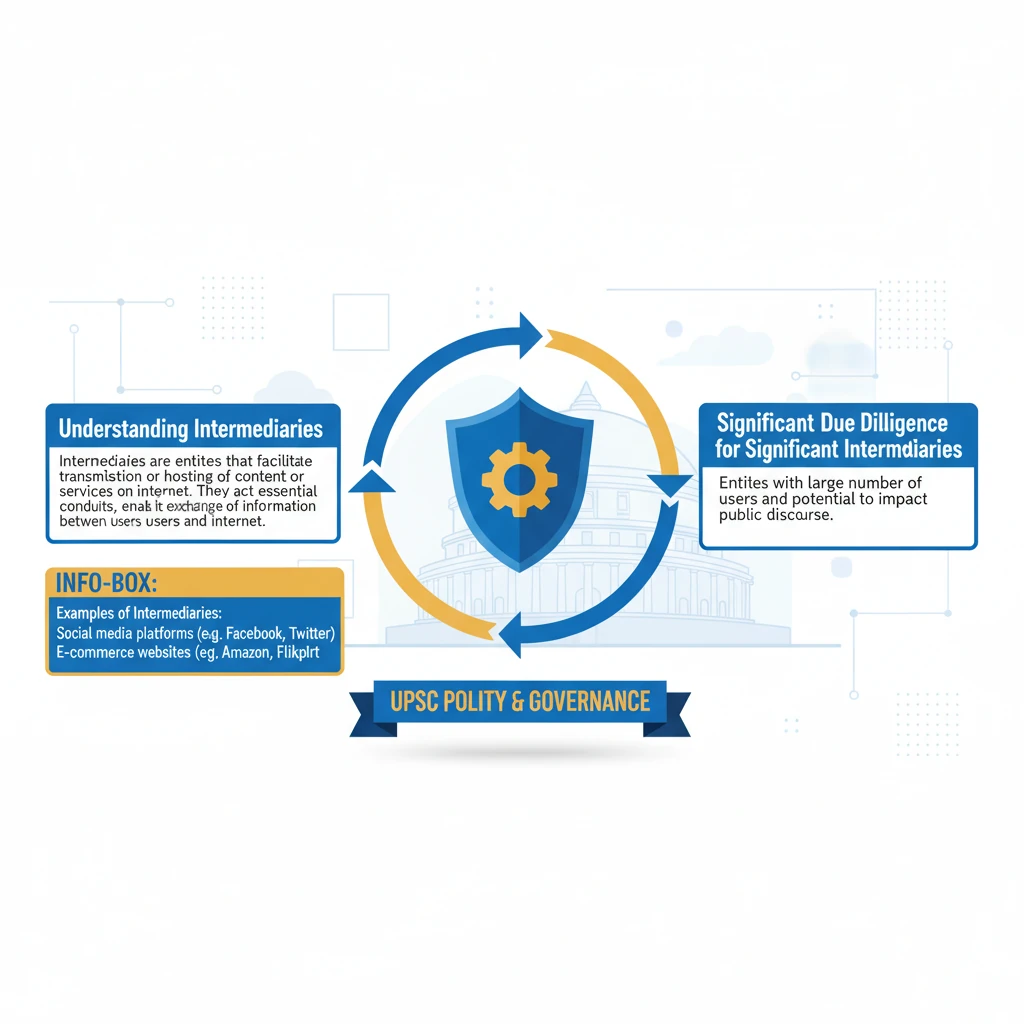
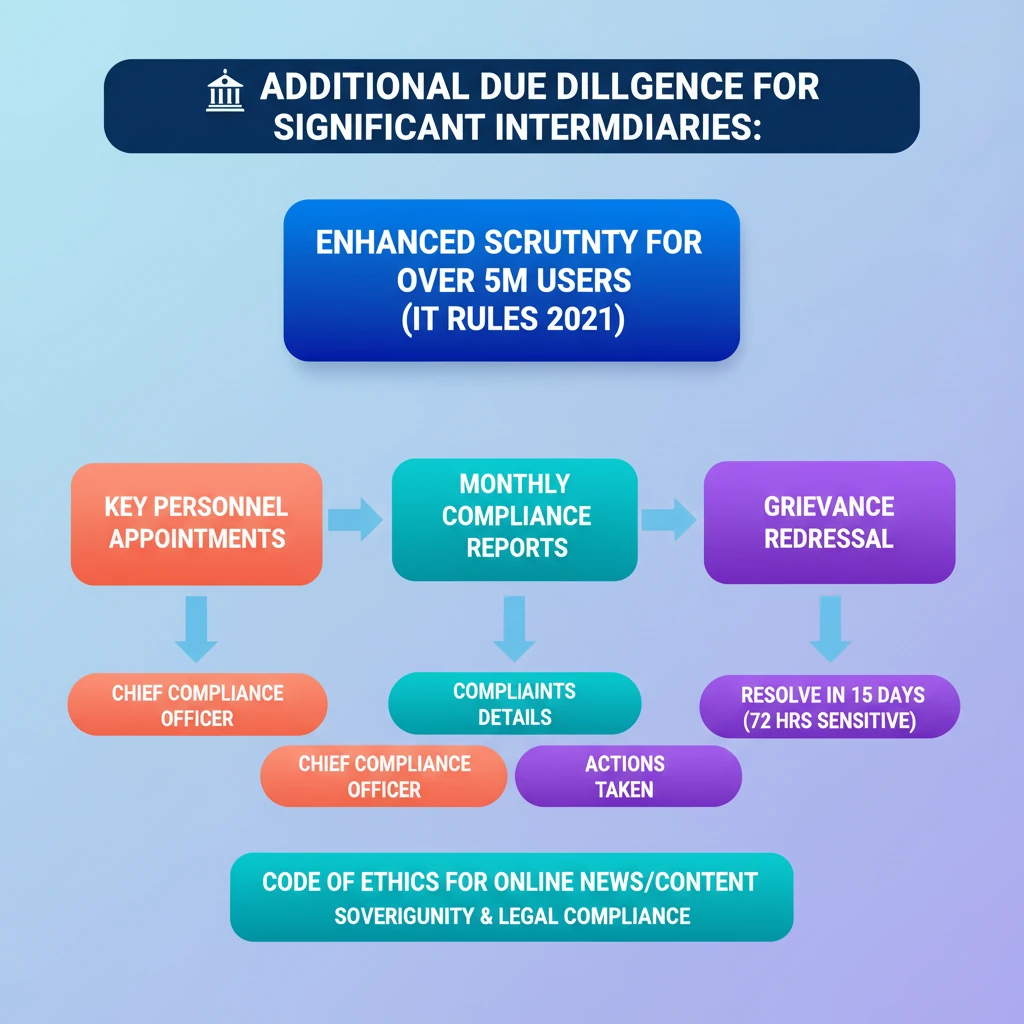
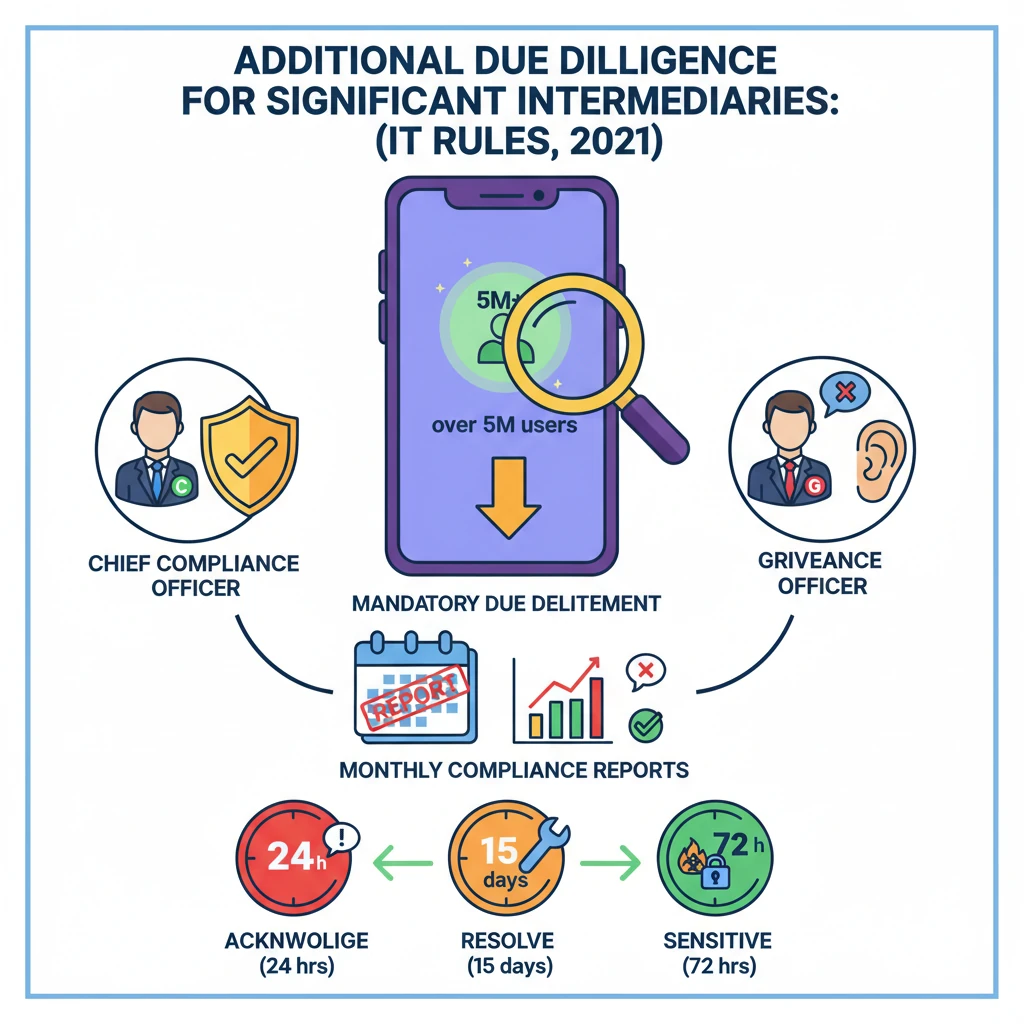
<h4>Understanding Intermediaries</h4><p><strong>Intermediaries</strong> are entities that facilitate the transmission or hosting of content or services on the internet. They act as essential conduits, enabling the exchange of information between users and the internet.</p><div class='info-box'><p><strong>Examples of Intermediaries:</strong></p><ul><li><strong>Social media platforms</strong> (e.g., <strong>Facebook</strong>, <strong>Twitter</strong>)</li><li><strong>E-commerce websites</strong> (e.g., <strong>Amazon</strong>, <strong>Flipkart</strong>)</li><li><strong>Search engines</strong> (e.g., <strong>Google</strong>)</li><li><strong>Internet Service Providers (ISPs)</strong></li><li><strong>Cloud service providers</strong></li></ul></div><h4>Defining Significant Social Media Intermediaries</h4><p><strong>Significant Social Media Intermediaries (SSMIs)</strong> are a specific subset of intermediaries. They are characterized by their substantial user base and considerable influence on public discourse.</p><div class='key-point-box'><p>Under the <strong>IT Rules, 2021</strong>, an intermediary with over <strong>5 million users</strong> in India is classified as a <strong>significant intermediary</strong>. This classification subjects them to enhanced regulatory requirements due to their wider reach and potential impact.</p></div><h4>Additional Due Diligence Requirements for SSMIs</h4><p>To ensure greater accountability and user safety, <strong>Significant Social Media Intermediaries</strong> are mandated to undertake specific additional due diligence measures. These measures aim to foster a more responsible online environment.</p><ul><li><strong>Appointment of Key Personnel:</strong> SSMIs must appoint a <strong>Chief Compliance Officer</strong> and a <strong>Grievance Officer</strong>. These roles are crucial for ensuring adherence to the rules and addressing user complaints.</li><li><strong>Monthly Compliance Reports:</strong> These intermediaries are required to submit <strong>monthly compliance reports</strong>. These reports must detail the complaints received and the actions taken to resolve them.</li></ul><h4>Grievance Redressal Mechanism</h4><p>A robust <strong>Grievance Redressal Mechanism</strong> is a cornerstone of the new regulations, ensuring that user complaints are addressed promptly and effectively.</p><ul><li><strong>Acknowledgement Timeline:</strong> Intermediaries must acknowledge any complaint received within <strong>24 hours</strong> of its submission.</li><li><strong>Resolution Timeline:</strong> Most complaints are required to be resolved within <strong>15 days</strong> from the date of receipt.</li><li><strong>Expedited Resolution for Sensitive Content:</strong> Complaints concerning content that violates privacy or contains harmful material must be addressed with greater urgency, specifically within <strong>72 hours</strong>.</li></ul><h4>Code of Ethics for Publishers</h4><p>The regulations also extend to publishers of news and online content, mandating adherence to a specific <strong>Code of Ethics</strong>. This code aims to ensure responsible content creation and dissemination.</p><div class='key-point-box'><p>The <strong>Code of Ethics</strong> ensures that published content does not negatively affect the <strong>sovereignty of India</strong> or violate any existing laws. This provision is vital for maintaining national security and public order.</p></div><h4>Regulation of Online Games</h4><p>The scope of due diligence also covers <strong>Online Gaming Intermediaries</strong>, bringing a new layer of oversight to this rapidly growing sector.</p><ul><li><strong>Detailed Policies:</strong> Online gaming intermediaries must provide clear and detailed policies regarding <strong>withdrawals</strong>, <strong>winnings</strong>, and <strong>user identity verification</strong>. This enhances transparency for users.</li><li><strong>Self-Regulatory Body Verification:</strong> <strong>Real-money online games</strong> are specifically required to be verified by a designated <strong>self-regulatory body</strong>. This ensures fairness and prevents fraudulent practices.</li></ul><div class='exam-tip-box'><p><strong>UPSC Insight:</strong> The concept of <strong>"due diligence"</strong> is central to governance. For <strong>GS Paper II (Polity & Governance)</strong>, understanding its application to digital platforms is crucial. Focus on the balance between regulation and innovation, and the implications for fundamental rights like <strong>freedom of speech</strong> and <strong>privacy</strong>.</p></div>
💡 Key Takeaways
- •Significant Intermediaries (over 5M users) face enhanced due diligence under IT Rules, 2021.
- •Mandatory appointment of Chief Compliance Officer and Grievance Officer.
- •Monthly compliance reports detailing complaints and actions taken.
- •Grievances must be acknowledged within 24 hours, resolved within 15 days (72 hours for sensitive content).
- •Code of Ethics for online news/content publishers to ensure sovereignty and legal compliance.
- •Online gaming intermediaries require detailed policies and self-regulatory body verification for real-money games.
🧠 Memory Techniques
95% Verified Content
📚 Reference Sources
•Press Information Bureau (PIB) releases on IT Rules, 2021
•Reports from reputable legal and policy think tanks on digital regulations in India