UN Global Principles for Information Integrity - International Relations | UPSC Learning
Topics
0 topics • 0 completed
🔍
No topics match your search
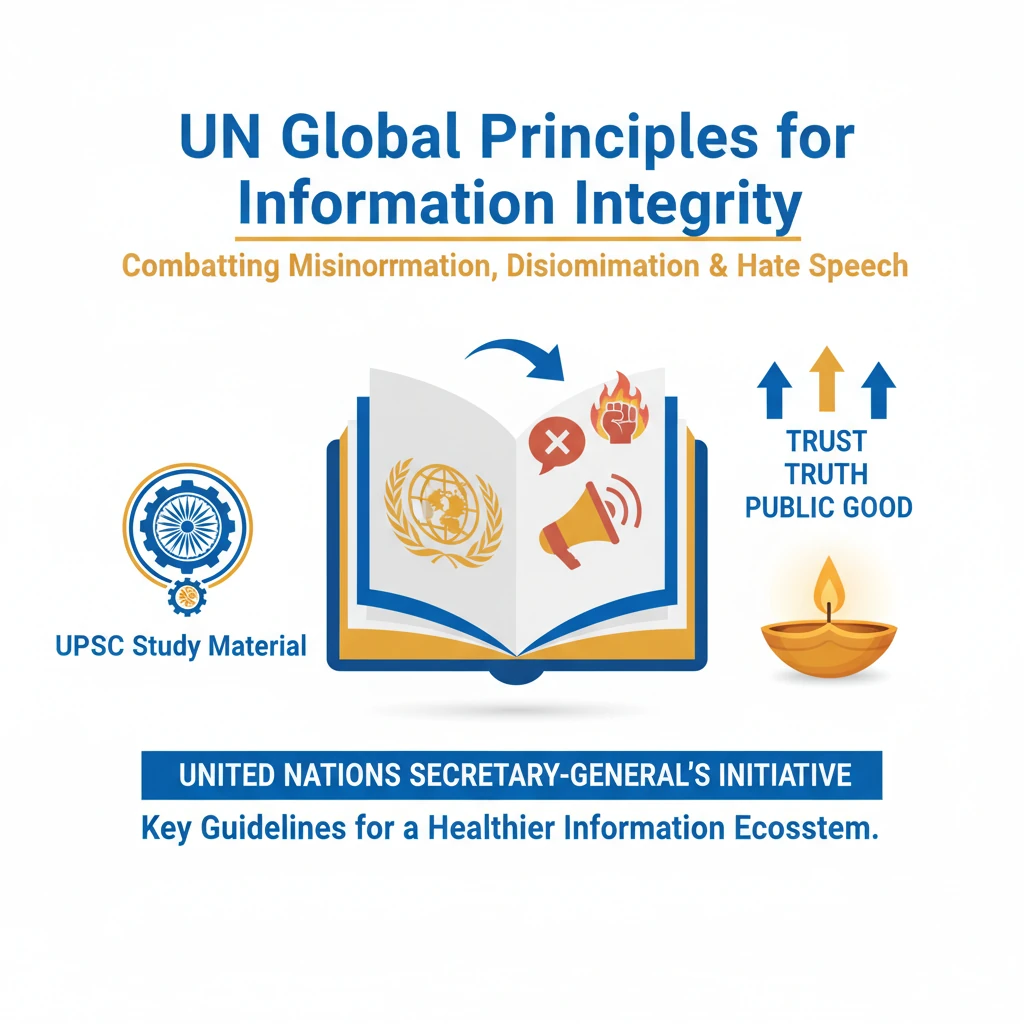
UN Global Principles for Information Integrity
Medium⏱️ 10 min read
international relations
📖 Introduction
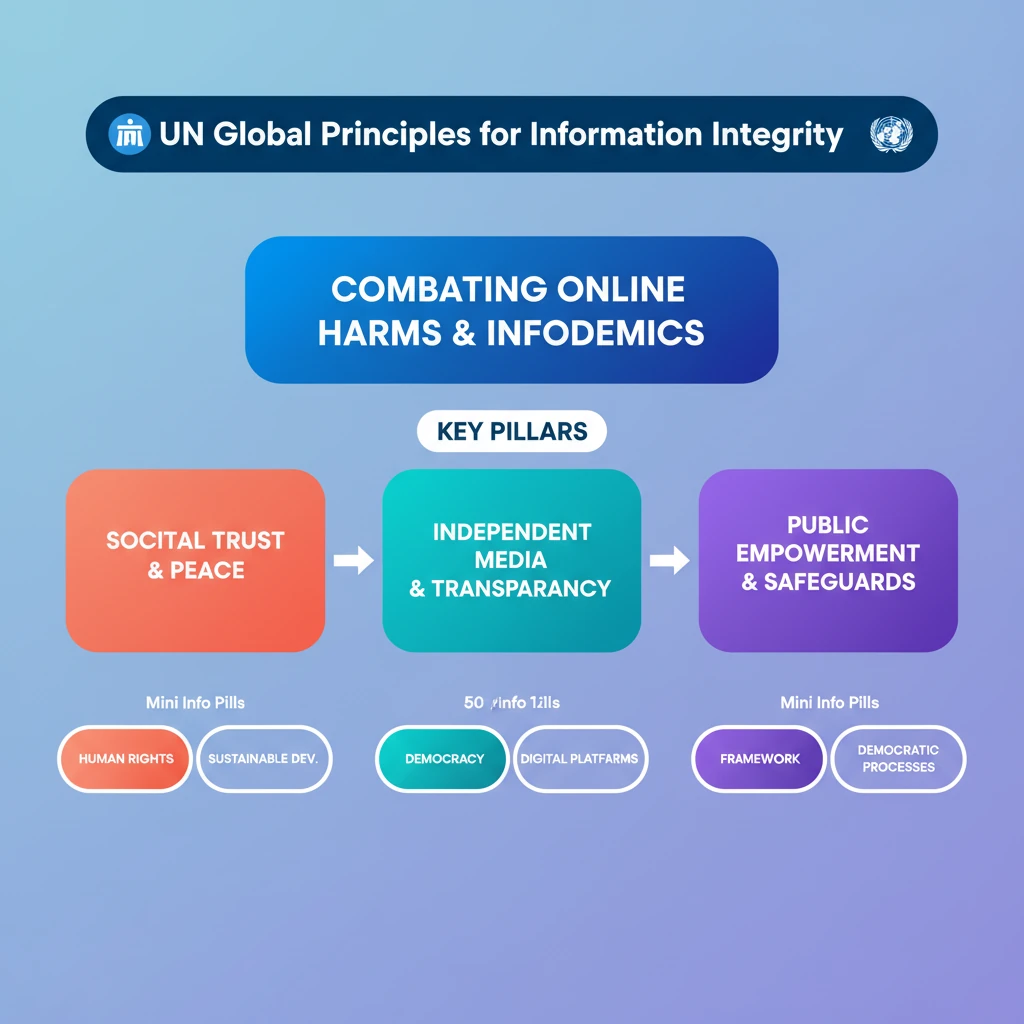
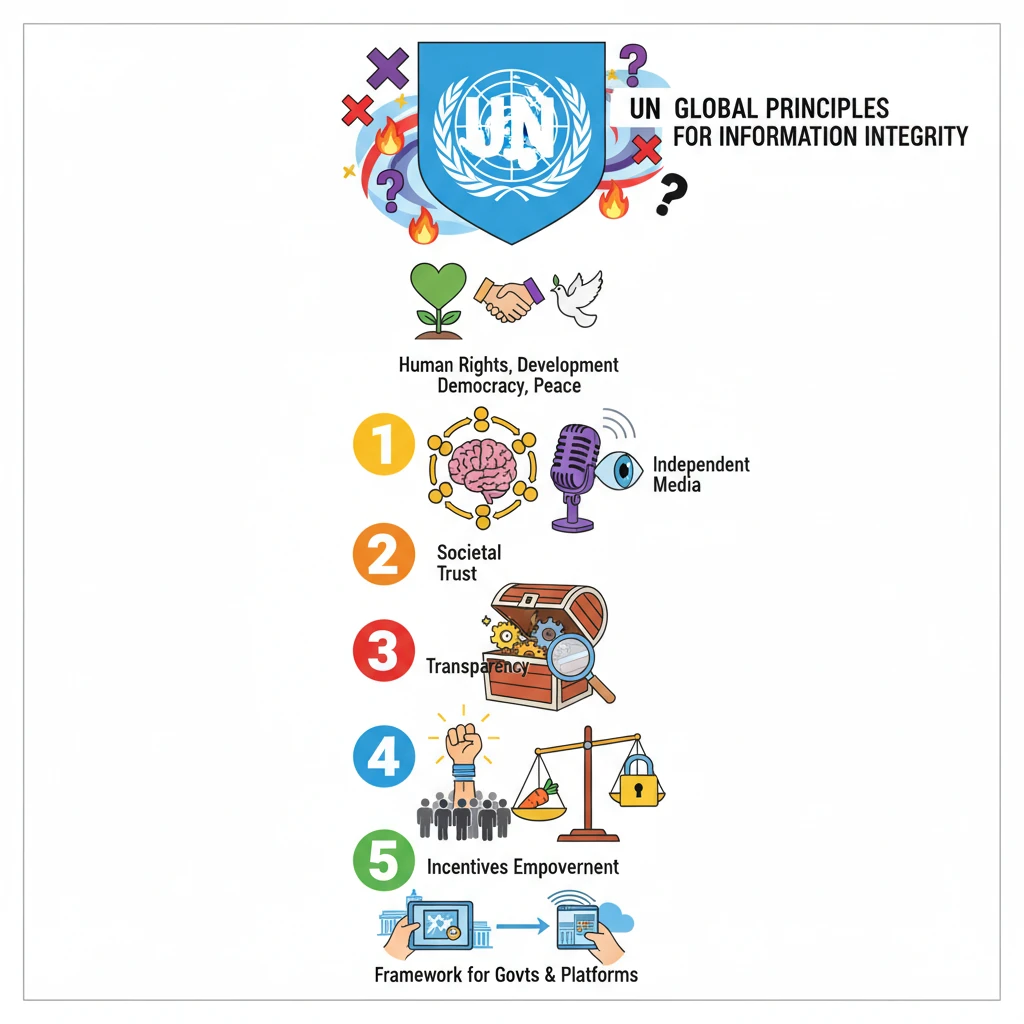
<h4>Introduction to UN Global Principles for Information Integrity</h4><p>The <strong>United Nations Secretary-General</strong> recently unveiled a crucial set of guidelines known as the <strong>‘United Nations Global Principles for Information Integrity’</strong>. These principles are designed to combat the pervasive issues of <strong>online misinformation</strong>, <strong>disinformation</strong>, and <strong>hate speech</strong>.</p><p>The initiative seeks to address the widespread harm caused by false information across various <strong>digital platforms</strong>. It represents a global effort to foster a healthier and more reliable information environment.</p><div class='exam-tip-box'><p><strong>UPSC Relevance:</strong> This topic is highly relevant for <strong>GS Paper II (International Relations)</strong> and <strong>GS Paper III (Internal Security, Cyber Security)</strong>. Questions may focus on global governance, media ethics, and the challenges of digital age.</p></div><h4>The Vision Behind the Principles</h4><p>These principles lay the groundwork for a vision of a more humane and trustworthy <strong>information ecosystem</strong>. The overarching goal is to prioritize <strong>human rights</strong> and actively support critical global objectives.</p><p>These objectives include fostering <strong>sustainable development</strong>, advancing <strong>climate action</strong>, strengthening <strong>democracy</strong>, and promoting <strong>peace</strong> worldwide. The integrity of information is seen as fundamental to achieving these goals.</p><h4>The Five Global Principles for Information Integrity</h4><p>The framework consists of <strong>five core principles</strong>, each addressing a vital aspect of information integrity in the digital age. They collectively aim to build a robust defense against harmful online content.</p><div class='key-point-box'><ul><li><strong>1. Societal Trust and Resilience:</strong> This principle focuses on building strong <strong>societal trust</strong> and enhancing <strong>resilience</strong> among populations. It aims to effectively counteract the proliferation and impact of <strong>misinformation</strong> and <strong>hate speech</strong>.</li><li><strong>2. Independent, Free, and Pluralistic Media:</strong> Emphasizes the critical need for <strong>media independence</strong>, <strong>freedom</strong>, and <strong>diversity</strong>. This supports the production of high-quality, reliable journalism and ensures the representation of diverse viewpoints.</li><li><strong>3. Transparency and Research:</strong> Advocates for greater <strong>transparency</strong> in the operations of <strong>digital platforms</strong>. It also stresses the importance of supporting independent <strong>research</strong> into the complex dynamics of the modern information ecosystem.</li><li><strong>4. Public Empowerment:</strong> Centers on equipping individuals with essential <strong>digital literacy</strong> and <strong>critical thinking skills</strong>. This empowers citizens to navigate the vast and often challenging information landscape more effectively.</li><li><strong>5. Incentives and Safeguards:</strong> Calls for aligning the <strong>business models</strong> of <strong>digital platforms</strong> with fundamental <strong>human rights</strong>. It also seeks to establish clear mechanisms for <strong>accountability</strong> regarding harmful content spread through these platforms.</li></ul></div>
💡 Key Takeaways
- •UN Global Principles aim to curb online misinformation, disinformation, and hate speech.
- •The initiative prioritizes human rights, sustainable development, democracy, and peace.
- •There are five core principles: Societal Trust, Independent Media, Transparency, Public Empowerment, and Incentives/Safeguards.
- •They provide a framework for governments and digital platforms to ensure information integrity.
- •Critical for combating 'infodemics' and protecting democratic processes in the digital age.
🧠 Memory Techniques
98% Verified Content
📚 Reference Sources
•UN Secretary-General's statements on Information Integrity
•Reputable news sources covering the launch of the UN Global Principles for Information Integrity (e.g., The Guardian, Reuters, Associated Press)