What is the Indian Ocean Region (IOR)? - International Relations | UPSC Learning
Topics
0 topics • 0 completed
🔍
No topics match your search
What is the Indian Ocean Region (IOR)?
Medium⏱️ 8 min read
international relations
📖 Introduction
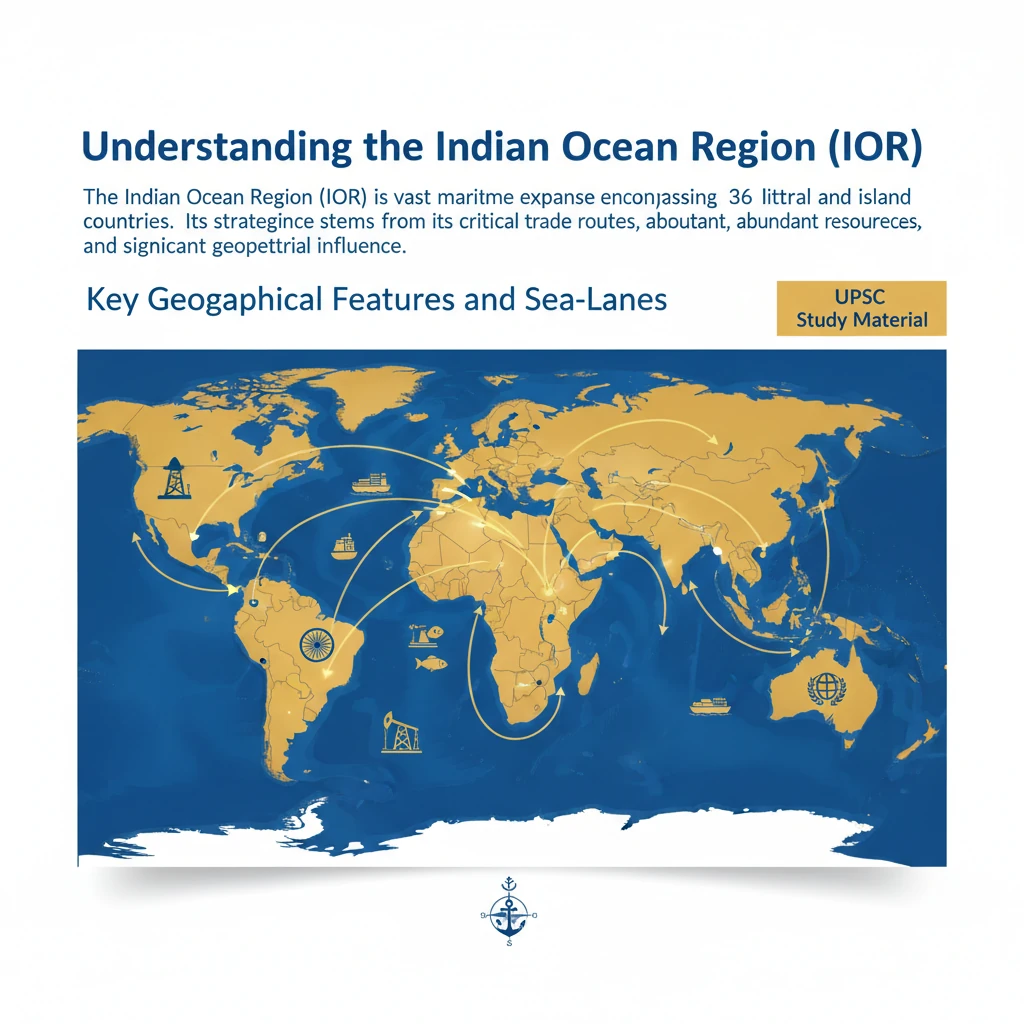
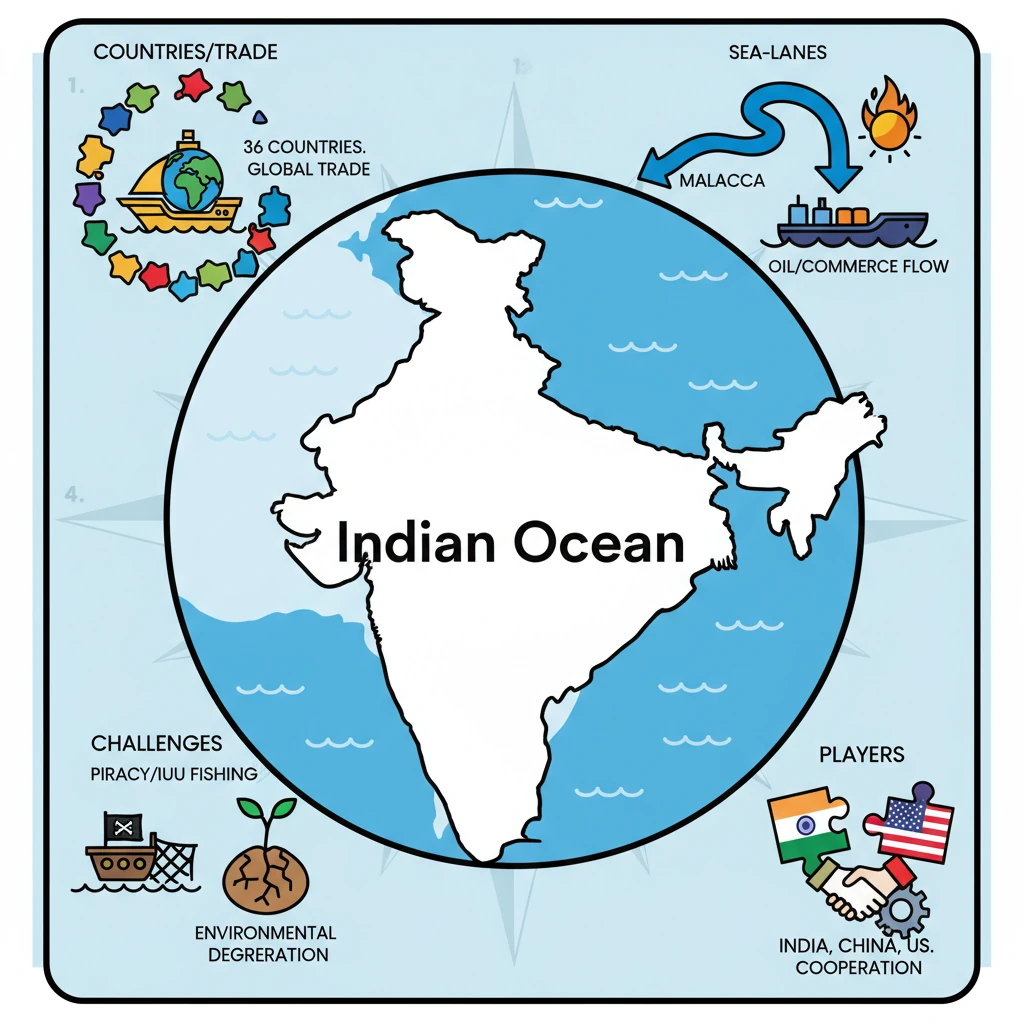
<h4>Understanding the Indian Ocean Region (IOR)</h4><p>The <strong>Indian Ocean Region (IOR)</strong> is a vast maritime expanse encompassing <strong>36 littoral and island countries</strong>. Its strategic importance stems from its critical <strong>trade routes</strong>, abundant <strong>natural resources</strong>, and significant <strong>geopolitical influence</strong>.</p><h4>Key Geographical Features and Sea-Lanes</h4><p>The IOR is home to some of the world's busiest <strong>sea-lanes</strong>. These vital arteries facilitate global commerce and energy transit.</p><div class='info-box'><ul><li><strong>Straits of Hormuz</strong>: Crucial for oil exports from the Persian Gulf.</li><li><strong>Strait of Malacca</strong>: A primary conduit for trade between Asia and the West.</li></ul></div><p>These <strong>chokepoints</strong> highlight the region's indispensable role in international trade and security.</p><h4>Rich Resources and Emerging Challenges</h4><p>Beyond its strategic location, the IOR boasts immense <strong>marine biodiversity</strong> and significant <strong>natural resources</strong>, including vast hydrocarbon reserves.</p><div class='key-point-box'><p>However, the region confronts a multitude of complex challenges that threaten its stability and sustainability:</p><ul><li><strong>Piracy</strong>: Particularly in areas like the Gulf of Aden.</li><li><strong>Illegal, Unreported, and Unregulated (IUU) Fishing</strong>: Depleting marine resources.</li><li><strong>Environmental Degradation</strong>: Due to pollution, climate change, and overexploitation.</li></ul></div><h4>Major Players and the Imperative for Cooperation</h4><p>Several global and regional powers are actively engaged in the IOR. <strong>India</strong> plays a central and proactive role, given its geographical proximity and historical ties.</p><p>Other significant actors include <strong>China</strong>, the <strong>United States</strong>, and various <strong>regional organisations</strong>. The confluence of these interests underscores the critical need for collaborative efforts.</p><div class='exam-tip-box'><p>UPSC often asks about <strong>India's strategic interests</strong> and its approach to regional challenges in the IOR. Understanding the roles of other powers is crucial for a comprehensive answer.</p></div><p>Such cooperation is essential to effectively address common challenges and ensure the <strong>sustainable development</strong> and security of the entire region.</p><h4>Indian Ocean Rim Association (IORA)</h4><p>The <strong>Indian Ocean Rim Association (IORA)</strong> is a prominent intergovernmental organisation within the IOR, fostering regional cooperation.</p><div class='info-box'><p><strong>IORA's Primary Objective</strong>:</p><ul><li>To promote <strong>economic cooperation</strong>.</li><li>To facilitate <strong>regional integration</strong> among countries bordering the Indian Ocean.</li></ul></div><p>It serves as a key platform for dialogue and collaboration on various issues, from trade to maritime safety.</p>
💡 Key Takeaways
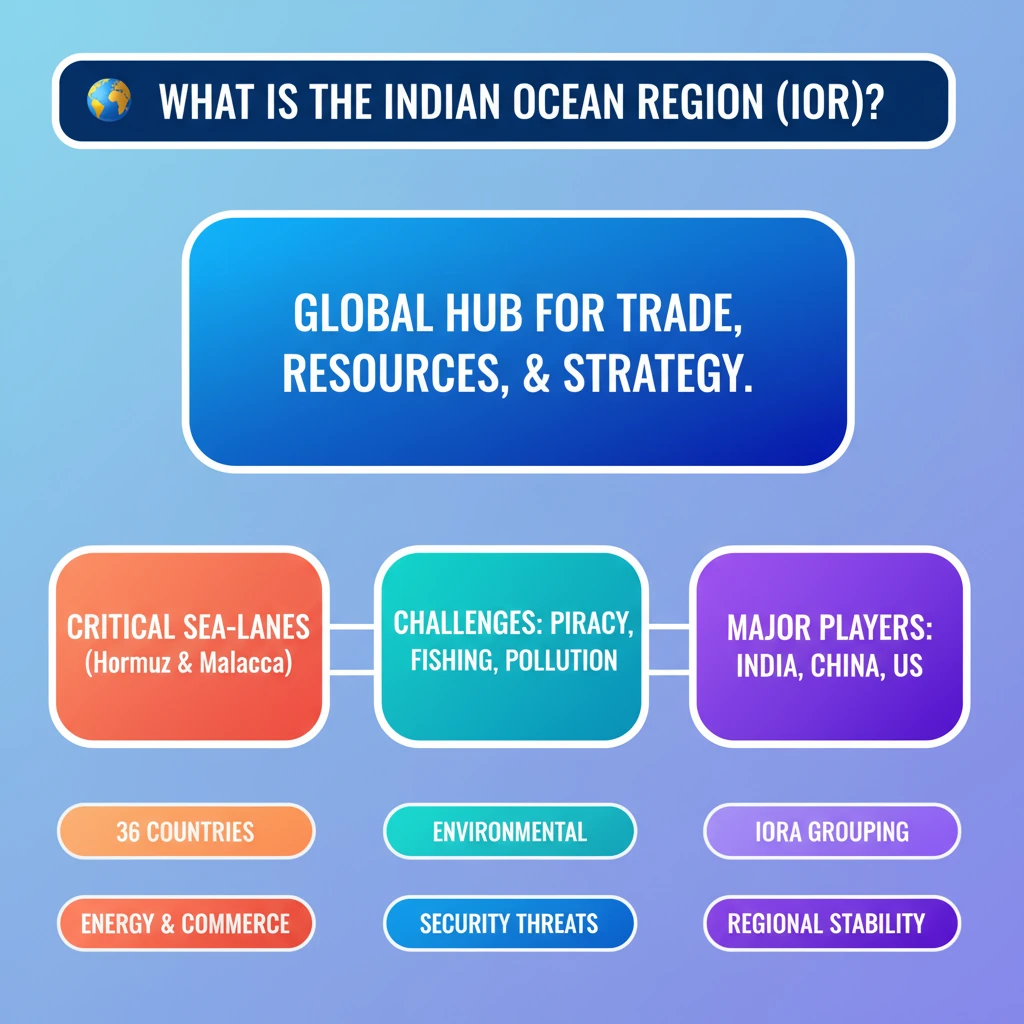
- •The Indian Ocean Region (IOR) spans 36 littoral and island countries, vital for global trade and resources.
- •It includes critical sea-lanes like the Straits of Hormuz and Malacca, essential for energy and commerce.
- •Key challenges include piracy, IUU fishing, and environmental degradation.
- •India, China, and the US are major players, necessitating cooperation for regional stability and sustainable development.
- •IORA promotes economic cooperation and regional integration among Indian Ocean states.
- •The IOR is a focal point for geopolitical competition and the 'Blue Economy' concept.
🧠 Memory Techniques
95% Verified Content
📚 Reference Sources
•Ministry of External Affairs (MEA) India
•Indian Ocean Rim Association (IORA) Official Website
•Reputable Geopolitical Think Tanks (e.g., ORF, CSIS)