India-China Border Infrastructure & Dispute Resolution Efforts - International Relations | UPSC Learning
Topics
0 topics • 0 completed
🔍
No topics match your search
India-China Border Infrastructure & Dispute Resolution Efforts
Medium⏱️ 6 min read
international relations
📖 Introduction
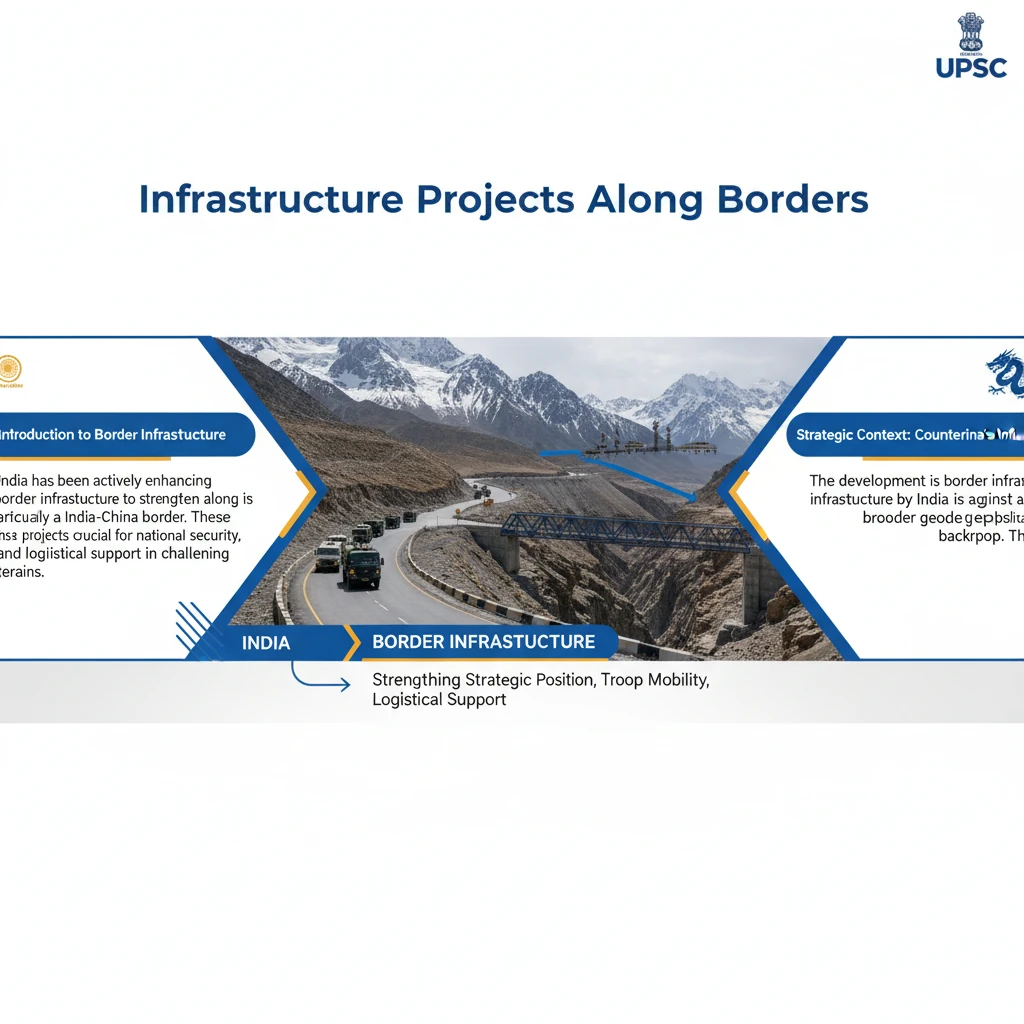
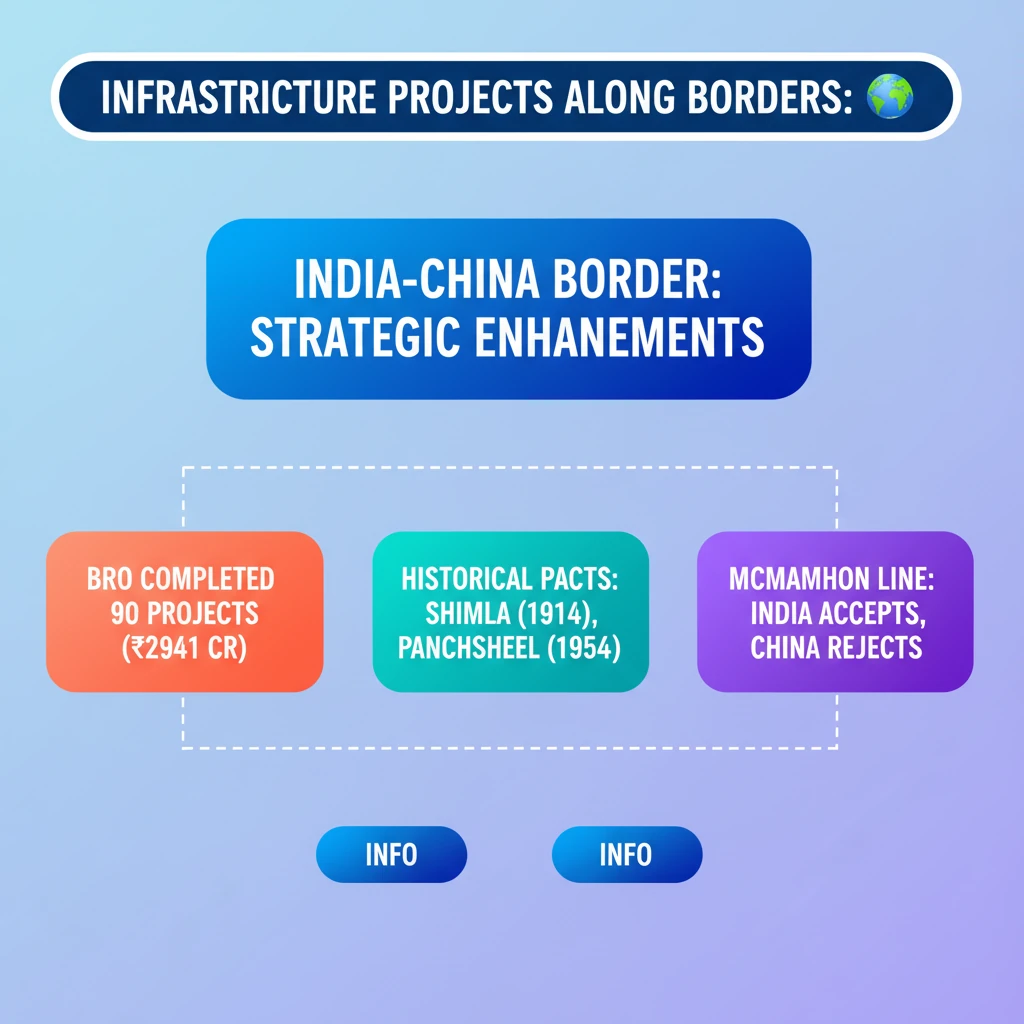
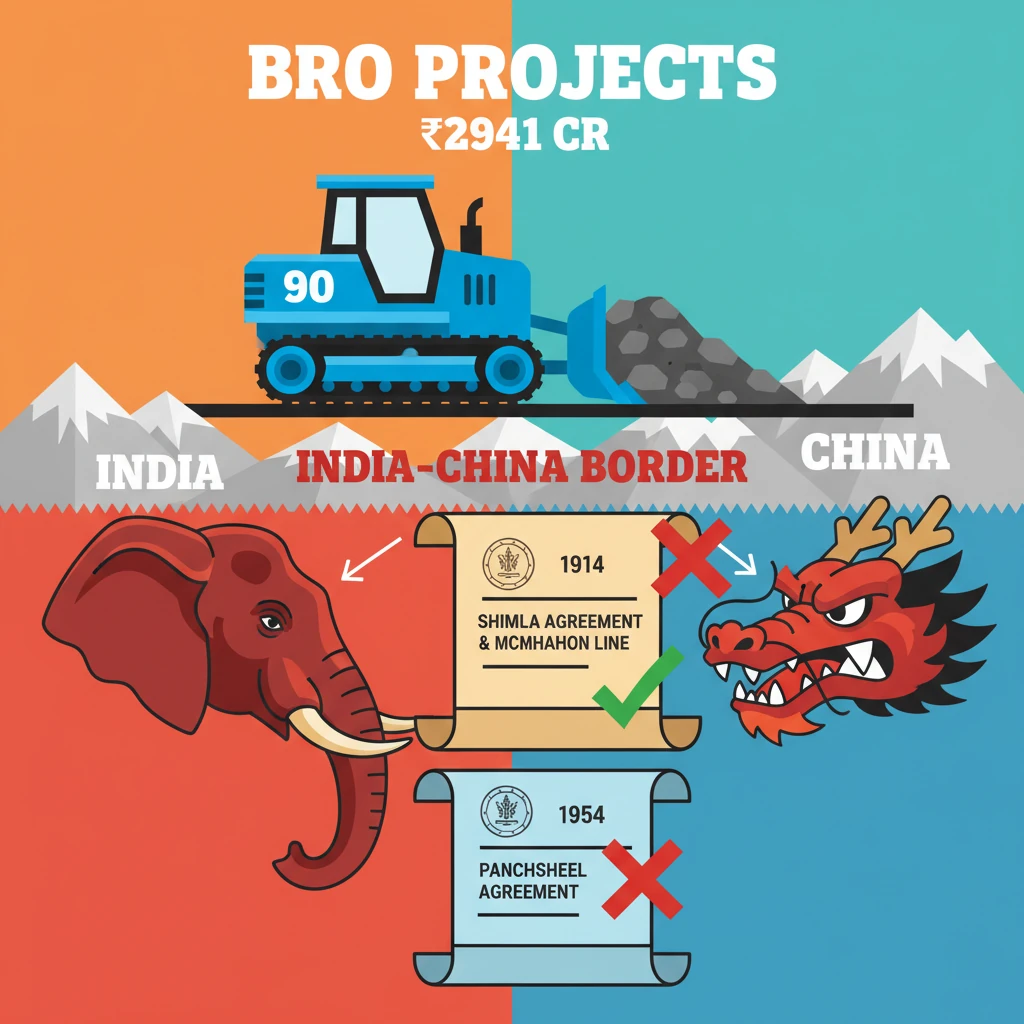
<h4>Introduction to Border Infrastructure</h4><p>India has been actively enhancing its <strong>border infrastructure</strong> to strengthen its strategic position, particularly along the <strong>India-China border</strong>. These projects are crucial for national security, troop mobility, and logistical support in challenging terrains.</p><h4>Strategic Context: Countering China's Influence</h4><p>The development of border infrastructure by India is set against a broader geopolitical backdrop. This includes efforts to counter <strong>China’s military network</strong> and influence in the <strong>Indo-Pacific</strong> and <strong>Indian Ocean regions</strong>.</p><p>A wider strategy involves enhancing <strong>naval presence</strong>, expanding <strong>military bases</strong>, and strengthening <strong>diplomatic ties</strong> with regional nations. These actions collectively aim to balance regional power dynamics.</p><h4>India's Border Infrastructure Development</h4><p>India's focus on border infrastructure is a direct response to evolving geopolitical realities and security requirements. It ensures better connectivity and preparedness for any contingencies.</p><div class='key-point-box'><p><strong>Key Focus:</strong> Strengthening India's position along the <strong>India-China border</strong> through robust infrastructure development.</p></div><h4>Role of Border Roads Organisation (BRO)</h4><p>The <strong>Border Roads Organisation (BRO)</strong> plays a pivotal role in constructing and maintaining India's border infrastructure. Its work is vital for improving accessibility and strategic mobility in remote and difficult border areas.</p><div class='info-box'><p><strong>BRO Achievements:</strong> The <strong>BRO</strong> has completed <strong>90 infrastructure projects</strong> along the <strong>India-China border</strong>, with a total worth of <strong>Rs 2,941 crore</strong>.</p></div><h4>Previous Efforts to Settle Indo-China Border Disputes</h4><p>Historical attempts have been made to resolve the complex <strong>Indo-China border disputes</strong>. These agreements provide important context to the ongoing strategic developments.</p><h4>The Shimla Agreement of 1914</h4><p>The <strong>Shimla Agreement of 1914</strong> was a significant early attempt to define the boundary. It aimed to demarcate the border between <strong>Tibet</strong> and <strong>North East India</strong>.</p><p>A convention was held in <strong>Shimla</strong> in <strong>1914</strong>, with representatives from <strong>Tibet</strong>, <strong>China</strong>, and <strong>British India</strong> participating in the discussions.</p><div class='info-box'><p><strong>Key Outcome:</strong> The agreement was signed by <strong>British India</strong> and <strong>Tibet</strong>, but <strong>Chinese officials</strong> did not sign it.</p></div><p>Presently, <strong>India recognizes</strong> both the <strong>Shimla Agreement</strong> and the <strong>McMahon Line</strong> as valid boundaries. However, <strong>China has rejected</strong> both of these.</p><h4>The Panchsheel Agreement of 1954</h4><p>The <strong>Panchsheel Agreement of 1954</strong> laid down five principles of peaceful coexistence, aiming to guide bilateral relations between India and China.</p><div class='key-point-box'><p><strong>Core Principle:</strong> The doctrine clearly indicated the willingness to ‘<strong>Respect each other’s sovereignty and territorial integrity</strong>’.</p></div><p><strong>China initially accepted</strong> these <strong>Panchsheel principles</strong>, and the agreement served as a foundational basis for bilateral relations between the two countries.</p><p>However, over time, the <strong>Panchsheel Agreement faced challenges</strong>, particularly during the <strong>Sino-Indian War of 1962</strong>, which significantly impacted its efficacy.</p><div class='exam-tip-box'><p><strong>UPSC Insight:</strong> Understanding the historical agreements like <strong>Shimla (1914)</strong> and <strong>Panchsheel (1954)</strong> is crucial for Mains answers on <strong>India-China relations</strong> and <strong>border disputes</strong>. Note the differing recognition by India and China.</p></div>
💡 Key Takeaways
- •India is actively enhancing border infrastructure, especially along the India-China border, for strategic advantage.
- •The Border Roads Organisation (BRO) has completed 90 projects worth Rs 2,941 crore to bolster connectivity.
- •Historical attempts to resolve border disputes include the Shimla Agreement (1914) and the Panchsheel Agreement (1954).
- •India recognizes the Shimla Agreement and McMahon Line; China rejects them.
- •The Panchsheel Agreement, initially accepted, faced challenges during the 1962 Sino-Indian War.
- •Border infrastructure is crucial for national security, troop mobility, logistical support, and countering regional influence.
🧠 Memory Techniques
95% Verified Content