Indo-Pacific Economic Framework (IPEF): Objectives, Members, and Pillars - International Relations | UPSC Learning
Topics
0 topics • 0 completed
🔍
No topics match your search
Indo-Pacific Economic Framework (IPEF): Objectives, Members, and Pillars
Medium⏱️ 8 min read
international relations
📖 Introduction
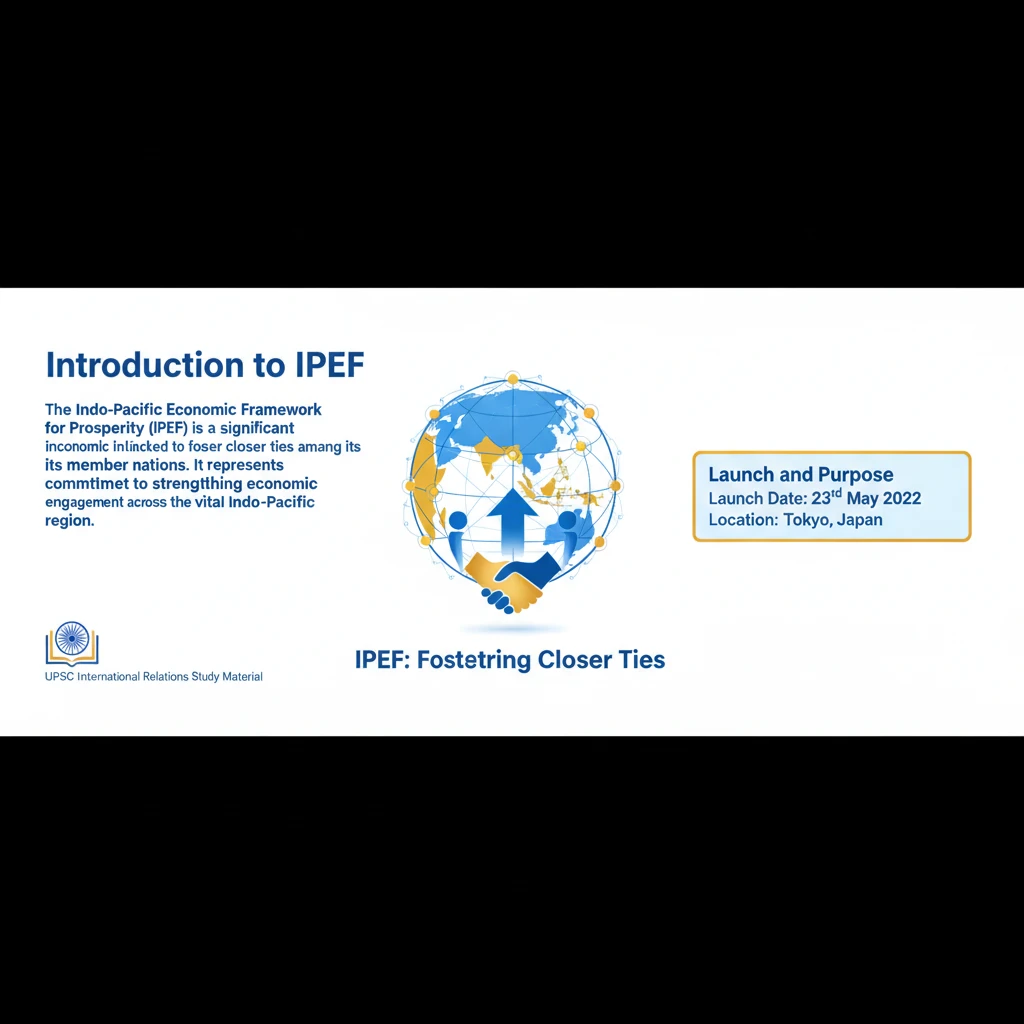
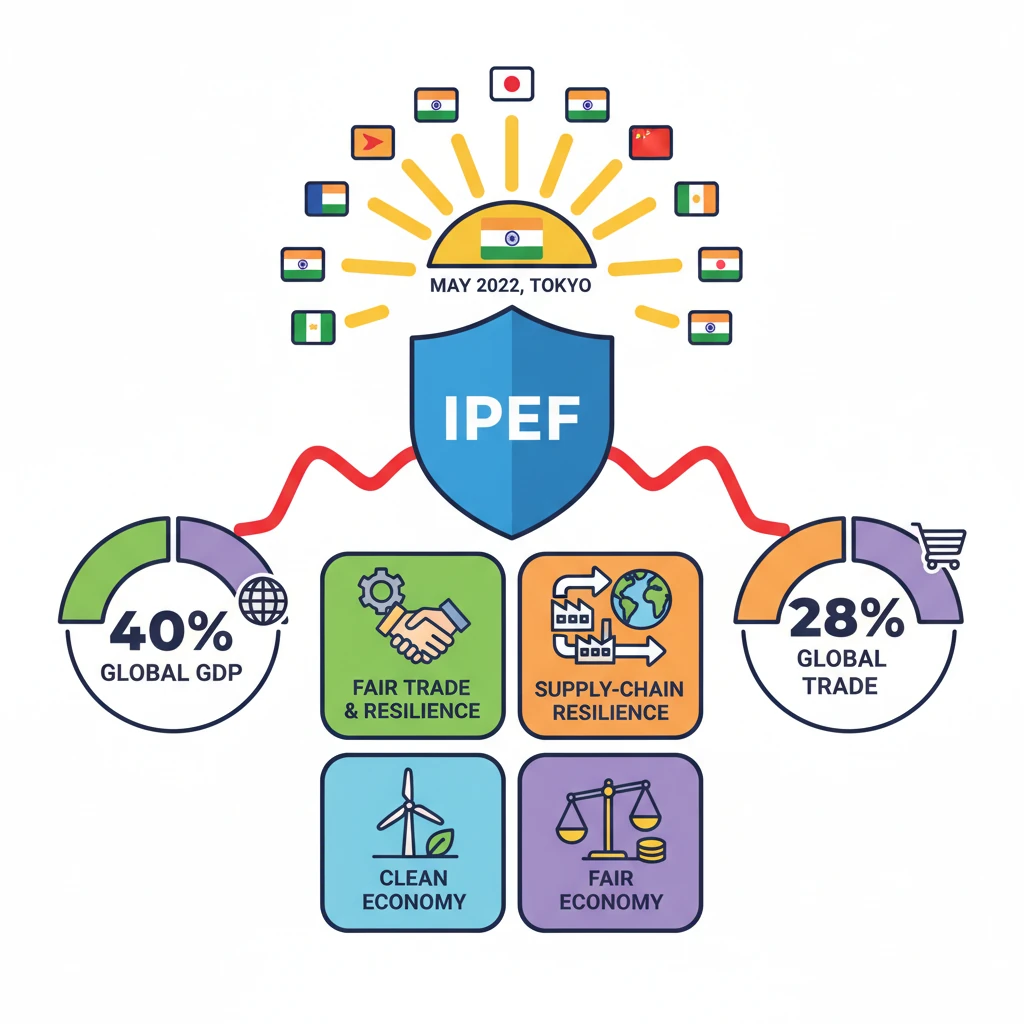
<h4>Introduction to IPEF</h4><p>The <strong>Indo-Pacific Economic Framework for Prosperity (IPEF)</strong> is a significant economic initiative launched to foster closer ties among its member nations. It represents a commitment to strengthening economic engagement across the vital <strong>Indo-Pacific region</strong>.</p><h4>Launch and Purpose</h4><div class='info-box'><p><strong>Launch Date:</strong> <strong>23rd May 2022</strong></p><p><strong>Location:</strong> <strong>Tokyo, Japan</strong></p><p><strong>Initial Members:</strong> <strong>14 countries</strong></p></div><p>The primary objective of <strong>IPEF</strong> is to enhance <strong>economic engagement and cooperation</strong> among its partner countries. This framework aims to drive sustainable <strong>growth</strong>, ensure <strong>economic stability</strong>, and promote overall <strong>prosperity</strong> within the region.</p><h4>Member Countries and Economic Clout</h4><p>The <strong>IPEF</strong> comprises a diverse group of <strong>14 nations</strong> spanning the Indo-Pacific. These members are crucial players in the global economy and represent a substantial portion of international trade and output.</p><div class='info-box'><p><strong>IPEF Partner Countries:</strong></p><ul><li><strong>Australia</strong></li><li><strong>Brunei</strong></li><li><strong>Fiji</strong></li><li><strong>India</strong></li><li><strong>Indonesia</strong></li><li><strong>Japan</strong></li><li><strong>South Korea</strong></li><li><strong>Malaysia</strong></li><li><strong>New Zealand</strong></li><li><strong>Philippines</strong></li><li><strong>Singapore</strong></li><li><strong>Thailand</strong></li><li><strong>United States</strong></li><li><strong>Vietnam</strong></li></ul></div><div class='key-point-box'><p>Collectively, these <strong>14 IPEF partners</strong> account for approximately <strong>40% of global GDP</strong> and <strong>28% of global goods and services trade</strong>, highlighting their significant economic influence.</p></div><h4>The Four Pillars of IPEF</h4><p>The <strong>IPEF</strong> is structured around <strong>four main pillars</strong>, each addressing critical aspects of economic cooperation and resilience. These pillars guide the framework's initiatives and negotiations.</p><h5>Pillar I: Fair and Resilient Trade</h5><p>This pillar focuses on establishing high-standard, inclusive, and transparent rules of engagement for trade among partner countries. It aims to foster an environment conducive to robust economic activity.</p><div class='info-box'><p><strong>Objective:</strong> To promote sustained <strong>economic growth</strong>, regional <strong>peace</strong>, and collective <strong>prosperity</strong> through fair and resilient trade practices.</p></div><h5>Pillar II: Supply-Chain Resilience</h5><p>Recognizing the vulnerabilities exposed by recent global events, this pillar is dedicated to strengthening supply chains. It seeks to prevent disruptions and ensure smooth economic functioning.</p><ul><li>It aims to make <strong>supply chains more resilient, robust, and well-integrated</strong> across the Indo-Pacific.</li><li>Key areas of focus include improving <strong>logistics</strong>, enhancing <strong>connectivity</strong>, and boosting <strong>investments in critical sectors</strong>.</li><li>The pillar also emphasizes improving the role of <strong>workers</strong> through targeted <strong>upskilling and reskilling initiatives</strong>.</li></ul><div class='exam-tip-box'><p>UPSC aspirants should note that <strong>supply chain resilience</strong> is a recurring theme in international relations and economics, often linked to geopolitical stability and economic security. Questions may arise on how <strong>IPEF</strong> contributes to this goal, especially for countries like <strong>India</strong>.</p></div>
💡 Key Takeaways
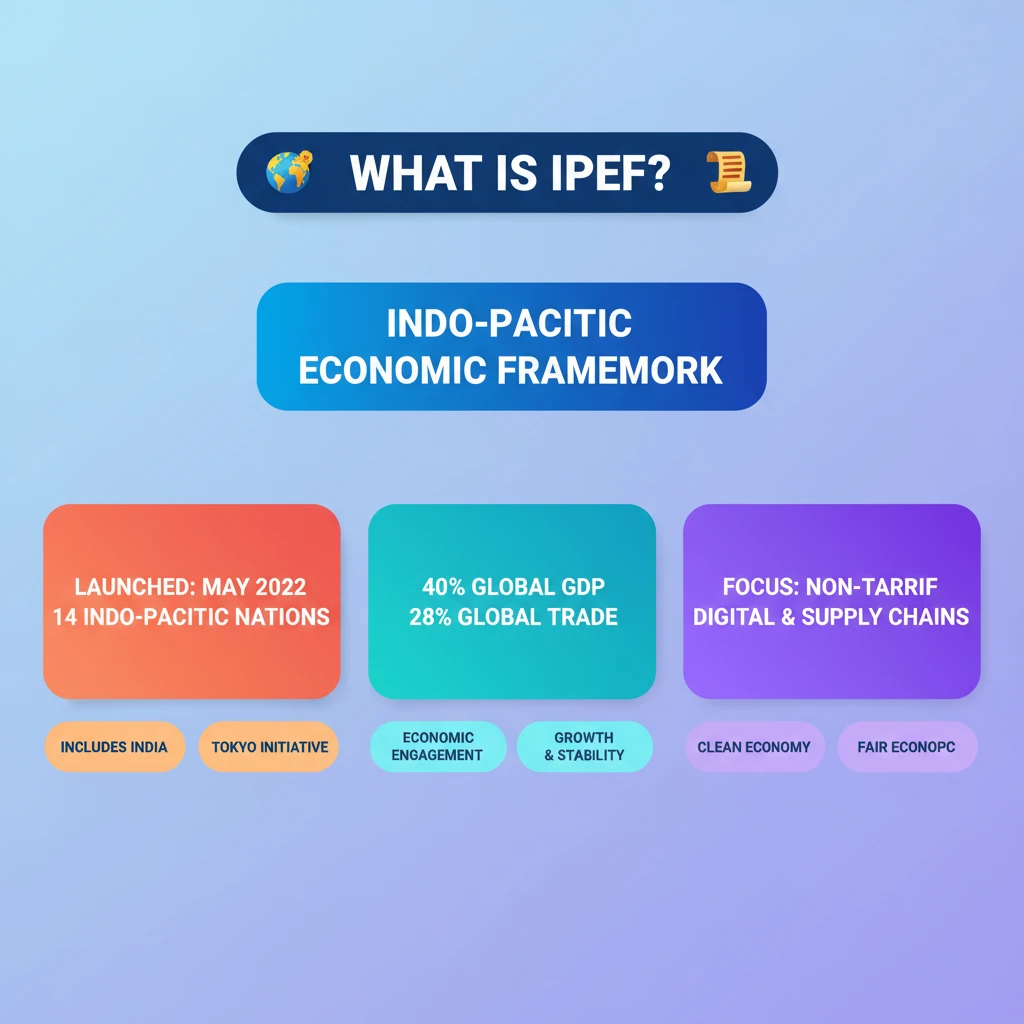
- •IPEF launched May 2022 in Tokyo with 14 Indo-Pacific nations, including India.
- •Aims to strengthen economic engagement, growth, stability, and prosperity in the region.
- •Members represent 40% of global GDP and 28% of global trade.
- •Built on 4 main pillars: Fair and Resilient Trade, Supply-Chain Resilience, and two others (Clean Economy, Fair Economy) not detailed in this summary.
- •Focuses on non-tariff aspects like supply chain resilience and digital economy, differing from traditional FTAs.
- •Offers a flexible framework where members can opt-in to specific pillars, not requiring full commitment to all.
🧠 Memory Techniques
95% Verified Content
📚 Reference Sources
•Official White House Briefings on IPEF
•Reports from think tanks on Indo-Pacific economic strategy