Annual Exchange of Nuclear Installation Lists: India and Pakistan - International Relations | UPSC Learning
Topics
0 topics • 0 completed
🔍
No topics match your search
Annual Exchange of Nuclear Installation Lists: India and Pakistan
Medium⏱️ 8 min read
international relations
📖 Introduction
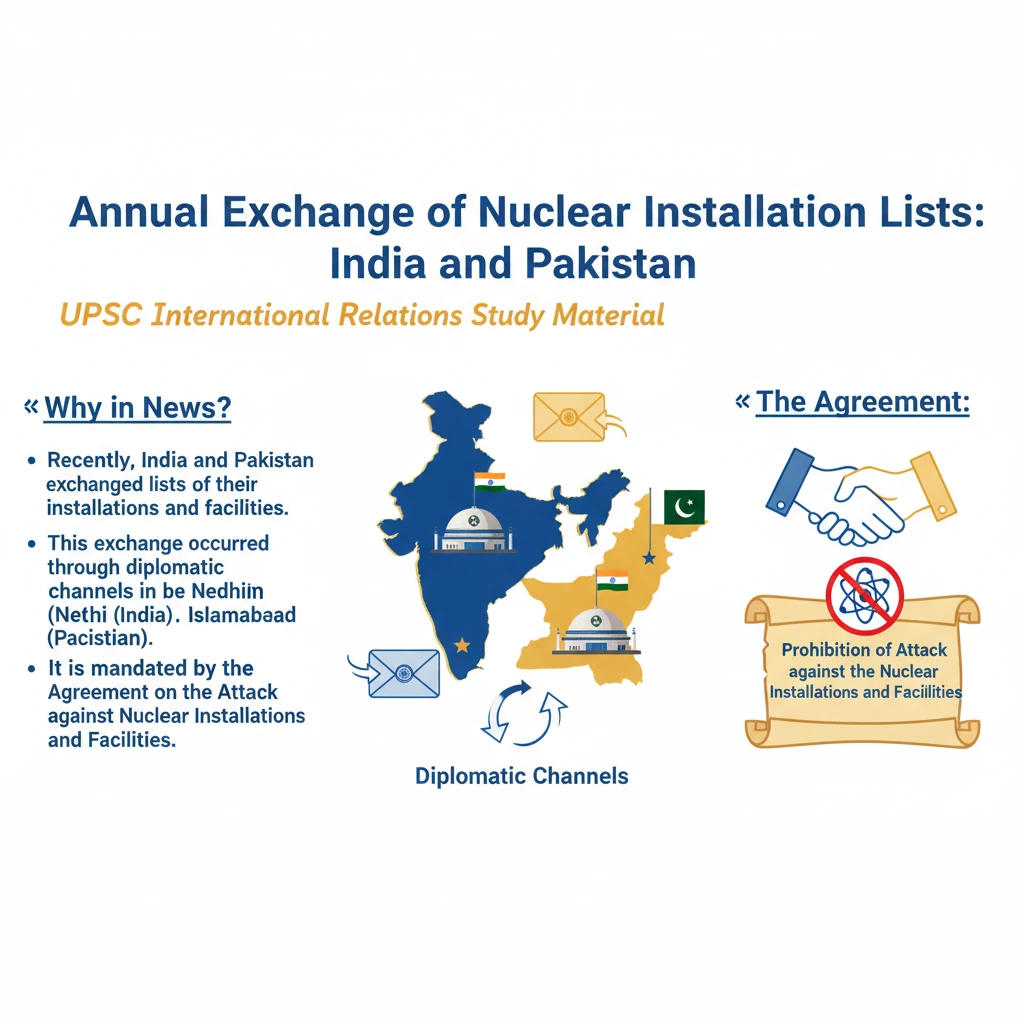
<h4>Why in News?</h4><p>Recently, <strong>India</strong> and <strong>Pakistan</strong> exchanged lists of their <strong>nuclear installations and facilities</strong>.</p><p>This exchange occurred through <strong>diplomatic channels</strong> in <strong>New Delhi</strong> (India) and <strong>Islamabad</strong> (Pakistan).</p><p>It is mandated by the <strong>Agreement on the Prohibition of Attack against Nuclear Installations and Facilities</strong> between the two countries.</p><h4>The Agreement: An Overview</h4><div class='info-box'><p>The <strong>Agreement on the Prohibition of Attack against Nuclear Installations and Facilities</strong> was signed on <strong>December 31, 1988</strong>.</p><p>Signatories were then <strong>Pakistani Prime Minister Benazir Bhutto</strong> and <strong>Indian Prime Minister Rajiv Gandhi</strong>.</p></div><p>The treaty officially came into force on <strong>January 27, 1991</strong>.</p><p>The recent exchange marks the <strong>33rd consecutive exchange</strong> of these lists between the two nations.</p><p>The <strong>first exchange</strong> took place on <strong>January 1, 1992</strong>.</p><h4>Mandate and Scope of the Agreement</h4><p>The agreement mandates both countries to inform each other about any <strong>nuclear installations and facilities</strong> to be covered.</p><p>This information exchange must occur annually on <strong>January 1st</strong> of every calendar year.</p><div class='key-point-box'><p>It provides a crucial <strong>confidence-building security measure (CBM)</strong> environment between <strong>India</strong> and <strong>Pakistan</strong>.</p></div><div class='info-box'><p>According to the agreement, the term <strong>‘nuclear installation or facility’</strong> includes:</p><ul><li><strong>Nuclear power and research reactors</strong></li><li><strong>Fuel fabrication facilities</strong></li><li><strong>Uranium enrichment facilities</strong></li><li><strong>Isotope separation facilities</strong></li><li><strong>Reprocessing facilities</strong></li><li>Any other installations with <strong>fresh or irradiated nuclear fuel and materials</strong> in any form</li><li>Establishments storing <strong>significant quantities of radioactive materials</strong></li></ul></div><h4>Historical Context: Operation Brasstacks</h4><p>While other factors played a role, the direct trigger for the negotiation and signing of the agreement was the tension generated by the <strong>1986-87 Brasstacks exercise</strong> by the <strong>Indian Army</strong>.</p><p><strong>Operation Brasstacks</strong> was a large-scale <strong>military exercise</strong> conducted in the <strong>Indian state of Rajasthan</strong>, near the <strong>Pakistan border</strong>.</p><h4>Major Areas of Dispute Between India and Pakistan</h4><p>Despite the nuclear CBM, several significant disputes persist between <strong>India</strong> and <strong>Pakistan</strong>, impacting bilateral relations.</p><h5>Kashmir Dispute</h5><ul><li><strong>Line of Control (LoC) Violations</strong>: Frequent <strong>ceasefire violations</strong> along the <strong>LoC</strong> result in casualties and escalating tensions.</li><li><strong>Disagreements over Demilitarization</strong>: Calls for <strong>demilitarization</strong> on both sides of the <strong>LoC</strong> remain unaddressed, hindering progress towards peaceful resolution.</li></ul><h5>Terrorism</h5><ul><li><strong>Cross-border Infiltration</strong>: <strong>India</strong> accuses <strong>Pakistan-backed militants</strong> of infiltrating the <strong>LoC</strong> to carry out terrorist attacks.</li><li><strong>Designation of Terror Groups</strong>: Differences in designating <strong>militant groups</strong> as terrorist organizations create obstacles to counter-terrorism cooperation.</li><li><strong>Impact on Civilian Populations</strong>: Terrorist attacks claim innocent lives and foster further animosity between the two communities.</li></ul><h5>Water Sharing</h5><ul><li><strong>Construction of Dams</strong>: Dispute over construction of <strong>dams</strong> and <strong>hydroelectric projects</strong> on the <strong>Indus River</strong> and its tributaries, impacting water flow and usage rights.</li><li><strong>Implementation of Indus Water Treaty</strong>: Differences in interpreting and implementing clauses of the treaty regarding water allocation and dispute resolution mechanisms.</li></ul><h5>Trade and Economic Ties</h5><ul><li><strong>Trade Barriers</strong>: Restrictive trade policies and high tariffs imposed by both countries hinder <strong>cross-border trade</strong> and <strong>economic connectivity</strong>.</li><li>In <strong>August 2019</strong>, <strong>Pakistan</strong> halted trade with <strong>India</strong> in response to constitutional amendments made in the <strong>Jammu and Kashmir region</strong>.</li></ul>
💡 Key Takeaways
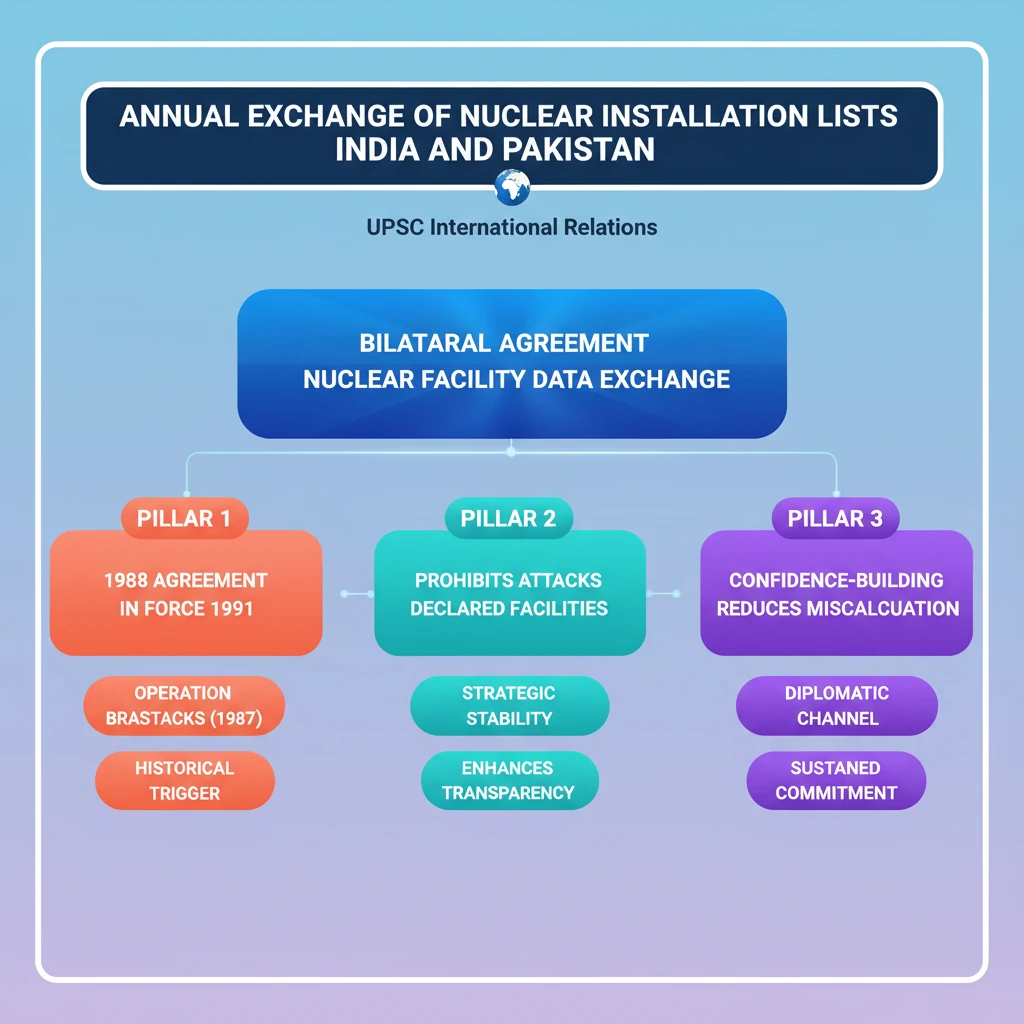
- •India and Pakistan annually exchange lists of their nuclear installations under a 1988 bilateral agreement.
- •The agreement, in force since 1991, prohibits attacks on each other's declared nuclear facilities.
- •It serves as a crucial Confidence-Building Measure (CBM) to reduce miscalculation and enhance transparency.
- •The 1986-87 Operation Brasstacks crisis was a direct historical trigger for the agreement's negotiation.
- •Despite broader bilateral disputes, this annual exchange represents a sustained diplomatic channel and commitment to strategic stability.
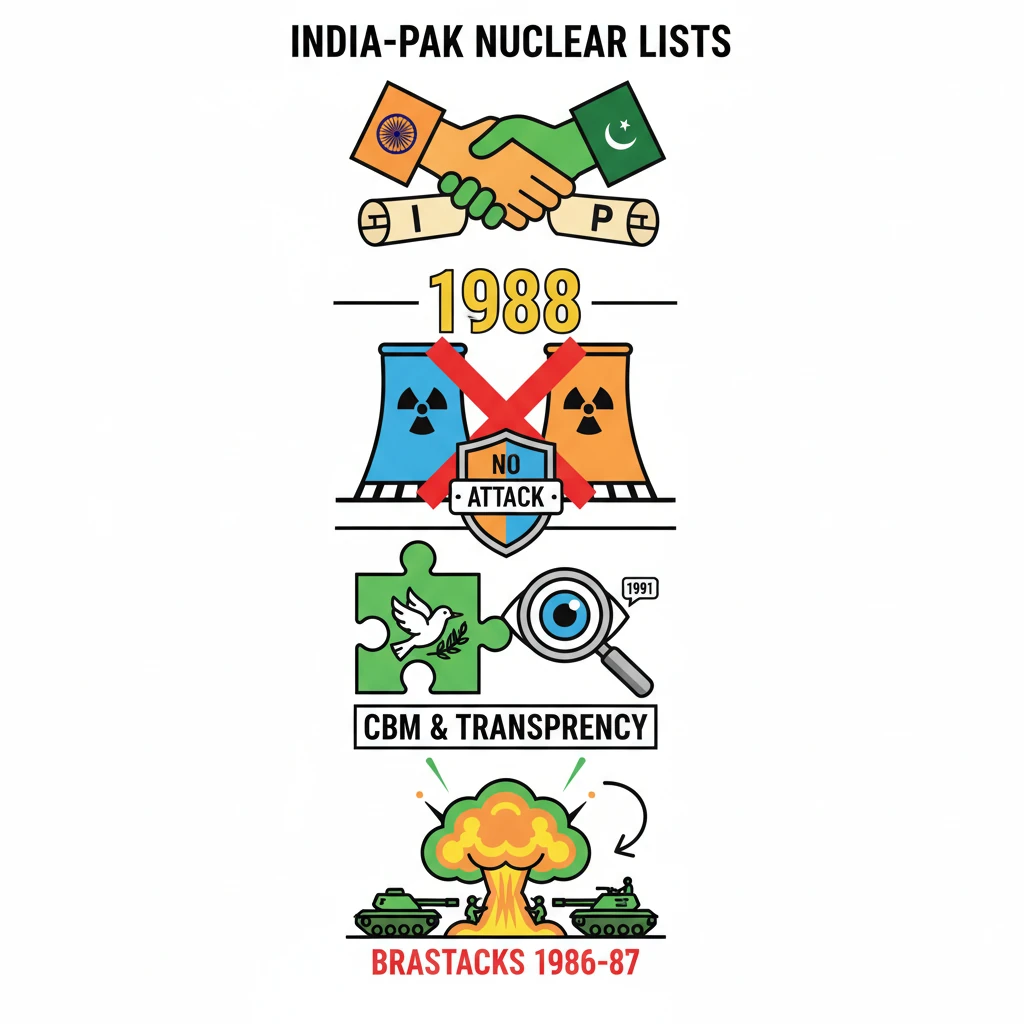
🧠 Memory Techniques
95% Verified Content
📚 Reference Sources
•Ministry of External Affairs (India) press releases
•Pakistan Ministry of Foreign Affairs statements
•Academic papers on India-Pakistan Confidence-Building Measures