What are the Different Frameworks for Nuclear Proliferation and Nuclear Disarmament - International Relations | UPSC Learning
Topics
0 topics • 0 completed
🔍
No topics match your search
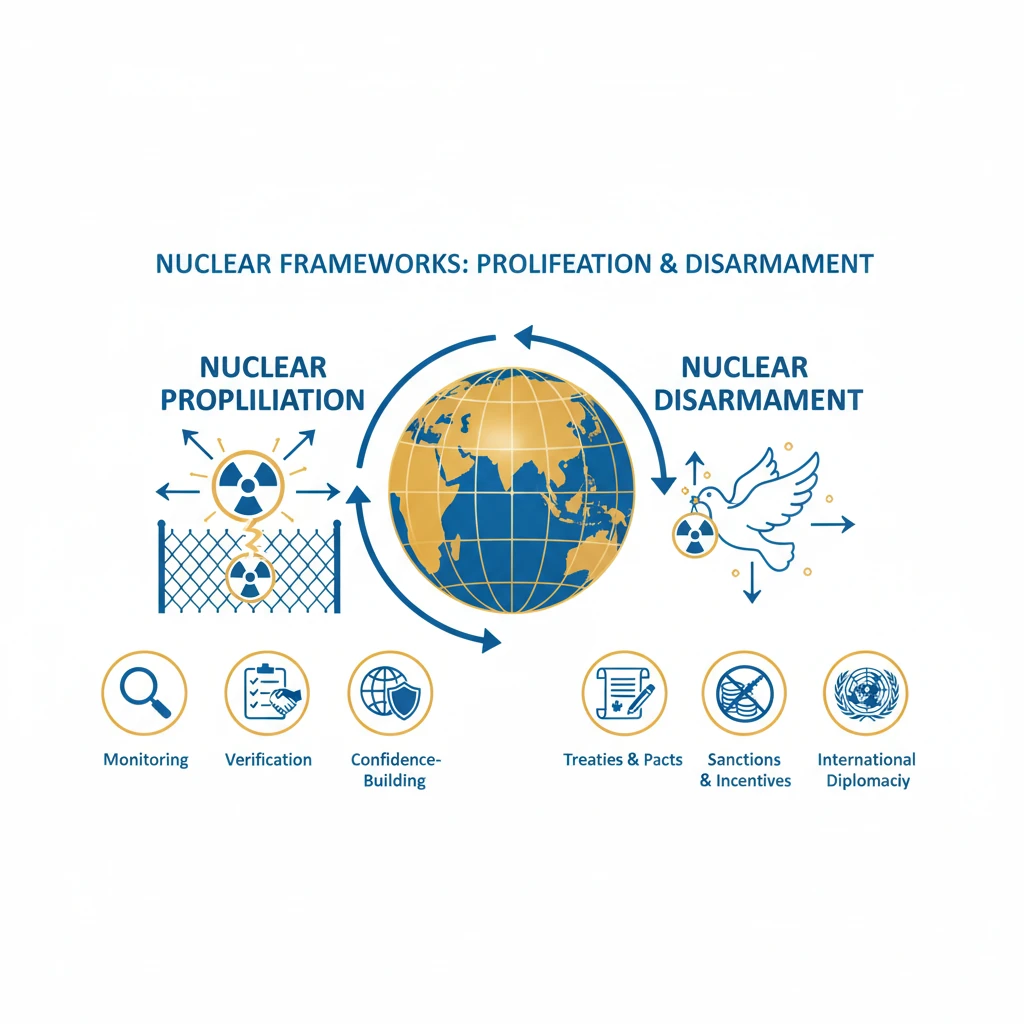
What are the Different Frameworks for Nuclear Proliferation and Nuclear Disarmament
Medium⏱️ 7 min read
international relations
📖 Introduction
<h4>Understanding Nuclear Proliferation and Disarmament Frameworks</h4><p>The global community employs various frameworks to address the critical issues of <strong>nuclear proliferation</strong> and <strong>nuclear disarmament</strong>. These frameworks aim to prevent the spread of nuclear weapons and ultimately achieve a world free of them.</p><p>These mechanisms range from international organizations with monitoring mandates to regional treaties that establish weapon-free zones. Their collective goal is to enhance global security and stability.</p><h4>The International Atomic Energy Agency (IAEA)</h4><p>The <strong>International Atomic Energy Agency (IAEA)</strong> is a pivotal international organization established in <strong>1957</strong>. It operates under the aegis of the <strong>United Nations</strong> and serves as the world's central intergovernmental forum for scientific and technical cooperation in the nuclear field.</p><div class='info-box'><p>The <strong>IAEA's primary role</strong> is to promote the safe, secure, and peaceful use of nuclear technologies. Simultaneously, it works to prevent the diversion of nuclear material from peaceful uses to nuclear weapons programs.</p></div><p>The IAEA plays a crucial role in <strong>monitoring compliance</strong> with various international nuclear agreements, most notably the <strong>Treaty on the Non-Proliferation of Nuclear Weapons (NPT)</strong>. Its inspectors verify that nuclear materials are not being used for illicit purposes.</p><div class='key-point-box'><p>The <strong>IAEA's safeguards system</strong> is central to its mission. This system involves regular inspections, surveillance, and verification of nuclear facilities and materials in signatory states to ensure adherence to non-proliferation commitments.</p></div><h4>Regional Nuclear-Weapon-Free Zones (NWFZs)</h4><p><strong>Regional Nuclear-Weapon-Free Zones (NWFZs)</strong> represent another significant framework for nuclear disarmament. These are treaties by which a group of states agrees to prohibit the development, manufacture, control, possession, testing, stationing, or transport of nuclear weapons within their respective territories.</p><p>The establishment of NWFZs signifies a strong regional commitment to non-proliferation and disarmament. They contribute to regional stability and can build momentum for broader global disarmament efforts.</p><div class='info-box'><p>The <strong>first NWFZ</strong> was established in <strong>Latin America</strong> through the <strong>Treaty of Tlatelolco</strong>. This treaty marked a groundbreaking achievement in regional disarmament.</p></div><div class='exam-tip-box'><p>Understanding the distinction between global frameworks like the <strong>NPT</strong> (supported by <strong>IAEA</strong> safeguards) and regional initiatives like <strong>NWFZs</strong> is vital for UPSC Mains. Discuss their complementary roles in answer writing.</p></div>
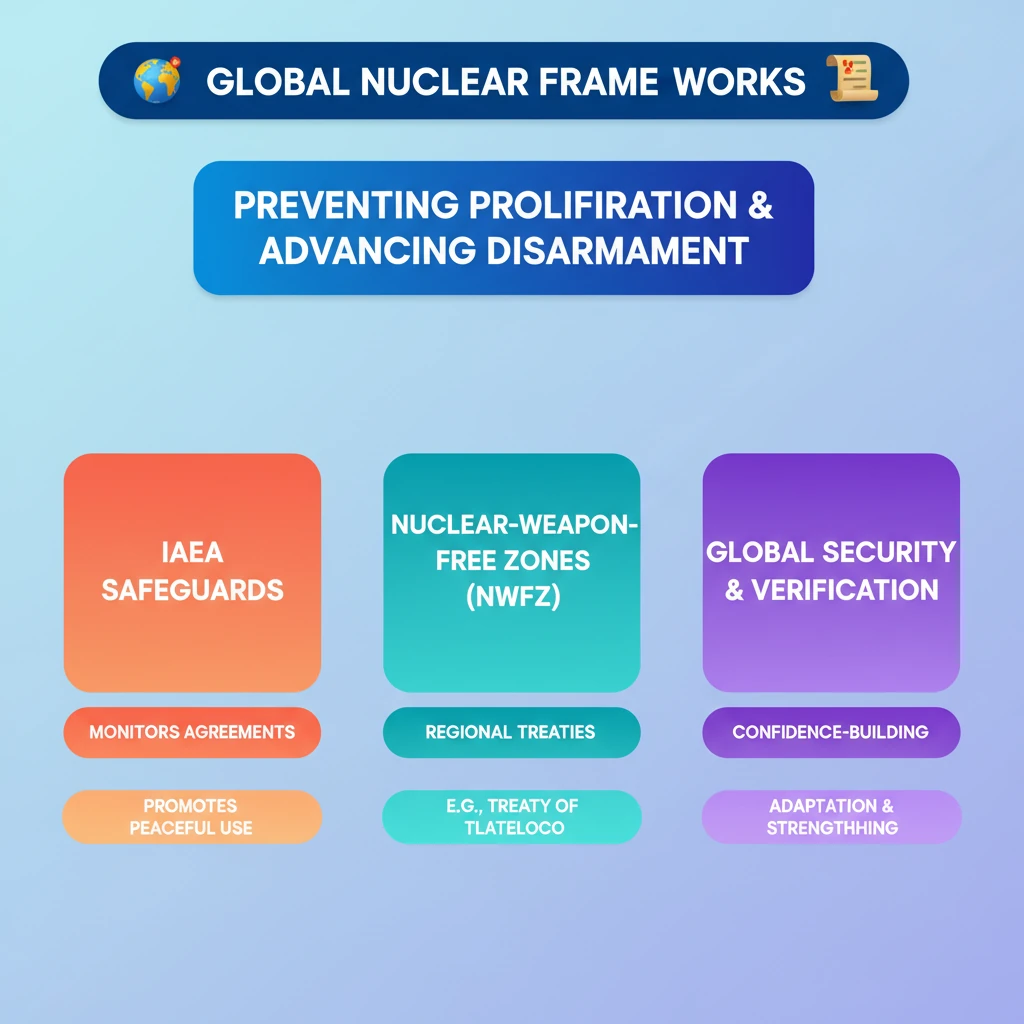
💡 Key Takeaways
- •Nuclear frameworks aim to prevent proliferation and achieve disarmament.
- •The IAEA monitors compliance and promotes peaceful nuclear technology use.
- •Regional Nuclear-Weapon-Free Zones (NWFZs) prohibit nuclear weapons in specific areas.
- •The Treaty of Tlatelolco was the first NWFZ, established in Latin America.
- •These frameworks are crucial for global security and stability amidst ongoing nuclear challenges.
🧠 Memory Techniques
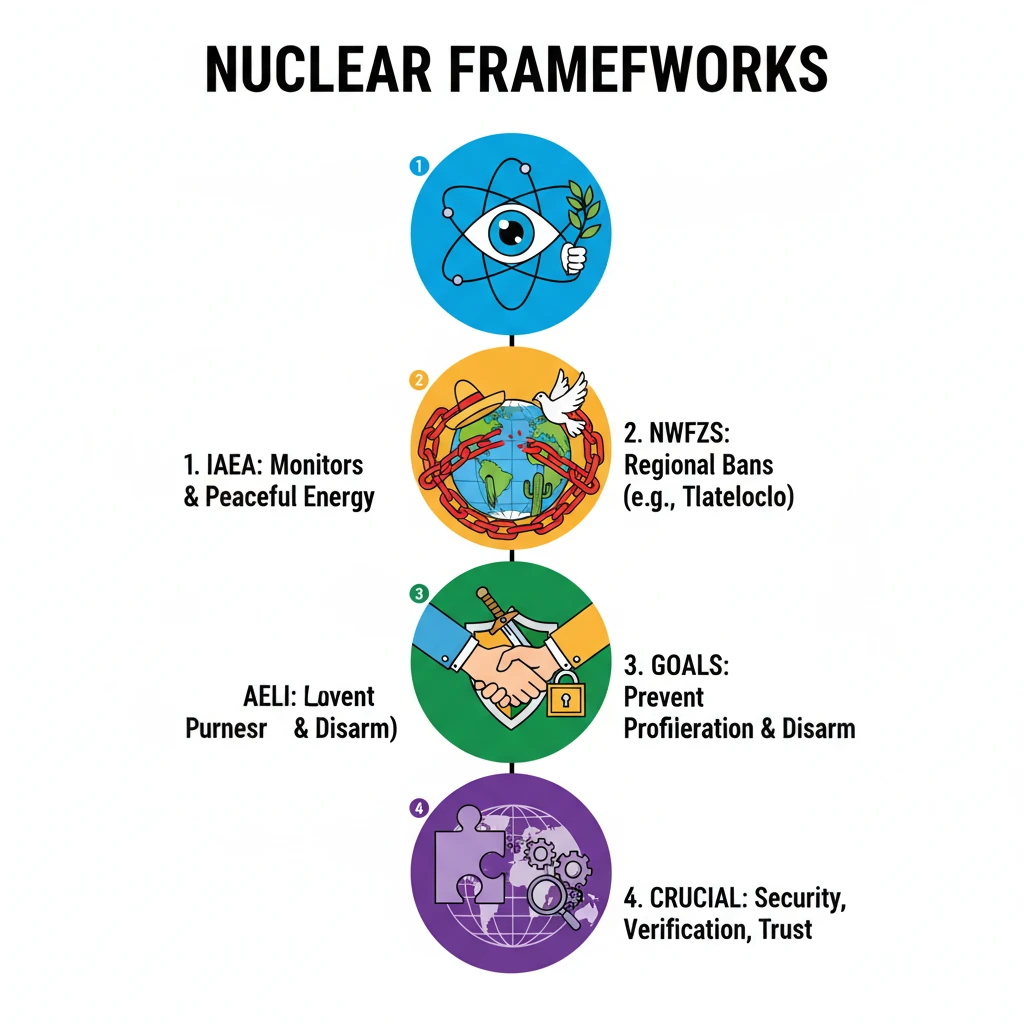
98% Verified Content
📚 Reference Sources
•International Atomic Energy Agency (IAEA) Official Website
•United Nations Office for Disarmament Affairs (UNODA) Website
•Treaty of Tlatelolco Text and Background Information