What are the Major Aspects of India-Myanmar Relations? - International Relations | UPSC Learning
Topics
0 topics • 0 completed
🔍
No topics match your search
What are the Major Aspects of India-Myanmar Relations?
Medium⏱️ 7 min read
international relations
📖 Introduction
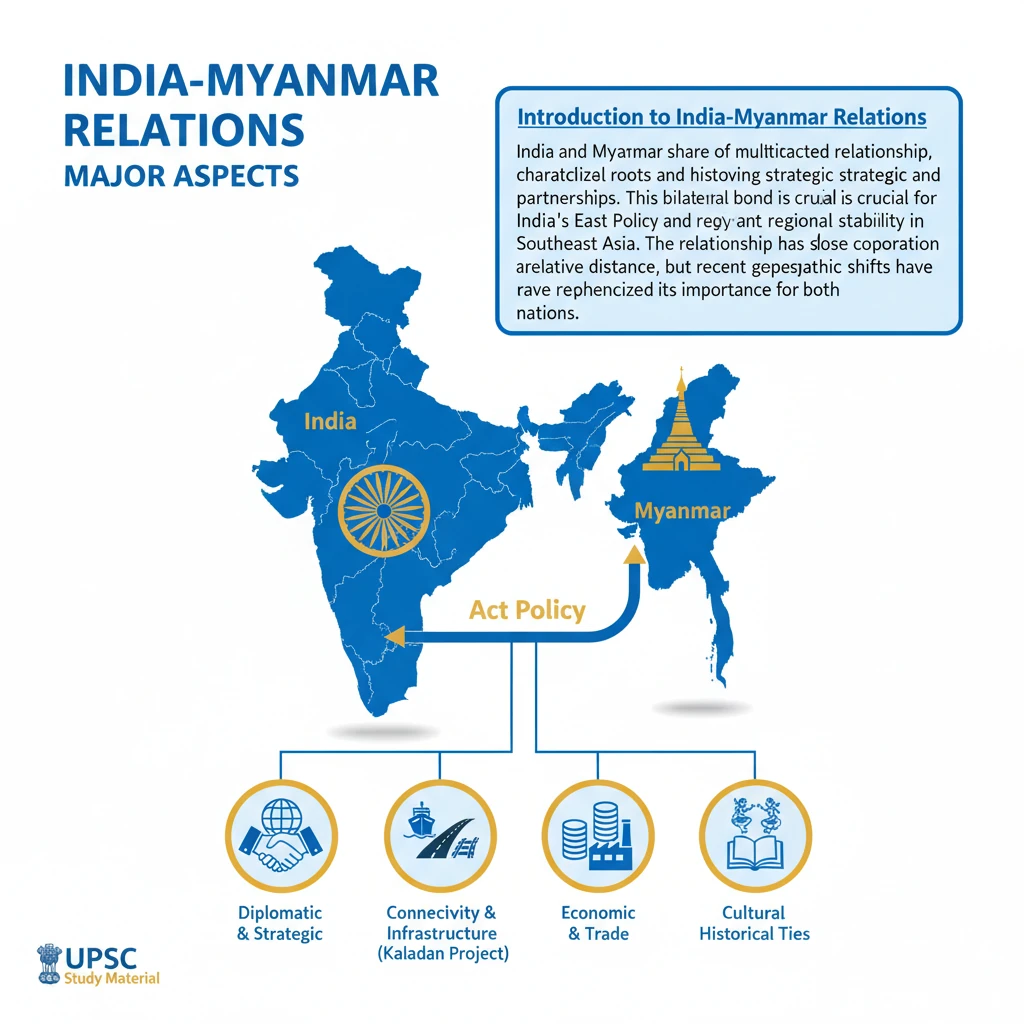
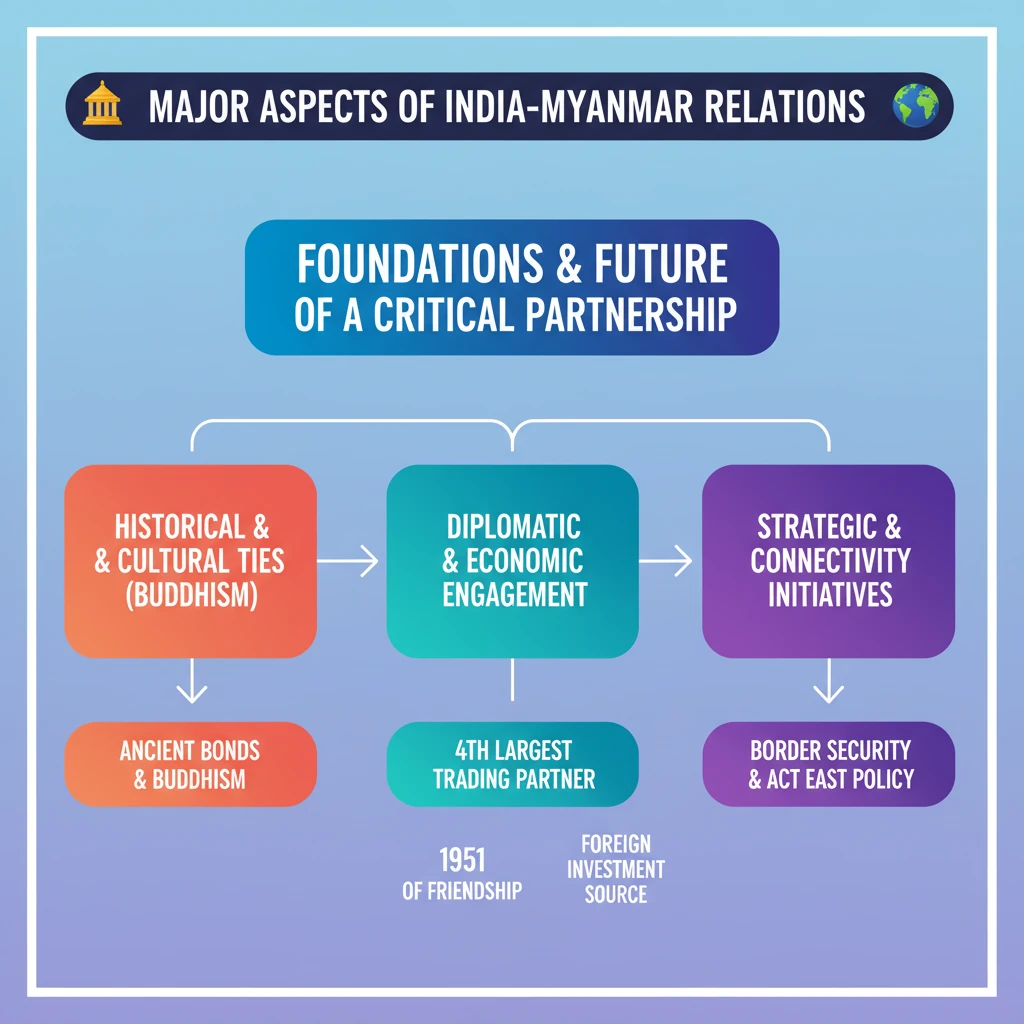
<h4>Introduction to India-Myanmar Relations</h4><p><strong>India</strong> and <strong>Myanmar</strong> share a multifaceted relationship, characterized by deep historical roots and evolving strategic and economic partnerships. This bilateral bond is crucial for India's <strong>Act East Policy</strong> and regional stability in Southeast Asia.</p><p>The relationship has seen periods of close cooperation and relative distance, but recent geopolitical shifts have re-emphasized its importance for both nations.</p><h4>Historical and Cultural Foundations</h4><p>The ties between <strong>India</strong> and <strong>Myanmar</strong> extend back centuries, predating modern nation-states. These connections are primarily built upon shared cultural and religious heritage.</p><p><strong>Buddhism</strong> plays a pivotal role, with its origins in India significantly influencing Myanmar's cultural landscape. Many historical sites and practices in Myanmar reflect this shared legacy, fostering strong people-to-people connections.</p><div class='info-box'><p>The formal diplomatic relations between independent <strong>India</strong> and <strong>Myanmar</strong> were solidified with the signing of the <strong>Treaty of Friendship</strong> in <strong>1951</strong>. This treaty laid the groundwork for peaceful coexistence and cooperation across various sectors.</p></div><h4>Economic Cooperation</h4><p><strong>Economic cooperation</strong> is a vital pillar of the <strong>India-Myanmar relationship</strong>. India is a significant player in Myanmar's trade and investment landscape, contributing to its economic development.</p><div class='info-box'><p>Currently, <strong>India</strong> stands as <strong>Myanmar's 4th largest trading partner</strong>. This highlights the substantial volume of bilateral trade, encompassing a range of goods from agricultural products to manufactured items.</p></div><p>Beyond trade, <strong>India</strong> is also a <strong>major source of investment</strong> for Myanmar. Indian companies have invested in various sectors including infrastructure, energy, manufacturing, and pharmaceuticals, contributing to Myanmar's economic growth.</p><div class='exam-tip-box'><p>When discussing economic ties, remember to mention specific connectivity projects like the <strong>Kaladan Multi-Modal Transit Transport Project</strong>. These are practical examples of India's commitment to enhancing regional trade and investment infrastructure.</p></div>
💡 Key Takeaways
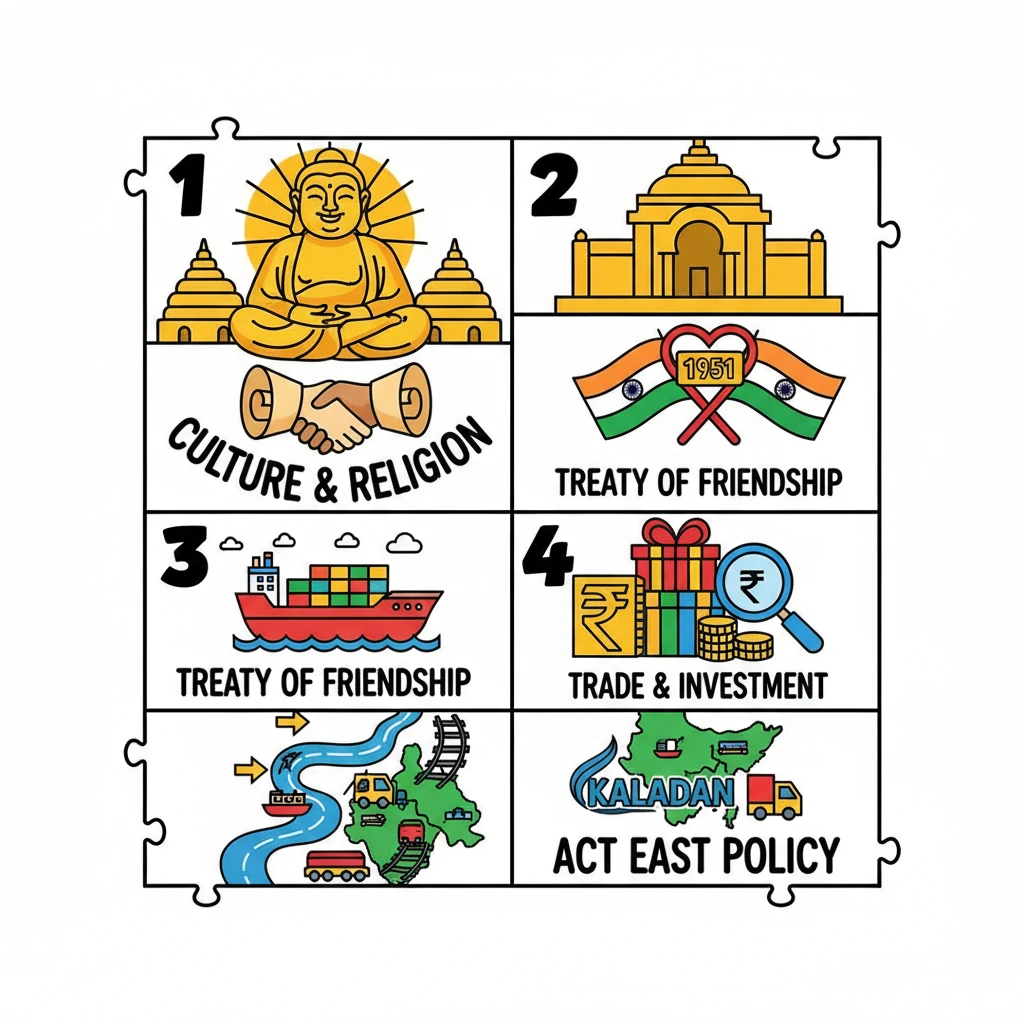
- •India-Myanmar ties are rooted in ancient cultural and religious bonds, especially Buddhism.
- •The 1951 Treaty of Friendship forms the diplomatic foundation of their modern relationship.
- •India is Myanmar's 4th largest trading partner and a significant source of foreign investment.
- •Connectivity projects like Kaladan Multi-Modal Transit Transport are vital for India's Northeast and Act East Policy.
- •Bilateral security cooperation is crucial for managing the shared border and tackling cross-border challenges.
- •Myanmar is strategically important for India's regional outreach and geopolitical balancing in Southeast Asia.
🧠 Memory Techniques
95% Verified Content
📚 Reference Sources
•Ministry of External Affairs (MEA), India
•Observer Research Foundation (ORF)
•Council on Foreign Relations (CFR)
•Press Information Bureau (PIB), Government of India