Arrest Warrants ICC and Hamas Leaders - International Relations | UPSC Learning
Topics
0 topics • 0 completed
🔍
No topics match your search
Arrest Warrants ICC and Hamas Leaders
Medium⏱️ 6 min read
international relations
📖 Introduction
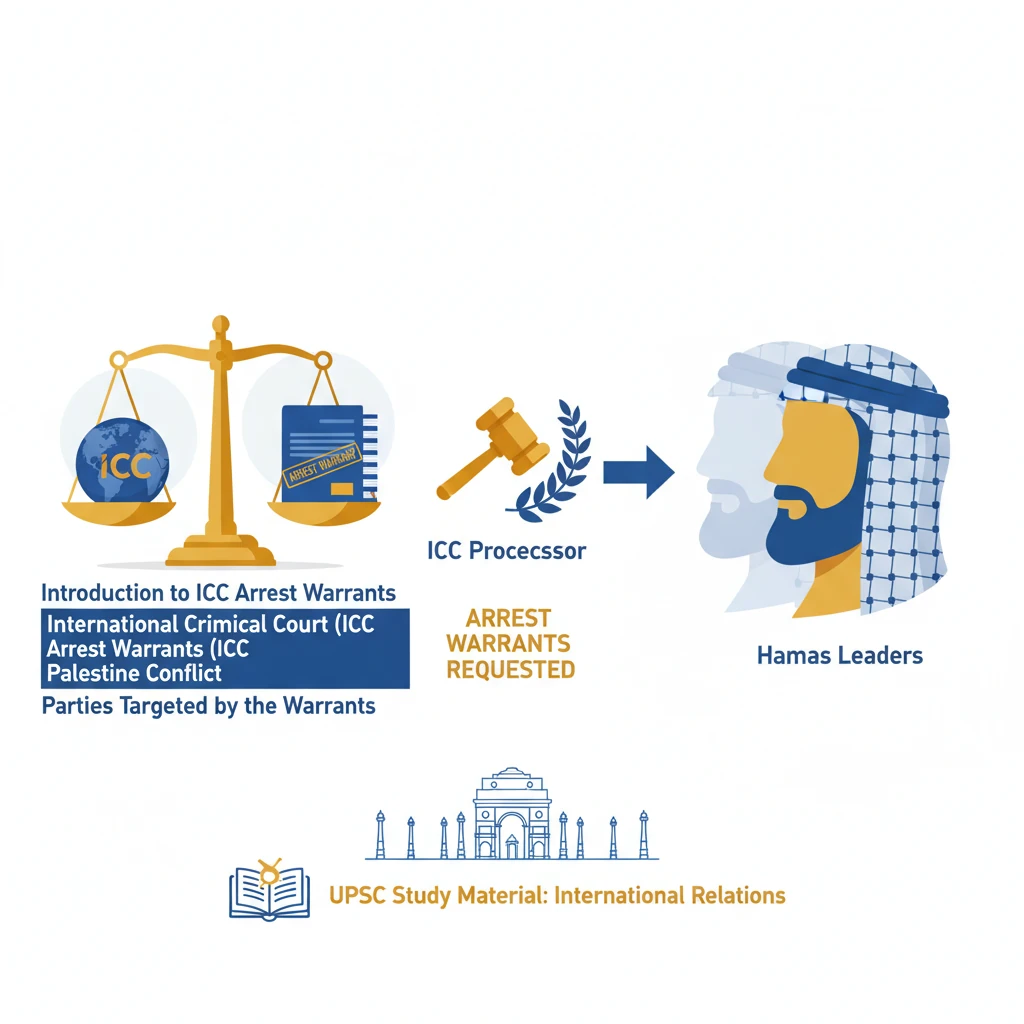
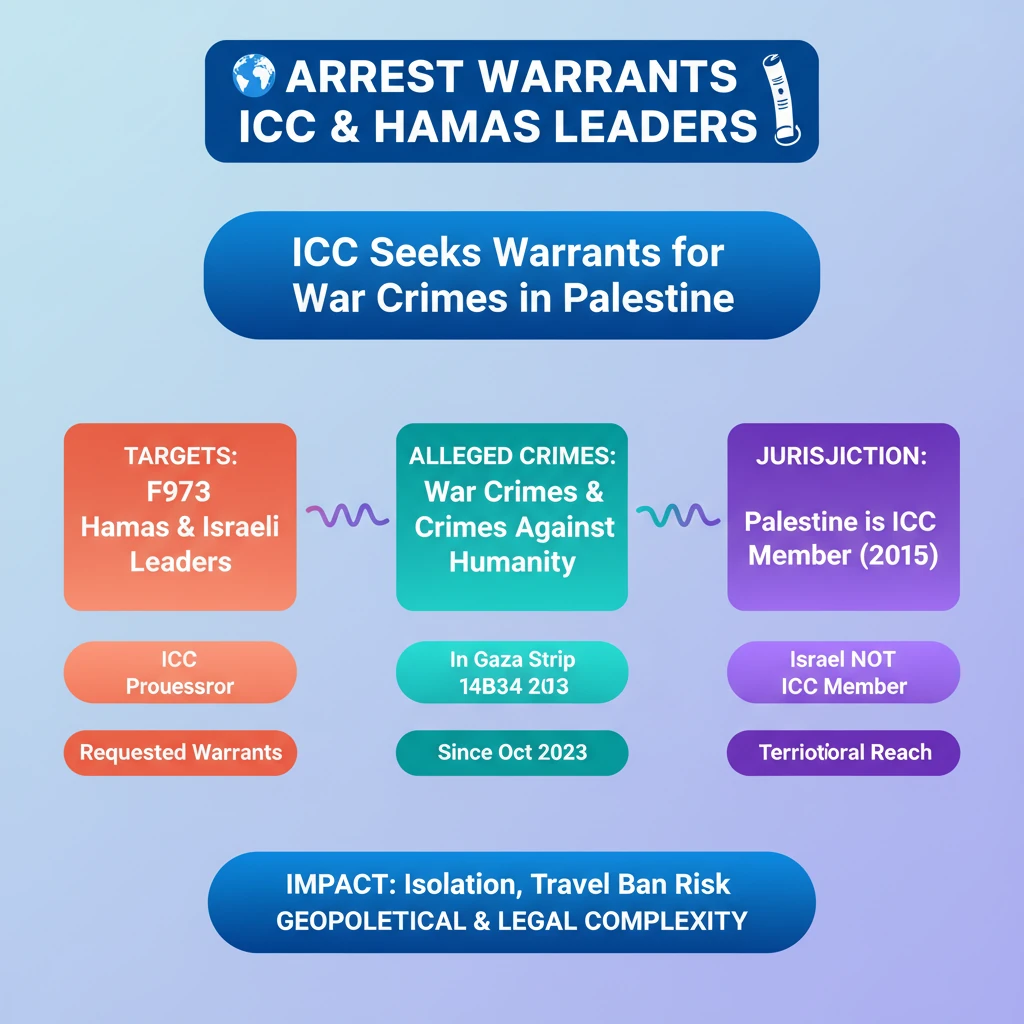
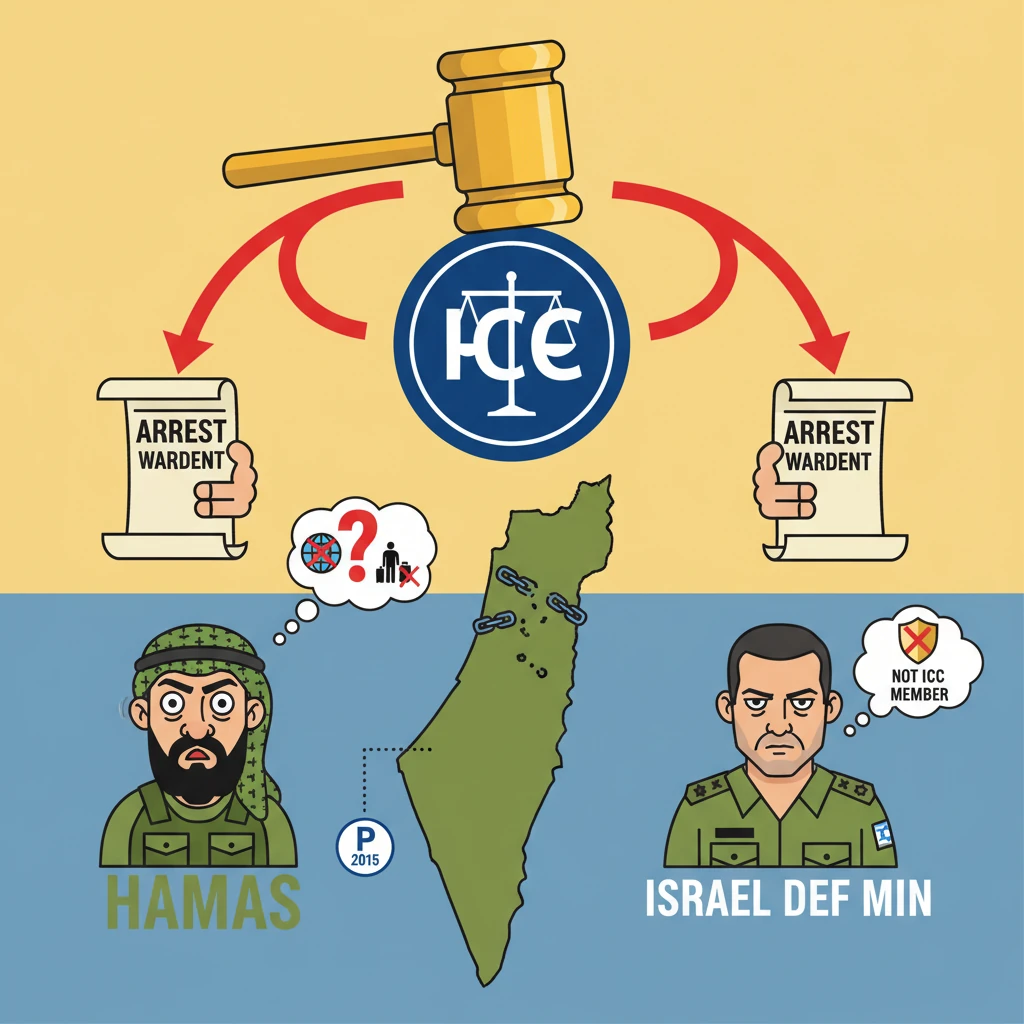
<h4>Introduction to ICC Arrest Warrants</h4><p>Recently, the <strong>International Criminal Court (ICC)</strong> prosecutor made a significant request. This request was for <strong>arrest warrants</strong> against key figures involved in the conflict in <strong>Palestine</strong>.</p><p>The move has drawn considerable international attention and highlights the complex interplay of international law and geopolitical realities.</p><h4>Parties Targeted by the Warrants</h4><p>The requested warrants target leaders from both sides of the conflict. Specifically, the prosecutor sought warrants against leaders of <strong>Hamas</strong>.</p><p>Additionally, a warrant was requested for the <strong>Defence Minister of Israel</strong>. These individuals are accused of committing <strong>war crimes</strong> in the region of <strong>Palestine</strong>.</p><div class='key-point-box'><p><strong>Key Request:</strong> Arrest warrants sought against <strong>Hamas leaders</strong> and <strong>Israel's Defence Minister</strong> for alleged <strong>war crimes</strong> in <strong>Palestine</strong>.</p></div><h4>ICC Jurisdiction and Membership Status</h4><p>A crucial aspect of this development is the membership status of the involved entities with the <strong>ICC</strong>. <strong>Israel is not a member of the International Criminal Court</strong>.</p><p>This non-membership has significant implications for the immediate enforceability of any potential warrants against Israeli officials.</p><div class='info-box'><p><strong>Palestine's ICC Membership:</strong> The <strong>ICC</strong> formally accepted <strong>“The State of Palestine”</strong> as a member state in <strong>2015</strong>. This membership grants the ICC jurisdiction over crimes committed on Palestinian territory.</p></div><h4>Implications of the Warrants</h4><p>Even if the <strong>arrest warrants</strong> are issued, the concerned <strong>Israeli leaders</strong> do not face any immediate risk of prosecution. This is due to <strong>Israel's non-membership</strong> in the <strong>ICC</strong>.</p><p>However, the issuance of such warrants could have other substantial consequences. It could further deepen <strong>Israel’s international isolation</strong>.</p><p>Moreover, it would likely make it significantly more difficult for the implicated <strong>Israeli leaders</strong> to travel abroad. This is because member states of the ICC would be obligated to cooperate with the court's warrants.</p><div class='exam-tip-box'><p><strong>UPSC Insight:</strong> Understand the distinction between <strong>ICC membership</strong> and its implications for <strong>jurisdiction</strong>. This case exemplifies how international legal actions can exert diplomatic and political pressure even without direct enforcement capabilities on non-member states. Focus on the concept of <strong>universal jurisdiction</strong> and the <strong>Rome Statute</strong>.</p></div>
💡 Key Takeaways
- •ICC prosecutor requested arrest warrants against Hamas leaders and Israel's Defence Minister.
- •Warrants are for alleged war crimes committed in Palestine.
- •Israel is not an ICC member, but Palestine joined in 2015, granting territorial jurisdiction.
- •Immediate prosecution risk for Israeli leaders is low, but warrants could lead to international isolation and travel restrictions.
- •The case highlights the complex interplay of international law, jurisdiction, and geopolitical pressure.
🧠 Memory Techniques
98% Verified Content
📚 Reference Sources
•Official website of the International Criminal Court (ICC)
•United Nations documents on Palestine's ICC membership