H-1B Visa Program - International Relations | UPSC Learning
Topics
0 topics • 0 completed
🔍
No topics match your search
H-1B Visa Program
Medium⏱️ 8 min read
international relations
📖 Introduction
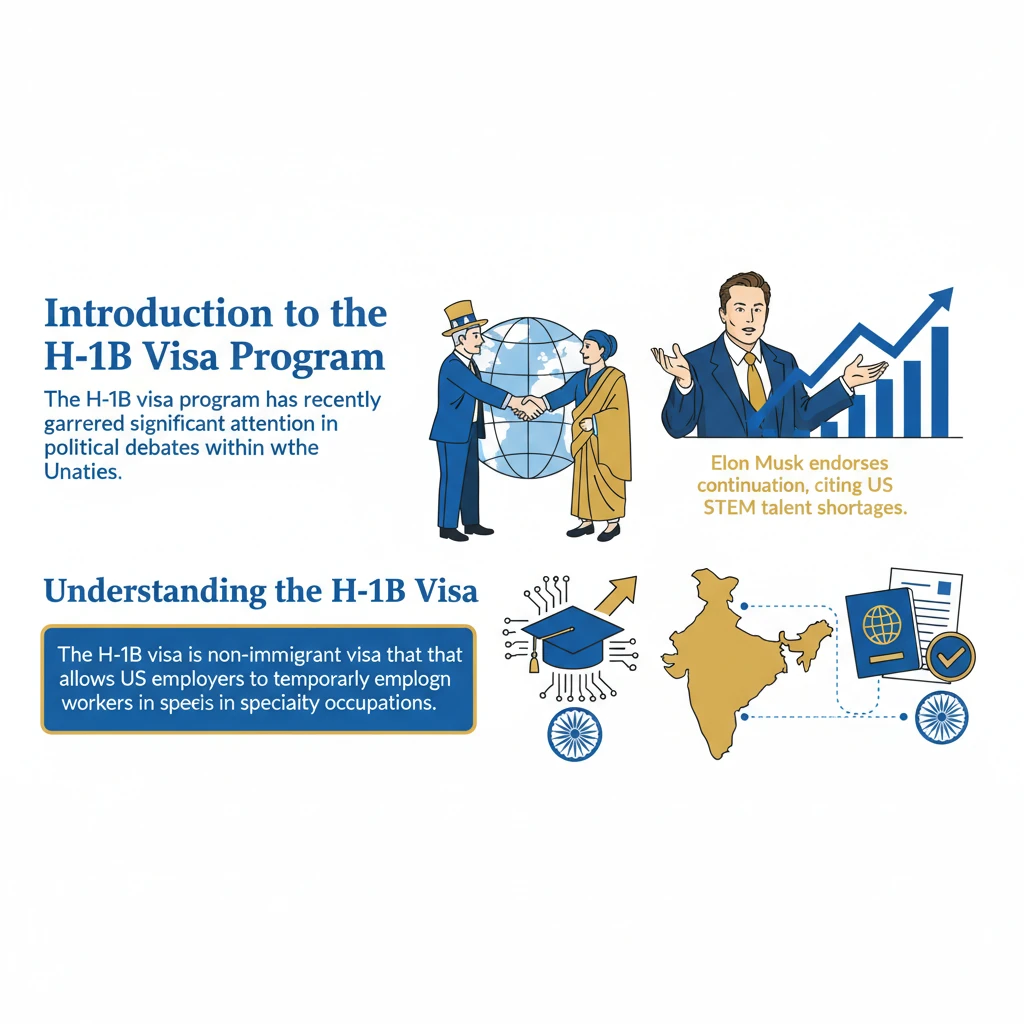
<h4>Introduction to the H-1B Visa Program</h4><p>The <strong>H-1B visa program</strong> has recently garnered significant attention in <strong>political debates</strong> within the United States.</p><p>Prominent figures, including <strong>Elon Musk</strong>, have publicly voiced their support for its continuation. They emphasize its crucial role in addressing the <strong>US’s STEM talent shortages</strong>.</p><h4>Understanding the H-1B Visa</h4><div class='info-box'><p>The <strong>H-1B visa</strong> is a <strong>non-immigrant visa</strong> category. It permits US-based companies to temporarily employ foreign workers in specific <strong>specialty occupations</strong>.</p></div><p>These specialty jobs typically require a high level of skill and often a minimum of a <strong>bachelor’s degree</strong>. Key fields include <strong>Science, Technology, Engineering, and Mathematics (STEM)</strong>, as well as <strong>Information Technology (IT)</strong>.</p><p>The program was originally introduced in <strong>1990</strong>. Its primary aim was to assist US employers in filling skill gaps when qualified American workers were not available.</p><h4>What is a Non-Immigrant Visa?</h4><div class='info-box'><p>A <strong>non-immigrant visa</strong> grants individuals temporary entry into the United States. It is distinct from an immigrant visa, which leads to permanent residency.</p></div><p>Such visas are issued for various specific purposes, including <strong>tourism, business, work, study</strong>, or <strong>medical treatment</strong>, for a defined period.</p><h4>Visa Duration and Renewal</h4><p>An <strong>H-1B visa</strong> can be initially issued for a maximum period of <strong>six years</strong>. This duration is typically split into two three-year increments.</p><p>Upon the completion of this six-year period, the visa holder has two main options. They must either depart the US for at least <strong>12 months</strong> before being eligible to reapply for another H-1B visa, or they can apply for <strong>permanent residence</strong> (a <strong>Green Card</strong>).</p><h4>Annual Cap and Exemptions</h4><p>The <strong>H-1B visa program</strong> operates under an annual numerical limit, commonly known as the <strong>annual cap</strong>. This cap restricts the number of new visas issued each fiscal year.</p><div class='info-box'><ul><li><strong>Regular Annual Cap:</strong> Currently set at <strong>65,000</strong> new H-1B visas per fiscal year.</li><li><strong>Master’s Exemption:</strong> An additional <strong>20,000 visas</strong> are reserved. These are specifically for applicants who hold a <strong>master’s degree or higher</strong> from a US university.</li></ul></div><div class='exam-tip-box'><p><strong>UPSC Insight:</strong> Understanding the distinction between <strong>immigrant</strong> and <strong>non-immigrant visas</strong> is crucial. Also, note the specific <strong>annual cap</strong> and <strong>exemptions</strong> as these are frequently debated policy points relevant to <strong>GS-II: International Relations</strong>.</p></div>
💡 Key Takeaways
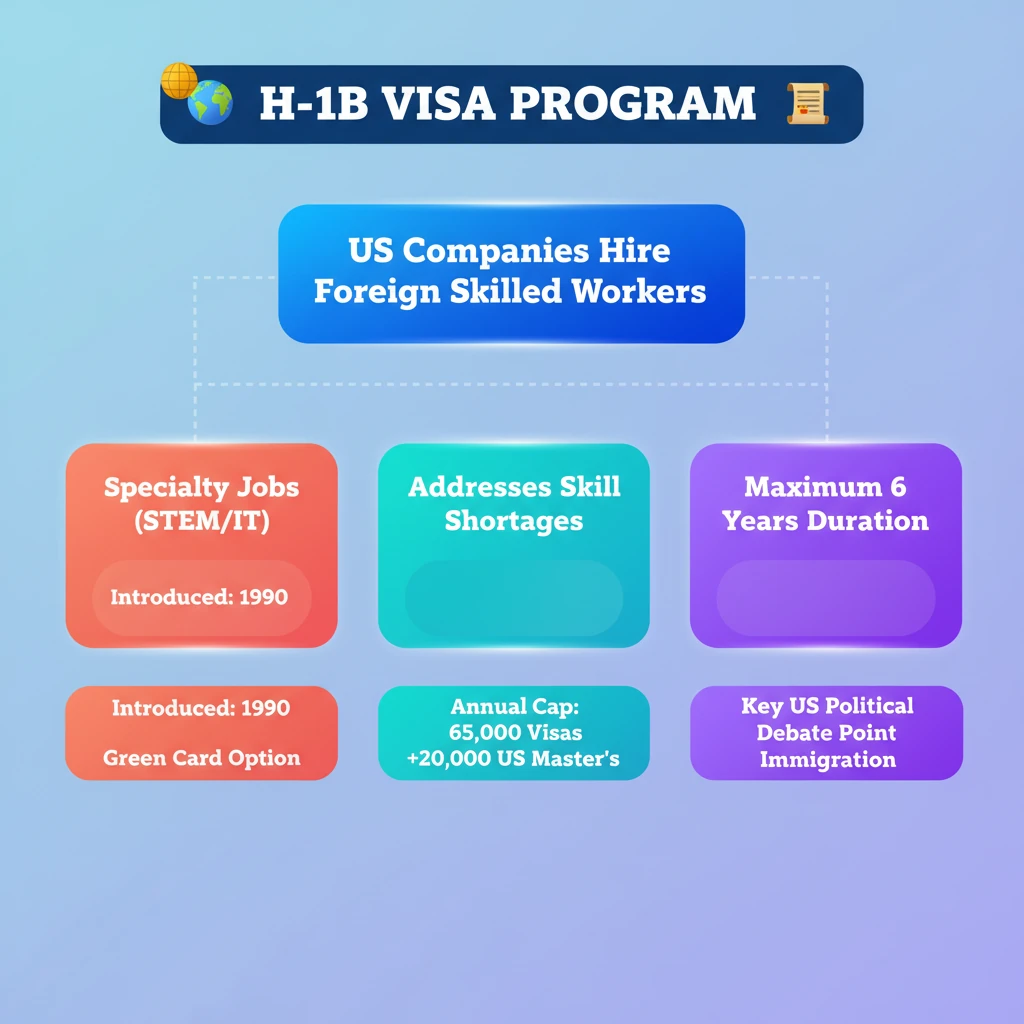
- •The H-1B is a non-immigrant visa allowing US companies to hire foreign workers for specialty (STEM/IT) jobs.
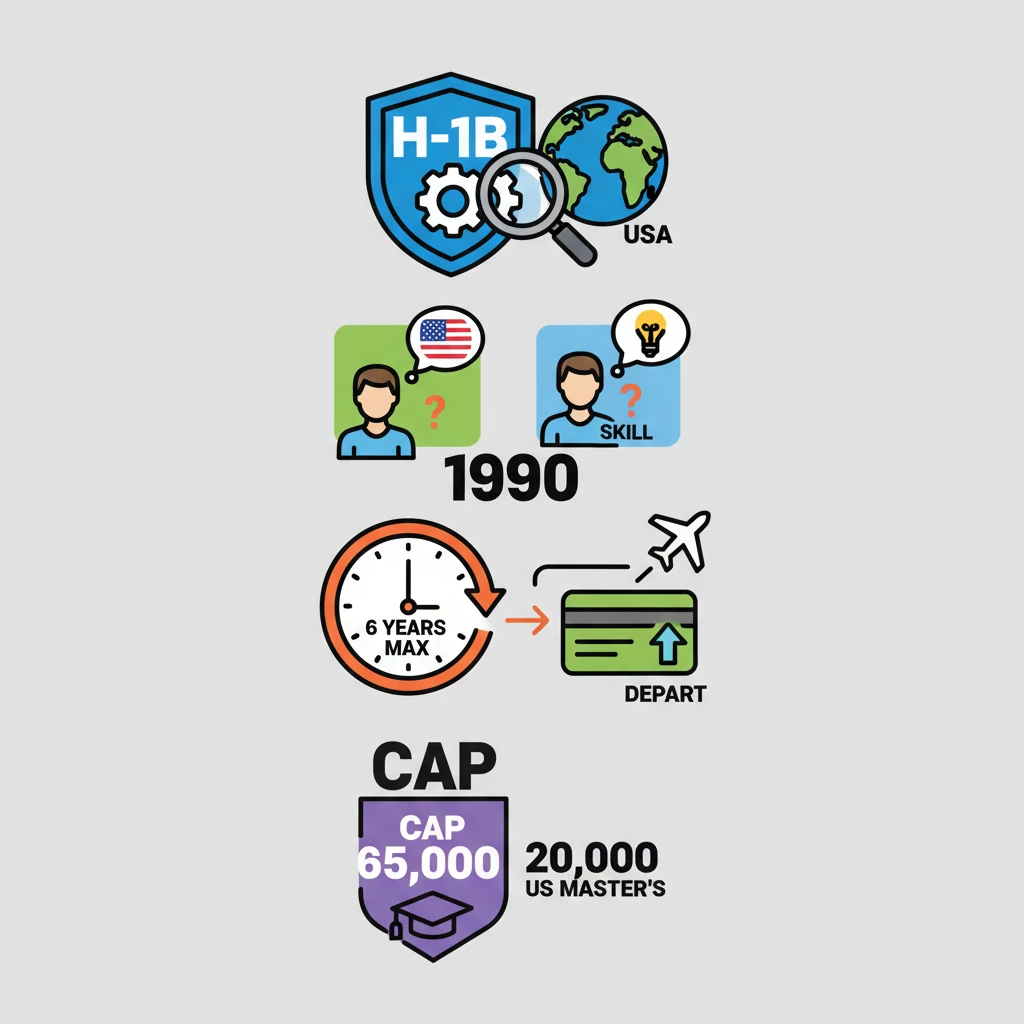
- •It was introduced in 1990 to address skill shortages when qualified US workers are unavailable.
- •Visa duration is a maximum of six years, after which a Green Card application or departure is required.
- •There is an annual cap of 65,000 visas, with an additional 20,000 for US Master's degree holders.
- •The program is a key point in US political debates regarding STEM talent and immigration policy.
🧠 Memory Techniques
95% Verified Content
📚 Reference Sources
•US Citizenship and Immigration Services (USCIS) official website
•Department of Homeland Security (DHS) reports
•Congressional Research Service (CRS) reports on H-1B visas