India-Sri Lanka: Connectivity, ETCA, and Petroleum Pipeline Initiatives - International Relations | UPSC Learning
Topics
0 topics • 0 completed
🔍
No topics match your search
India-Sri Lanka: Connectivity, ETCA, and Petroleum Pipeline Initiatives
Medium⏱️ 8 min read
international relations
📖 Introduction
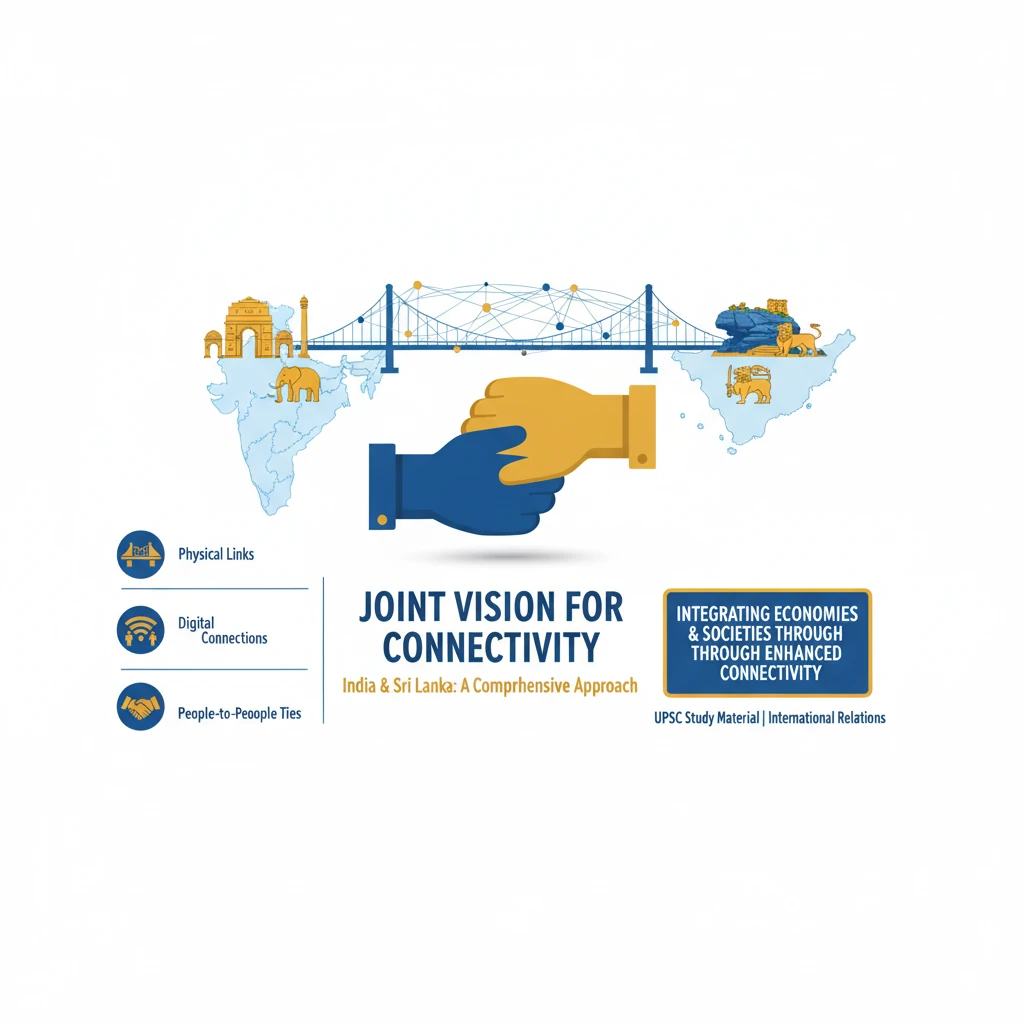
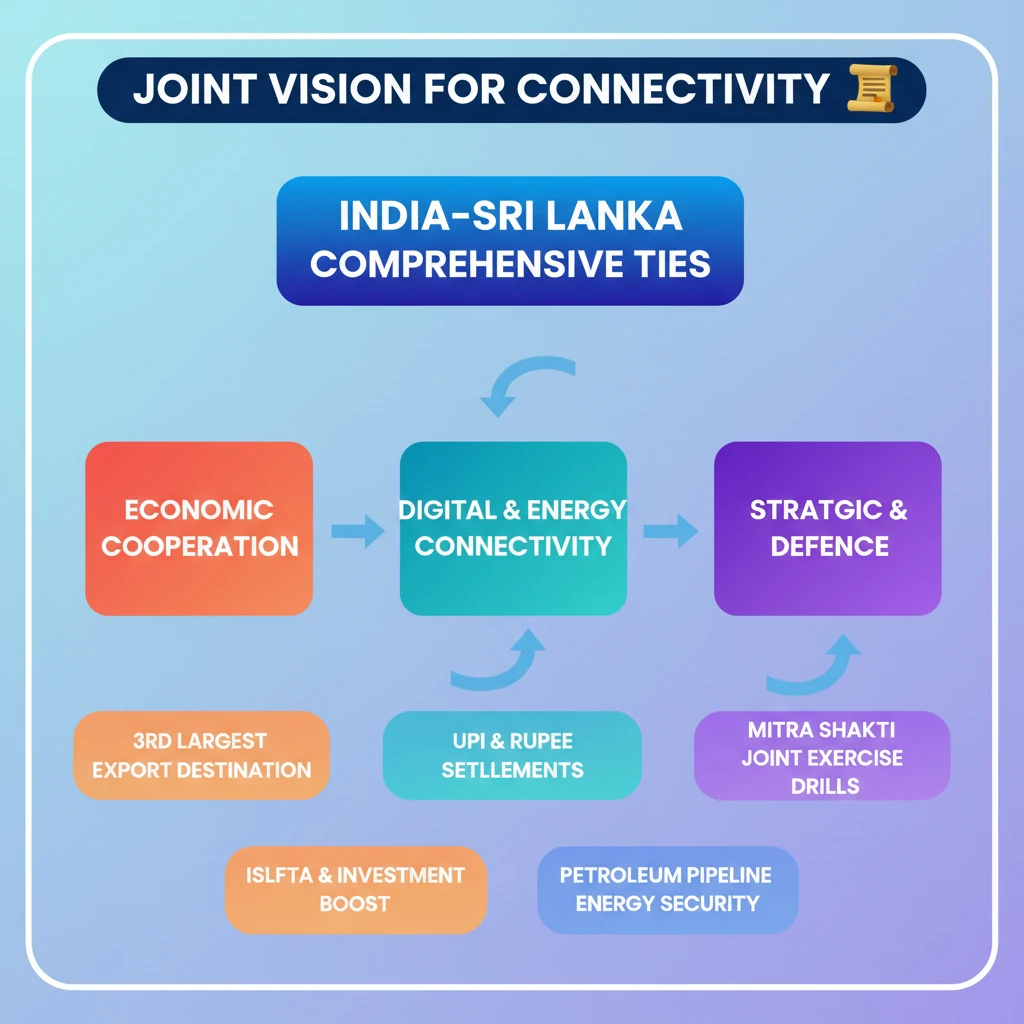
<h4>Introduction to Joint Vision for Connectivity</h4><p>India and Sri Lanka have forged a <strong>Joint Vision for Connectivity</strong>, emphasizing a comprehensive approach to bolster bilateral ties. This vision extends beyond traditional links, encompassing various critical sectors for mutual growth.</p><div class='key-point-box'><p>The core objective is to integrate the economies and societies of both nations through enhanced physical, digital, and people-to-people connections.</p></div><h4>Pillars of Comprehensive Connectivity</h4><p>The joint vision outlines several key areas for enhanced connectivity:</p><ul><li><strong>People-to-people connectivity</strong>: Fostering cultural exchanges and stronger human links.</li><li><strong>Renewable energy cooperation</strong>: Collaborating on sustainable energy solutions.</li><li><strong>Logistics and port connectivity</strong>: Improving trade routes and maritime infrastructure.</li><li><strong>Grid connectivity for electricity trade</strong>: Establishing infrastructure for cross-border power exchange.</li></ul><h4>Economic and Technology Cooperation Agreement (ETCA)</h4><p>Both countries are actively exploring the establishment of an <strong>Economic and Technology Cooperation Agreement (ETCA)</strong>. This agreement aims to deepen economic integration and stimulate development.</p><div class='info-box'><p>The <strong>ETCA</strong> is envisioned as a framework to facilitate trade, investment, and technological collaboration, thereby fostering stronger economic ties between India and Sri Lanka.</p></div><h4>Multi-Project Petroleum Pipeline</h4><p>A significant agreement has been reached to establish a <strong>multi-product petroleum pipeline</strong>. This pipeline will run from the southern part of India to Sri Lanka.</p><p>The primary goal of this initiative is to ensure an <strong>affordable and reliable supply of energy resources</strong> for Sri Lanka. This addresses a critical need for its economic development.</p><div class='key-point-box'><p>Recognizing the pivotal role of <strong>energy security</strong> in economic progress, the pipeline project is a strategic move to bolster Sri Lanka's energy independence.</p></div><h4>Digital and Financial Connectivity: UPI Adoption</h4><p>Sri Lanka has officially adopted <strong>India’s Unified Payments Interface (UPI) service</strong>. This marks a substantial advancement in enhancing fintech connectivity between the two nations.</p><p>The integration of <strong>UPI</strong> streamlines digital transactions, promoting ease of business and tourism. It is a concrete step towards supporting Sri Lanka's economic recovery and growth.</p><h4>Rupee for Trade Settlement</h4><p>Further strengthening financial ties, the use of the <strong>Indian Rupee for trade settlement</strong> is actively helping Sri Lanka's economy. This reduces reliance on third-country currencies.</p><div class='info-box'><p>Both <strong>UPI adoption</strong> and <strong>Rupee trade settlement</strong> are crucial measures aimed at providing tangible support for Sri Lanka's ongoing economic stabilization and development.</p></div><h4>Robust Economic Ties</h4><p>India stands as <strong>Sri Lanka’s third-largest export destination</strong>, following the US and UK. This highlights the significant trade relationship between the two countries.</p><div class='info-box'><p>More than <strong>60% of Sri Lanka’s exports</strong> benefit from the provisions of the <strong>India-Sri Lanka Free Trade Agreement (ISLFTA)</strong>, underscoring its impact on bilateral trade.</p></div><p>India is also a substantial investor in Sri Lanka. <strong>Foreign Direct Investment (FDI) from India</strong> amounted to approximately <strong>USD 1.7 billion</strong> between <strong>2005 and 2019</strong>.</p><h4>Defence Cooperation</h4><p>Bilateral defence cooperation is robust, with both nations conducting regular joint military and naval exercises. These exercises enhance interoperability and security cooperation.</p><div class='info-box'><ul><li><strong>Joint Military Exercise</strong>: <strong>Mitra Shakti</strong></li><li><strong>Joint Naval Exercise</strong>: <strong>SLINEX</strong></li></ul></div>
💡 Key Takeaways
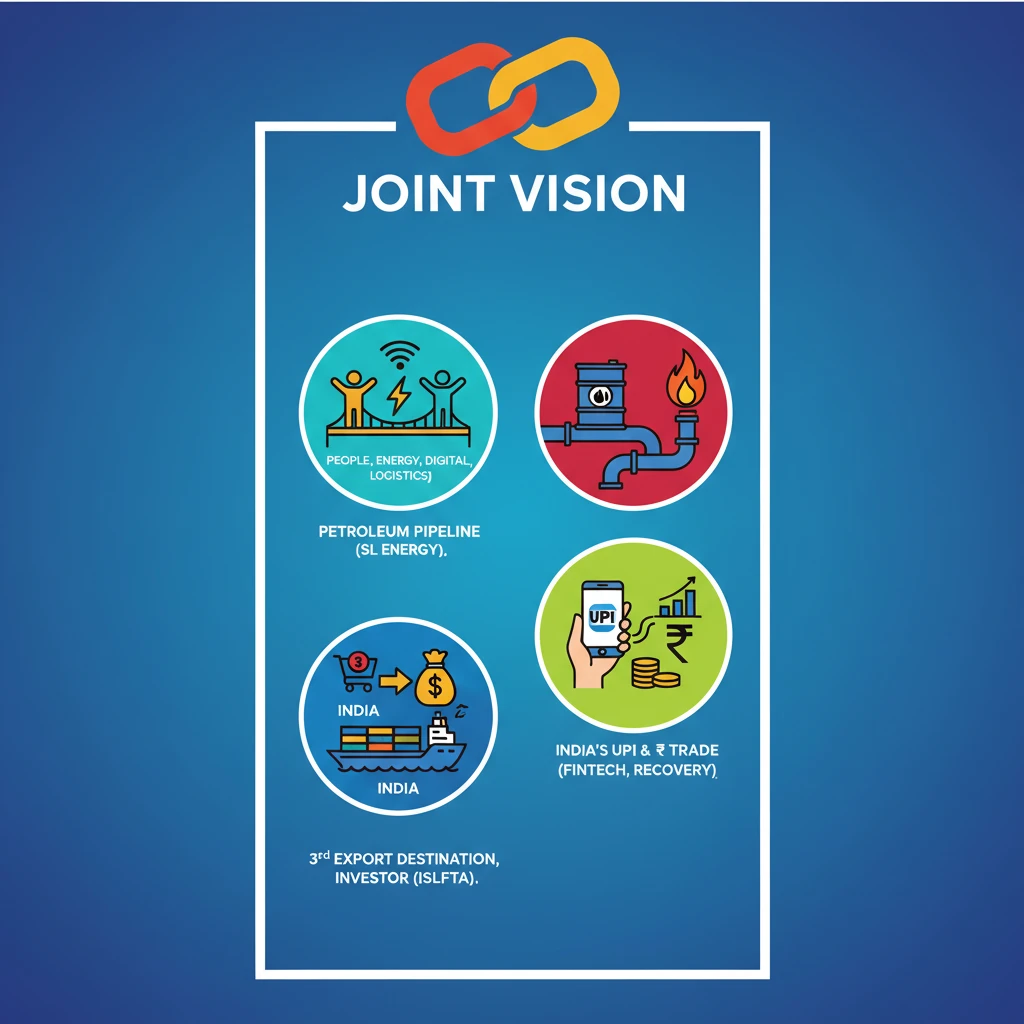
- •India-Sri Lanka Joint Vision emphasizes comprehensive connectivity: people, energy, logistics, digital.
- •Key projects include a multi-product petroleum pipeline for Sri Lanka's energy security.
- •Sri Lanka's adoption of India's UPI and Rupee trade settlement boosts fintech and economic recovery.
- •India is Sri Lanka's 3rd largest export destination and a major investor, benefiting from ISLFTA.
- •Defence cooperation is strong with joint exercises like Mitra Shakti and SLINEX.
- •The vision aligns with India's 'Neighbourhood First' policy, fostering mutual prosperity and regional stability.
🧠 Memory Techniques
95% Verified Content