Susta Region Dispute: India-Nepal Border Issue - International Relations | UPSC Learning
Topics
0 topics • 0 completed
🔍
No topics match your search
Susta Region Dispute: India-Nepal Border Issue
Medium⏱️ 6 min read
international relations
📖 Introduction
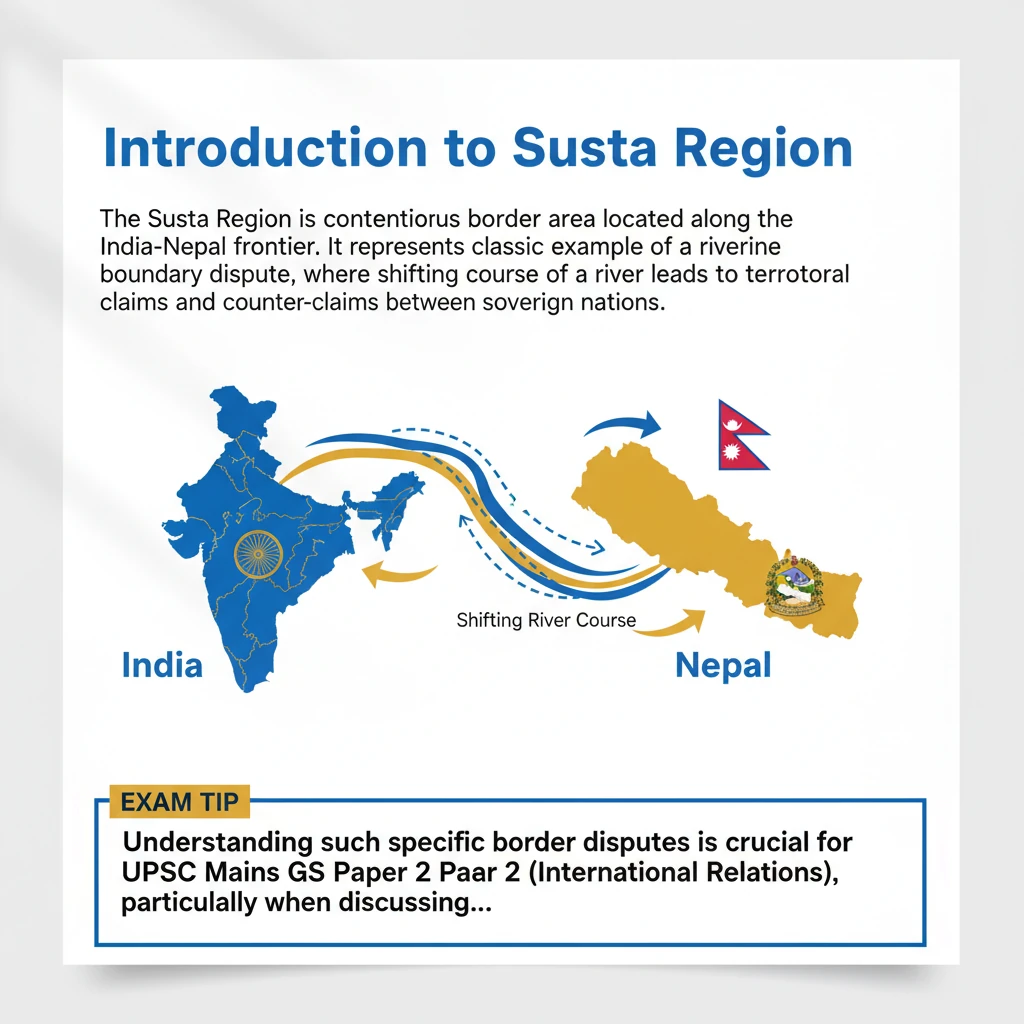
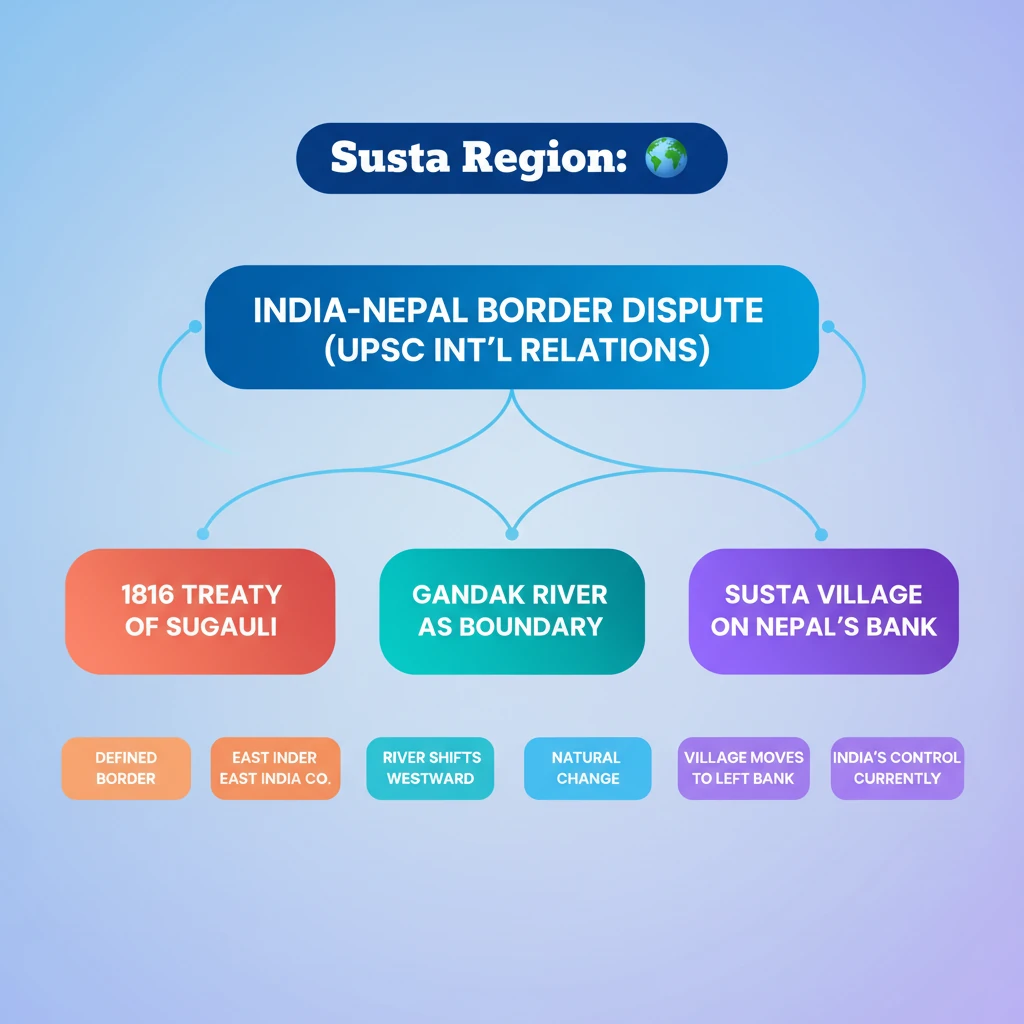
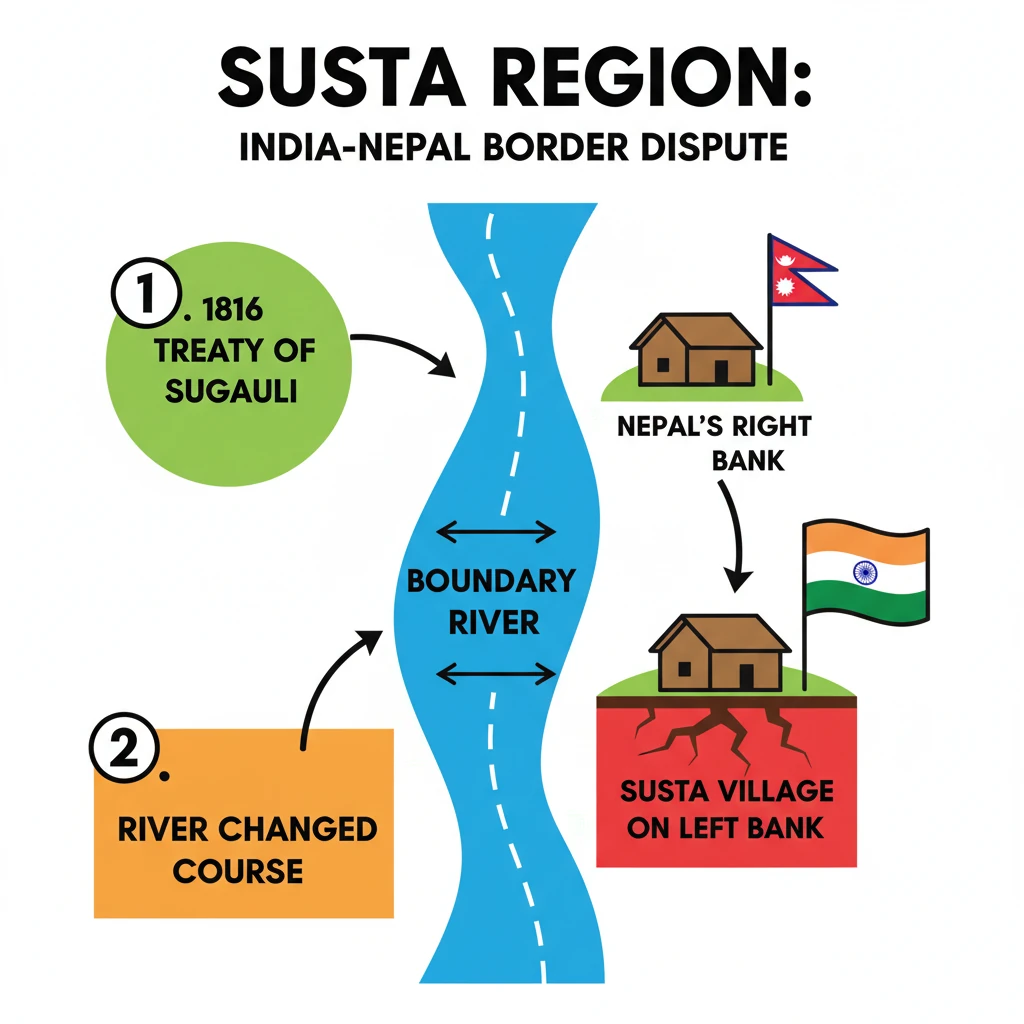
<h4>Introduction to Susta Region</h4><p>The <strong>Susta Region</strong> is a contentious border area located along the India-Nepal frontier. It represents a classic example of a riverine boundary dispute, where the shifting course of a river leads to territorial claims and counter-claims between sovereign nations.</p><div class='exam-tip-box'><p>Understanding such specific border disputes is crucial for <strong>UPSC Mains GS Paper 2 (International Relations)</strong>, particularly when discussing India's relations with its neighbours and border management challenges.</p></div><h4>Treaty of Sugauli and Boundary Definition</h4><p>The international boundary between <strong>India</strong> and <strong>Nepal</strong> in this sector was historically defined by the <strong>Treaty of Sugauli</strong>. This significant treaty, signed in <strong>1816</strong>, designated the <strong>Gandak River</strong> as the natural border.</p><div class='info-box'><p><strong>Treaty Provision:</strong> The <strong>right bank</strong> of the <strong>Gandak River</strong> was stipulated to be under <strong>Nepal's</strong> control, while the <strong>left bank</strong> fell under <strong>India's</strong> jurisdiction.</p></div><h4>Initial Status of Susta Village</h4><p>When the <strong>Treaty of Sugauli</strong> was initially signed, <strong>Susta village</strong> was situated on the <strong>right bank</strong> of the <strong>Gandak River</strong>. Consequently, based on the treaty's demarcation, <strong>Susta</strong> was unequivocally recognized as a part of <strong>Nepal's</strong> territory.</p><h4>Gandak River's Course Change</h4><p>Over several decades, the dynamic nature of the <strong>Gandak River</strong> led to a significant geographical alteration. The river gradually changed its course, a natural phenomenon known as <strong>river migration</strong> or <strong>avulsion</strong>.</p><div class='key-point-box'><p>This change in the river's path resulted in <strong>Susta village</strong> shifting its position relative to the river. It moved from its original location on the <strong>right bank</strong> to what is now considered the <strong>left bank</strong> of the river.</p></div><h4>Current Status of Susta Village</h4><p>Due to the aforementioned change in the <strong>Gandak River's</strong> course, <strong>Susta village</strong> is now geographically located on the <strong>left bank</strong>. As per the original terms of the <strong>Treaty of Sugauli</strong>, the <strong>left bank</strong> falls under <strong>India's</strong> control.</p><p>Currently, the <strong>Susta region</strong>, including the village, is under <strong>India's</strong> administrative control, leading to an ongoing border dispute with <strong>Nepal</strong>.</p>
💡 Key Takeaways
- •Susta Region is an India-Nepal border dispute.
- •The 1816 Treaty of Sugauli defined the Gandak River as the boundary.
- •Susta village was initially on Nepal's right bank.
- •The Gandak River changed its course, moving Susta to the left bank.
- •Susta is currently under India's control, leading to a dispute.
- •Riverine boundaries are prone to disputes due to natural course changes.
🧠 Memory Techniques
95% Verified Content
📚 Reference Sources
•Ministry of External Affairs, Government of India (Official Statements)
•Nepal's Ministry of Foreign Affairs (Official Statements)
•Academic papers on India-Nepal border disputes and riverine boundaries