Iran-Israel Conflict - International Relations | UPSC Learning
Topics
0 topics • 0 completed
🔍
No topics match your search
Iran-Israel Conflict
Medium⏱️ 10 min read
international relations
📖 Introduction
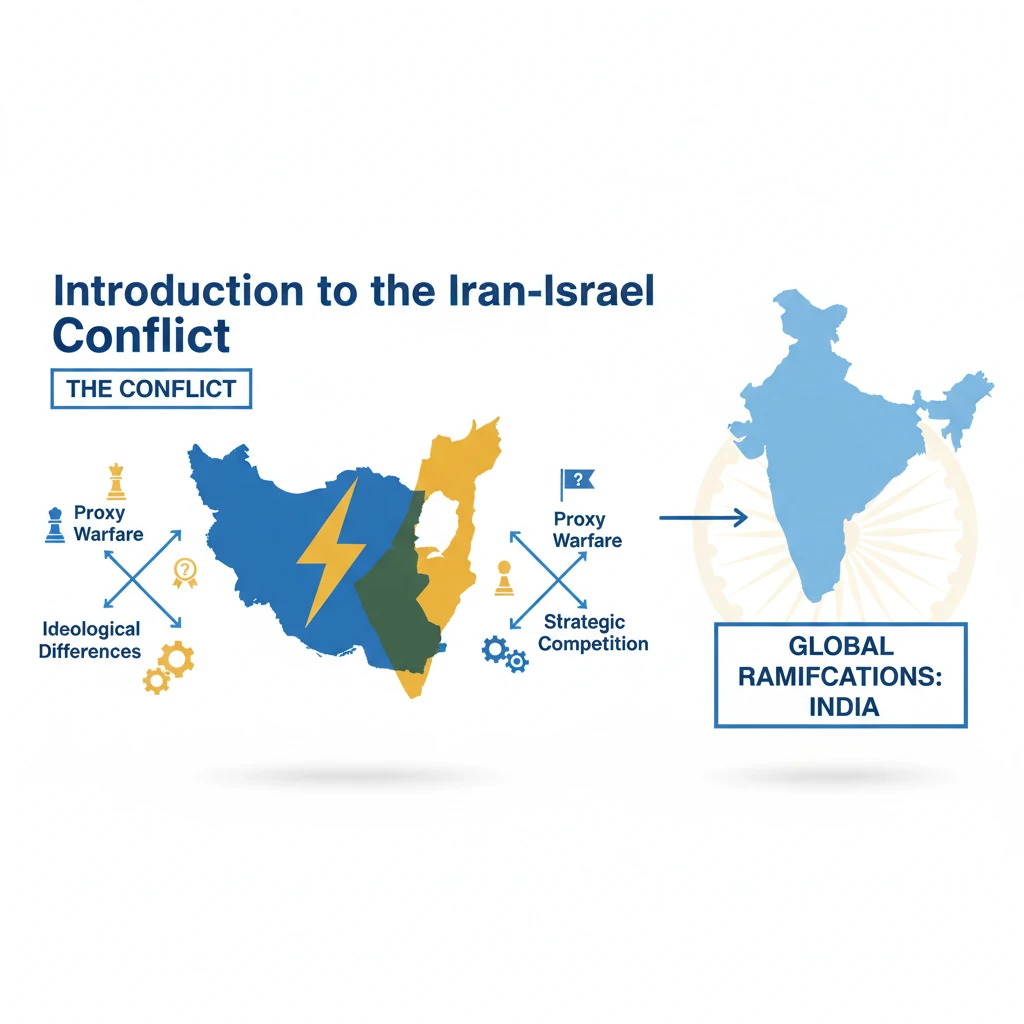
<h4>Introduction to the Iran-Israel Conflict</h4><p>The <strong>Iran-Israel conflict</strong> represents a complex and multifaceted geopolitical rivalry in the Middle East. This ongoing tension significantly impacts regional stability and has global ramifications, including for countries like <strong>India</strong>.</p><p>The conflict is characterized by proxy warfare, ideological differences, and strategic competition rather than direct conventional military engagement between the two states.</p><h4>Why the Conflict is in News</h4><p>Recent escalations and developments in the <strong>Iran-Israel conflict</strong> frequently bring it into international headlines. These events often highlight the volatile nature of the Middle East and the intricate web of alliances and antagonisms.</p><div class='info-box'><p>The immediate trigger for the conflict being in news often relates to specific incidents. These can include missile strikes, cyberattacks, or actions by proxy groups supported by either nation.</p></div><h4>Impact on the Indian Diaspora</h4><p>One of the critical concerns for India stemming from this conflict is the security and well-being of the large <strong>Indian diaspora</strong> in the <strong>Gulf region</strong>. Any significant escalation could directly threaten their safety and economic stability.</p><div class='key-point-box'><p>The <strong>Gulf region</strong> hosts millions of Indian expatriates who contribute significantly to both the host economies and India through remittances. Their security is a paramount concern for Indian foreign policy.</p></div><p>Turmoil in the Gulf can lead to disruptions in oil supplies, increased shipping costs, and economic instability, all of which have direct implications for India's energy security and trade interests.</p><h4>Nature of the Conflict</h4><p>The <strong>Iran-Israel conflict</strong> is primarily an indirect confrontation. Both nations leverage various non-state actors and regional alliances to advance their strategic objectives and undermine the other's influence.</p><ul><li><strong>Iran's Strategy:</strong> Supports groups like <strong>Hezbollah</strong> in Lebanon, <strong>Hamas</strong> and <strong>Palestinian Islamic Jihad</strong> in Gaza, and various militias in Iraq and Syria, forming an 'Axis of Resistance'.</li><li><strong>Israel's Strategy:</strong> Focuses on intelligence operations, targeted strikes against Iranian assets or proxies, and diplomatic efforts to isolate Iran.</li></ul><div class='exam-tip-box'><p>For UPSC, understand that this is not a conventional war but a 'shadow war' or 'proxy conflict'. Focus on the strategic implications and India's stakes, especially in <strong>GS Paper 2 (International Relations)</strong>.</p></div>
💡 Key Takeaways
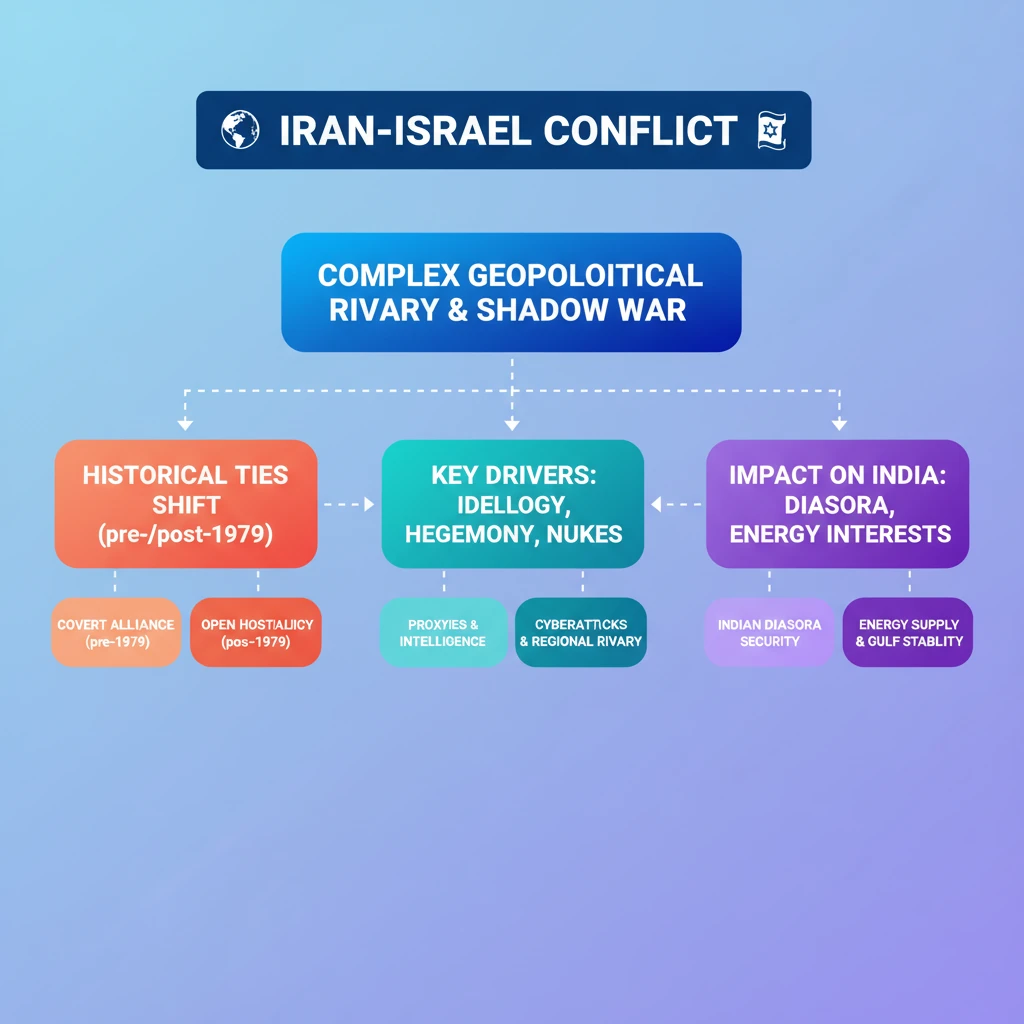
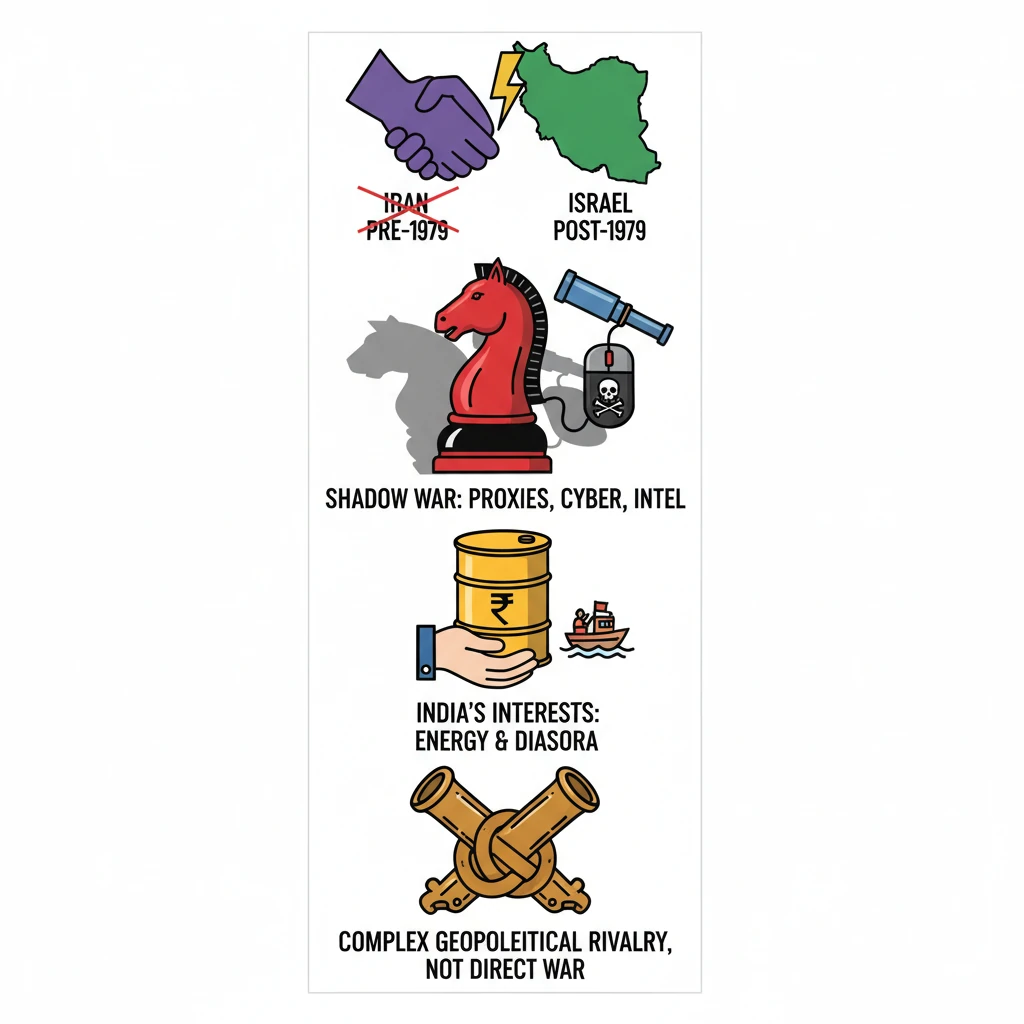
- •The Iran-Israel conflict is a complex geopolitical rivalry, not a direct conventional war.
- •It is primarily a 'shadow war' involving proxies, intelligence operations, and cyberattacks.
- •The conflict significantly impacts the security of the Indian diaspora and India's energy interests in the Gulf.
- •Historical ties shifted from covert alliance (pre-1979) to open hostility (post-1979 Islamic Revolution).
- •Key drivers include ideological differences, regional hegemony, and Iran's nuclear program.
- •India maintains a delicate diplomatic balance due to strong ties with both nations.
🧠 Memory Techniques
95% Verified Content
📚 Reference Sources
•Council on Foreign Relations (CFR) analyses on Iran-Israel conflict
•Al Jazeera reports on Middle East geopolitics
•The Economic Times articles on India's Gulf diaspora and energy security