What are Other Maritime Corridors Significant for India? - International Relations | UPSC Learning
Topics
0 topics • 0 completed
🔍
No topics match your search
What are Other Maritime Corridors Significant for India?
Medium⏱️ 8 min read
international relations
📖 Introduction
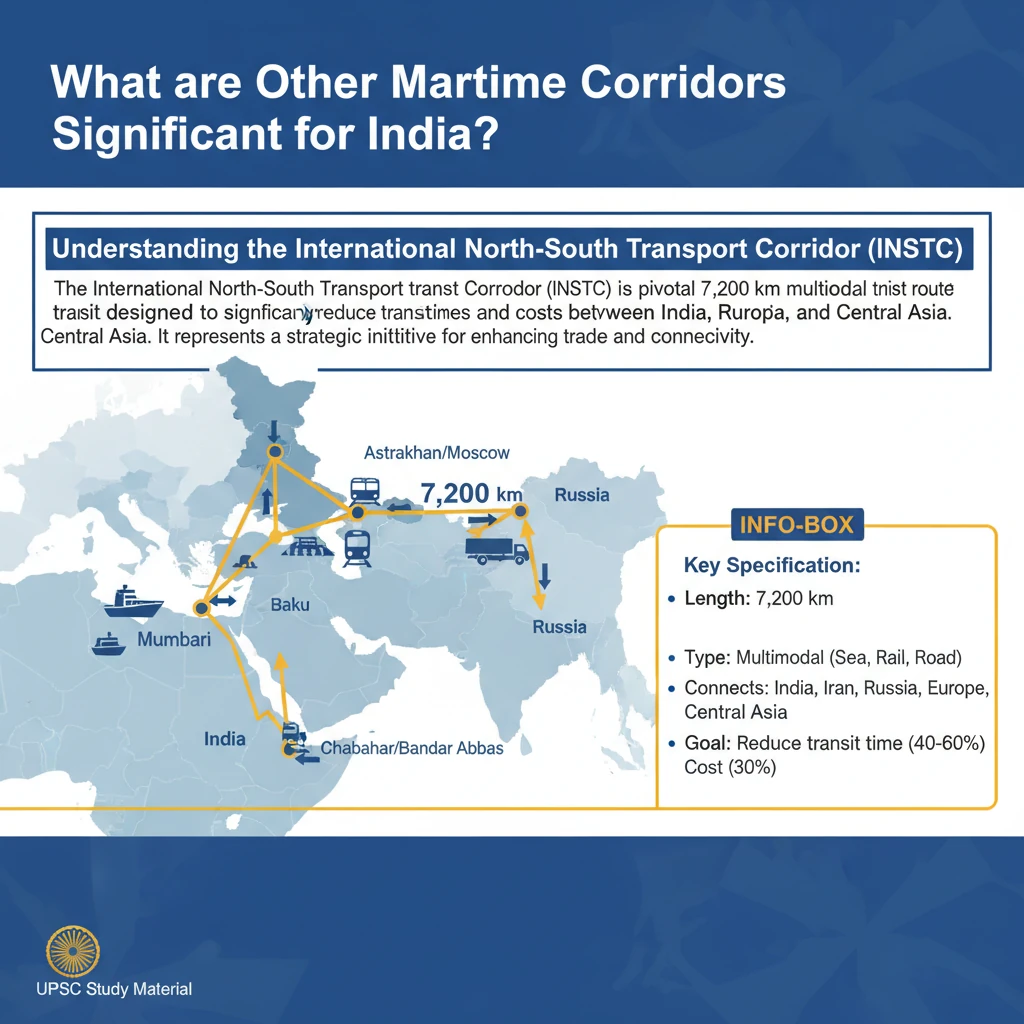
<h4>Understanding the International North-South Transport Corridor (INSTC)</h4><p>The <strong>International North-South Transport Corridor (INSTC)</strong> is a pivotal <strong>7,200 km multimodal transit route</strong> designed to significantly reduce transit times and costs between India, Russia, Iran, Europe, and Central Asia. It represents a strategic initiative for enhancing trade and connectivity.</p><div class='info-box'><p><strong>Key Specification:</strong></p><ul><li><strong>Length:</strong> 7,200 km</li><li><strong>Nature:</strong> Multimodal (ship, rail, road)</li><li><strong>Primary Link:</strong> Indian Ocean and Persian Gulf to the Caspian Sea via Iran, extending to Northern Europe (St. Petersburg, Russia).</li></ul></div><h4>Genesis and Evolution of INSTC</h4><p>The INSTC was formally launched in <strong>2000</strong> through a trilateral agreement. The founding members were <strong>India</strong>, <strong>Iran</strong>, and <strong>Russia</strong>, recognizing the mutual benefits of enhanced regional connectivity.</p><p>Since its inception, the corridor has seen substantial growth in its membership. It has expanded to include <strong>13 member countries</strong>, reflecting its growing regional importance and appeal to various nations seeking efficient trade routes.</p><div class='key-point-box'><p><strong>Founding Members (2000):</strong> <strong>India</strong>, <strong>Iran</strong>, <strong>Russia</strong></p><p><strong>Current Status:</strong> Expanded to <strong>13 member countries</strong>.</p></div><h4>Connectivity Framework of INSTC</h4><p>The corridor integrates various modes of transport, including <strong>ship</strong>, <strong>rail</strong>, and <strong>road routes</strong>. This multimodal approach ensures flexibility and efficiency in freight movement across diverse geographical terrains.</p><p>It establishes crucial linkages between key regions, connecting <strong>India</strong>, <strong>Iran</strong>, <strong>Azerbaijan</strong>, <strong>Russia</strong>, <strong>Central Asia</strong>, and <strong>Europe</strong>. This extensive network facilitates seamless trade and economic cooperation.</p><h4>Primary Routes within INSTC</h4><p>The INSTC is structured around three distinct corridors, each serving specific geographical connections and logistical pathways. These routes optimize transit based on origin and destination points.</p><ol><li><strong>Central Corridor:</strong> This route connects <strong>India to Russia via Iran</strong>, forming the core artery of the INSTC.</li><li><strong>Western Corridor:</strong> This pathway links <strong>Azerbaijan, Iran, and India</strong>, offering an alternative route with significant geopolitical implications.</li><li><strong>Eastern Corridor:</strong> Connecting <strong>Russia to India through Central Asia</strong>, this route leverages the vast landmass of Central Asian nations for transit.</li></ol><div class='exam-tip-box'><p><strong>UPSC Insight:</strong> Understanding the <strong>multimodal nature</strong> and the <strong>three main routes</strong> of INSTC is crucial. Questions often focus on its <strong>strategic significance</strong>, <strong>economic benefits</strong>, and <strong>geopolitical implications</strong> for India's foreign policy and trade relations. Be prepared to discuss its role in bypassing traditional routes and fostering regional integration.</p></div>
💡 Key Takeaways
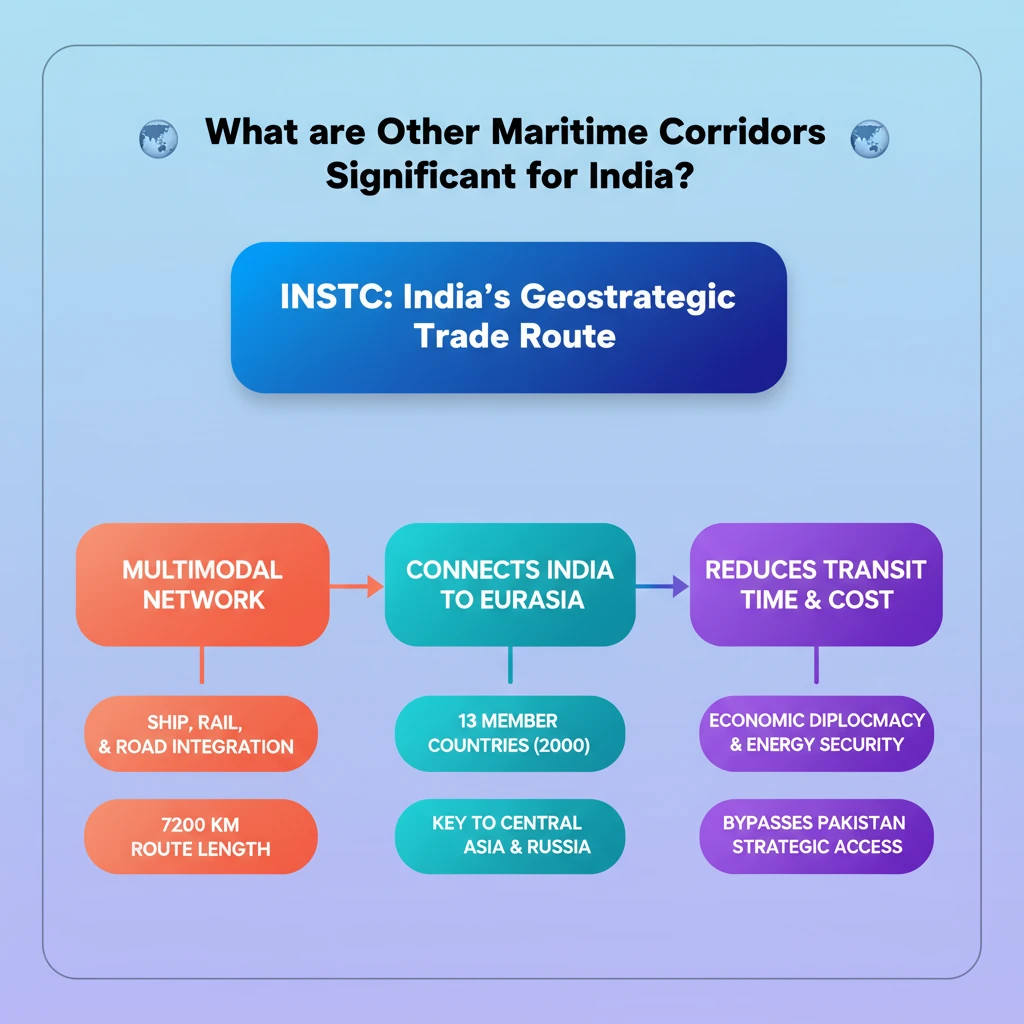
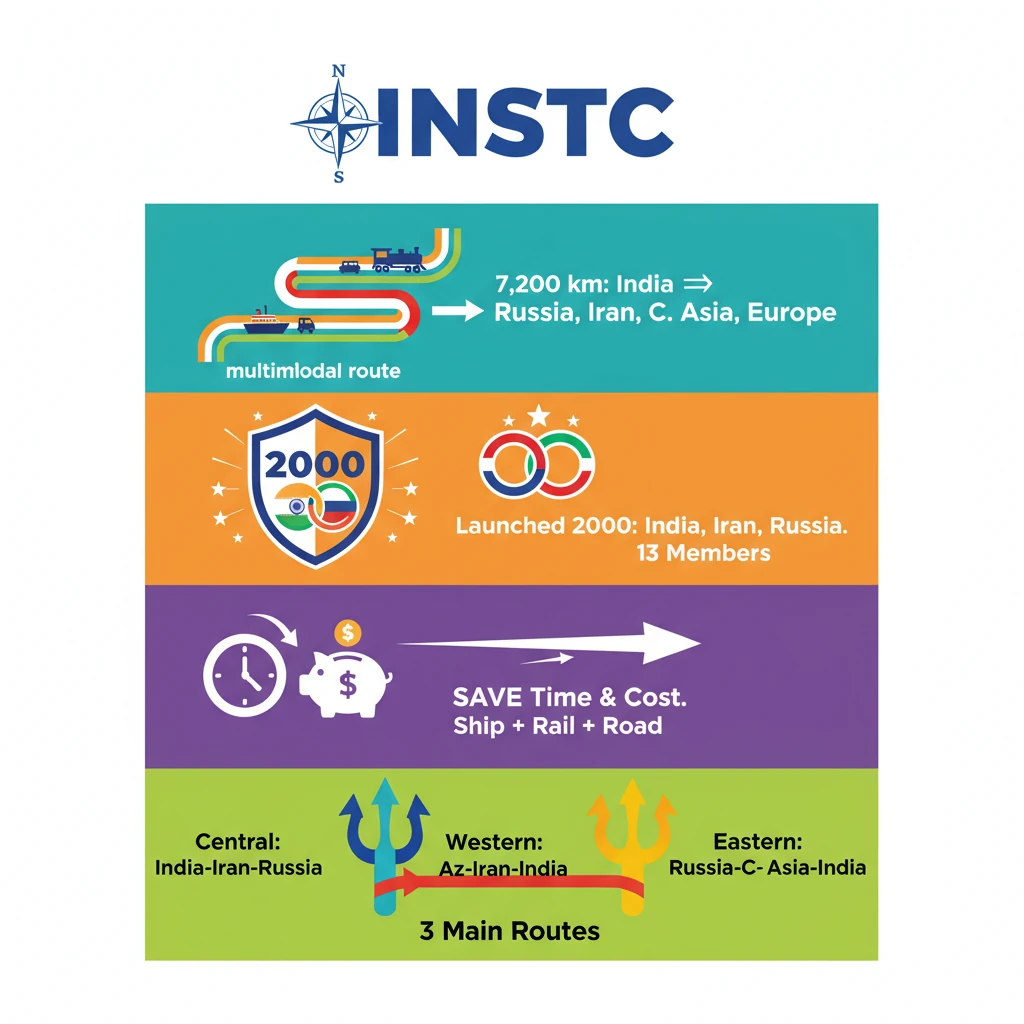
- •INSTC is a 7,200 km multimodal route connecting India to Russia, Iran, Central Asia, and Europe.
- •Launched in 2000 by India, Iran, and Russia; now has 13 member countries.
- •Integrates ship, rail, and road to significantly reduce transit time and cost.
- •Comprises three main routes: Central (India-Iran-Russia), Western (Azerbaijan-Iran-India), Eastern (Russia-Central Asia-India).
- •Crucial for India's economic diplomacy, energy security, and strategic access to Central Asia, bypassing Pakistan.
🧠 Memory Techniques
95% Verified Content
📚 Reference Sources
•Ministry of External Affairs, Government of India (Official Statements on INSTC)
•International North-South Transport Corridor (INSTC) Official Websites/Reports
•Think tank analyses on regional connectivity and trade routes