What are the Regions of Border Dispute Between India and Nepal? - International Relations | UPSC Learning
Topics
0 topics • 0 completed
🔍
No topics match your search
What are the Regions of Border Dispute Between India and Nepal?
Medium⏱️ 5 min read
international relations
📖 Introduction
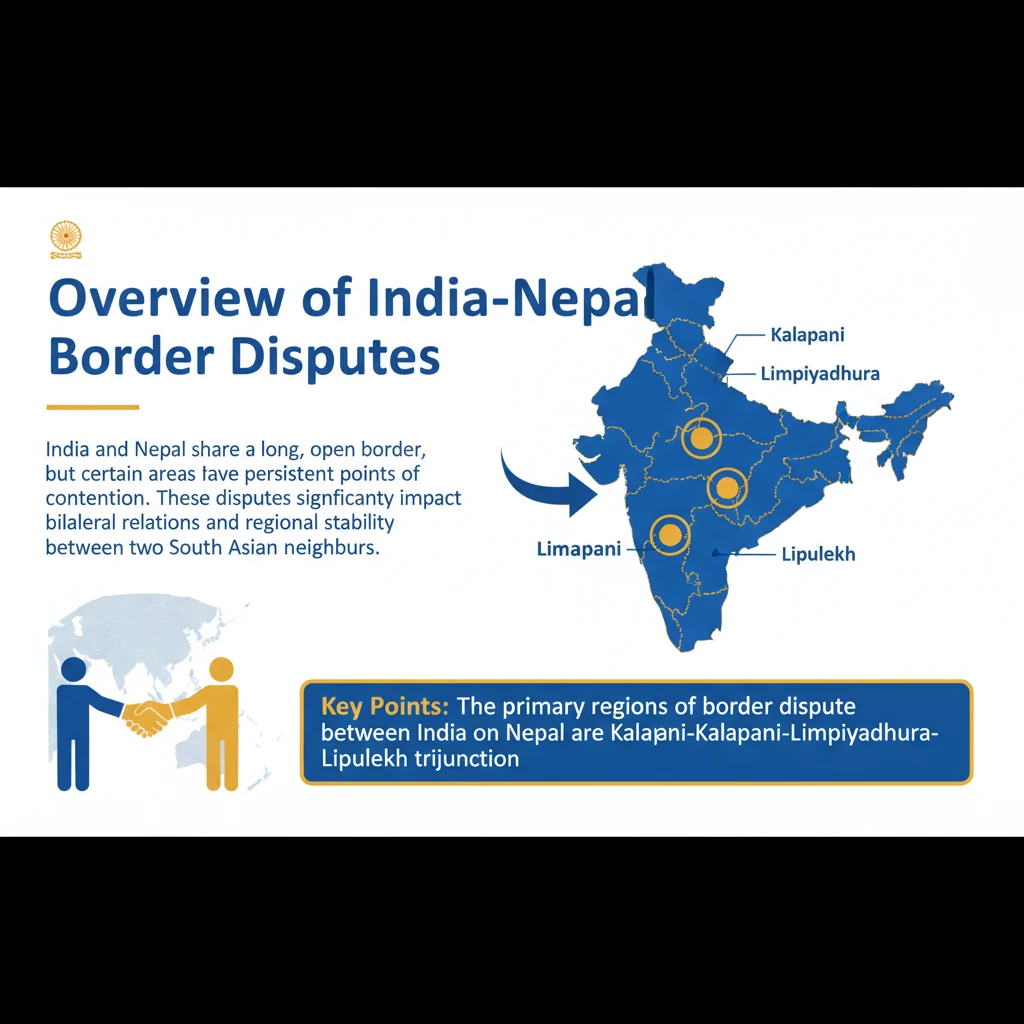
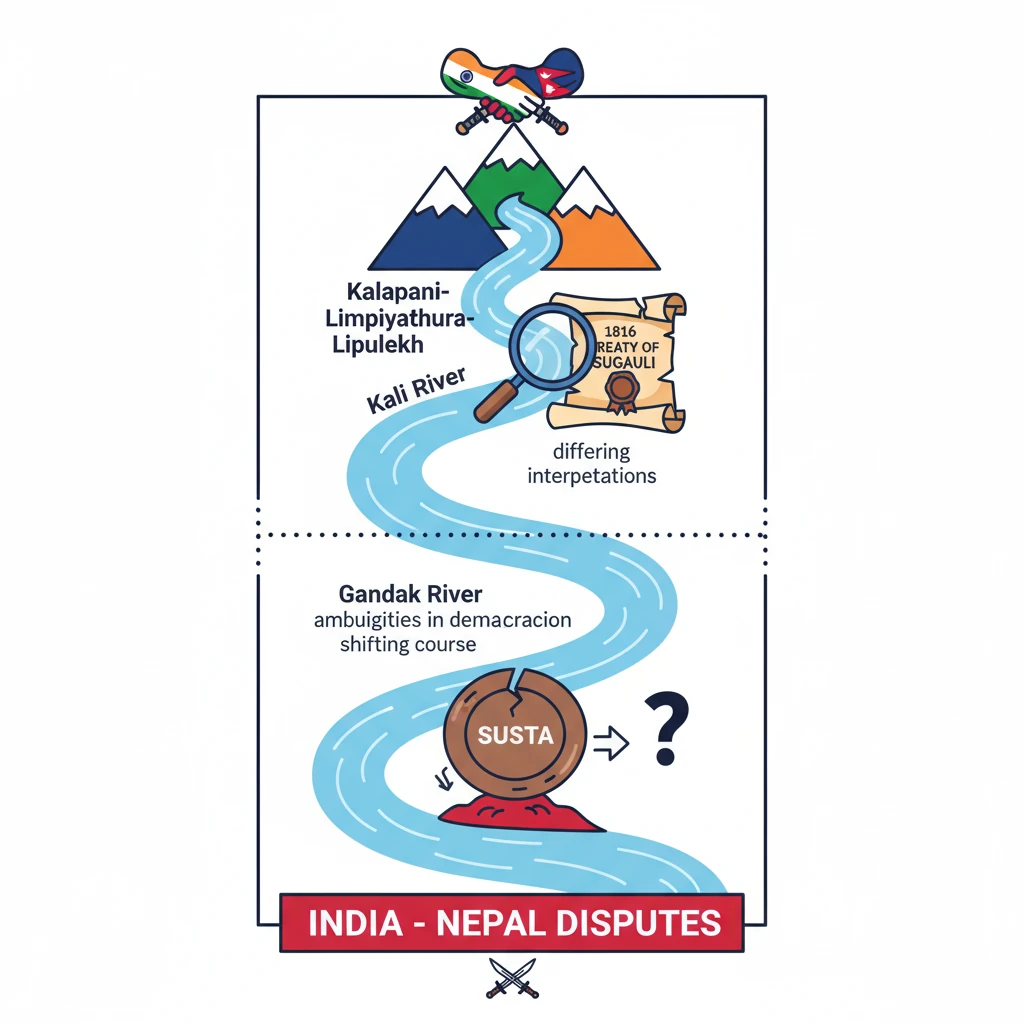
<h4>Overview of India-Nepal Border Disputes</h4><p><strong>India</strong> and <strong>Nepal</strong> share a long, open border, but certain areas have been persistent points of contention. These disputes significantly impact bilateral relations and regional stability between the two South Asian neighbours.</p><div class='key-point-box'>The primary regions of border dispute between <strong>India</strong> and <strong>Nepal</strong> are the <strong>Kalapani-Limpiyadhura-Lipulekh trijunction</strong> and the <strong>Susta area</strong>.</div><h4>The Kalapani-Limpiyadhura-Lipulekh Trijunction</h4><p>This region, often referred to as the <strong>Kalapani Region</strong>, is a strategically significant flashpoint. It is located near the crucial tri-junction where the borders of <strong>India</strong>, <strong>Nepal</strong>, and <strong>China</strong> meet.</p><div class='info-box'>The <strong>Kalapani-Limpiyadhura-Lipulekh trijunction</strong> encompasses an area of approximately <strong>35 square kilometres</strong>. Nepal claims this territory lies in its <strong>northwestern part</strong>.</div><p>The core of this dispute revolves around the precise origin of the <strong>Kali River</strong>. According to the <strong>Treaty of Sugauli (1816)</strong>, the <strong>Kali River</strong> forms the western boundary of <strong>Nepal</strong> with <strong>India</strong>. India maintains the river originates from <strong>Kalapani</strong>, while Nepal asserts its origin is further west at <strong>Limpiyadhura</strong>.</p><h4>The Susta Area Dispute</h4><p>The <strong>Susta area</strong> represents another long-standing border dispute between <strong>India</strong> and <strong>Nepal</strong>. This region is situated in the <strong>West Champaran district</strong> of <strong>Bihar</strong>, <strong>India</strong>, bordering <strong>Nawalparasi district</strong> of <strong>Nepal</strong>.</p><div class='info-box'>The <strong>Susta area</strong> dispute primarily arises from the changing course of the <strong>Gandak River</strong> (known as Narayani in Nepal). The river's shifting path has led to ambiguities in defining the exact international boundary.</div><p>Both countries claim sovereignty over parts of the fertile land within the <strong>Susta region</strong>. This issue has historical roots, linked to land surveys and challenges in demarcating riverine boundaries over time.</p>
💡 Key Takeaways
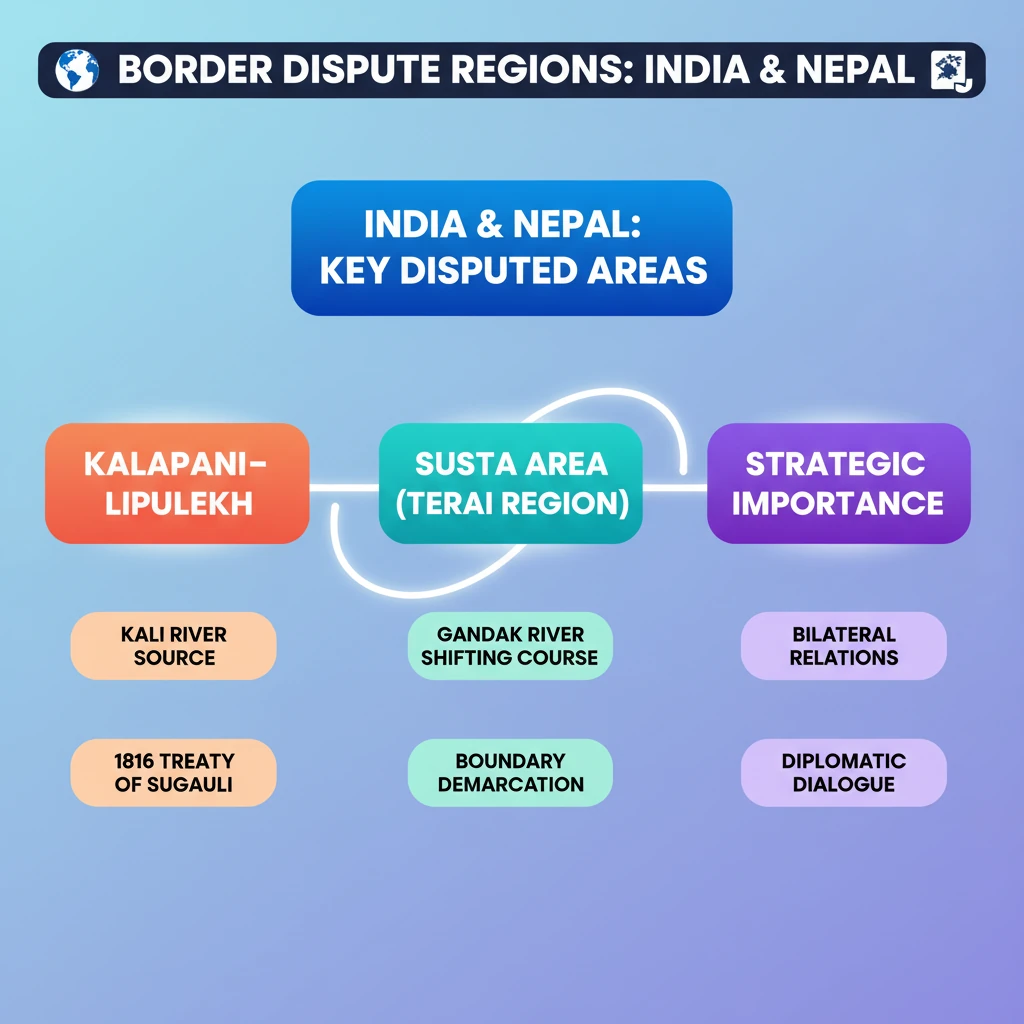
- •India and Nepal primarily dispute the Kalapani-Limpiyadhura-Lipulekh trijunction and the Susta area.
- •The Kalapani dispute stems from differing interpretations of the Kali River's source, as defined by the 1816 Treaty of Sugauli.
- •The Susta dispute is primarily due to the shifting course of the Gandak River, causing ambiguities in demarcation.
- •Both regions hold strategic importance and are sensitive issues impacting India-Nepal bilateral relations.
- •Resolution requires sustained diplomatic dialogue, mutual respect, and technical solutions for boundary demarcation.
- •These disputes highlight challenges in managing riverine borders and interpreting historical treaties.
🧠 Memory Techniques
95% Verified Content
📚 Reference Sources
•Ministry of External Affairs (India) official statements and press releases
•Government of Nepal official statements and diplomatic notes
•Academic analyses and geopolitical reports on India-Nepal relations and border issues
•Historical records pertaining to the Treaty of Sugauli (1816)