G20 Rio de Janeiro Leaders’ Declaration - International Relations | UPSC Learning
Topics
0 topics • 0 completed
🔍
No topics match your search
G20 Rio de Janeiro Leaders’ Declaration
Medium⏱️ 5 min read
international relations
📖 Introduction
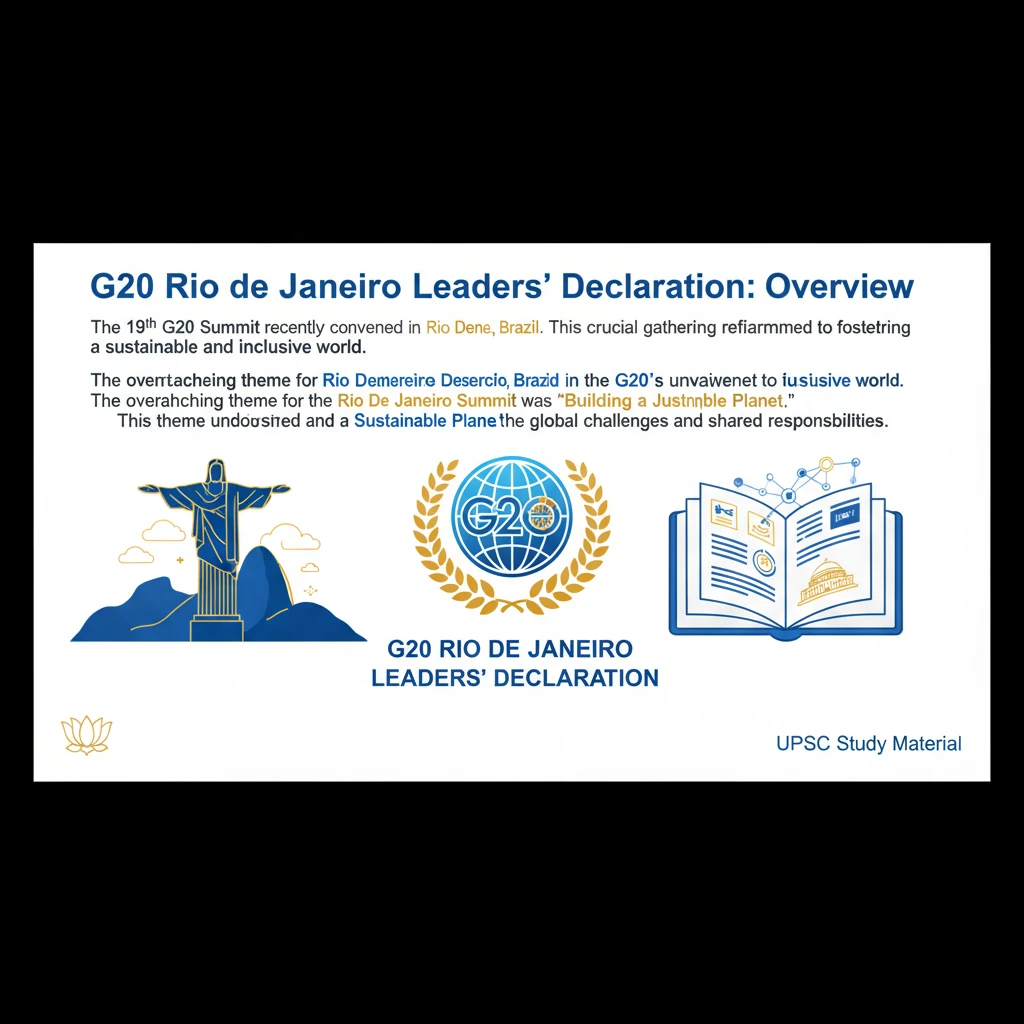
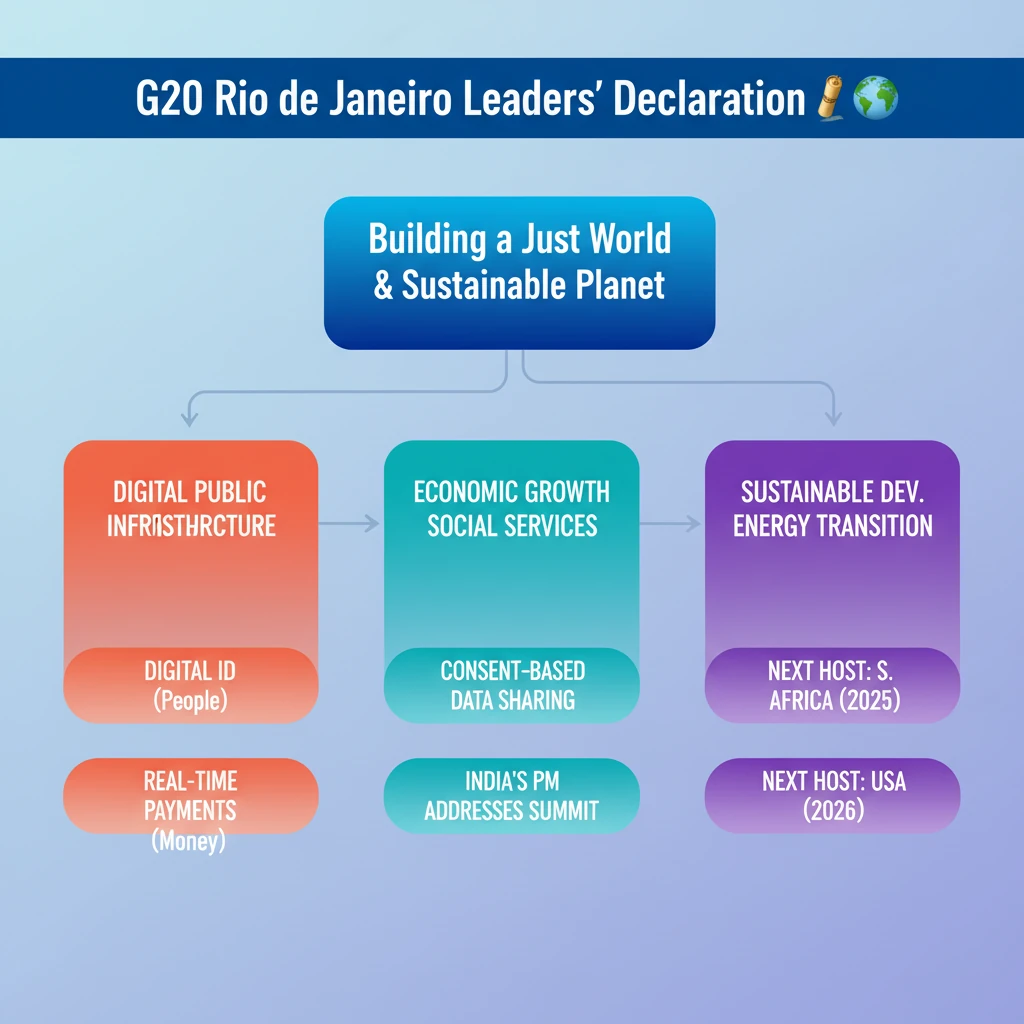
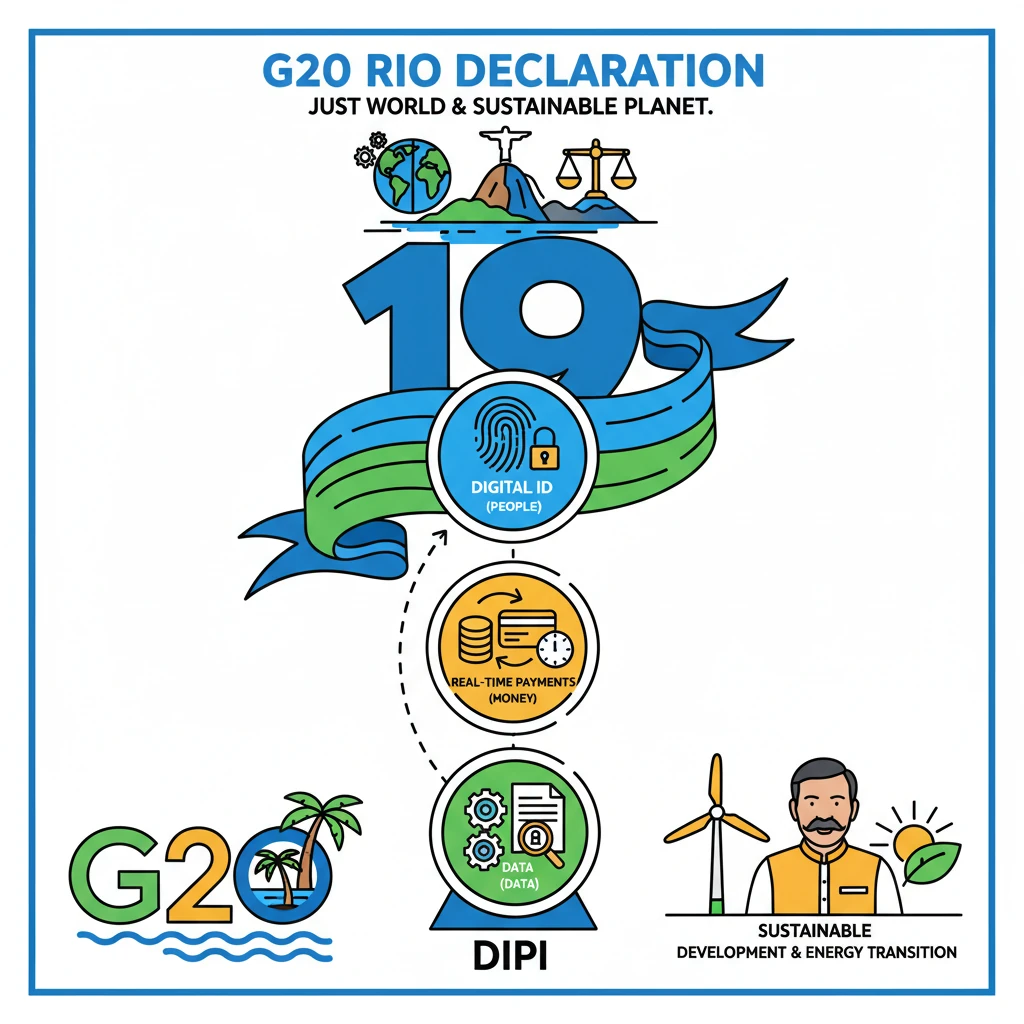
<h4>G20 Rio de Janeiro Leaders’ Declaration: Overview</h4><p>The <strong>19th G20 Summit</strong> recently convened in <strong>Rio de Janeiro, Brazil</strong>. This crucial gathering reaffirmed the G20’s unwavering commitment to fostering a <strong>sustainable and inclusive world</strong>.</p><p>The overarching theme for the <strong>Rio de Janeiro Summit</strong> was <strong>“Building a Just World and a Sustainable Planet.”</strong> This theme underscored the global challenges and shared responsibilities facing member nations.</p><div class='info-box'><p><strong>Key Event:</strong> India’s Prime Minister addressed the G20 session specifically on <strong>Sustainable Development and Energy Transition</strong>, highlighting India's contributions and vision.</p></div><div class='info-box'><p><strong>Future Hosts:</strong> The <strong>G20 Presidency</strong> will transition to <strong>South Africa in 2025</strong>, followed by the <strong>United States of America in 2026</strong>, ensuring continuity in global leadership discussions.</p></div><h4>Understanding Digital Public Infrastructure (DPI)</h4><p><strong>Digital Public Infrastructure (DPI)</strong> represents a foundational set of <strong>digital systems</strong>. These systems are designed to empower countries to deliver <strong>economic opportunities</strong> and provide <strong>social services</strong> both safely and efficiently.</p><div class='info-box'><p><strong>Definition:</strong> <strong>DPI</strong> is a robust framework of digital technologies that connects people, data, and money, much like traditional physical infrastructure such as roads and railways connect people and goods.</p></div><p>Its influence extends across the <strong>entire economy</strong>, creating interconnected pathways for various interactions. This broad coverage facilitates seamless operations and access to services for citizens.</p><h4>The Core Pillars of a DPI Ecosystem</h4><p>An effective <strong>DPI ecosystem</strong> is built upon three fundamental flows: <strong>people, money, and data</strong>. Each component is critical for realizing the full potential of digital transformation.</p><div class='key-point-box'><ul><li><strong>Flow of People:</strong> Enabled by a robust <strong>digital ID system</strong>, ensuring unique and verifiable identification for individuals.</li><li><strong>Flow of Money:</strong> Facilitated by a <strong>real-time fast payment system</strong>, allowing for instant and secure financial transactions.</li><li><strong>Flow of Personal Information:</strong> Managed through <strong>consent-based data sharing systems</strong>, empowering citizens with control over their data and enabling personalized service delivery.</li></ul></div><p>These interconnected flows are essential for actualizing the benefits of <strong>DPIs</strong>, ensuring that citizens have a real ability to control their personal information and access services effectively.</p>
💡 Key Takeaways
- •The 19th G20 Summit in Rio de Janeiro focused on 'Building a Just World and a Sustainable Planet.'
- •Digital Public Infrastructure (DPI) was a central theme, recognized for enabling economic opportunities and social services.
- •DPI is built on three pillars: digital ID (people), real-time payments (money), and consent-based data sharing (data).
- •India's PM addressed sustainable development and energy transition at the summit.
- •South Africa (2025) and USA (2026) are the next G20 hosts.
- •DPI is crucial for achieving Sustainable Development Goals and fostering inclusive growth.
🧠 Memory Techniques
95% Verified Content