St. Martin's Island: Historical Evolution and Naming - International Relations | UPSC Learning
Topics
0 topics • 0 completed
🔍
No topics match your search
St. Martin's Island: Historical Evolution and Naming
Medium⏱️ 7 min read
international relations
📖 Introduction
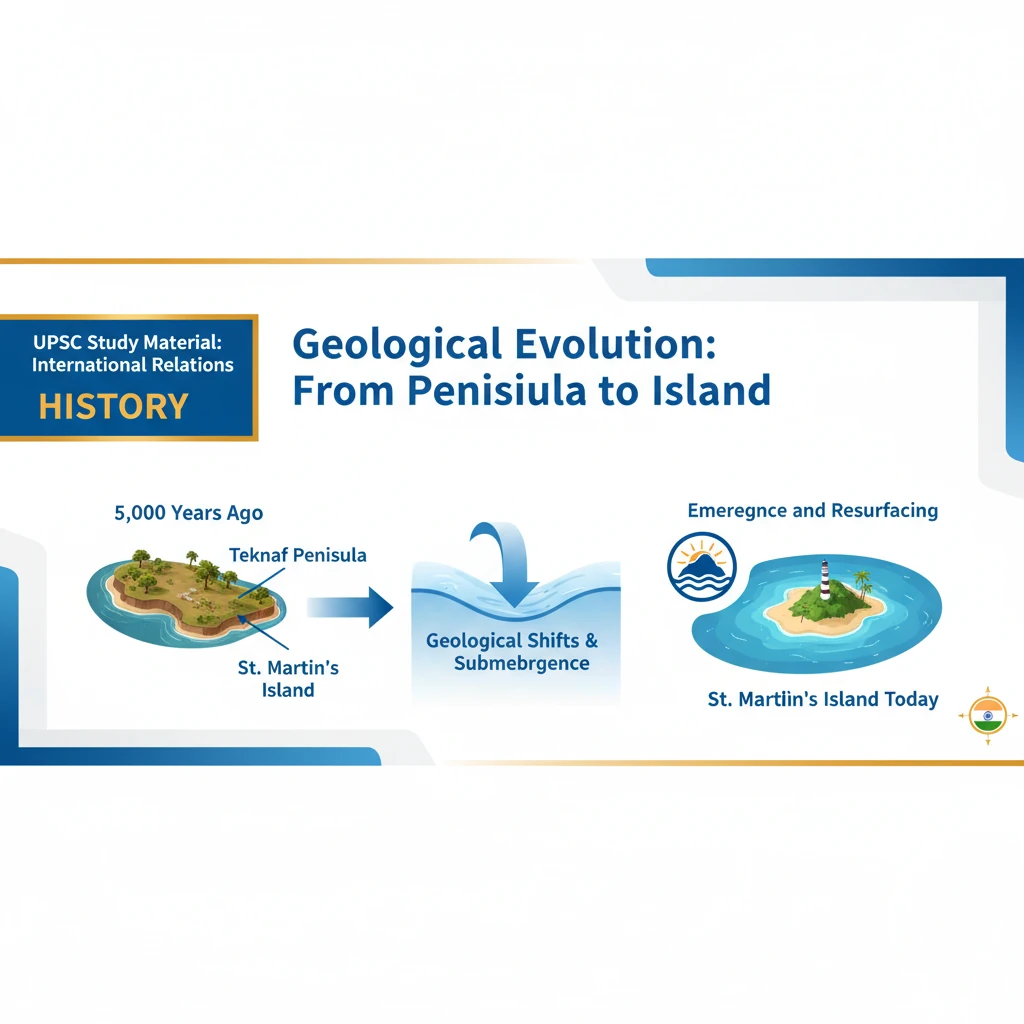
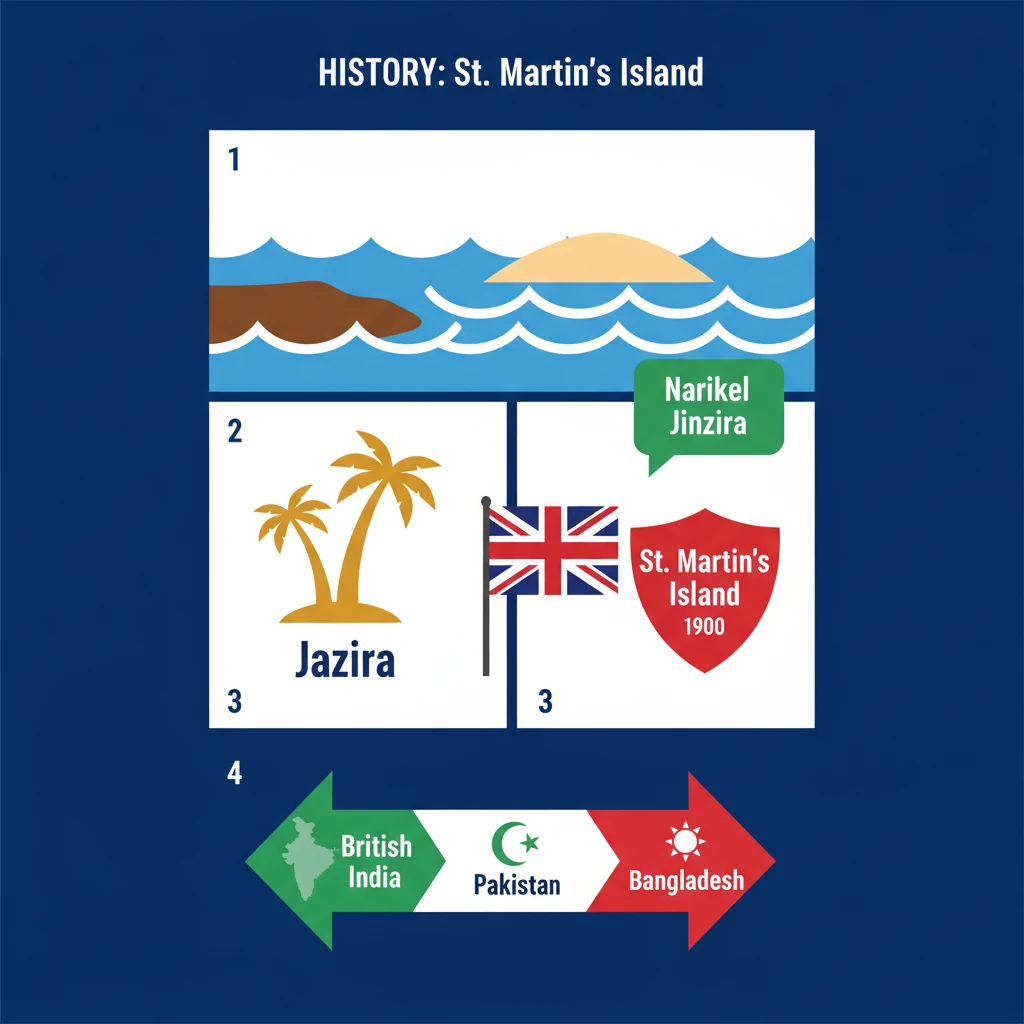
<h4>Geological Evolution: From Peninsula to Island</h4><p>Around <strong>5,000 years ago</strong>, the landmass now known as <strong>St. Martin's Island</strong> was an integral part of the <strong>Teknaf peninsula</strong>. This connection signifies a vastly different ancient coastline.</p><p>Over time, significant geological shifts led to the gradual <strong>submergence</strong> of this land into the sea, altering the region's geography dramatically.</p><h4>Emergence and Resurfacing</h4><p>Approximately <strong>450 years ago</strong>, a remarkable geological event occurred: the <strong>southern suburbs</strong> of what is now <strong>St. Martin's Island</strong> began to <strong>resurface</strong> from the sea.</p><p>Within the subsequent <strong>100 years</strong>, the remaining <strong>northern and other parts</strong> of the island also rose above sea level, completing its re-emergence as a distinct landform.</p><h4>Early Inhabitants and Indigenous Naming</h4><p>The first recorded settlers on the island were <strong>Arab merchants</strong>, who arrived in the <strong>18th Century</strong>. Their presence marked the beginning of documented human settlement.</p><div class='info-box'><p>The Arab settlers initially named the island <strong>"Jazira"</strong>, which simply means <strong>"the island"</strong> in Arabic, reflecting its isolated nature.</p></div><p>Later, the local populace adopted a new name, calling it <strong>"Narikel Jinjira"</strong> or <strong>"Coconut Island"</strong>. This name likely stemmed from the abundance of coconut trees found on the island.</p><h4>British Annexation and Colonial Renaming</h4><p>In <strong>1900</strong>, during a comprehensive land survey, <strong>British India annexed</strong> the island. This marked its formal incorporation into the British colonial administration.</p><div class='key-point-box'><p>It was during this period that the island received its current name, <strong>St. Martin's Island</strong>. It was named after <strong>Martin</strong>, who was then the <strong>Deputy Commissioner of Chittagong</strong>.</p></div><h4>Post-Colonial Transitions</h4><p>Following the <strong>partition of British India in 1947</strong>, St. Martin's Island became a part of the newly formed nation of <strong>Pakistan</strong>.</p><p>Ultimately, after the <strong>1971 Liberation War</strong>, the island became an integral territory of independent <strong>Bangladesh</strong>, reflecting the region's broader political shifts.</p><div class='exam-tip-box'><p>Understanding the <strong>chronological sequence</strong> of naming and political control is crucial for UPSC. Note the shift from indigenous/settler names to colonial names and then post-independence status.</p></div>
💡 Key Takeaways
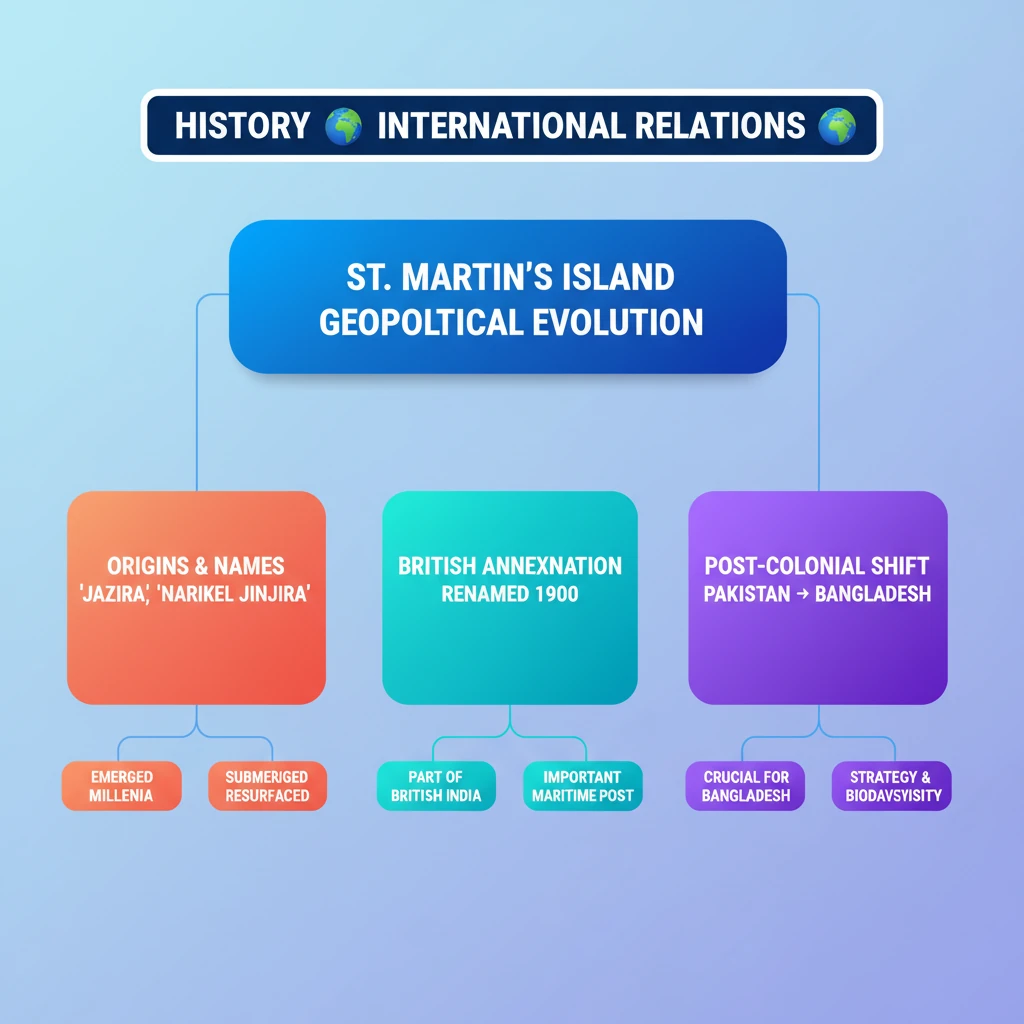
- •St. Martin's Island evolved from a peninsula, submerged, and resurfaced over millennia.
- •It held names like "Jazira" and "Narikel Jinjira" before British annexation.
- •British India renamed it "St. Martin's Island" in 1900.
- •It transitioned from British India to Pakistan, then to independent Bangladesh.
- •The island is crucial for Bangladesh's maritime strategy and biodiversity.
- •It faces significant threats from climate change and requires sustainable management.
🧠 Memory Techniques
95% Verified Content
📚 Reference Sources
•General geographical and historical knowledge of the Bay of Bengal region
•Public domain information on St. Martin's Island