What is Nuclear Disarmament - International Relations | UPSC Learning
Topics
0 topics • 0 completed
🔍
No topics match your search
What is Nuclear Disarmament
Medium⏱️ 8 min read
international relations
📖 Introduction
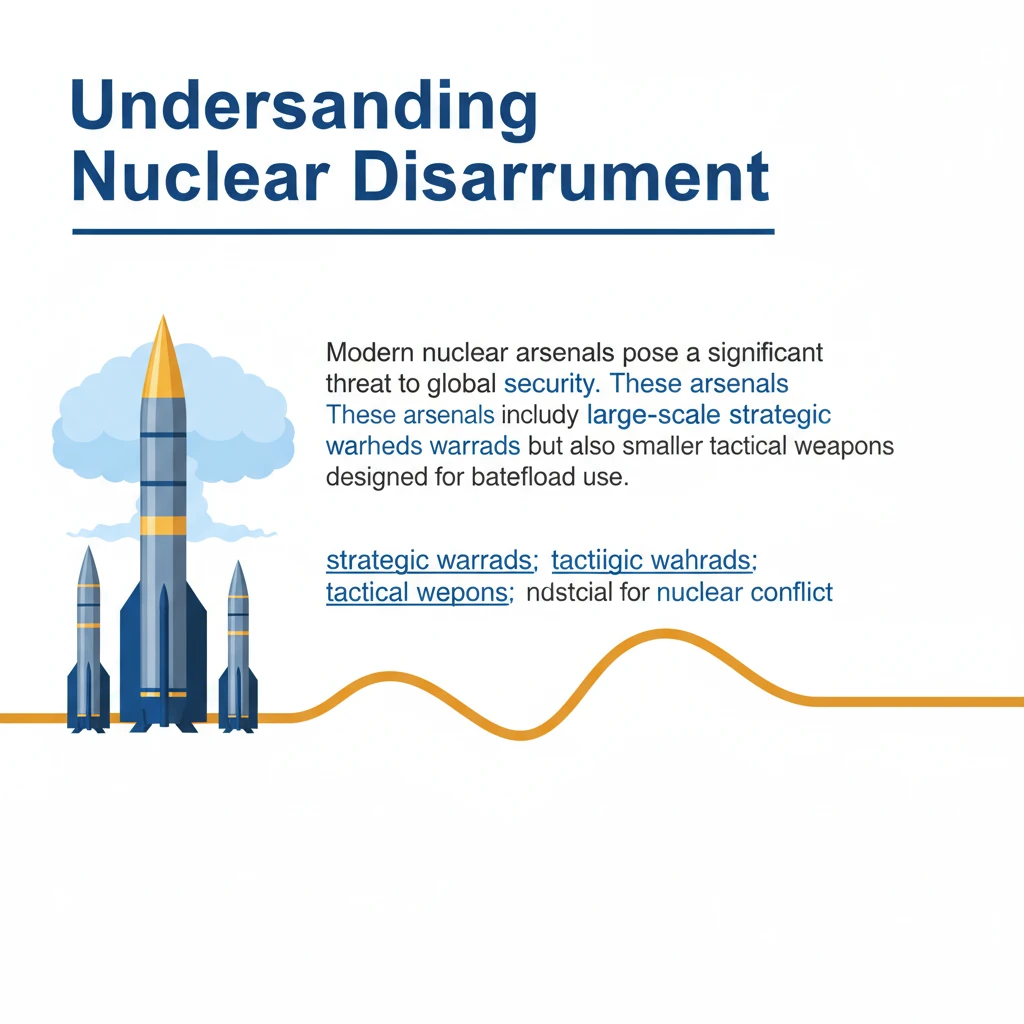
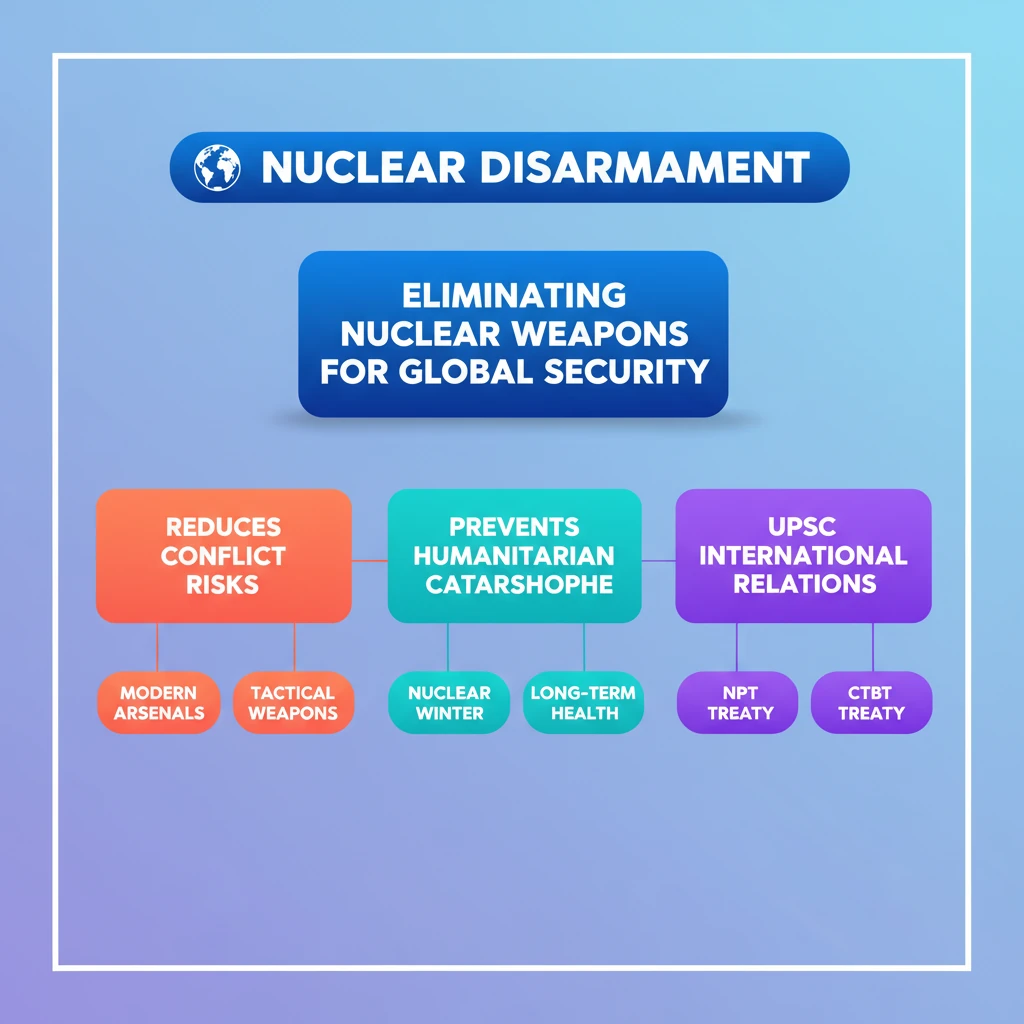
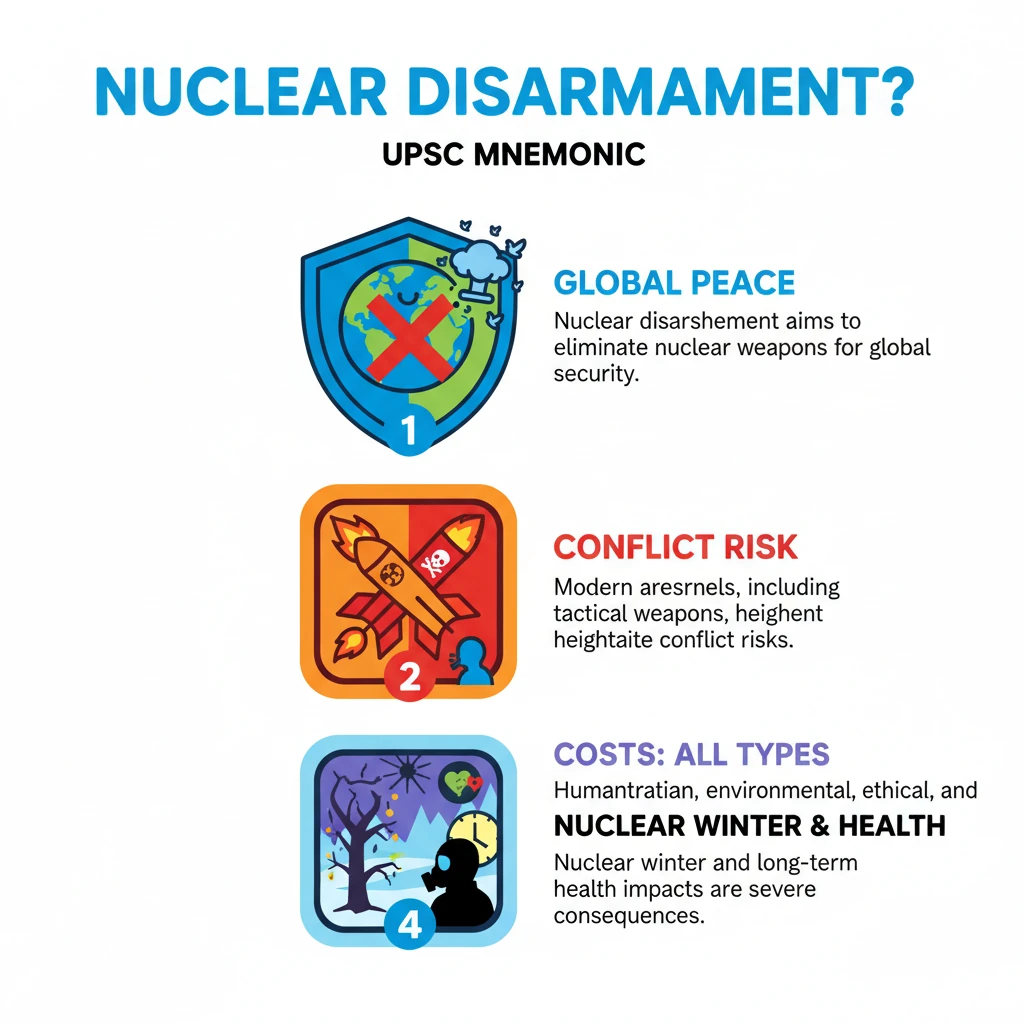
<h4>Understanding Nuclear Disarmament</h4><p>Modern <strong>nuclear arsenals</strong> pose a significant threat to global security. These arsenals include not only large-scale <strong>strategic warheads</strong> but also smaller, more portable <strong>tactical weapons</strong>.</p><p>The presence of <strong>tactical nuclear weapons</strong>, designed for battlefield use, significantly increases the risk of a potential <strong>nuclear conflict</strong>. This escalation potential underscores the urgency of disarmament efforts.</p><h4>What is Nuclear Disarmament?</h4><div class='info-box'><p><strong>Nuclear disarmament</strong> refers to the systematic process of <strong>reducing</strong> or completely <strong>eliminating nuclear weapons</strong> worldwide. Its primary objective is to enhance <strong>global security</strong> and avert the catastrophic outcomes of <strong>nuclear warfare</strong>.</p></div><p>This comprehensive process involves various efforts aimed at stringent <strong>control</strong> and the eventual <strong>abolition</strong> of all existing <strong>nuclear arsenals</strong>. The ultimate vision is to achieve a truly <strong>nuclear-free world</strong>.</p><h4>Need for Nuclear Disarmament</h4><p>The imperative for <strong>nuclear disarmament</strong> stems from several critical factors, ranging from humanitarian concerns to economic implications. These considerations highlight the profound dangers associated with nuclear weapons.</p><h4>Humanitarian Impact</h4><div class='key-point-box'><p>The immediate aftermath of a <strong>nuclear explosion</strong> is devastating. It leads to widespread <strong>loss of life</strong>, immense <strong>mass destruction</strong>, severe <strong>burns</strong>, and debilitating <strong>radiation sickness</strong> among survivors.</p></div><p>Beyond the initial impact, long-term health consequences are dire. Survivors and their descendants can suffer from increased rates of <strong>cancer</strong> and irreversible <strong>genetic damage</strong> for many generations.</p><h4>Environmental Consequences</h4><p>A <strong>nuclear detonation</strong> can trigger large-scale <strong>environmental damage</strong> with global repercussions. One of the most severe potential outcomes is a phenomenon known as <strong>“nuclear winter.”</strong></p><p>During a <strong>nuclear winter</strong>, vast amounts of smoke and dust from explosions would block sunlight, leading to a drastic and prolonged period of <strong>global cooling</strong>. This would cause widespread <strong>agricultural collapse</strong> and severe disruptions to global <strong>ecosystems</strong>.</p><h4>Ethical and Moral Considerations</h4><p>The sheer <strong>destructiveness</strong> and indiscriminate nature of <strong>nuclear weapons</strong> raise profound ethical questions regarding their existence and potential use. Their impact violates fundamental principles of humanity.</p><p>The concept of <strong>just war theory</strong> and the tenets of <strong>humanitarian law</strong> are directly contradicted by the indiscriminate nature of nuclear weapons, which cause widespread suffering without distinction.</p><h4>Economic Costs</h4><p>The maintenance and continuous upgrading of <strong>nuclear arsenals</strong> demand colossal <strong>financial resources</strong>. These funds represent a significant drain on national budgets globally.</p><p>These substantial economic costs could otherwise be allocated to crucial areas such as <strong>development initiatives</strong>, poverty alleviation, and addressing pressing global challenges like <strong>climate change</strong>. This highlights a critical opportunity cost.
💡 Key Takeaways
- •Nuclear disarmament aims to reduce and eliminate nuclear weapons for global security.
- •Modern arsenals, including tactical weapons, increase conflict risk.
- •Key reasons for disarmament include humanitarian, environmental, ethical, and economic costs.
- •Humanitarian impacts involve immediate destruction, radiation sickness, and long-term genetic damage.
- •Environmental risks include 'nuclear winter,' global cooling, and agricultural collapse.
- •Ethical concerns revolve around the indiscriminate nature of nuclear weapons against humanitarian law.
- •Economic resources spent on arsenals could be redirected to development and climate change.
🧠 Memory Techniques
98% Verified Content
📚 Reference Sources
•United Nations Office for Disarmament Affairs (UNODA)
•International Atomic Energy Agency (IAEA)
•Stockholm International Peace Research Institute (SIPRI)