What are Key Highlights of the 6th AITIGA Joint Committee Meetings? - International Relations | UPSC Learning
Topics
0 topics • 0 completed
🔍
No topics match your search
What are Key Highlights of the 6th AITIGA Joint Committee Meetings?
Medium⏱️ 6 min read
international relations
📖 Introduction
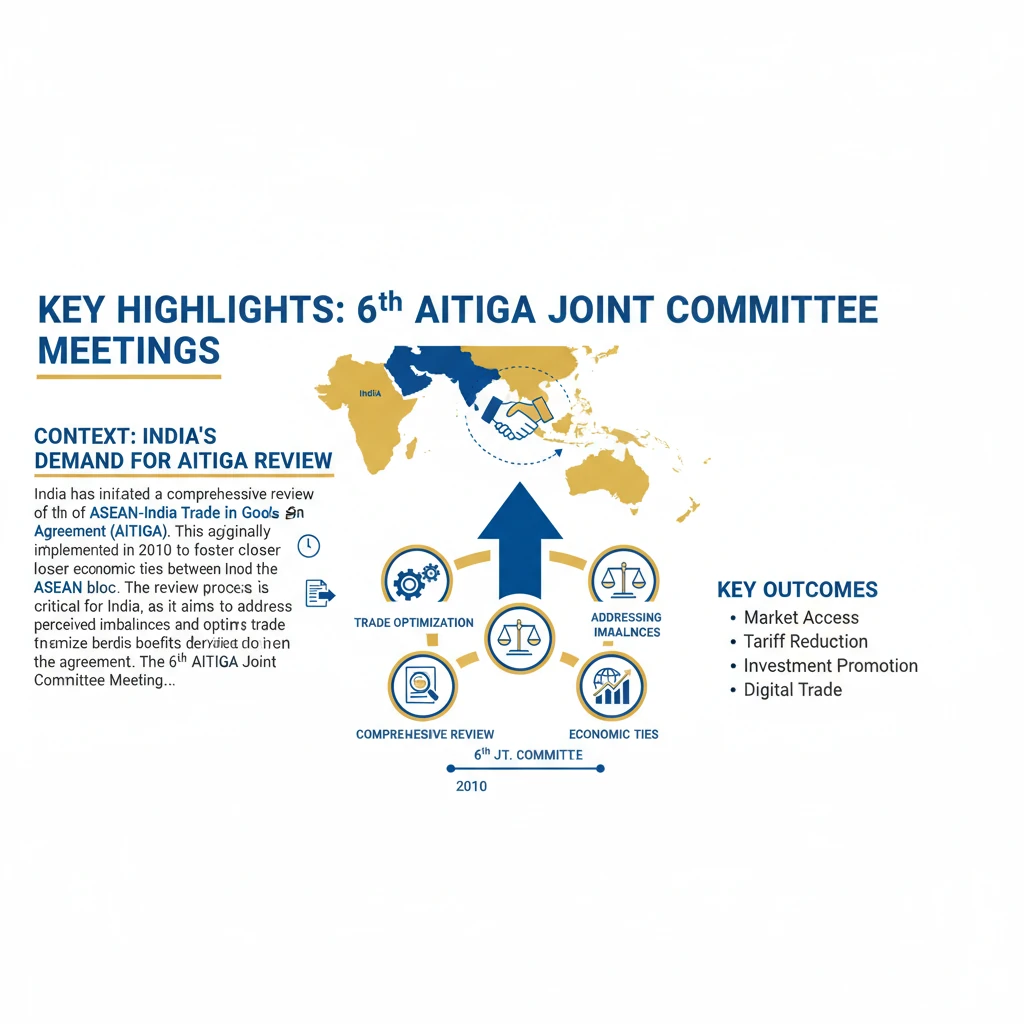
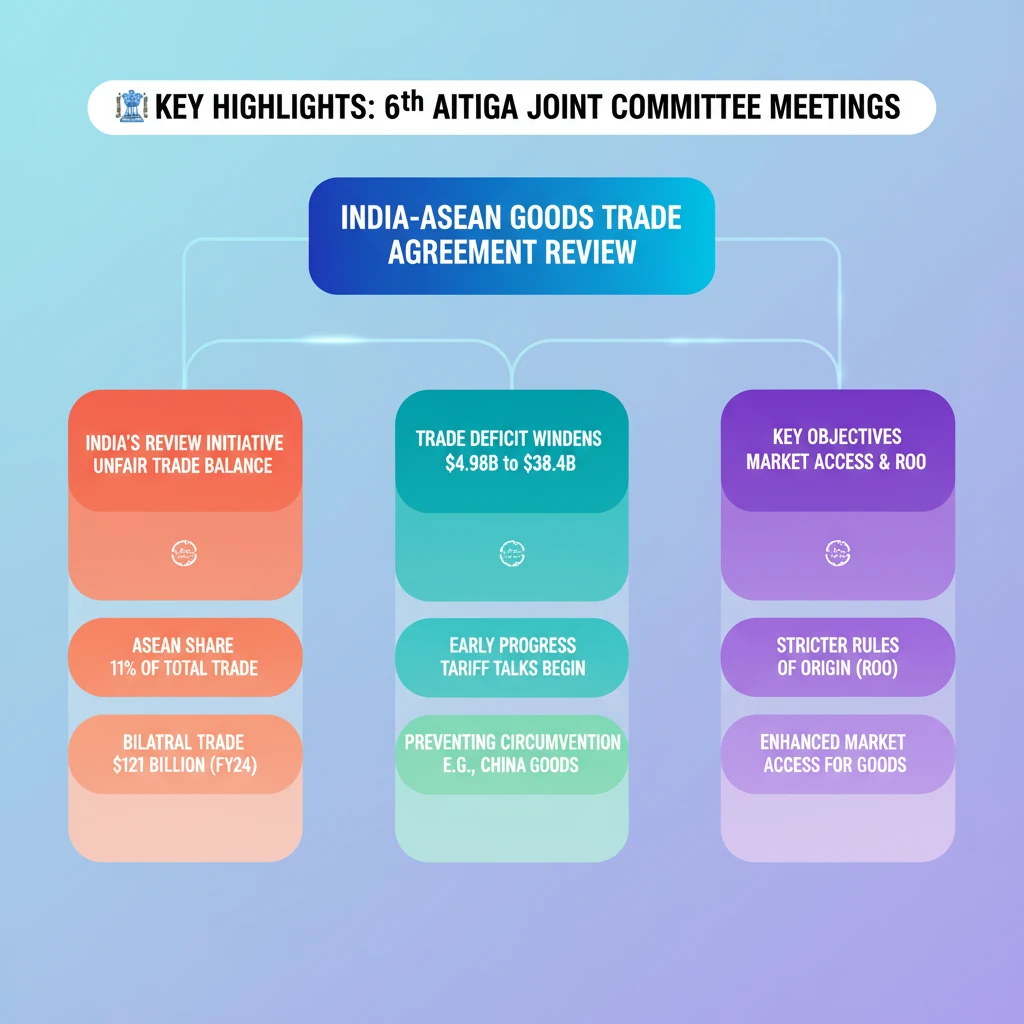
<h4>Context: India's Demand for AITIGA Review</h4><p>India has initiated a comprehensive review of the <strong>ASEAN-India Trade in Goods Agreement (AITIGA)</strong>. This agreement was originally implemented in <strong>2010</strong> to foster closer economic ties between India and the <strong>ASEAN</strong> bloc.</p><p>The review process is critical for India, as it aims to address perceived imbalances and optimize the trade benefits derived from the agreement. The <strong>6th AITIGA Joint Committee Meetings</strong> served as a crucial platform for these discussions.</p><h4>Reasons for India's Review Demand</h4><p>India sought a review of <strong>AITIGA</strong> primarily due to concerns over <strong>disproportionate trade benefits</strong> favoring <strong>ASEAN countries</strong>. Data indicates a significant widening of India's trade deficit with the bloc since the agreement's inception.</p><div class='info-box'><p><strong>Trade Data Comparison (FY 2010-11 vs. FY 2023-24):</strong></p><ul><li><strong>India’s Exports to ASEAN:</strong> Increased from <strong>USD 25.62 billion</strong> to <strong>USD 41.2 billion</strong>.</li><li><strong>India’s Imports from ASEAN:</strong> Surged from <strong>USD 30.8 billion</strong> to <strong>USD 87.36 billion</strong>.</li></ul></div><p>This substantial increase in imports compared to exports has led to a growing trade imbalance, prompting India to seek a re-evaluation of the agreement's terms.</p><h4>India's Key Objectives in the Review</h4><p>India's primary goals in the <strong>AITIGA</strong> review are multifaceted, focusing on improving market access and strengthening trade regulations.</p><ul><li><strong>Enhanced Market Access:</strong> India is pushing for greater market-opening commitments from <strong>ASEAN countries</strong>, particularly <strong>Vietnam</strong>. This aims to facilitate easier entry for Indian goods into these markets.</li><li><strong>Stricter Rules of Origin (ROO):</strong> A key objective is to implement more stringent <strong>Rules of Origin</strong> provisions. This is designed to prevent goods from third countries, notably <strong>China</strong>, from being re-routed through <strong>ASEAN nations</strong> to avail preferential tariff rates under <strong>AITIGA</strong>.</li></ul><div class='key-point-box'><p>The stricter <strong>ROO</strong> are crucial to ensure that only goods genuinely originating from <strong>ASEAN</strong> or <strong>India</strong> benefit from the agreement, preventing misuse and protecting domestic industries.</p></div><h4>Progress in Negotiations</h4><p>During the <strong>6th AITIGA Joint Committee Meetings</strong>, significant initial progress was made. Both sides advanced towards initiating <strong>tariff negotiations</strong>.</p><p>This step is considered crucial in the overall review process, as it directly addresses the tariff structures and concessions that dictate the flow of goods between India and <strong>ASEAN</strong>.</p><h4>Key Trade Statistics with ASEAN</h4><p><strong>ASEAN</strong> remains a vital trading partner for India, accounting for a significant portion of its global trade.</p><div class='info-box'><p><strong>Snapshot of India-ASEAN Trade:</strong></p><ul><li><strong>Share of India’s Global Trade:</strong> Approximately <strong>11%</strong>.</li><li><strong>Bilateral Trade (FY 2023-24):</strong> Reached <strong>USD 121 billion</strong>.</li><li><strong>Bilateral Trade (April-October 2024):</strong> Stood at <strong>USD 73 billion</strong>, marking a <strong>5.2% growth</strong> over the same period in the previous year.</li></ul></div><p>Despite the overall growth in bilateral trade, India's trade deficit with <strong>ASEAN</strong> has widened considerably. It grew from <strong>USD 4.98 billion</strong> in <strong>2010-11</strong> (the first full year of <strong>AITIGA</strong> operation) to <strong>USD 38.4 billion</strong> in <strong>2023-24</strong>.</p><div class='exam-tip-box'><p>Understanding the dynamics of <strong>trade deficits</strong> and the role of <strong>Rules of Origin</strong> is vital for <strong>UPSC Mains GS Paper 3 (Economy)</strong>. Candidates should be able to analyze the implications of such agreements on India's economic interests.</p></div>
💡 Key Takeaways
- •India initiated a review of the 2010 AITIGA due to disproportionate trade benefits favoring ASEAN.
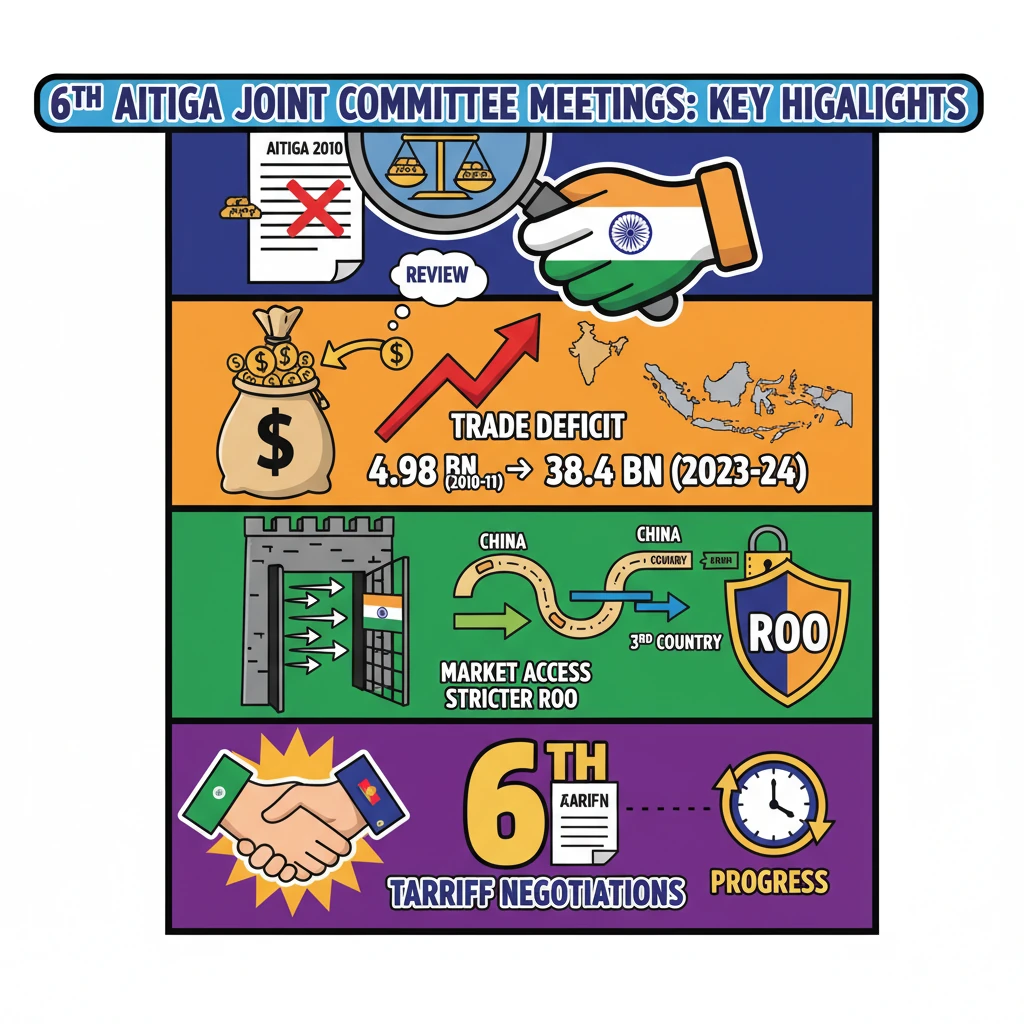
- •India's trade deficit with ASEAN widened significantly from USD 4.98 billion (FY 2010-11) to USD 38.4 billion (FY 2023-24).
- •Key Indian objectives include enhanced market access for its goods and stricter Rules of Origin (ROO) to prevent circumvention by third-country goods (e.g., China).
- •Initial progress has been made towards initiating tariff negotiations during the 6th AITIGA Joint Committee Meetings.
- •ASEAN accounts for approximately 11% of India's global trade, with bilateral trade reaching USD 121 billion in FY 2023-24.
🧠 Memory Techniques
95% Verified Content