SIPRI Report on Nuclear Arsenal - International Relations | UPSC Learning
Topics
0 topics • 0 completed
🔍
No topics match your search
SIPRI Report on Nuclear Arsenal
Medium⏱️ 8 min read
international relations
📖 Introduction
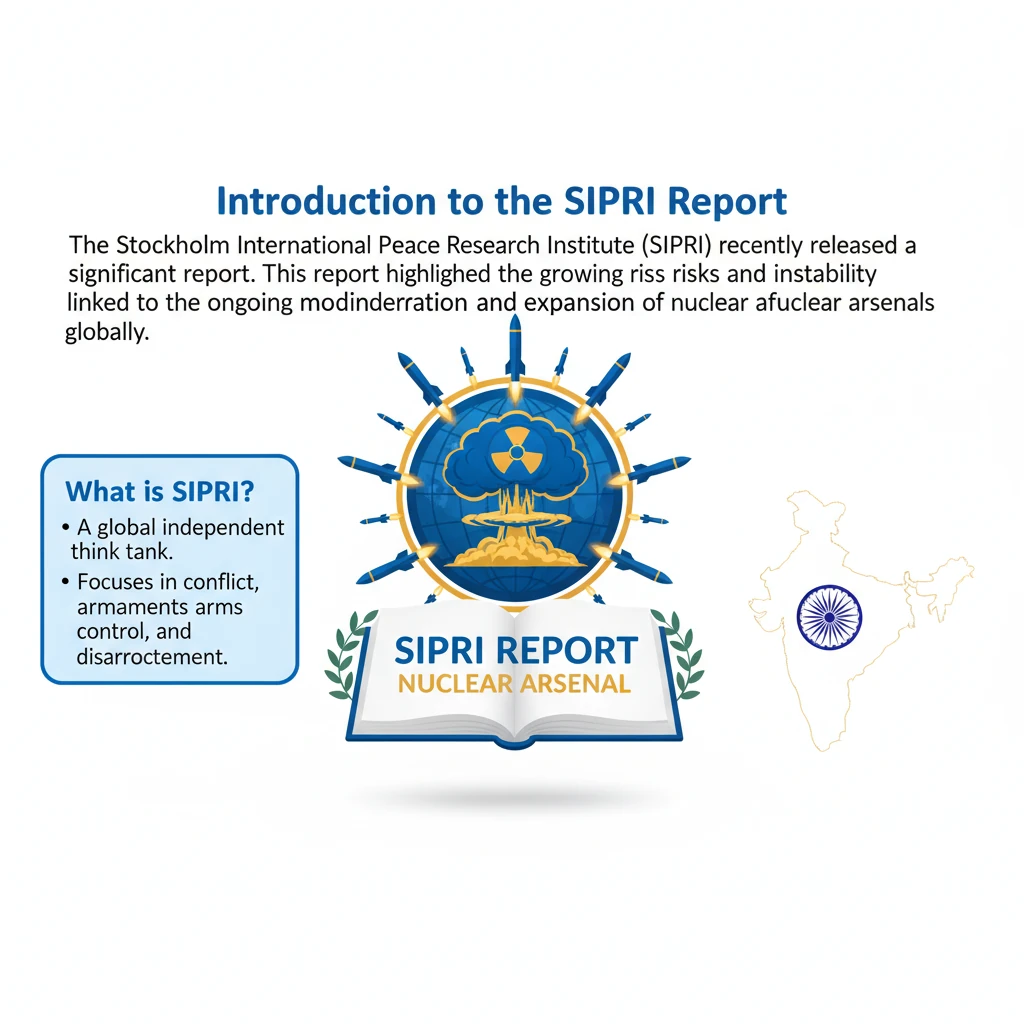
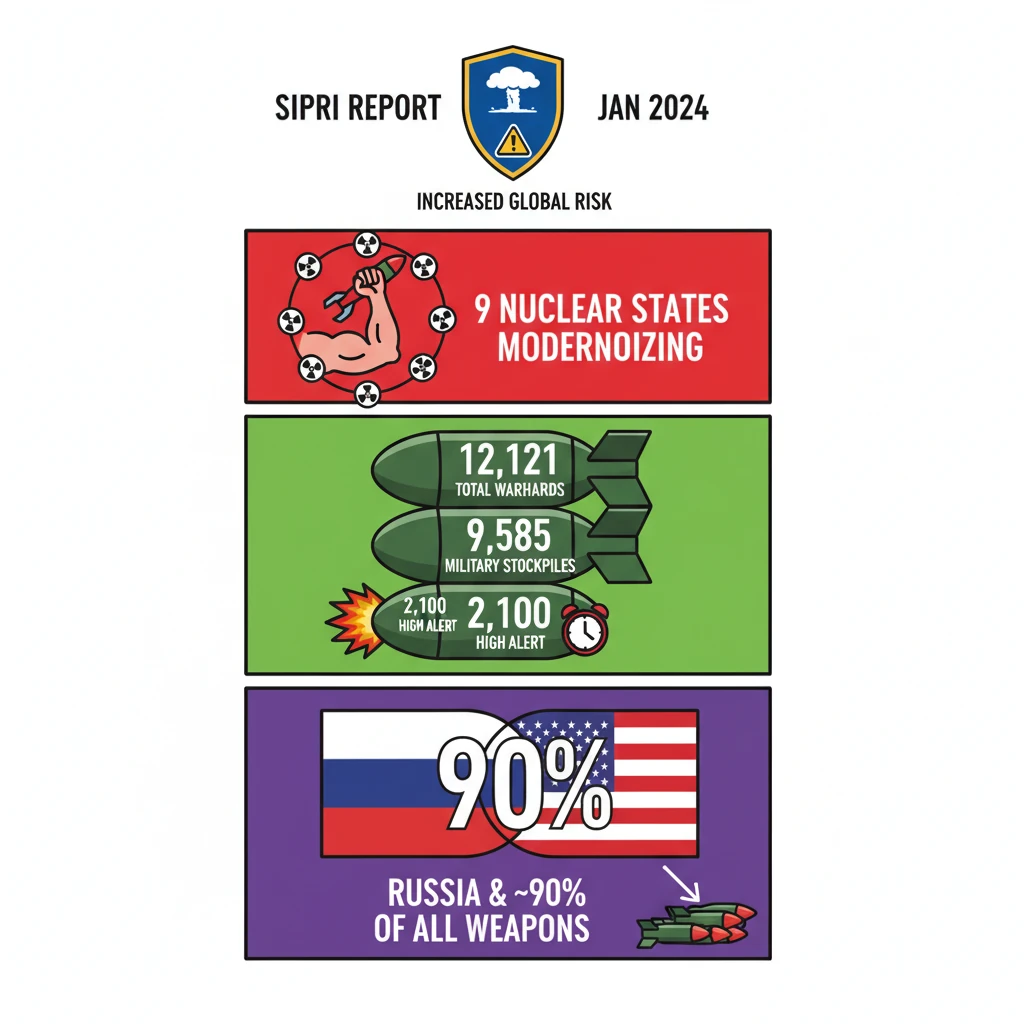
<h4>Introduction to the SIPRI Report</h4><p>The <strong>Stockholm International Peace Research Institute (SIPRI)</strong> recently released a significant report. This report highlighted the growing risks and instability linked to the ongoing <strong>modernisation</strong> and <strong>expansion</strong> of nuclear arsenals globally.</p><div class='info-box'><p><strong>What is SIPRI?</strong></p><ul><li>A global independent think tank.</li><li>Focuses on conflict, armaments, arms control, and disarmament.</li><li>Provides data, analysis, and recommendations.</li></ul></div><h4>Key Highlights: Global Nuclear Warheads</h4><p>The report underscores a concerning trend: all <strong>nine nuclear-armed states</strong> are actively modernising their arsenals. These states include the <strong>USA, Russia, UK, France, China, India, Pakistan, North Korea</strong>, and <strong>Israel</strong>.</p><div class='key-point-box'><p>The overall global inventory of nuclear warheads remains high, indicating a lack of progress in disarmament efforts.</p></div><ul><li>The <strong>total global inventory</strong> of nuclear warheads was approximately <strong>12,121</strong> as of <strong>January 2024</strong>.</li><li>Around <strong>9,585</strong> of these warheads were held in <strong>military stockpiles</strong>.</li><li>Approximately <strong>2,100 warheads</strong> were maintained on <strong>high operational alert</strong>. This alert status is primarily by <strong>Russia</strong> and the <strong>USA</strong>.</li><li>For the first time, <strong>China</strong> may also have some warheads on high alert, a significant development.</li></ul><h4>Country-Specific Developments</h4><p>The report provides specific insights into the nuclear activities of individual states, showcasing varied approaches to nuclear capabilities.</p><ul><li><strong>Russia and USA:</strong> These two nations collectively possess nearly <strong>90%</strong> of all nuclear weapons worldwide, maintaining their dominant positions.</li><li><strong>China:</strong> China has demonstrated a rapid increase in its nuclear arsenal. It grew from <strong>410</strong> to <strong>500</strong> warheads by <strong>January 2024</strong>. China is expanding its nuclear arsenal faster than any other country.</li><li><strong>North Korea:</strong> This nation is estimated to have approximately <strong>50 warheads</strong>. It also possesses enough fissile material for up to <strong>90 warheads</strong>.</li><li><strong>Israel:</strong> Israel is reportedly modernising its arsenal. It is also enhancing its <strong>plutonium production capabilities</strong>, though its nuclear status is not officially acknowledged.</li></ul><div class='info-box'><p><strong>India and Pakistan's Nuclear Status:</strong></p><ul><li><strong>India</strong> now possesses <strong>172 nuclear warheads</strong> as of <strong>January 2024</strong>.</li><li>This places India <strong>6th globally</strong>, surpassing <strong>Pakistan</strong>.</li><li><strong>Pakistan</strong> holds <strong>170 nuclear warheads</strong>.</li><li>India is specifically emphasising the development of <strong>longer-range weapons</strong>, primarily aimed at <strong>China</strong>.</li></ul></div><h4>Challenges in Nuclear Diplomacy</h4><p>The global geopolitical landscape has significantly impacted nuclear arms control. The report notes considerable setbacks in <strong>nuclear arms control</strong> and <strong>disarmament diplomacy</strong>.</p><p>These challenges are particularly exacerbated by ongoing conflicts, such as the <strong>war in Ukraine</strong> and the <strong>Gaza conflict</strong>. Such conflicts divert attention and resources from disarmament efforts.</p><div class='exam-tip-box'><p><strong>UPSC Insight:</strong> The SIPRI report is crucial for understanding current <strong>global security dynamics</strong> and <strong>non-proliferation challenges</strong>. It can be cited in <strong>GS2 (International Relations)</strong> and <strong>Essay</strong> papers.</p></div>
💡 Key Takeaways
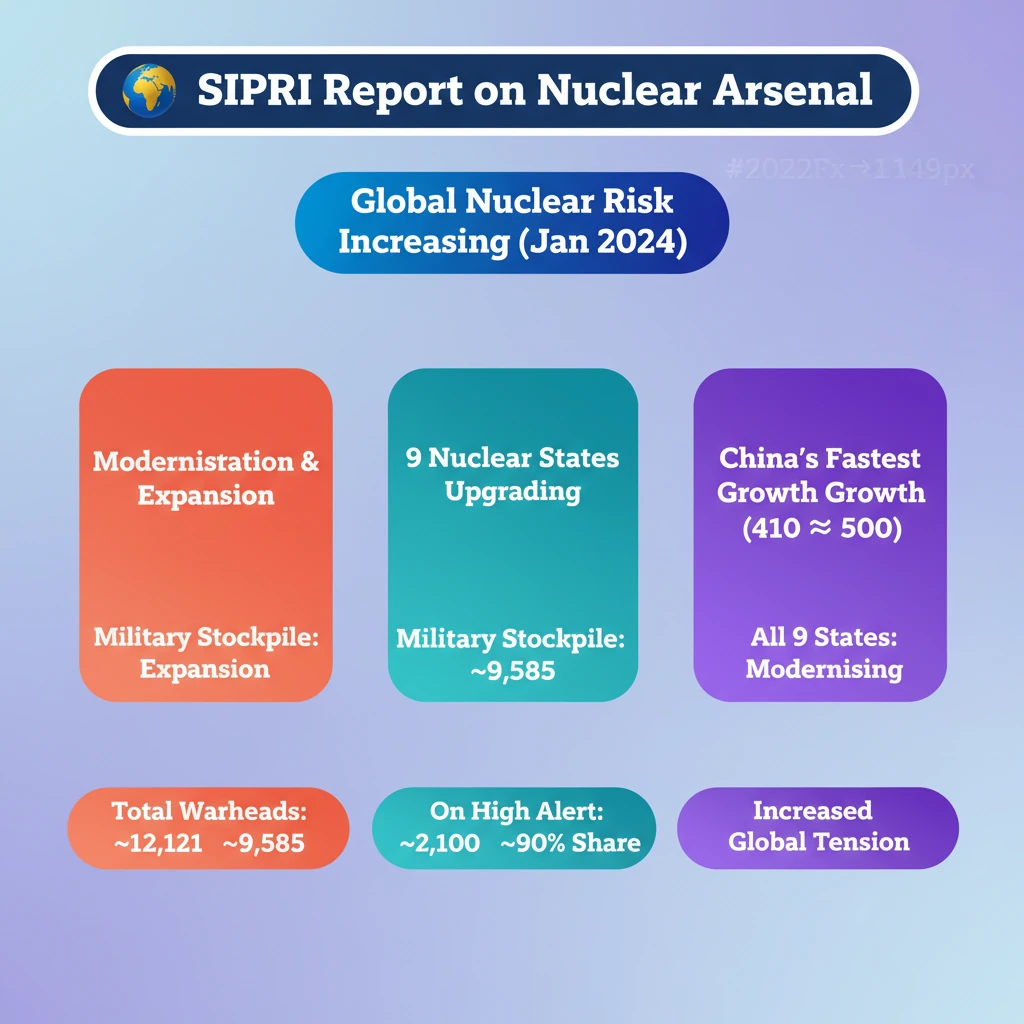
- •SIPRI Report (Jan 2024) highlights increased global nuclear risk due to modernisation and expansion.
- •All nine nuclear-armed states are modernising their arsenals.
- •Total global warheads: ~12,121; ~9,585 in military stockpiles; ~2,100 on high alert.
- •Russia and USA hold ~90% of all nuclear weapons.
- •China is expanding its arsenal fastest (410 to 500 warheads).
- •India (172 warheads) surpasses Pakistan (170 warheads), focusing on longer-range weapons.
- •Nuclear diplomacy faces setbacks due to conflicts like Ukraine and Gaza.
🧠 Memory Techniques
98% Verified Content
📚 Reference Sources
•Drishti IAS Summary of SIPRI Report