What is Salami Slicing Technique in Maritime Disputes? - International Relations | UPSC Learning
Topics
0 topics • 0 completed
🔍
No topics match your search
What is Salami Slicing Technique in Maritime Disputes?
Medium⏱️ 8 min read
international relations
📖 Introduction
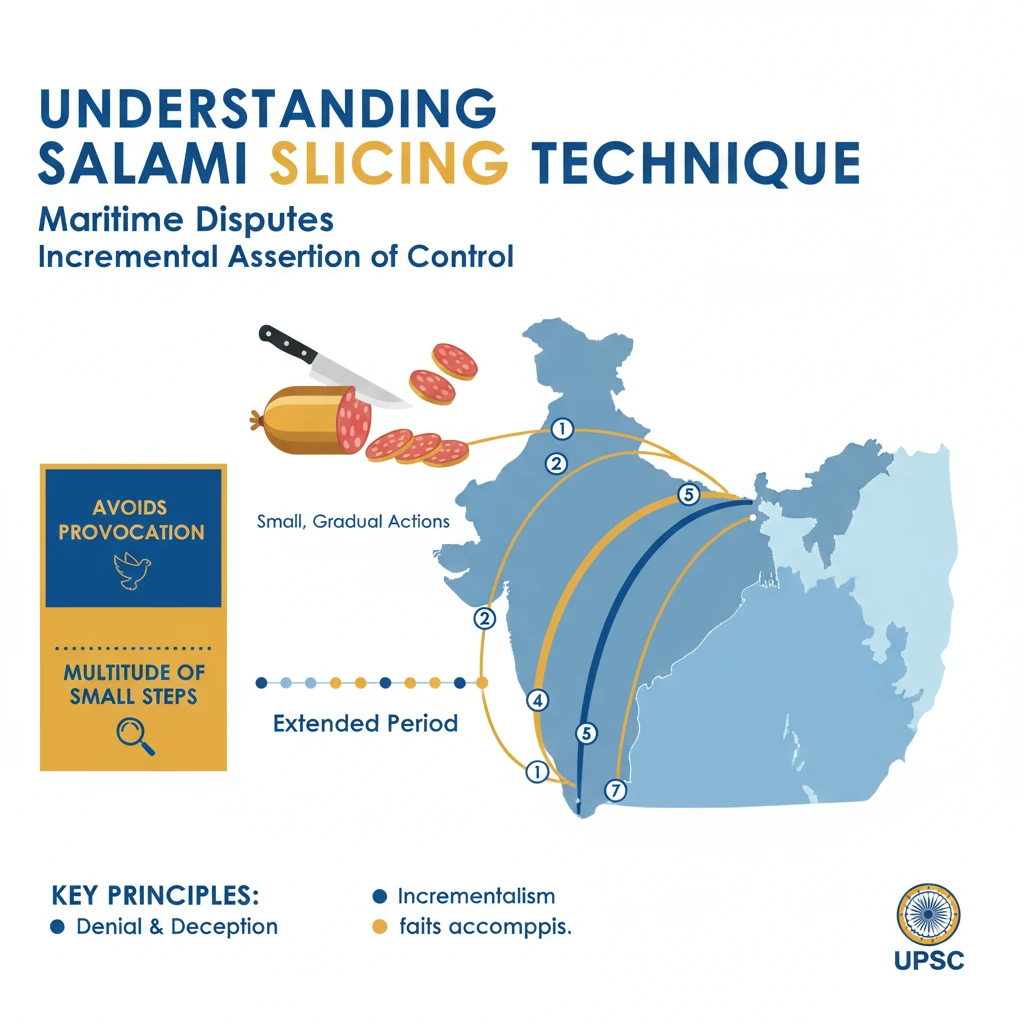
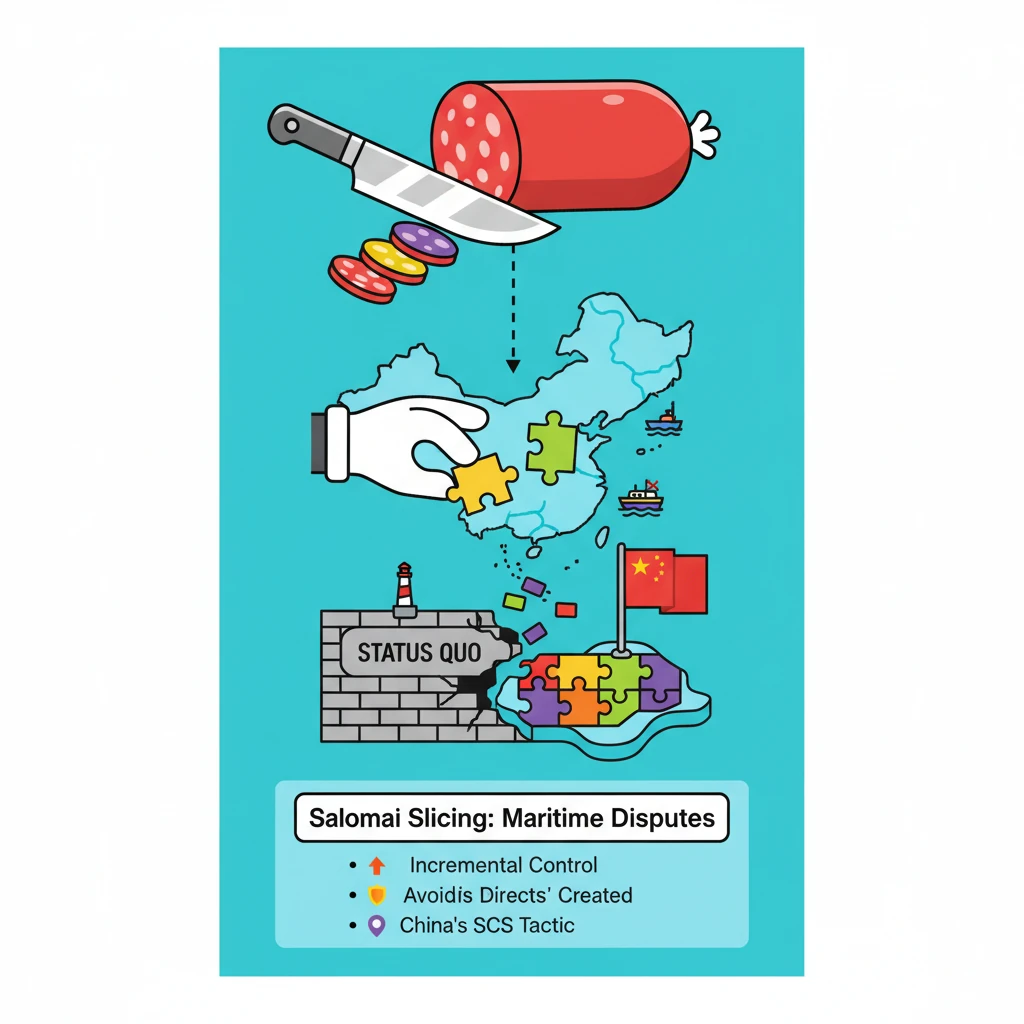
<h4>Understanding Salami Slicing Technique</h4><p>The <strong>Salami Slicing Technique</strong> in <strong>maritime disputes</strong> refers to a strategic approach where a country incrementally asserts control over disputed maritime areas. This is achieved through a series of small, gradual actions over an extended period.</p><p>The essence of this technique lies in avoiding any single, large action that might provoke a strong international or military response. Instead, it involves a multitude of minor infringements or assertions that, individually, seem insignificant.</p><div class='key-point-box'><p><strong>Key Principle:</strong> Each 'slice' is small enough to avoid direct confrontation but contributes to a cumulative gain, eventually leading to a significant shift in control or influence over the disputed territory.</p></div><h4>Characteristics of the Technique</h4><p>This method is characterized by its subtlety and long-term vision. It aims to alter the status quo without triggering an immediate, forceful reaction from other claimants or the international community.</p><ul><li><strong>Avoids Direct Confrontation:</strong> Actions are calibrated to stay below the threshold that would necessitate a military response or severe diplomatic backlash.</li><li><strong>Exploits Legal Ambiguities:</strong> Nations often leverage vague interpretations of international law, such as the <strong>United Nations Convention on the Law of the Sea (UNCLOS)</strong>, to justify their incremental steps.</li><li><strong>Creates Irreversible Situations:</strong> Over time, the cumulative effect of these small actions can create new facts on the ground (or sea) that are difficult to reverse, effectively cementing control.</li></ul><h4>Example: China in the South China Sea</h4><p><strong>China</strong> has frequently been accused of employing the <strong>salami slicing technique</strong> in the <strong>South China Sea</strong>. This strategic waterway is subject to overlapping claims by several countries, including the Philippines, Vietnam, Malaysia, Brunei, and Taiwan.</p><p>China's actions demonstrate a systematic approach to asserting its claims, particularly over features like reefs and shoals. These actions have gradually expanded its influence and limited access for other nations.</p><div class='info-box'><p><strong>Specific Actions by China:</strong><ul><li><strong>Building Artificial Islands:</strong> Transforming submerged reefs into fortified military outposts and civilian facilities.</li><li><strong>Conducting Resource Exploration:</strong> Asserting exclusive rights over oil, gas, and fishing resources within the disputed zones.</li><li><strong>Imposing Fishing Bans:</strong> Declaring unilateral fishing moratoriums that cover areas claimed by other nations.</li></ul></p></div><p>A recent instance involved <strong>Chinese coast guard ships</strong> blocking <strong>Philippine vessels</strong> at <strong>Second Thomas Shoal</strong>. This incident, while seemingly minor, is part of a larger pattern of asserting control and has led to escalated tensions in the region.</p><div class='exam-tip-box'><p><strong>UPSC Insight:</strong> Understanding <strong>Salami Slicing</strong> is crucial for analyzing <strong>geopolitical strategies</strong> and <strong>maritime security issues</strong> in the <strong>Indo-Pacific region</strong>. It often appears in questions related to <strong>international relations</strong> and <strong>India's neighbourhood policy</strong> (<strong>GS Paper 2</strong>).</p></div>
💡 Key Takeaways
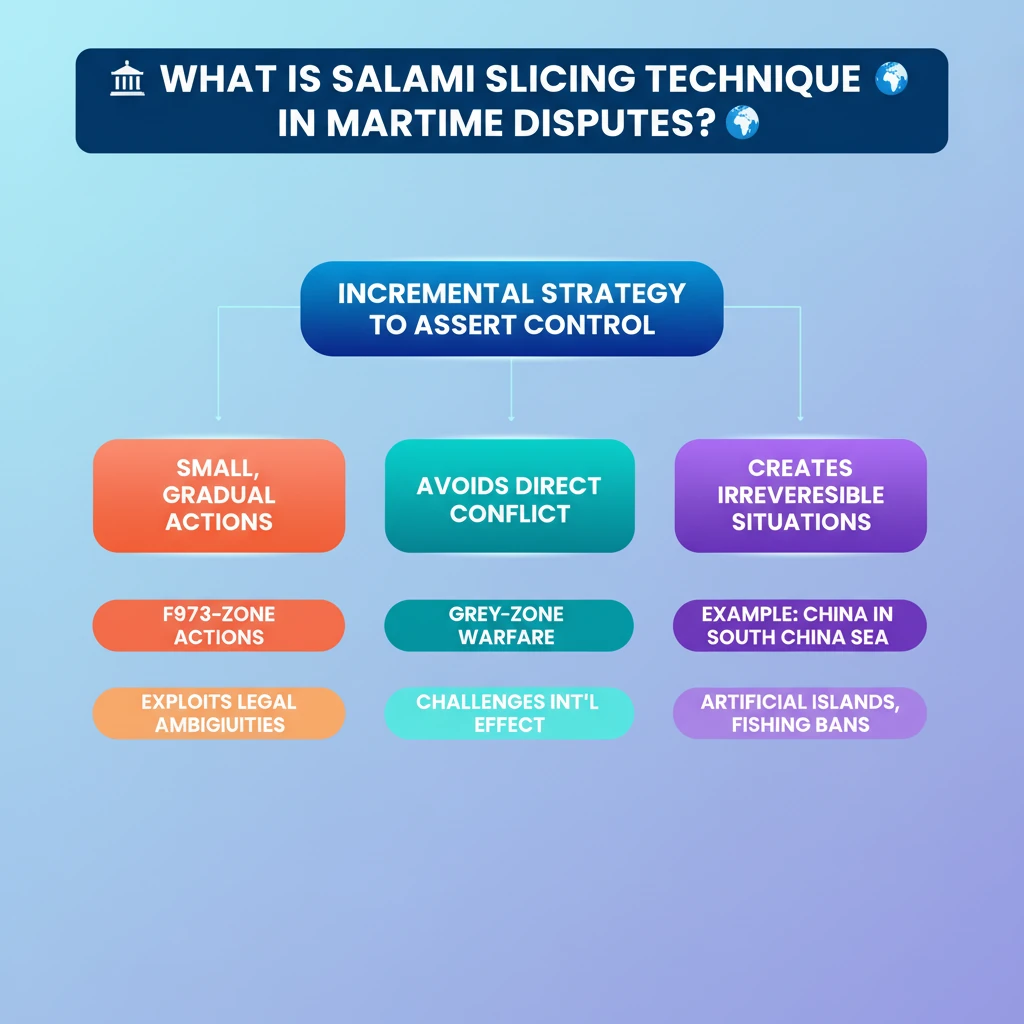
- •Salami Slicing is an incremental strategy to assert control over disputed areas.
- •It involves small, gradual actions to avoid direct confrontation and exploit legal ambiguities.
- •The cumulative effect creates irreversible situations, challenging the status quo.
- •China's actions in the South China Sea (artificial islands, fishing bans) are prime examples.
- •It's a form of grey-zone warfare, posing significant challenges to international law and regional stability.
🧠 Memory Techniques
95% Verified Content
📚 Reference Sources
•General knowledge on South China Sea disputes and international relations