India’s Engagement at ASEAN Meet - International Relations | UPSC Learning
Topics
0 topics • 0 completed
🔍
No topics match your search
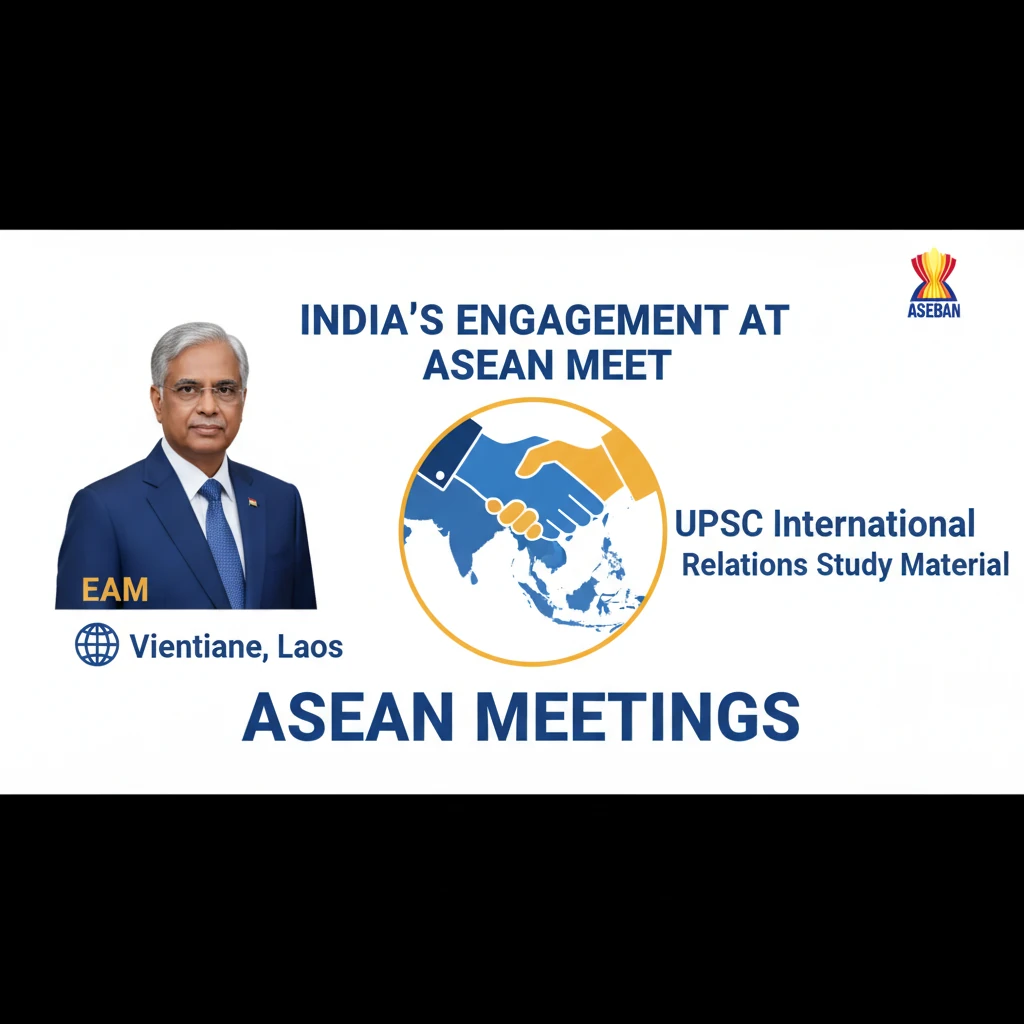
India’s Engagement at ASEAN Meet
Medium⏱️ 7 min read
international relations
📖 Introduction
<h4>Introduction to India's ASEAN Engagement</h4><p>India's External Affairs Minister (<strong>EAM</strong>) recently undertook a significant visit to <strong>Vientiane, Laos</strong>. This visit was primarily for the <strong>Association of Southeast Asian Nations (ASEAN)</strong> meetings, underscoring India's commitment to regional partnerships.</p><p>The visit served as a crucial platform for high-level dialogues with various global leaders. These interactions aimed at further strengthening <strong>bilateral relations</strong> and fostering deeper cooperation across multiple sectors.</p><h4>Understanding ASEAN: A Regional Powerhouse</h4><p>The <strong>Association of Southeast Asian Nations (ASEAN)</strong> is a prominent regional intergovernmental organization. It plays a pivotal role in promoting economic, political, security, educational, and socio-cultural cooperation among its ten member states.</p><div class='info-box'><p><strong>Founded:</strong> 8th August 1967</p><p><strong>Location:</strong> Bangkok, Thailand</p><p><strong>Formalized by:</strong> The ASEAN Declaration</p></div><p>ASEAN has emerged as one of the world's largest economic blocs. Projections suggest that the region could potentially become the <strong>4th-largest economy globally by 2050</strong>, highlighting its growing influence.</p><h4>Evolution of ASEAN Membership</h4><p>ASEAN was initially established by five founding member states. Over the years, it has progressively expanded to include more nations from Southeast Asia, strengthening its regional representation.</p><ul><li><strong>Initial Signatories:</strong> <ul><li><strong>Indonesia</strong></li><li><strong>Malaysia</strong></li><li><strong>the Philippines</strong></li><li><strong>Singapore</strong></li><li><strong>Thailand</strong></li></ul></li><li><strong>Later Additions:</strong> <ul><li><strong>Brunei Darussalam</strong> (1984)</li><li><strong>Vietnam</strong> (1995)</li><li><strong>Laos PDR</strong> (1997)</li><li><strong>Myanmar</strong> (1997)</li><li><strong>Cambodia</strong> (1999)</li></ul></li></ul><h4>ASEAN's Institutional Framework and Achievements</h4><p>A significant milestone for ASEAN was the adoption of the <strong>ASEAN Charter in 2008</strong>. This charter provided the organization with a robust legal status and a comprehensive institutional framework.</p><div class='key-point-box'><p>The <strong>ASEAN Charter (2008)</strong> codified norms, rules, and values for the bloc. This enhancement has significantly improved <strong>accountability</strong> and <strong>compliance</strong> among member states, solidifying its operational structure.</p></div><p>One of ASEAN's biggest successes has been its remarkable achievement in promoting <strong>economic integration</strong> among its members. This has led to increased trade, investment, and regional prosperity.</p><div class='exam-tip-box'><p>ASEAN played a crucial role in negotiating the <strong>Regional Comprehensive Economic Partnership (RCEP)</strong>. Although India is not a member, understanding ASEAN's role in the <strong>world's largest free trade agreement</strong> is vital for UPSC, especially for questions on regional economic blocs and India's trade policy.</p></div>
💡 Key Takeaways
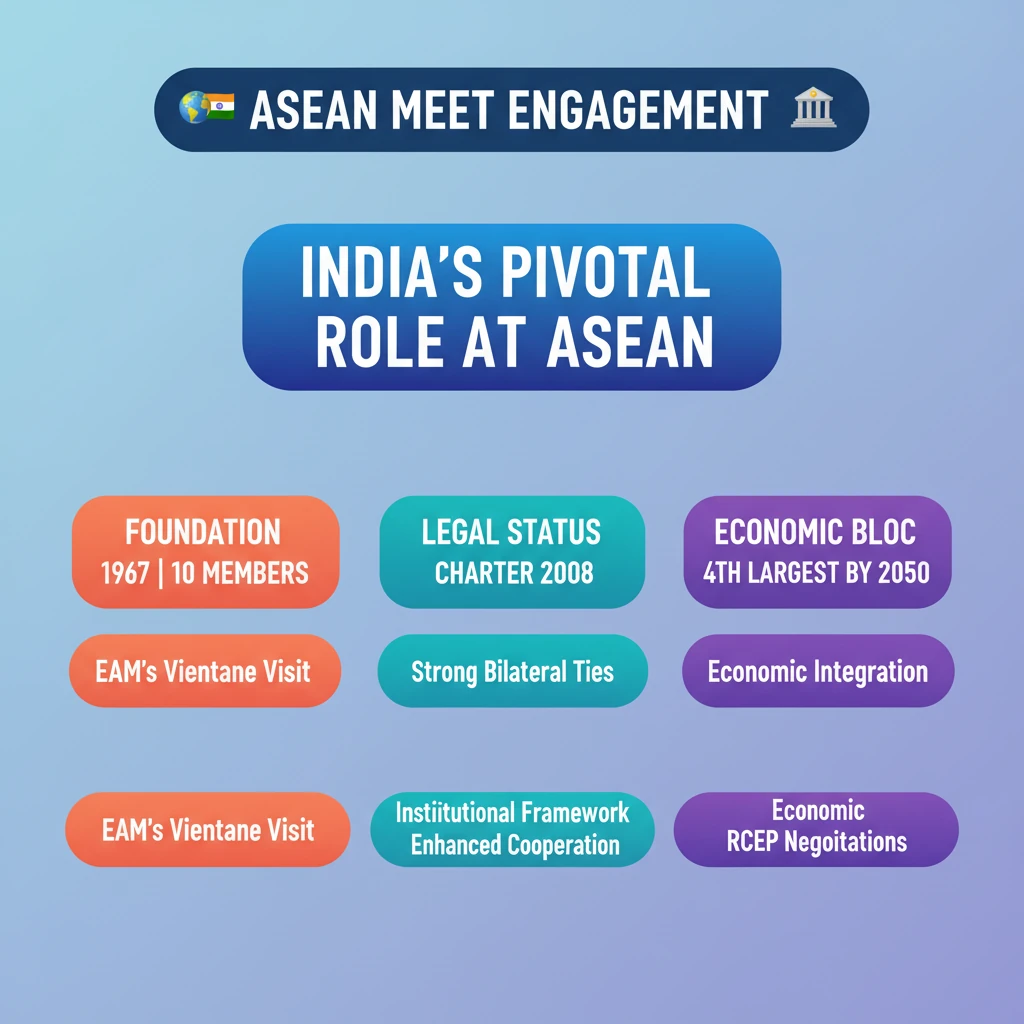
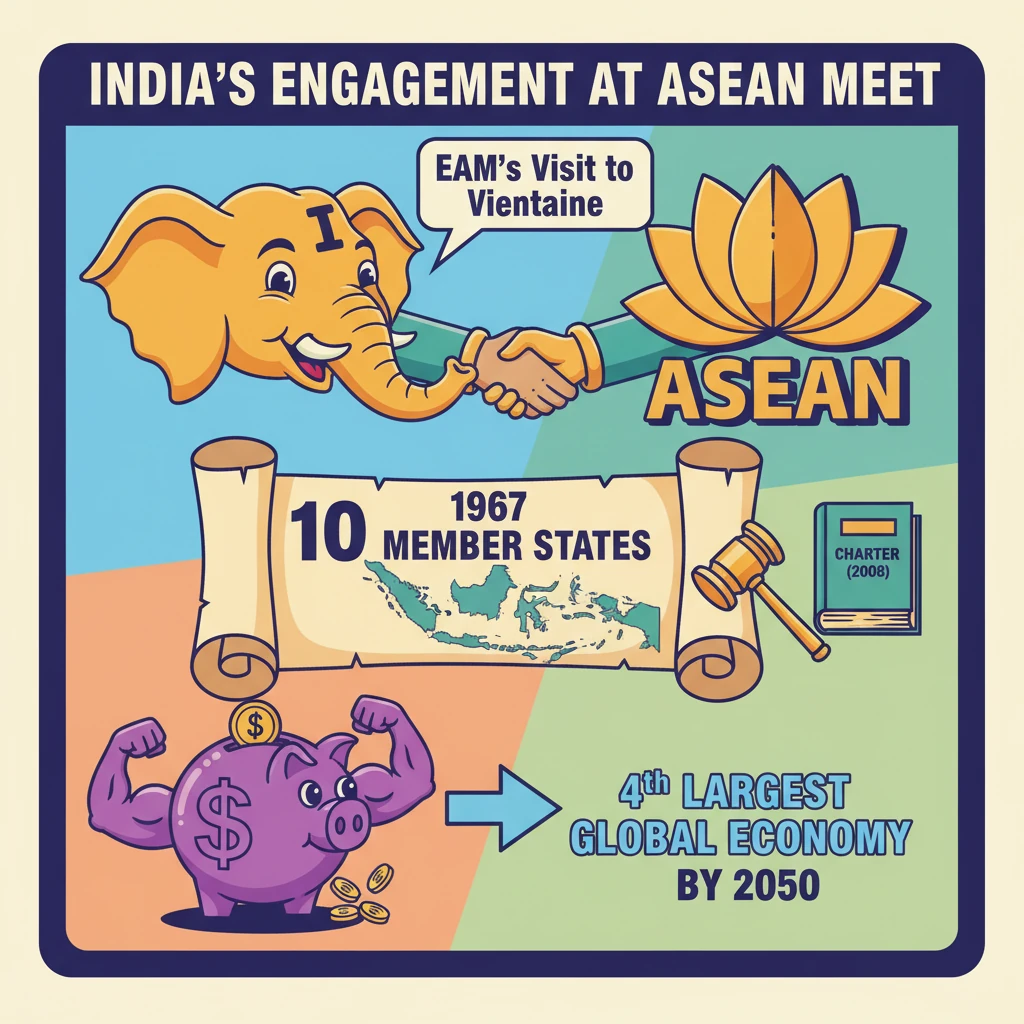
- •EAM's visit to Vientiane for ASEAN meetings highlights India's strong engagement.
- •ASEAN, founded in 1967, is a regional intergovernmental organization with 10 member states.
- •The ASEAN Charter (2008) provided legal status and institutional framework.
- •ASEAN is a major economic bloc, projected to be the 4th largest global economy by 2050.
- •ASEAN's key achievements include economic integration and negotiating RCEP.
- •India's Act East Policy places ASEAN at its core for strategic and economic partnerships.
🧠 Memory Techniques
95% Verified Content