India Acts East - International Relations | UPSC Learning
Topics
0 topics • 0 completed
🔍
No topics match your search
India Acts East
Medium⏱️ 8 min read
international relations
📖 Introduction
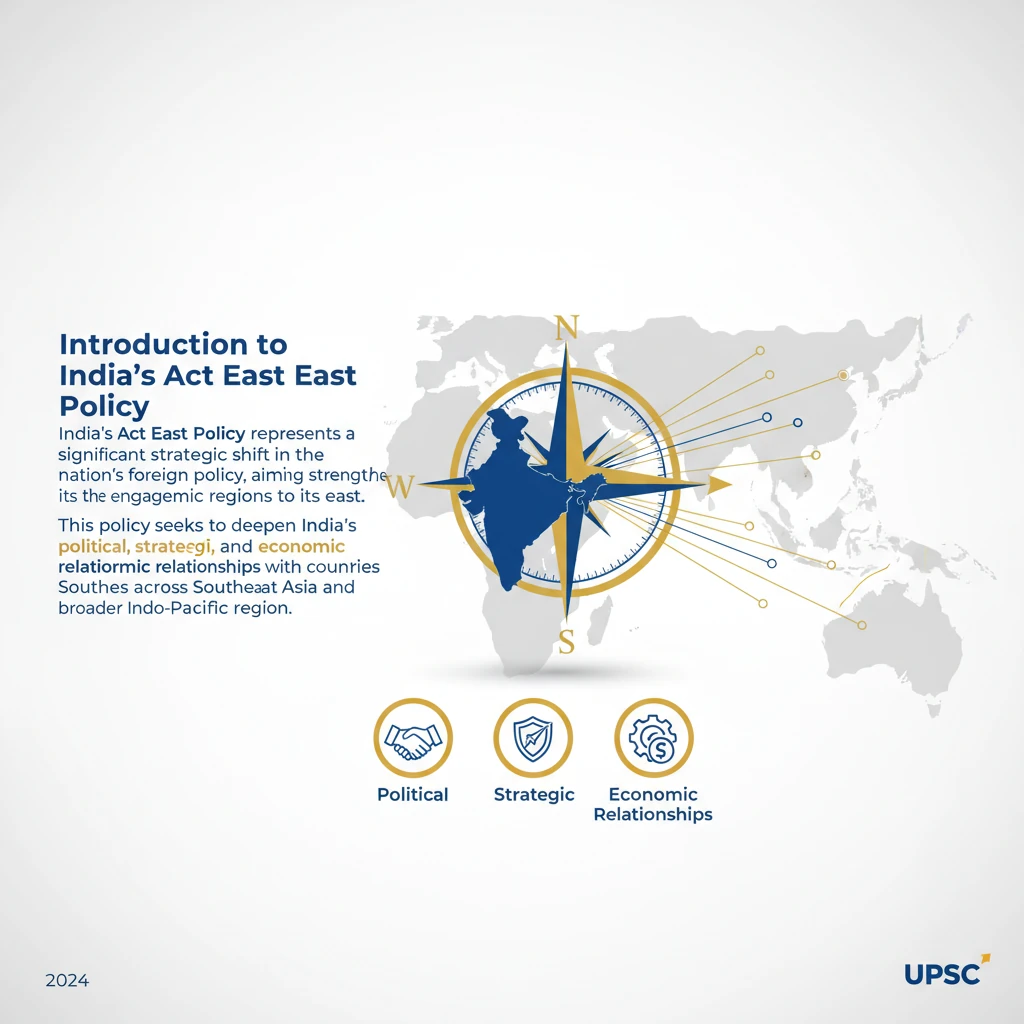
<h4>Introduction to India's Act East Policy</h4><p>India's <strong>Act East Policy</strong> represents a significant strategic shift in the nation's foreign policy, aiming to strengthen its engagement with the dynamic regions to its east.</p><p>This policy seeks to deepen India's <strong>political</strong>, <strong>strategic</strong>, and <strong>economic relationships</strong> with countries across <strong>Southeast Asia</strong> and the broader <strong>Indo-Pacific region</strong>.</p><div class='key-point-box'><p>The <strong>Act East Policy</strong> is not merely economic; it encompasses a comprehensive approach to foster robust ties in security, culture, and people-to-people connections, reflecting India's growing stature as a regional power.</p></div><h4>Key Driver: ASEAN</h4><p>The <strong>Association of Southeast Asian Nations (ASEAN)</strong> serves as a pivotal and central pillar of India's Act East Policy. India views ASEAN as the anchor for regional stability and cooperation.</p><p>India's engagement with <strong>ASEAN</strong> is multi-faceted, involving summits, ministerial dialogues, and various sectoral partnerships aimed at mutual growth and prosperity.</p><div class='info-box'><p><strong>ASEAN</strong> comprises ten member states: Brunei, Cambodia, Indonesia, Laos, Malaysia, Myanmar, Philippines, Singapore, Thailand, and Vietnam. It plays a crucial role in regional architecture.</p></div>
💡 Key Takeaways
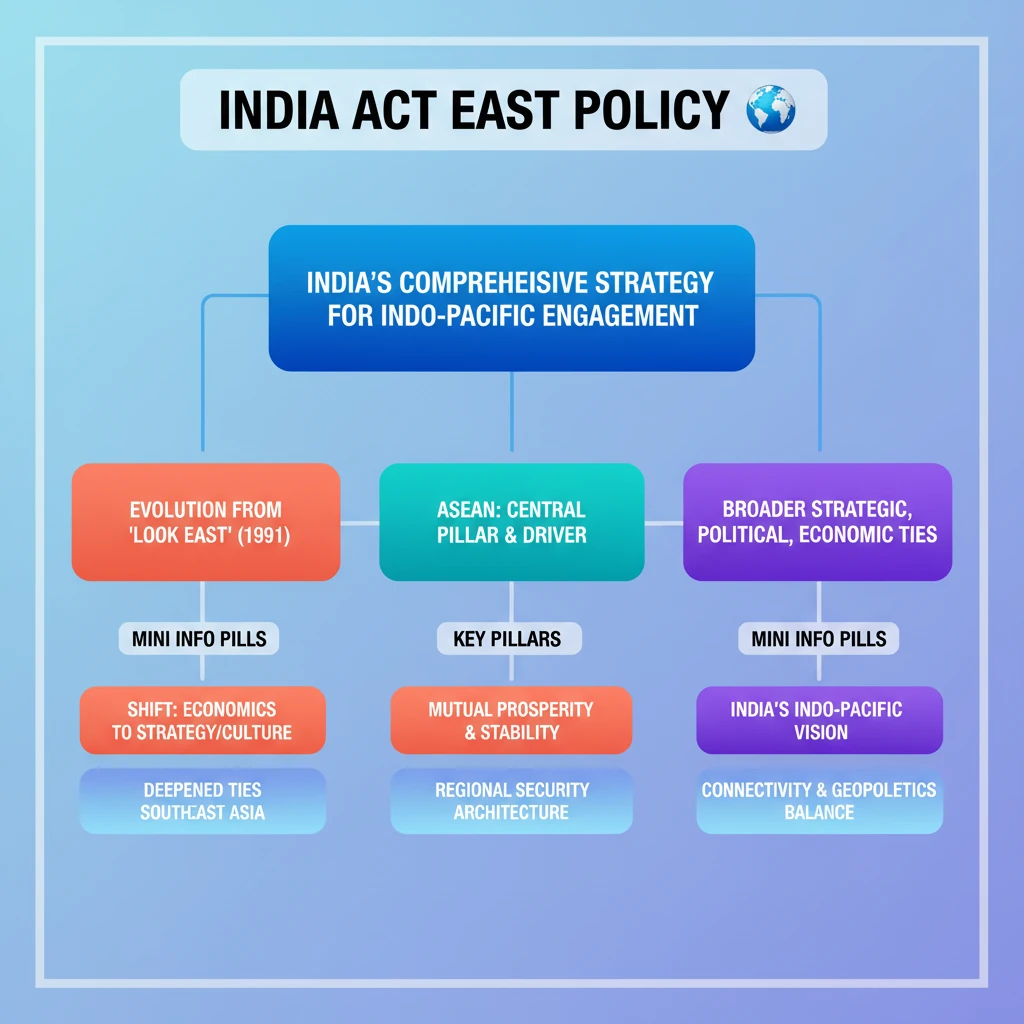
- •Act East Policy (AEP) is India's comprehensive strategy to deepen ties with Southeast Asia and the Indo-Pacific.
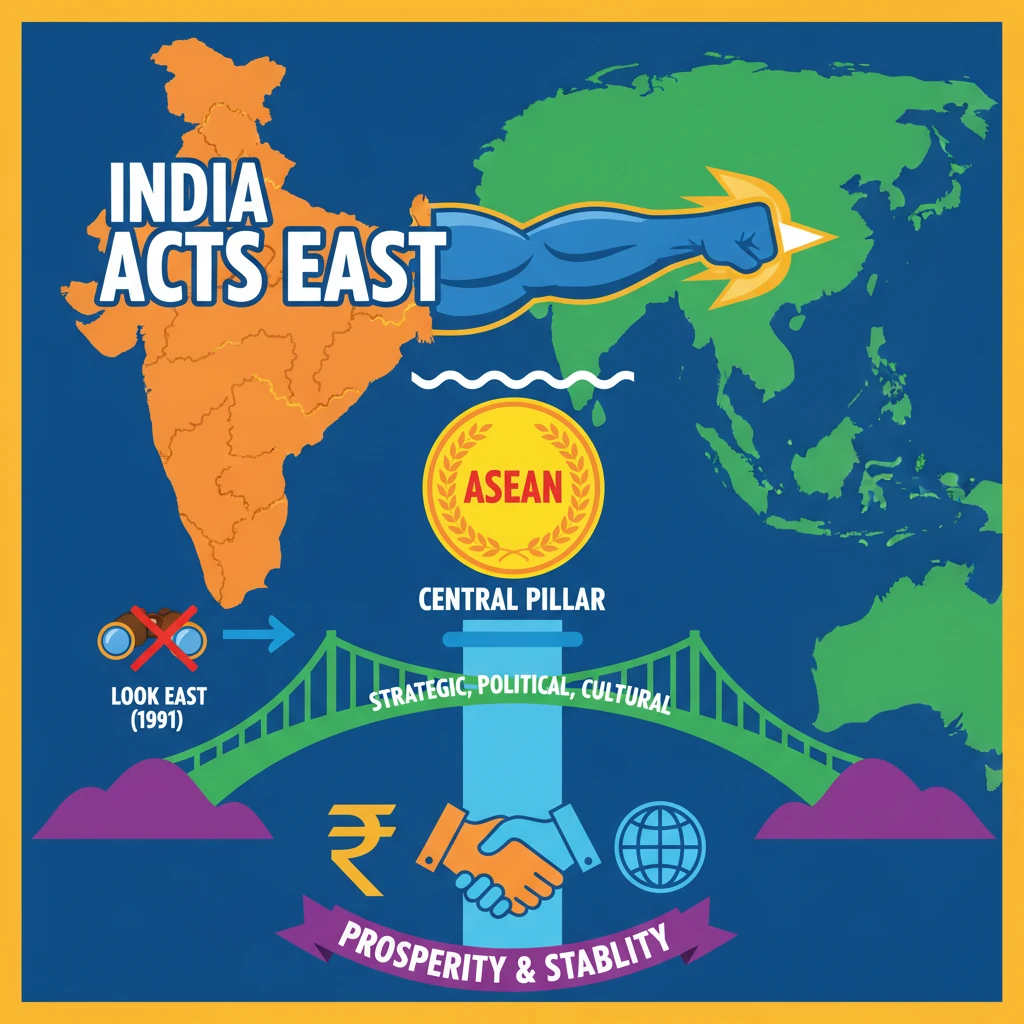
- •It evolved from the Look East Policy (1991), shifting from economic focus to broader strategic, political, and cultural engagement.
- •ASEAN is the central pillar and key driver of India's AEP.
- •AEP aims to enhance political, strategic, and economic relationships for mutual prosperity and regional stability.
- •It is crucial for India's Indo-Pacific vision, connectivity, and balancing geopolitical dynamics.
- •Connectivity projects (Kaladan, Trilateral Highway) and defense cooperation (SIMBEX) are key components.
🧠 Memory Techniques
95% Verified Content
📚 Reference Sources
•Institute for Defence Studies and Analyses (IDSA) publications on India's foreign policy
•Observer Research Foundation (ORF) analyses on Indo-Pacific and Act East Policy
•Academic journals and reputable news archives on international relations