Colombo Process - International Relations | UPSC Learning
Topics
0 topics • 0 completed
🔍
No topics match your search
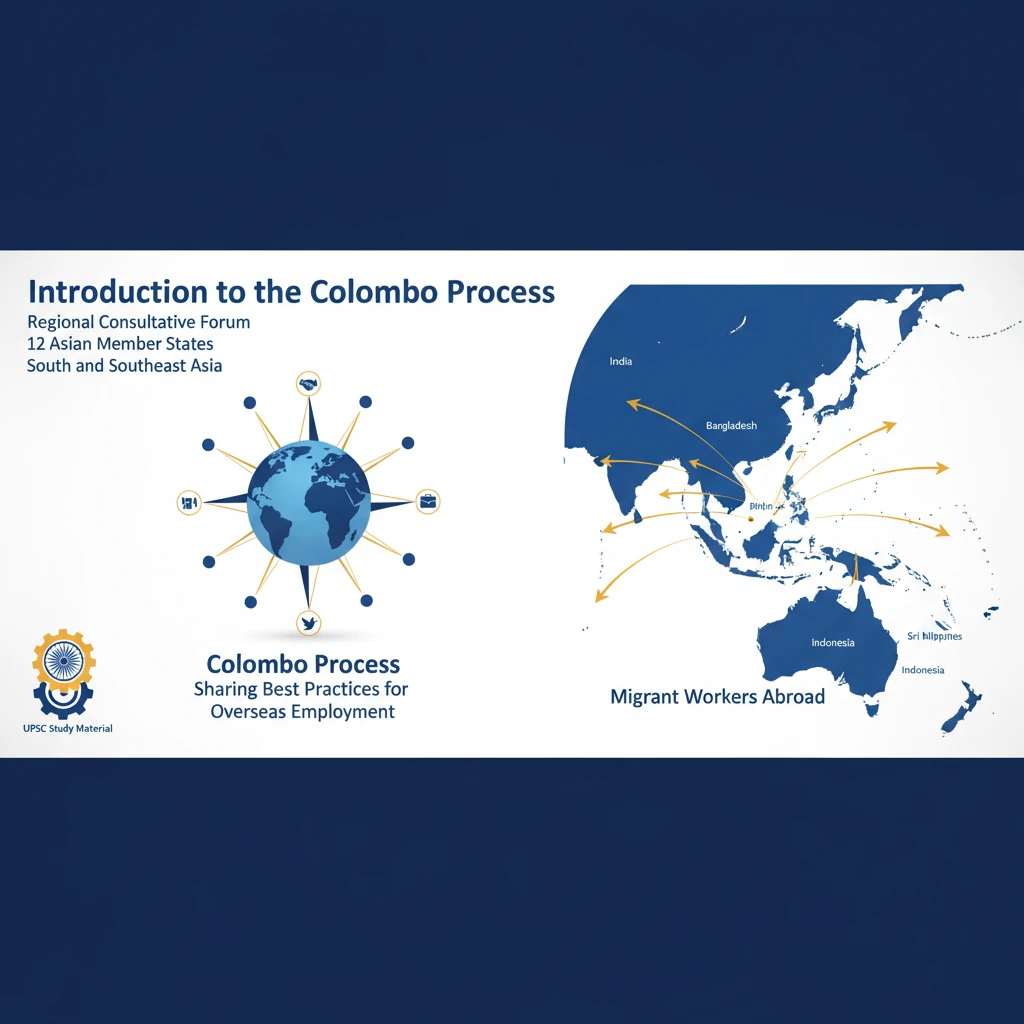
Colombo Process
Medium⏱️ 8 min read
international relations
📖 Introduction
<h4>Introduction to the Colombo Process</h4><p>The <strong>Colombo Process</strong> is a significant <strong>regional consultative forum</strong> comprising <strong>12 Asian member states</strong>. It serves as a crucial platform for countries in <strong>South and Southeast Asia</strong> that send <strong>migrant workers abroad</strong>.</p><p>Its primary objective is to foster dialogue and promote the <strong>sharing of best practices</strong> related to <strong>overseas employment</strong>. This collaborative approach helps member states address common challenges faced by their citizens working abroad.</p><div class='info-box'><p>The <strong>Colombo Process</strong> was initially established in <strong>2003</strong>, reflecting a growing regional need for coordinated strategies on labor migration governance.</p></div><h4>India's Recent Leadership Role</h4><p>Significantly, <strong>India</strong> has recently assumed the <strong>chair of the Colombo Process</strong> for the period <strong>2024-26</strong>. This marks the <strong>first time</strong> India has led this regional grouping since its inception.</p><p>This leadership position provides India with a unique opportunity to shape regional discourse and initiatives concerning <strong>migrant worker welfare</strong> and <strong>ethical recruitment practices</strong>.</p><div class='exam-tip-box'><p><strong>UPSC Insight:</strong> India's chairship highlights its increasing engagement in <strong>regional multilateral forums</strong> and its commitment to addressing <strong>transnational social issues</strong>, relevant for <strong>GS Paper 2 (International Relations)</strong>.</p></div><h4>Core Mandate and Objectives</h4><p>The core mandate of the <strong>Colombo Process</strong> revolves around enhancing the protection and welfare of <strong>migrant workers</strong>. It aims to create a more supportive and equitable environment for those seeking employment overseas.</p><ul><li><strong>Share Experiences:</strong> Facilitates the exchange of knowledge, strategies, and lessons learned among member states regarding labor migration.</li><li><strong>Consult on Issues:</strong> Provides a platform to discuss pressing challenges faced by <strong>overseas workers</strong>, including exploitation, rights violations, and reintegration issues.</li><li><strong>Offer Practical Solutions:</strong> Works towards developing and implementing actionable solutions to improve the conditions and safety of <strong>migrant workers</strong>.</li></ul><h4>Member States and Structure</h4><p>The <strong>Colombo Process</strong> includes <strong>12 Asian member states</strong>, representing a significant portion of global labor-sending countries. These nations actively participate in discussions and initiatives.</p><p>The <strong>founding states</strong> played a pivotal role in establishing the forum and setting its initial agenda for cooperation on <strong>labor migration</strong>.</p><div class='info-box'><p><strong>Member States:</strong></p><ul><li><strong>Afghanistan</strong></li><li><strong>Bangladesh</strong></li><li><strong>Cambodia</strong></li><li><strong>China</strong></li><li><strong>India</strong></li><li><strong>Indonesia</strong></li><li><strong>Nepal</strong></li><li><strong>Pakistan</strong></li><li><strong>The Philippines</strong></li><li><strong>Sri Lanka</strong></li><li><strong>Thailand</strong></li><li><strong>Vietnam</strong></li></ul><p><strong>Founding States:</strong> <strong>Bangladesh, China, India, Indonesia, Nepal, Pakistan, the Philippines, Sri Lanka, Thailand, and Vietnam</strong>.</p></div><h4>Decision-Making Mechanism</h4><p>Decisions within the <strong>Colombo Process</strong> are made through a process of <strong>consensus</strong> among all participating member states. This approach ensures broad acceptance and ownership of agreed-upon strategies.</p><p>It is important to note that the decisions made under the <strong>Colombo Process</strong> are <strong>non-binding</strong>. This characteristic allows for flexibility and encourages voluntary implementation by member countries.</p><div class='key-point-box'><p>The <strong>non-binding nature</strong> of the decisions emphasizes cooperation and shared understanding rather than enforced compliance, which is common in many regional consultative processes.</p></div>
💡 Key Takeaways
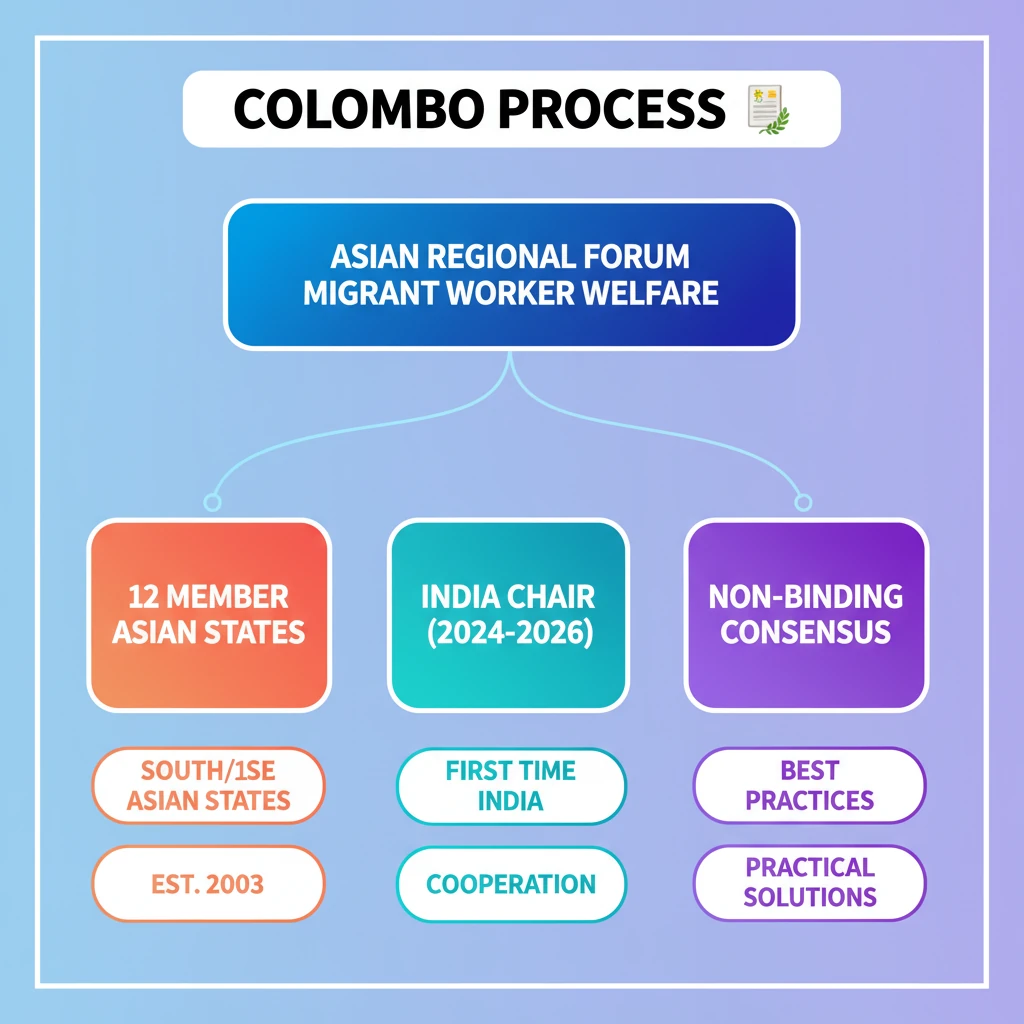
- •Colombo Process is a regional consultative forum focused on overseas employment and migrant worker welfare.
- •Comprises 12 Asian member states, primarily from South and Southeast Asia.
- •India has become chair for the first time (2024-26) since its inception in 2003.
- •Decisions are made by consensus and are non-binding, fostering cooperation.
- •Objectives include sharing best practices, consulting on worker issues, and offering practical solutions.
- •Chabahar Port is a separate strategic initiative by India to enhance its geopolitical influence and maritime security.
🧠 Memory Techniques
95% Verified Content