China’s ‘Xiaokang’ Border Defence Villages along the LAC - International Relations | UPSC Learning
Topics
0 topics • 0 completed
🔍
No topics match your search
China’s ‘Xiaokang’ Border Defence Villages along the LAC
Medium⏱️ 6 min read
international relations
📖 Introduction
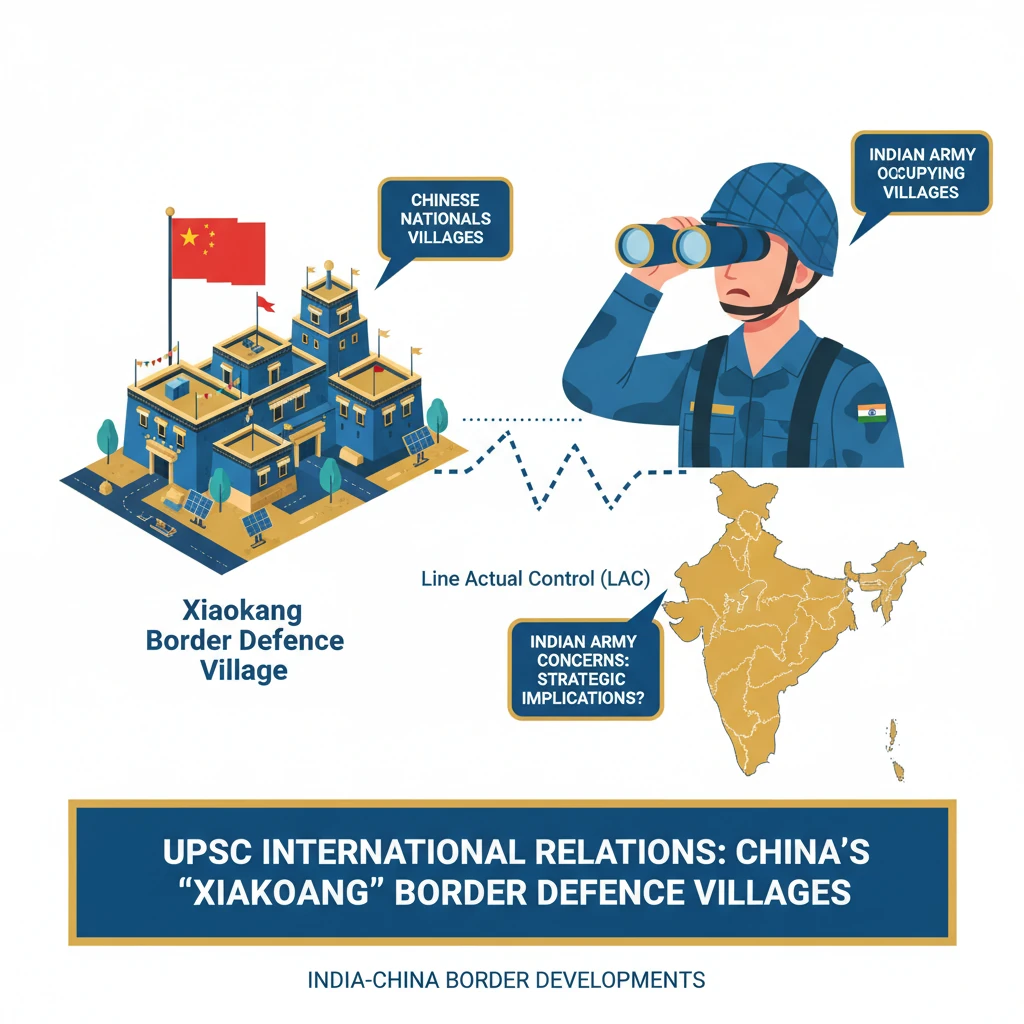
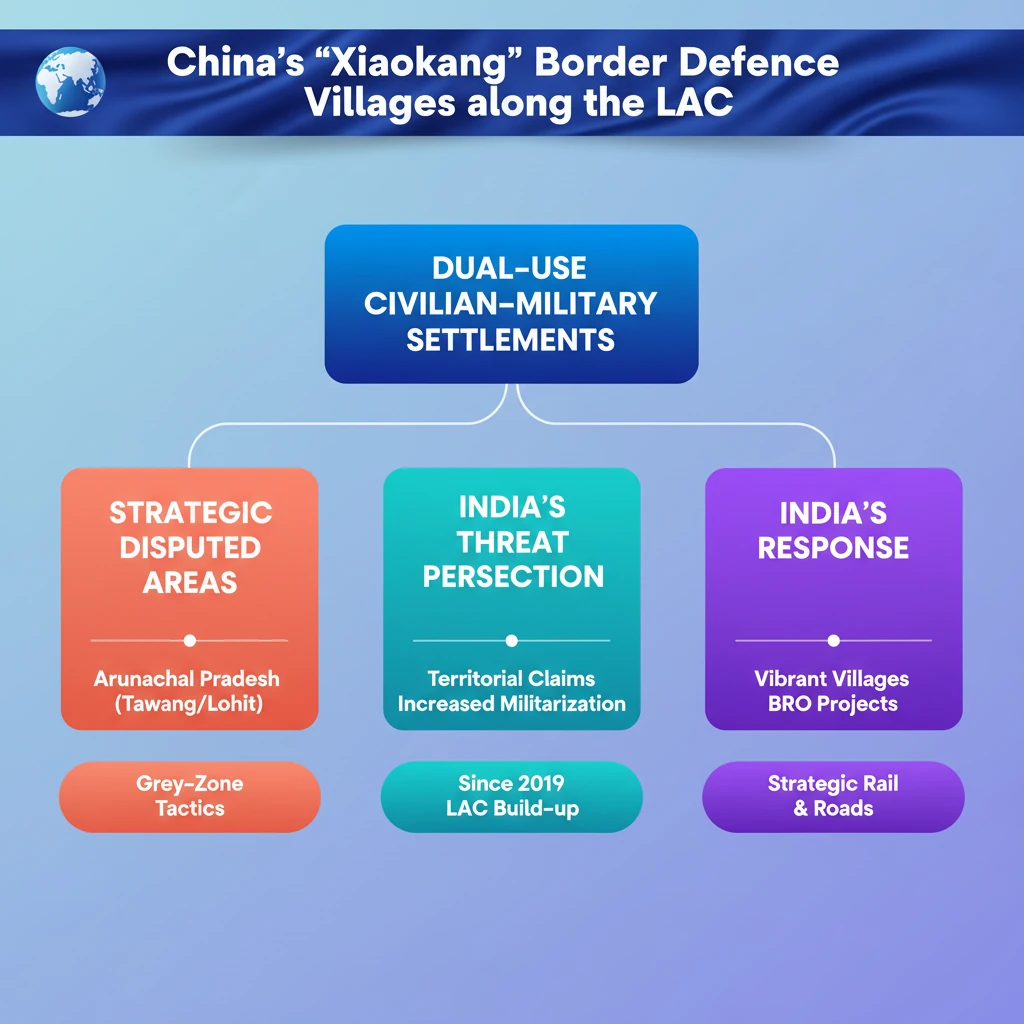
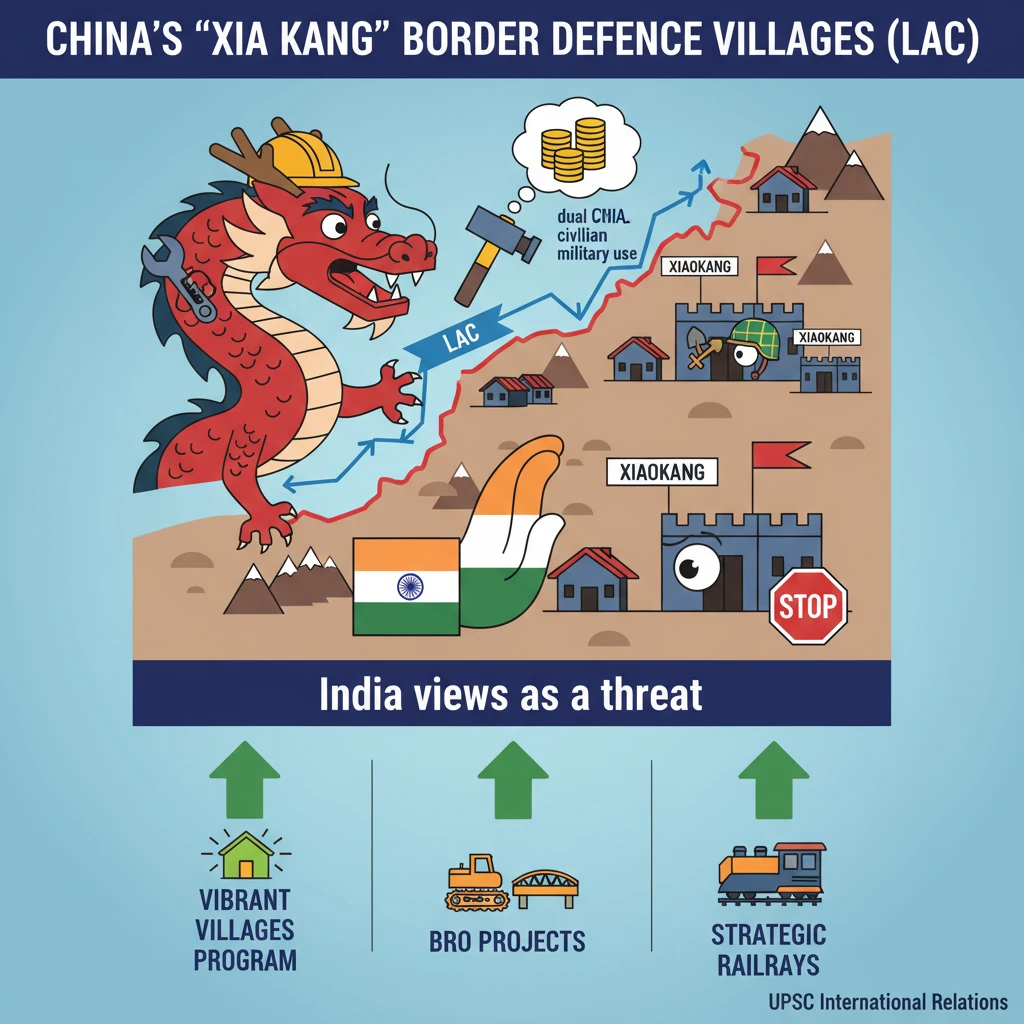
<h4>Recent Developments along the LAC</h4><p>In recent times, significant developments have been observed along the <strong>Line of Actual Control (LAC)</strong> between <strong>India</strong> and <strong>China</strong>.</p><p>Specifically, <strong>Chinese nationals</strong> have commenced occupying previously vacant <strong>“Xiaokang” border defence villages</strong>, drawing attention and concern from the <strong>Indian Army</strong>.</p><div class='info-box'><p>These strategic villages were initially constructed by <strong>China</strong> in <strong>2019</strong>. The nature of their occupants and their broader strategic implications are key areas of concern for <strong>India</strong>.</p></div><h4>Understanding Xiaokang Border Defence Villages</h4><p>The <strong>Xiaokang</strong>, also known as <strong>“well-off villages”</strong>, are a crucial component of <strong>China's strategic infrastructure development initiative</strong>.</p><p>This initiative is specifically focused on strengthening its borders, particularly along the <strong>Line of Actual Control (LAC)</strong> shared with <strong>India</strong>.</p><div class='info-box'><ul><li><strong>Notable Occupation Areas</strong>: These villages have been observed across from <strong>Lohit Valley</strong> and the <strong>Tawang sector</strong> in <strong>Arunachal Pradesh</strong>.</li></ul></div><h4>Dual-Use Infrastructure</h4><p>A defining characteristic of these <strong>Xiaokang villages</strong> is their design as <strong>“dual-use infrastructure”</strong>.</p><p>This means they are engineered to serve a dual purpose: accommodating <strong>civilian settlements</strong> while also facilitating a potential <strong>military presence</strong>.</p><div class='key-point-box'><p>These villages are strategically located in regions where <strong>territorial claims are contested</strong> or where <strong>China</strong> perceives a need to <strong>reinforce its sovereignty</strong>.</p></div><h4>Associated Concerns for India</h4><p>The establishment and occupation of <strong>Xiaokang border defence villages</strong> raise several critical concerns for <strong>India's security</strong> and strategic posture.</p><h5>1. Asserting Territorial Claims</h5><p><strong>China's construction</strong> of an estimated <strong>628 such villages</strong> along <strong>India's borders</strong> with the <strong>Tibet Autonomous Region</strong> is viewed as a concerted effort.</p><p>This initiative aims to unilaterally <strong>assert territorial claims</strong> along the disputed <strong>LAC</strong>, necessitating heightened vigilance from <strong>Indian military strategists</strong>.</p><h5>2. Military Implications</h5><p>The inherent <strong>dual-use nature</strong> of these villages raises significant concerns about potential <strong>increased militarisation</strong> in sensitive border areas.</p><p>This development could further escalate tensions along the already volatile <strong>Line of Actual Control (LAC)</strong>.</p><h5>3. Uncertain Intentions</h5><p>The lack of <strong>transparency</strong> surrounding the specific purpose and the actual scale of the <strong>civilian population</strong> within these villages creates deep suspicion.</p><p>This opacity actively hinders efforts towards <strong>trust-building</strong> between the two nations and complicates regional stability.
💡 Key Takeaways
- •Xiaokang villages are China's 'well-off' border defence settlements constructed since 2019.
- •They are 'dual-use infrastructure', serving both civilian settlement and potential military presence.
- •Located along the LAC, particularly in contested areas like Arunachal Pradesh's Lohit Valley and Tawang sector.
- •China has built 628 such villages, aiming to assert territorial claims and reinforce sovereignty.
- •Raise significant concerns for India regarding increased militarisation and uncertain Chinese intentions.
- •Compel India to enhance vigilance and accelerate its own border infrastructure development.
🧠 Memory Techniques
95% Verified Content