India to Ratify Cape Town Convention - International Relations | UPSC Learning
Topics
0 topics • 0 completed
🔍
No topics match your search

India to Ratify Cape Town Convention
Medium⏱️ 5 min read
international relations
📖 Introduction
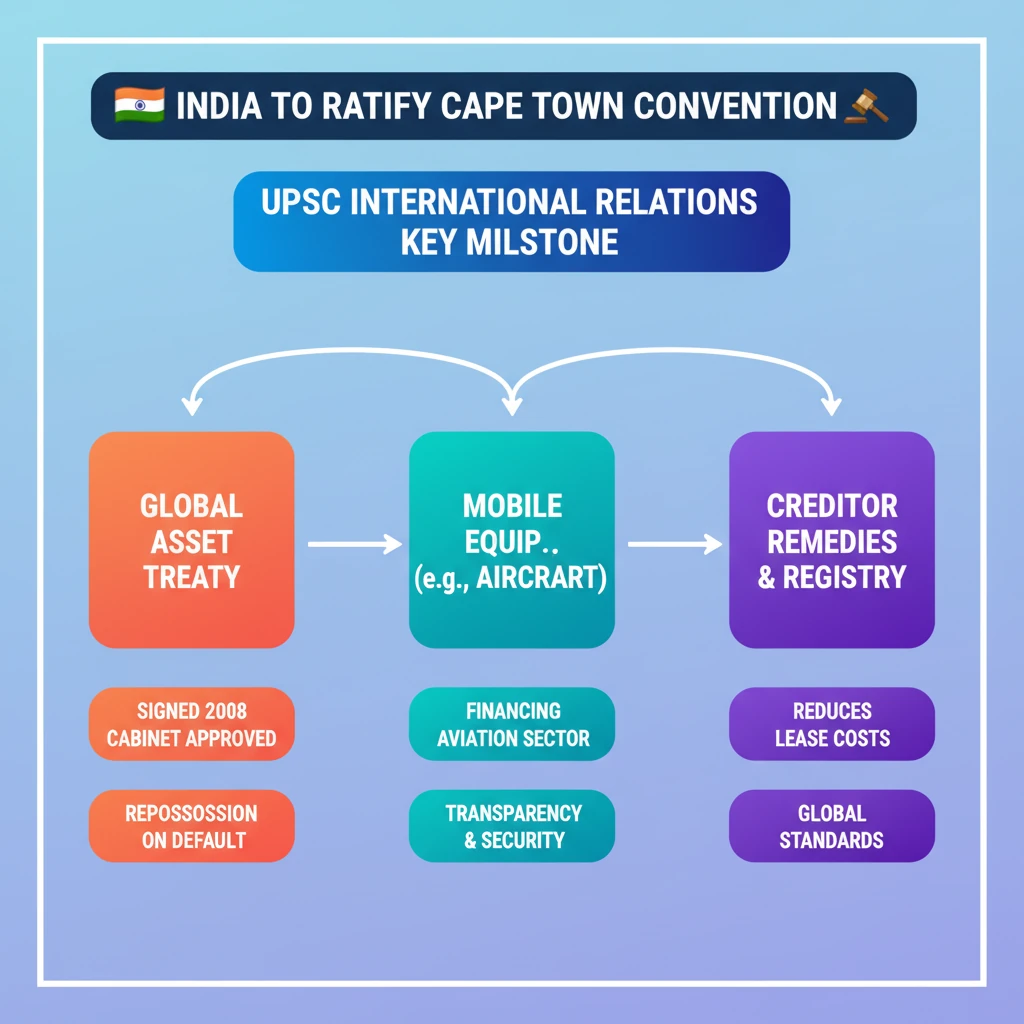
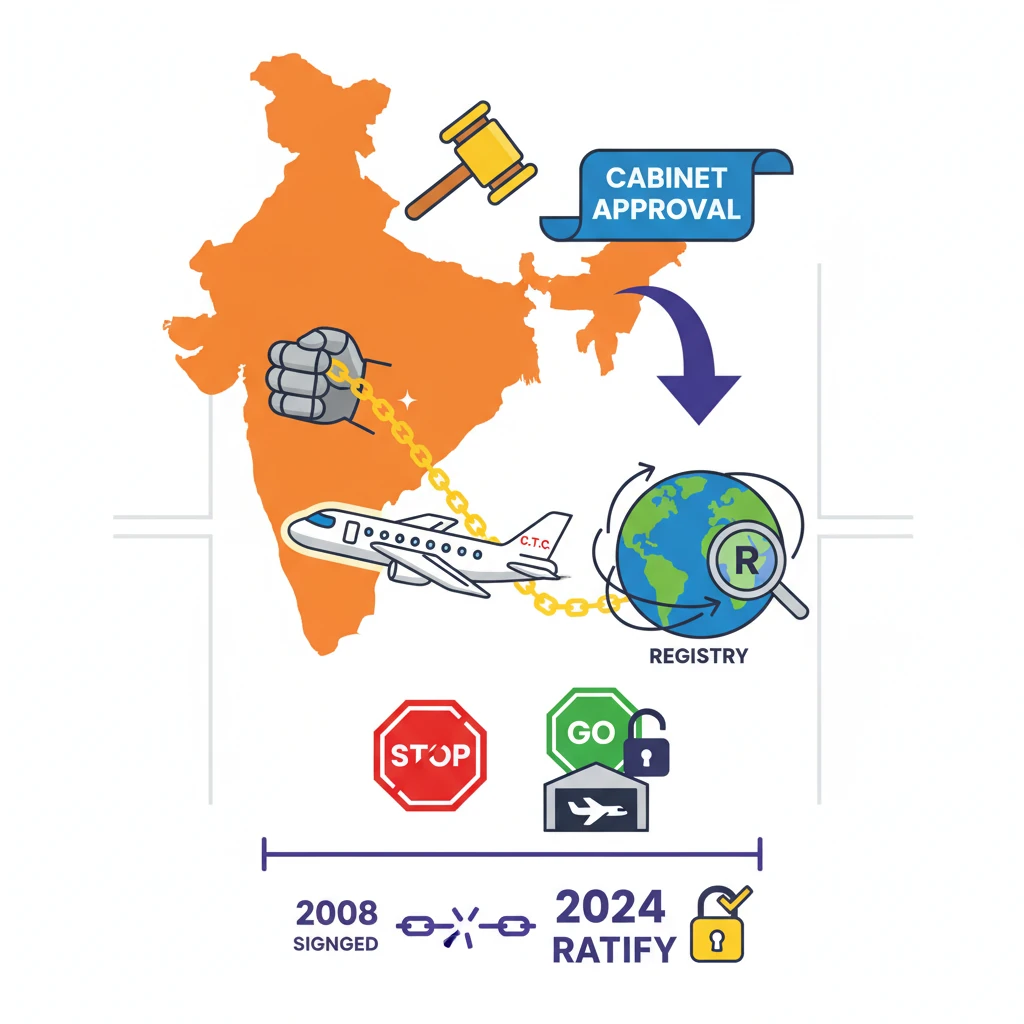
<h4>India to Ratify Cape Town Convention: Strengthening Aviation Framework</h4><p>The <strong>Union Cabinet</strong> has recently given its approval to the <strong>Protection and Enforcement of Interests in Aircraft Objects Bill</strong>. This move is a significant step towards bolstering <strong>India's aviation framework</strong> and aligning it with international standards.</p><div class='exam-tip-box'>This decision highlights India's commitment to global aviation norms, a crucial point for <strong>GS-II (International Relations)</strong> and <strong>GS-III (Economy)</strong>.</div><h4>Primary Objective of the Bill</h4><p>The primary aim of this Bill is to facilitate <strong>India's ratification</strong> and effective enforcement of the provisions laid out in two key international instruments: the <strong>Convention on International Interests in Mobile Equipment (Cape Town Convention)</strong> and its associated <strong>Protocol on Matters Specific to Aircraft Equipment (Cape Town Protocol)</strong>.</p><h4>Understanding the Cape Town Convention (CTC)</h4><p>The <strong>Cape Town Convention (CTC)</strong> is a landmark <strong>international treaty</strong> designed to simplify and secure the financing of high-value mobile assets.</p><div class='info-box'><p><strong>About CTC:</strong></p><ul><li>It enables <strong>creditors</strong>, such as <strong>lessors</strong>, <strong>lenders</strong>, and <strong>financiers</strong>, to efficiently <strong>repossess</strong> high-value mobile assets like <strong>aircraft</strong>, <strong>aircraft engines</strong>, and <strong>helicopters</strong>.</li><li>This right of repossession becomes critical if an airline or debtor defaults on its <strong>lease payments</strong> or other financial obligations.</li></ul></div><div class='info-box'><p><strong>Origin:</strong> The <strong>CTC</strong> was adopted in <strong>Cape Town, South Africa</strong>, in <strong>2001</strong>.</p></div><h4>Key Features of CTC</h4><div class='key-point-box'><p>The <strong>Cape Town Convention</strong> introduces several mechanisms to enhance security and predictability in asset financing:</p><ul><li><strong>Global Registry:</strong> It establishes a <strong>global electronic registry</strong> for recording international interests in mobile equipment. This ensures transparency and provides a clear priority system for registered creditor claims.</li><li><strong>Clear Remedies:</strong> The Convention provides clear and streamlined remedies for creditors. These include the right to facilitate the <strong>deregistration</strong> and <strong>export of aircraft</strong> without facing lengthy and complex legal procedures in the event of a default.</li></ul></div><h4>Role of the Cape Town Protocol</h4><p>The <strong>Cape Town Protocol</strong> acts as a complementary instrument to the main Convention. It specifically sets out detailed rules and procedures tailored for <strong>aircraft financing</strong> and <strong>leasing transactions</strong>, addressing the unique complexities of the aviation industry.</p><h4>India's Current Status Regarding CTC</h4><p><strong>India</strong> initially signed the <strong>Cape Town Convention</strong> in <strong>2008</strong>. However, despite signing, the nation had not yet proceeded with its full <strong>ratification</strong>, meaning its provisions were not legally binding within India's domestic framework until now.</p><div class='info-box'><p><strong>India's Aviation Market:</strong> India holds the position of the <strong>world’s third-largest domestic aviation market</strong>, trailing only the <strong>United States</strong> and <strong>China</strong>. This substantial market size underscores the importance of a robust and internationally compliant legal framework for aviation assets.</p></div>
💡 Key Takeaways
- •India's Union Cabinet approved a Bill to ratify the Cape Town Convention (CTC) and its Protocol.
- •The CTC is an international treaty allowing creditors to repossess high-value mobile assets like aircraft upon lease payment defaults.
- •Key features include a global registry for transparency and clear remedies for creditors (deregistration, export).
- •India signed CTC in 2008 but is now moving towards full ratification after cabinet approval.
- •Ratification aims to strengthen India's aviation framework, align with global standards, and reduce financing costs for airlines.
- •India is the world's third-largest domestic aviation market, making this step crucial for its growth and investment attraction.
🧠 Memory Techniques
95% Verified Content