India-Sri Lanka Defence Cooperation: Mitra Shakti & SLINEX - International Relations | UPSC Learning
Topics
0 topics • 0 completed
🔍
No topics match your search
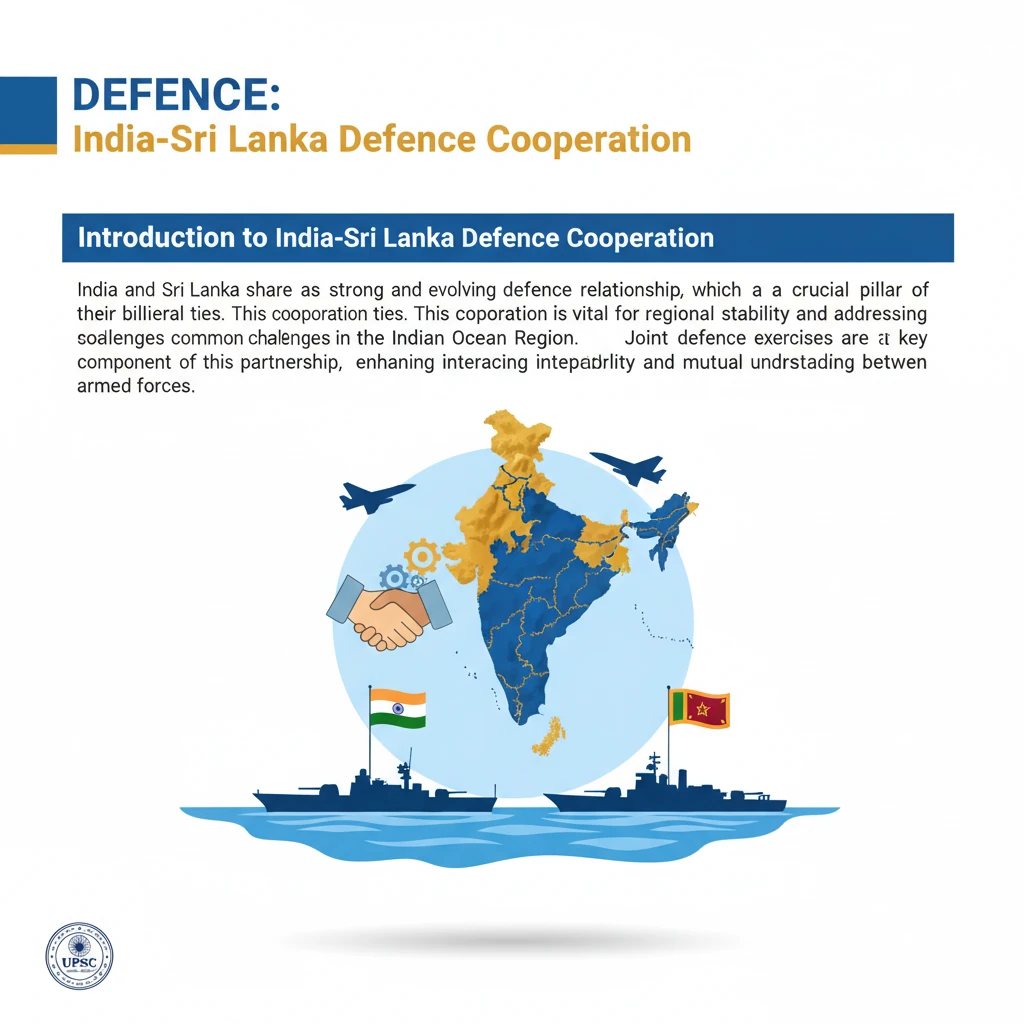
India-Sri Lanka Defence Cooperation: Mitra Shakti & SLINEX
Medium⏱️ 8 min read
international relations
📖 Introduction
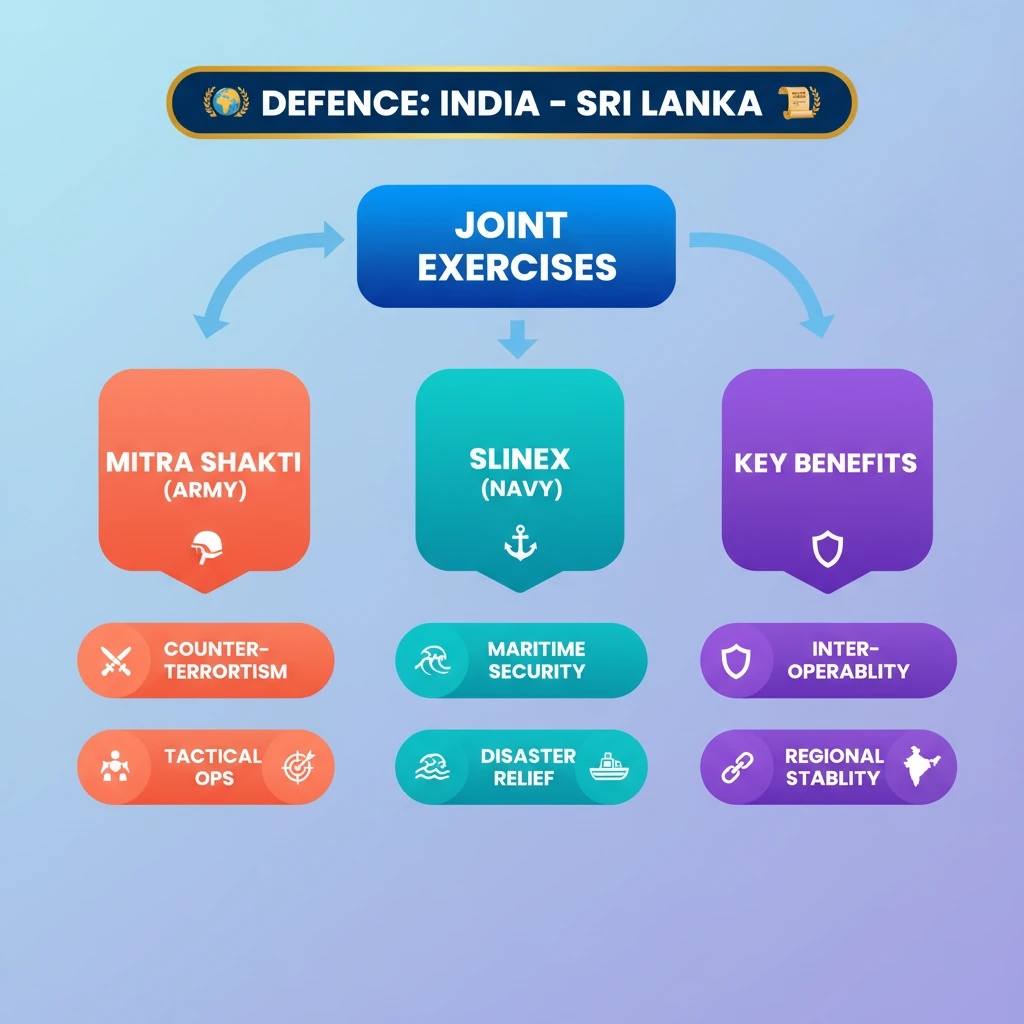
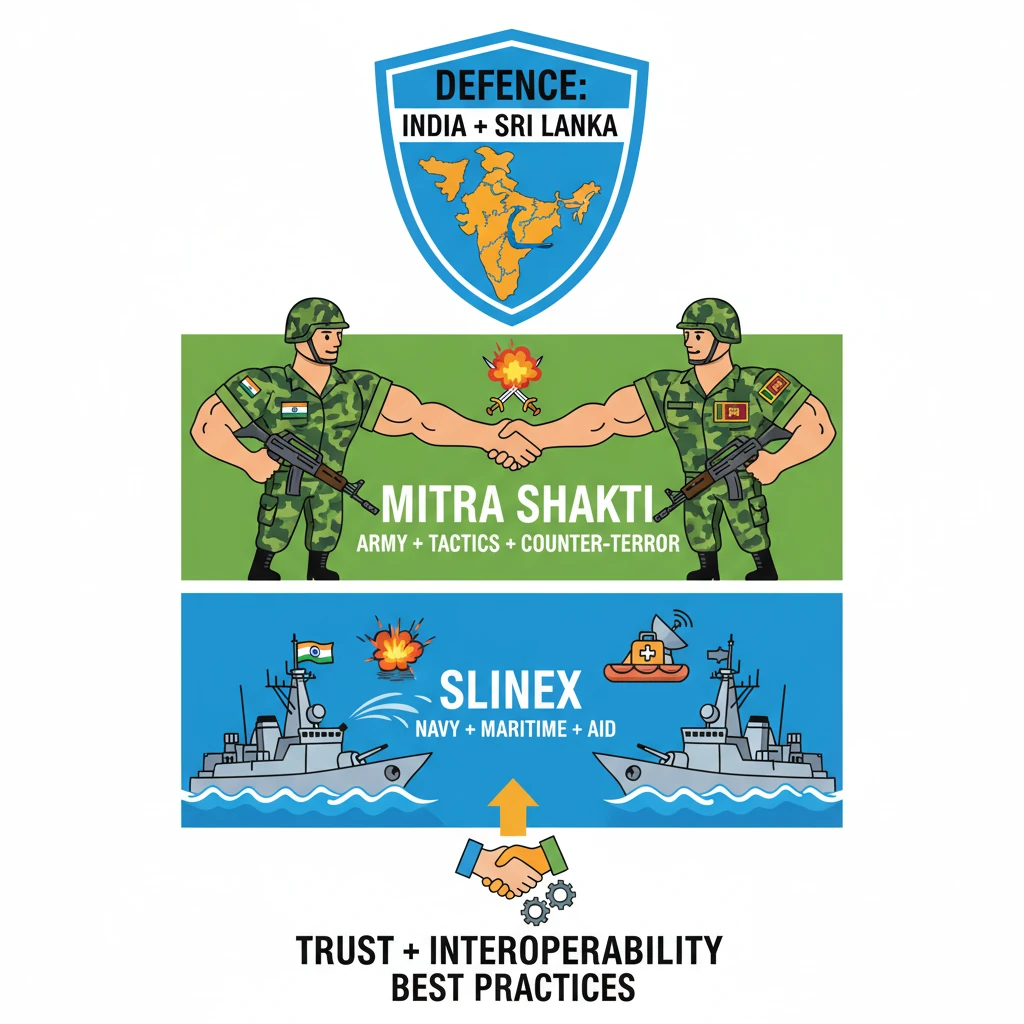
<h4>Introduction to India-Sri Lanka Defence Cooperation</h4><p><strong>India</strong> and <strong>Sri Lanka</strong> share a strong and evolving defence relationship, which is a crucial pillar of their bilateral ties. This cooperation is vital for regional stability and addressing common security challenges in the <strong>Indian Ocean Region</strong>.</p><p>Joint defence exercises are a key component of this partnership, enhancing interoperability and mutual understanding between the armed forces of both nations.</p><div class='exam-tip-box'><p><strong>UPSC Insight:</strong> Defence cooperation with neighbouring countries like <strong>Sri Lanka</strong> is a critical aspect of India's <strong>'Neighbourhood First' policy</strong> and its broader maritime security strategy, particularly in <strong>GS Paper 2 (International Relations)</strong> and <strong>GS Paper 3 (Internal Security)</strong>.</p></div><h4>Joint Military Exercise: Mitra Shakti</h4><p><strong>Mitra Shakti</strong> is a prominent <strong>joint military exercise</strong> conducted annually between the armies of <strong>India</strong> and <strong>Sri Lanka</strong>. Its primary focus is on counter-terrorism operations and enhancing tactical skills.</p><div class='info-box'><p><strong>Key Details of Mitra Shakti:</strong></p><ul><li><strong>Type:</strong> Joint Military Exercise (Army-to-Army)</li><li><strong>Objective:</strong> To build and promote close relations, enhance interoperability, and share best practices in counter-insurgency and counter-terrorism operations.</li><li><strong>Activities:</strong> Includes tactical level operations, heliborne operations, and urban warfare scenarios.</li></ul></div><p>This exercise provides a platform for both armies to train together, understand each other's procedures, and develop a common approach to dealing with modern security threats.</p><h4>Joint Naval Exercise: SLINEX</h4><p><strong>SLINEX</strong>, which stands for <strong>Sri Lanka-India Naval Exercise</strong>, is the biennial <strong>joint naval exercise</strong> conducted by the navies of the two countries. It focuses on maritime security and cooperation in the <strong>Indian Ocean</strong>.</p><div class='info-box'><p><strong>Key Details of SLINEX:</strong></p><ul><li><strong>Type:</strong> Joint Naval Exercise (Navy-to-Navy)</li><li><strong>Objective:</strong> To enhance interoperability, improve mutual understanding, and exchange best practices in maritime operations, including anti-piracy and disaster relief.</li><li><strong>Activities:</strong> Involves various naval manoeuvres, gunnery exercises, helicopter operations, and search and rescue missions.</li></ul></div><p><strong>SLINEX</strong> is crucial for strengthening maritime security in the region and ensuring the safety of sea lanes of communication, which are vital for global trade.</p>
💡 Key Takeaways
- •India and Sri Lanka conduct two primary joint defence exercises: Mitra Shakti (military) and SLINEX (naval).
- •Mitra Shakti focuses on counter-terrorism and tactical operations between armies.
- •SLINEX emphasizes maritime security, interoperability, and disaster relief between navies.
- •These exercises enhance interoperability, build trust, and share best practices.
- •They are crucial for regional stability, maritime security in the Indian Ocean, and India's 'Neighbourhood First' policy.
🧠 Memory Techniques
95% Verified Content
📚 Reference Sources
•Ministry of Defence, Government of India official press releases
•Indian Navy official website
•Ministry of External Affairs, Government of India official statements
•Reputable news agencies and defence analysis portals