Misinformation, Disinformation and Hate Speech - International Relations | UPSC Learning
Topics
0 topics • 0 completed
🔍
No topics match your search
Misinformation, Disinformation and Hate Speech
Medium⏱️ 10 min read
international relations
📖 Introduction
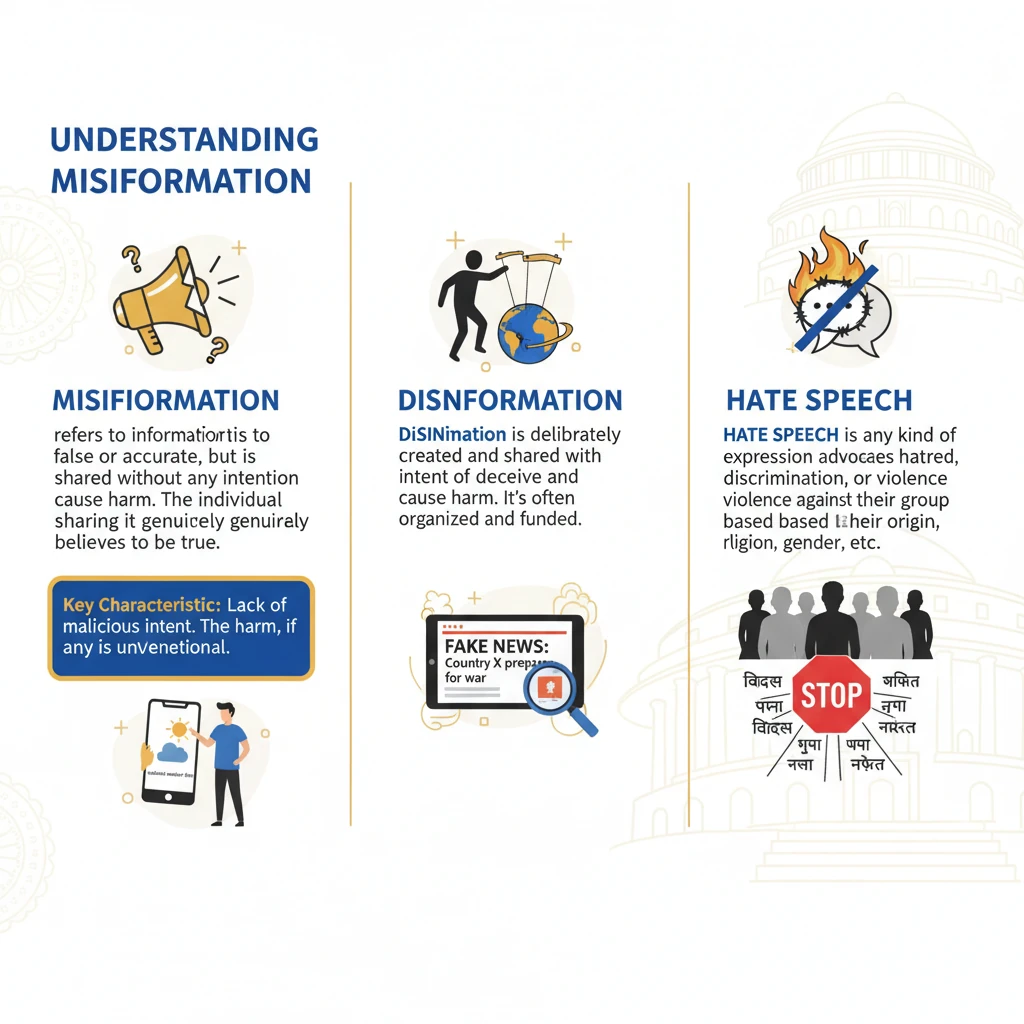
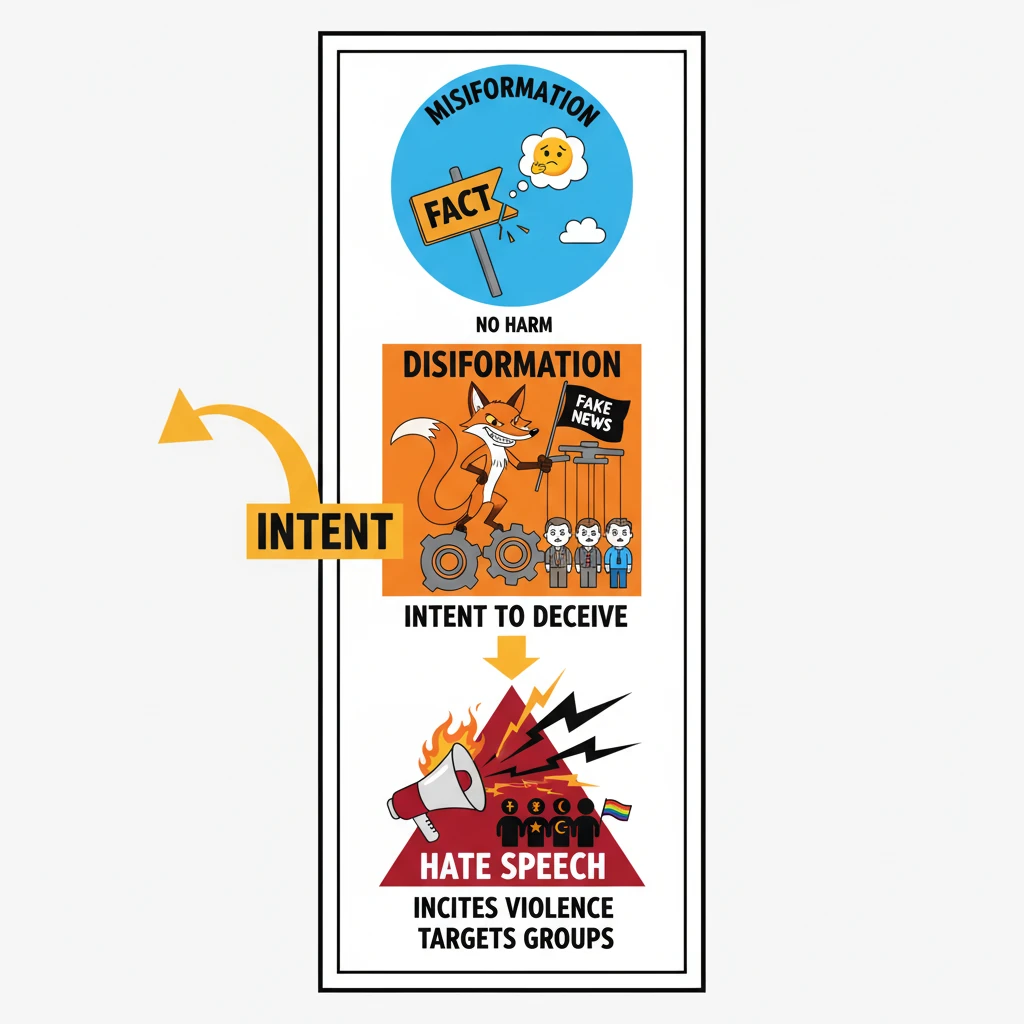
<h4>Understanding Misinformation</h4><p><strong>Misinformation</strong> refers to information that is <strong>false or inaccurate</strong>, but is shared <strong>without any intention to cause harm</strong>. The individual sharing it genuinely believes it to be true.</p><div class='info-box'><p><strong>Key Characteristic:</strong> Lack of malicious intent. The harm, if any, is unintentional.</p></div><p>An everyday example of misinformation is when someone shares an <strong>outdated weather forecast</strong>, genuinely believing it to be current and accurate. They are not trying to deceive anyone.</p><h4>Understanding Disinformation</h4><p><strong>Disinformation</strong>, in contrast, is <strong>intentionally false or misleading information</strong>. It is disseminated with a clear purpose to <strong>deceive or mislead others</strong>, often for political, financial, or social gain.</p><div class='info-box'><p><strong>Key Characteristic:</strong> Deliberate intent to deceive. It is a calculated act to manipulate public perception or behavior.</p></div><p>A classic example involves a <strong>fake news website</strong> publishing a fabricated story about a <strong>public health crisis</strong>. The goal is to cause panic, distrust among the population, or even financial market instability.</p><h4>Understanding Hate Speech</h4><p><strong>Hate Speech</strong> refers to any form of offensive discourse that specifically targets a <strong>group or an individual</strong>. This targeting is based on their inherent characteristics, such as <strong>race, religion, gender, sexual orientation, disability</strong>, or other similar attributes.</p><div class='info-box'><p><strong>Key Characteristic:</strong> Targets specific groups/individuals based on inherent traits, often threatening social peace and inciting hatred or violence.</p></div><p>It typically involves the use of <strong>epithets, malicious stereotypes</strong>, and statements designed to <strong>incite hatred, discrimination, or violence</strong> against a particular group. This can significantly destabilize social harmony and public order.</p>
💡 Key Takeaways
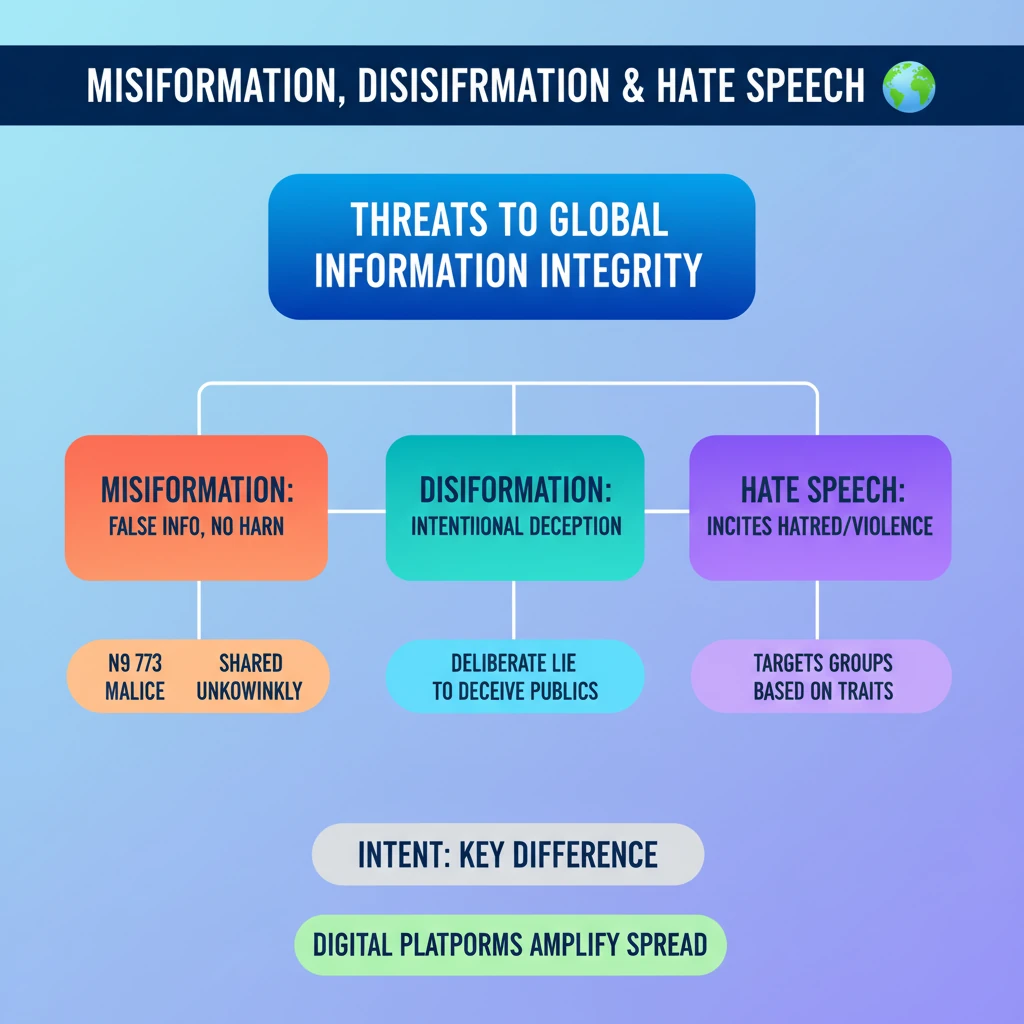
- •Misinformation is false information shared without intent to harm.
- •Disinformation is intentionally false information spread to deceive.
- •Hate speech targets groups based on inherent characteristics, inciting hatred or violence.
- •The intent (or lack thereof) is the primary differentiator between misinformation and disinformation.
- •Digital platforms have significantly amplified the spread and impact of all three.
- •These phenomena pose serious threats to democracy, public health, and social cohesion.
- •Combating them requires a multi-faceted approach involving legal frameworks, media literacy, and technological solutions.
🧠 Memory Techniques
98% Verified Content
📚 Reference Sources
•United Nations Strategy and Plan of Action on Hate Speech
•Indian Penal Code, 1860 (Sections 153A, 295A)
•Information Technology Act, 2000 (Section 69A)