GloBe Network: India Elected to Steering Committee, G20 Anti-Corruption Initiative - International Relations | UPSC Learning
Topics
0 topics • 0 completed
🔍
No topics match your search
GloBe Network: India Elected to Steering Committee, G20 Anti-Corruption Initiative
Medium⏱️ 5 min read
international relations
📖 Introduction
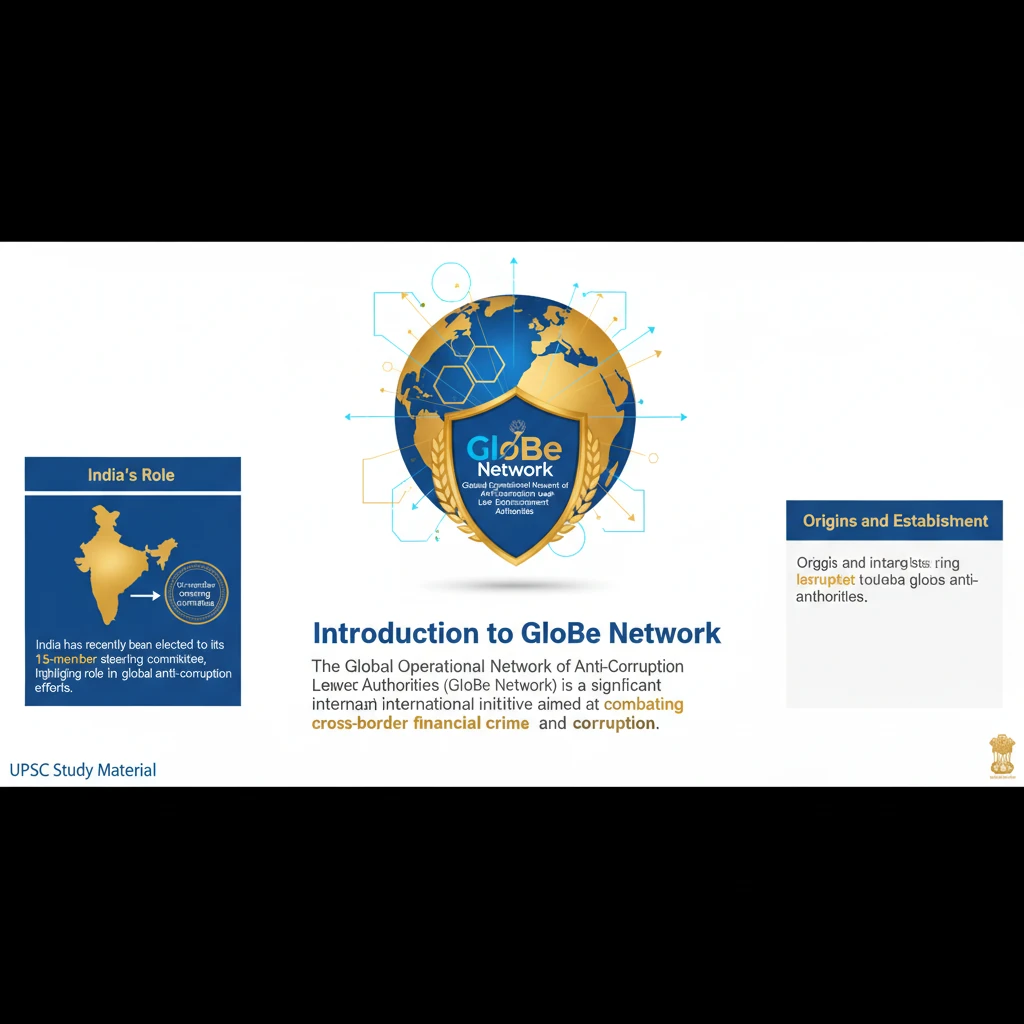
<h4>Introduction to GloBe Network</h4><p>The <strong>Global Operational Network of Anti-Corruption Law Enforcement Authorities (GloBe Network)</strong> is a significant international initiative aimed at combating <strong>cross-border financial crime</strong> and <strong>corruption</strong>.</p><p><strong>India</strong> has recently been elected to its <strong>15-member steering committee</strong>, highlighting its growing role in global anti-corruption efforts.</p><h4>Origins and Establishment</h4><p>The <strong>GloBe Network</strong> originated as a <strong>G-20 initiative</strong>, with strong support from <strong>India since 2020</strong>.</p><div class="info-box"><p>It was formally <strong>established in 2021</strong> during a special event held at the <strong>UN General Assembly Special Session against Corruption</strong>.</p></div><h4>Governance and Support</h4><p>The network is primarily <strong>governed by its member countries</strong>, ensuring a collaborative and member-driven approach to its operations.</p><p>Operational support and secretariat services are provided by the <strong>United Nations Office on Drugs and Crime (UNODC)</strong>, which plays a crucial role in its functioning.</p><h4>Membership and Structure</h4><p>Currently, the <strong>GloBe Network</strong> boasts a substantial membership, including <strong>121 member countries</strong> and representing <strong>219 authorities</strong> globally.</p><div class="info-box"><p>Its leadership structure comprises <strong>one chairman</strong>, <strong>one vice-chairman</strong>, and <strong>13 additional members</strong> who collectively guide its strategic initiatives.</p></div><h4>Core Objective and Function</h4><p>The primary objective of the <strong>GloBe Network</strong> is to <strong>facilitate the sharing of intelligence and best practices</strong> among anti-corruption law enforcement authorities.</p><p>This collaborative intelligence exchange is deemed <strong>crucial for effectively addressing complex cross-border financial crimes</strong>, which often involve multiple jurisdictions.</p><h4>India's Role and Participating Authorities</h4><p>In <strong>India</strong>, the <strong>Ministry of Home Affairs (MHA)</strong> serves as the central authority coordinating efforts related to the <strong>GloBe Network</strong>.</p><p>Key Indian agencies, including the <strong>Central Bureau of Investigation (CBI)</strong> and the <strong>Enforcement Directorate (ED)</strong>, are designated as member authorities within the network.</p><div class="exam-tip-box"><p><strong>UPSC Insight:</strong> India's election to the steering committee signifies its commitment to global anti-corruption efforts and enhances its diplomatic standing in international governance. This can be relevant for <strong>GS Paper II (International Relations)</strong>.</p></div>
💡 Key Takeaways
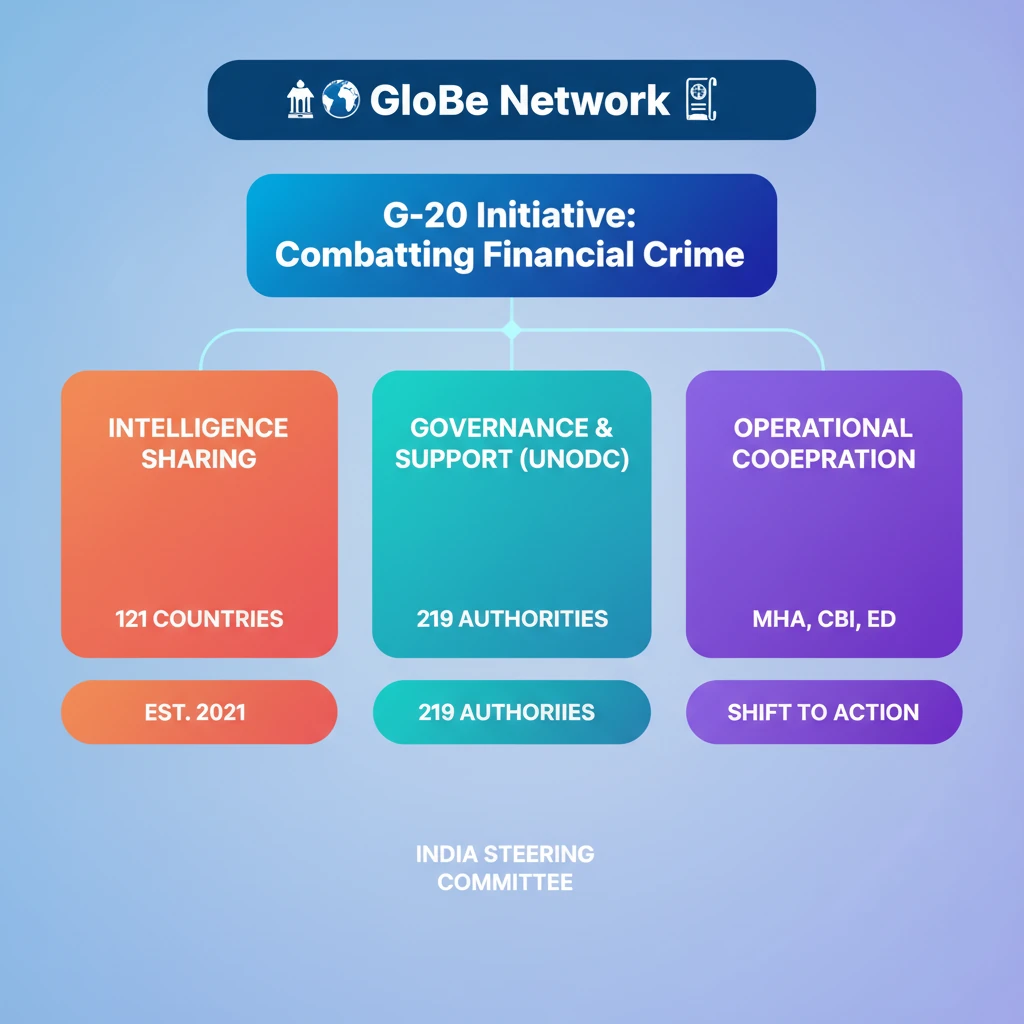
- •GloBe Network is a G-20 initiative, established in 2021, to combat cross-border financial crime.
- •It facilitates intelligence sharing and best practices among anti-corruption law enforcement authorities.
- •Governed by members, supported by UNODC; currently has 121 countries and 219 authorities.
- •India was elected to its 15-member steering committee, with MHA, CBI, and ED as key Indian participants.
- •Represents a shift towards operational, rather than just normative, international anti-corruption cooperation.
🧠 Memory Techniques

95% Verified Content