Nepal’s Currency Featured Kalapani Region - International Relations | UPSC Learning
Topics
0 topics • 0 completed
🔍
No topics match your search
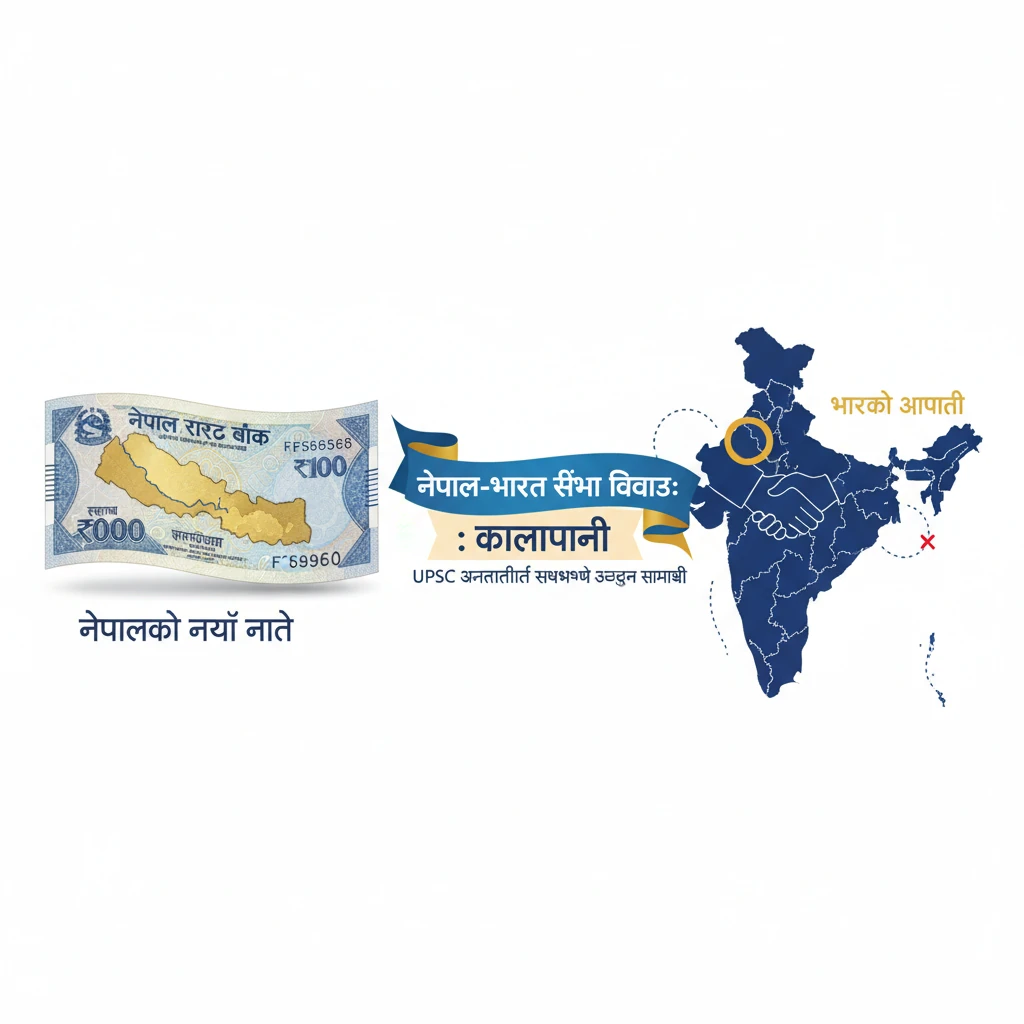
Nepal’s Currency Featured Kalapani Region
Medium⏱️ 7 min read
international relations
📖 Introduction
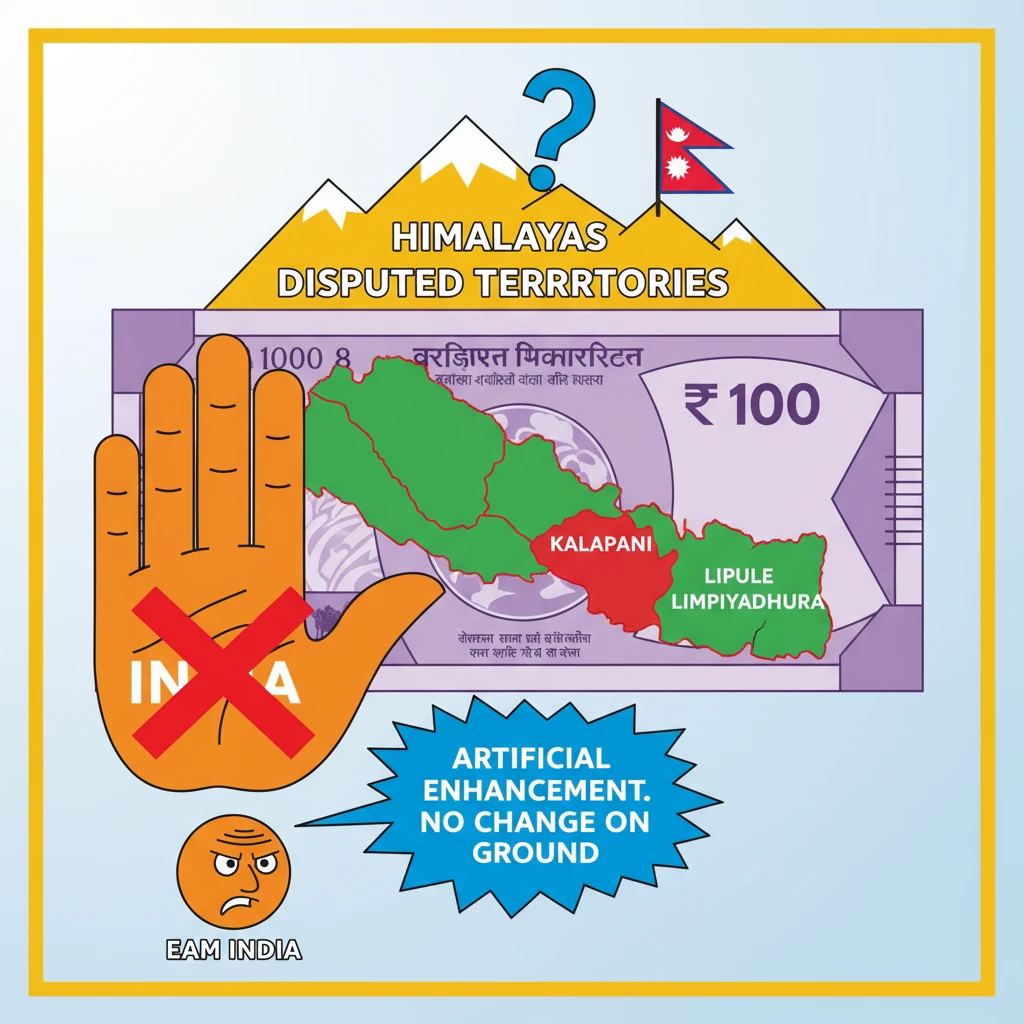
<h4>Introduction: Nepal's New Currency Note Initiative</h4><p>Recently, <strong>Nepal</strong> announced its decision to print a new <strong>Rs 100 currency note</strong>. This announcement has drawn significant attention and a sharp response from <strong>India</strong> due to a specific feature on the note.</p><p>The new currency note is set to feature a map of <strong>Nepal</strong> that includes territories currently under <strong>India's administration</strong>. This move is seen as a diplomatic assertion of territorial claims.</p><h4>The Contentious Territories: Kalapani, Lipulekh, and Limpiyadhura</h4><p>The map on <strong>Nepal's new Rs 100 note</strong> specifically depicts the regions of <strong>Lipulekh</strong>, <strong>Limpiyadhura</strong>, and <strong>Kalapani</strong> as part of <strong>Nepalese territory</strong>. These three areas are central to a long-standing border dispute between <strong>India</strong> and <strong>Nepal</strong>.</p><div class='info-box'><p><strong>Key Disputed Areas:</strong></p><ul><li><strong>Kalapani:</strong> A strategically important area located at the tri-junction of <strong>India</strong>, <strong>Nepal</strong>, and <strong>China</strong>.</li><li><strong>Lipulekh:</strong> A high-altitude Himalayan pass, crucial for trade and pilgrimage, including the <strong>Kailash Mansarovar Yatra</strong>.</li><li><strong>Limpiyadhura:</strong> Located to the west of the <strong>Kali River</strong>, considered by <strong>Nepal</strong> as the origin of the river, thus extending its claim further west.</li></ul></div><h4>India's Official Response and Stance</h4><p><strong>India</strong> responded unequivocally to <strong>Nepal's decision</strong>. The <strong>Indian External Affairs Minister</strong> termed <strong>Nepal's</strong> action as an "<strong>artificial enhancement</strong>" and "<strong>untenable</strong>".</p><div class='key-point-box'><p><strong>India's Position:</strong> <strong>New Delhi</strong> maintains that such cartographic changes by <strong>Nepal</strong> will not alter the existing situation or the ground reality. <strong>India</strong> considers these territories as integral parts of its own sovereign land.</p></div><div class='exam-tip-box'><p><strong>UPSC Insight:</strong> This incident highlights the complexities of <strong>India's 'Neighbourhood First' policy</strong> and the challenges in managing border disputes with immediate neighbours. It's crucial for understanding bilateral relations in <strong>GS Paper 2</strong>.</p></div>
💡 Key Takeaways
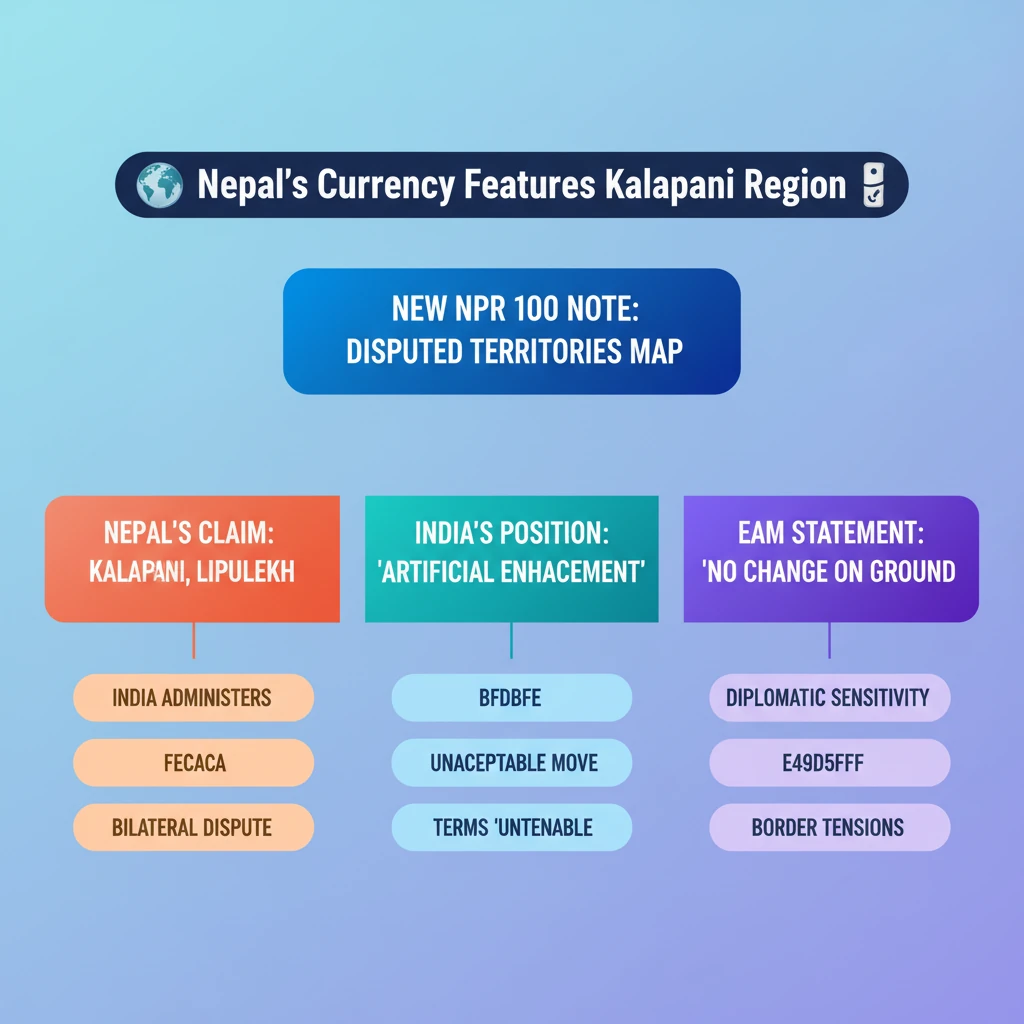
- •Nepal announced printing new Rs 100 currency notes featuring a map with Kalapani, Lipulekh, and Limpiyadhura.
- •These territories are disputed between India and Nepal, with India administering them.
- •India termed Nepal's move as "artificial enhancement" and "untenable."
- •India's External Affairs Minister stated it would not change the ground reality.
- •The incident highlights ongoing border disputes and diplomatic sensitivities in India-Nepal relations.
- •It underscores the use of cartography as a tool for asserting territorial claims.
🧠 Memory Techniques
98% Verified Content
📚 Reference Sources
•Ministry of External Affairs, Government of India (Official Statements)
•The Hindu (News Archives)
•Indian Express (News Archives)
•Nepali Times (News Archives)