International Organization for Migration (IOM) - International Relations | UPSC Learning
Topics
0 topics • 0 completed
🔍
No topics match your search
International Organization for Migration (IOM)
Medium⏱️ 8 min read
international relations
📖 Introduction
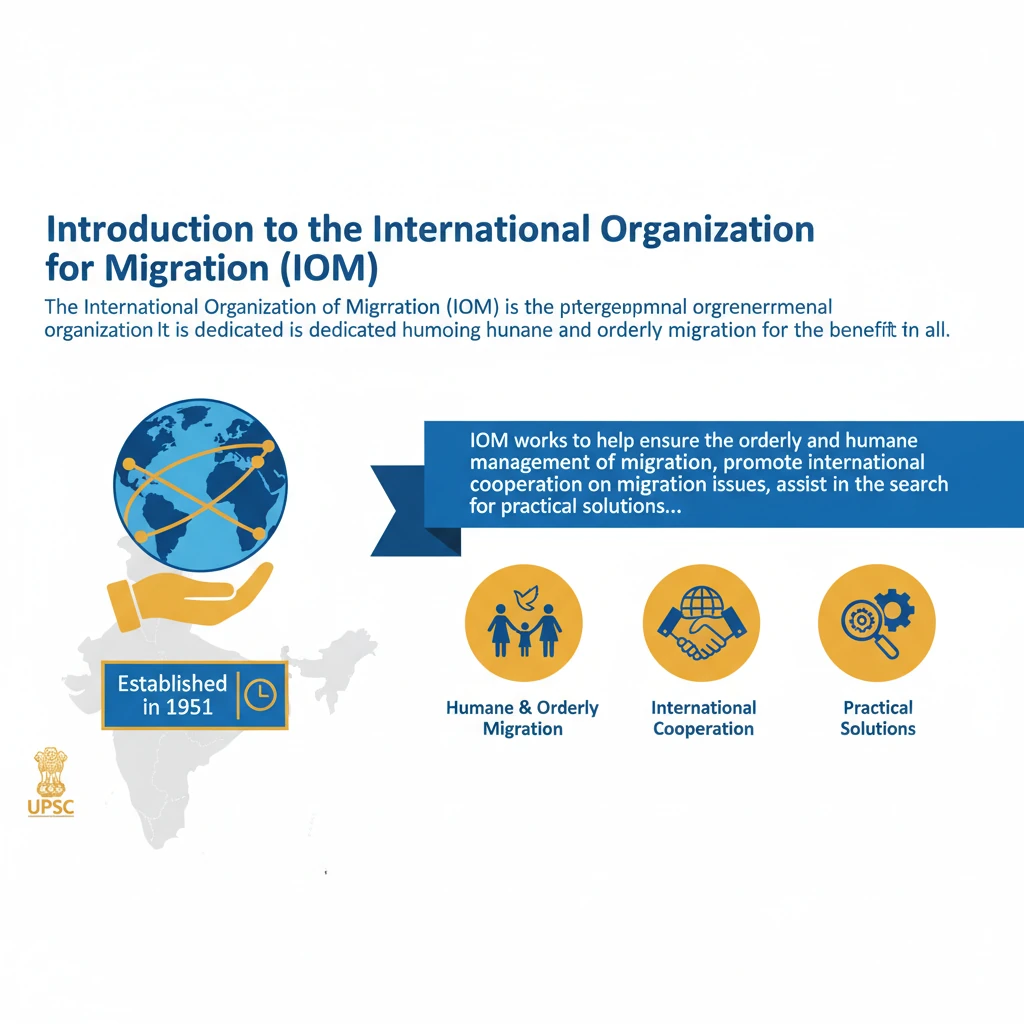
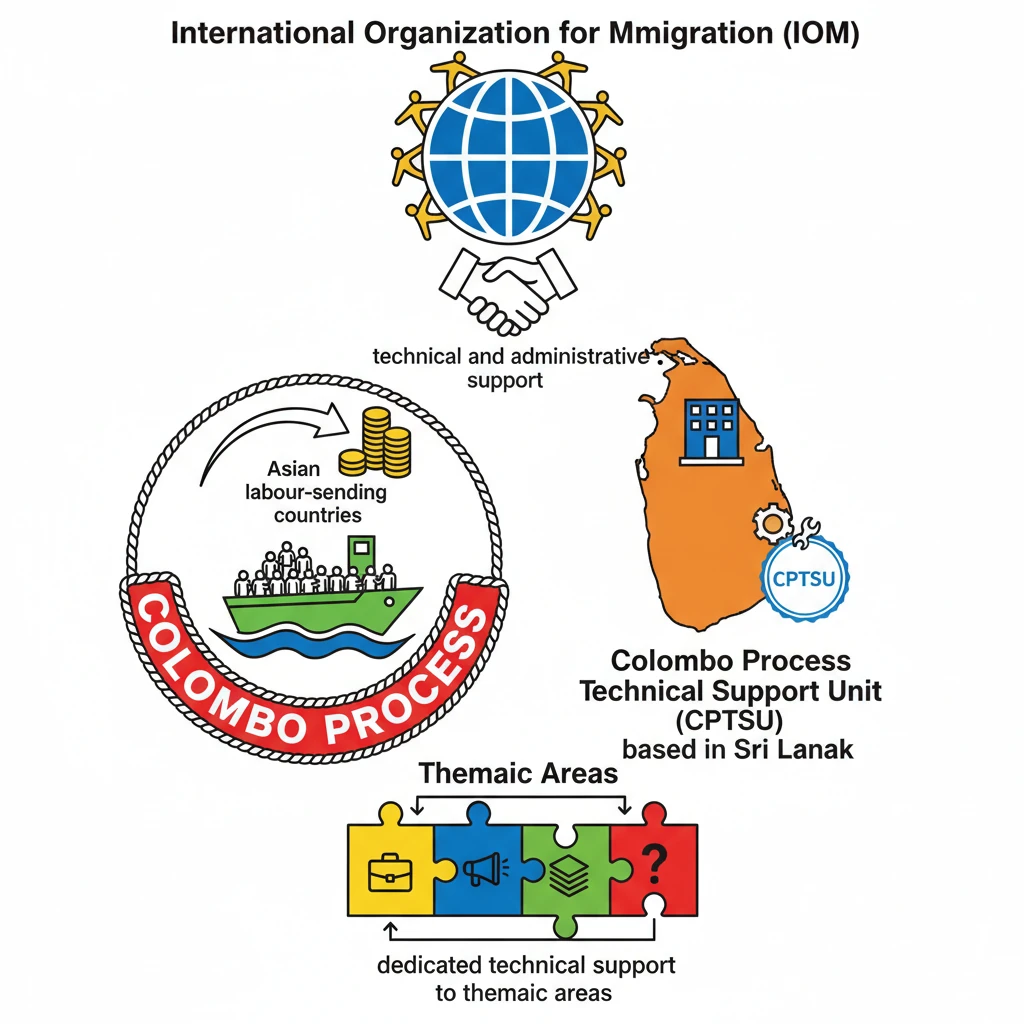
<h4>Introduction to the International Organization for Migration (IOM)</h4><p>The <strong>International Organization for Migration (IOM)</strong> is the principal intergovernmental organization in the field of migration. It is dedicated to promoting humane and orderly migration for the benefit of all. Established in <strong>1951</strong>, IOM works to help ensure the orderly and humane management of migration, promote international cooperation on migration issues, assist in the search for practical solutions to migration problems, and provide humanitarian assistance to migrants in need, including refugees and internally displaced people.</p><div class='info-box'><p><strong>IOM Mandate:</strong> To ensure the orderly and humane management of migration, promote international cooperation, assist in solutions to migration problems, and provide humanitarian assistance to migrants.</p></div><h4>IOM's Support to the Colombo Process</h4><p>A key function of the <strong>IOM</strong> is to provide crucial <strong>technical and administrative support</strong> to various regional consultative processes on migration. One such significant process is the <strong>Colombo Process</strong>, which focuses on overseas employment and contractual labour in Asia.</p><p>This support ensures that the <strong>Colombo Process</strong> can effectively address its thematic areas of focus. It helps in facilitating discussions, sharing best practices, and coordinating efforts among member states to improve migrant worker protection and management.</p><div class='key-point-box'><p>The <strong>IOM</strong>'s role is vital in operationalizing the objectives of regional dialogues like the <strong>Colombo Process</strong>, providing expertise and logistical aid.</p></div><h4>The Colombo Process Technical Support Unit (CPTSU)</h4><p>To specifically bolster the <strong>Colombo Process</strong>, the <strong>Colombo Process Technical Support Unit (CPTSU)</strong> was established. This unit is strategically based in <strong>Sri Lanka</strong>, a significant country in the Asian migration landscape.</p><p>The <strong>CPTSU</strong> is instrumental in delivering direct <strong>technical support</strong> to the <strong>Colombo Process</strong>. This support covers its various thematic areas, which typically include ethical recruitment, pre-departure orientation, skills recognition, and reintegration of returning migrants.</p><div class='info-box'><p><strong>CPTSU Location:</strong> The <strong>Colombo Process Technical Support Unit</strong> is based in <strong>Sri Lanka</strong>, providing dedicated technical assistance to the <strong>Colombo Process</strong>.</p></div><div class='exam-tip-box'><p>Understanding the distinction between <strong>IOM</strong>'s broader role and its specific function through the <strong>CPTSU</strong> for the <strong>Colombo Process</strong> is important for <strong>UPSC Mains GS-II (International Relations)</strong>. Focus on the 'support' mechanism and its impact on regional migration governance.</p></div>
💡 Key Takeaways
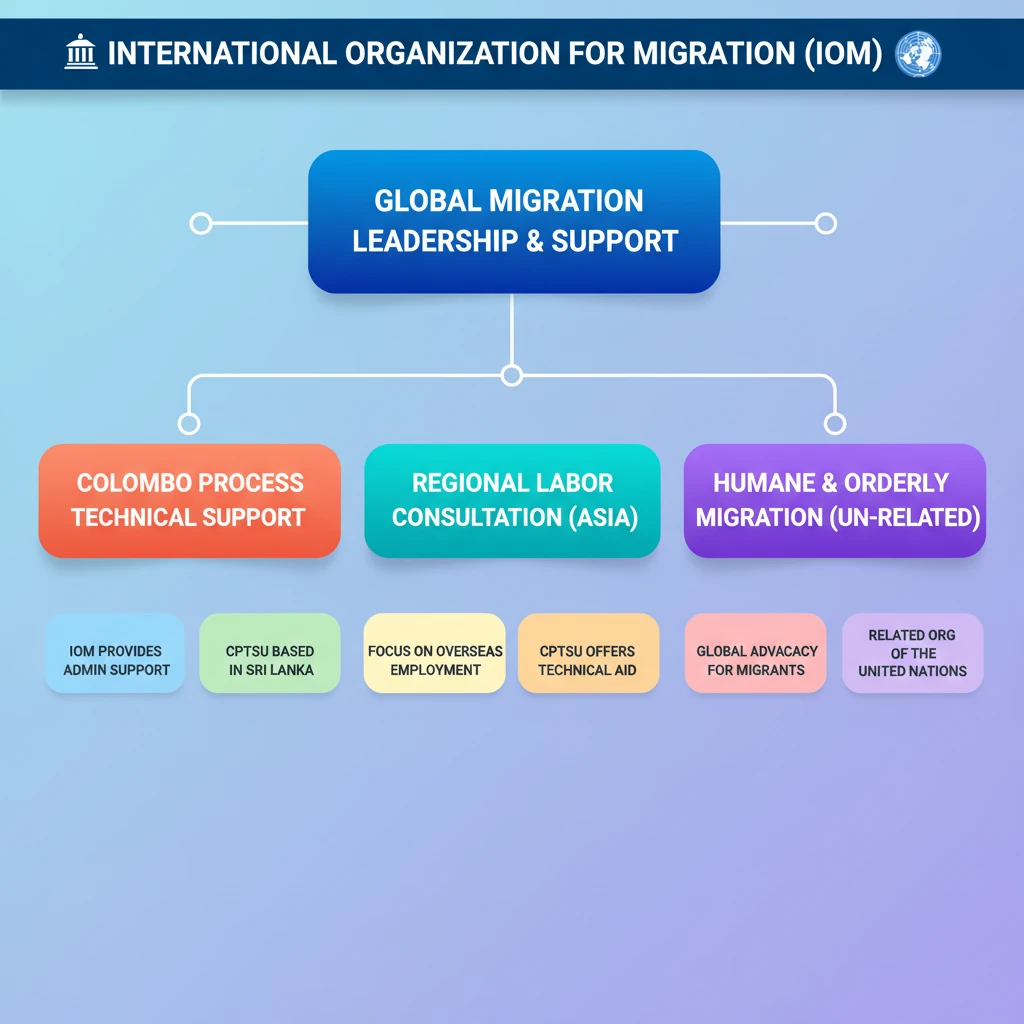
- •IOM provides technical and administrative support to the Colombo Process.
- •The Colombo Process is a regional consultative process for Asian labour-sending countries focusing on overseas employment.
- •The Colombo Process Technical Support Unit (CPTSU) is based in Sri Lanka.
- •CPTSU offers dedicated technical support to the Colombo Process's thematic areas.
- •IOM promotes humane and orderly migration globally and is a related organization of the UN.
- •Regional consultative processes like the Colombo Process are vital for effective migration governance and migrant worker protection.
🧠 Memory Techniques
95% Verified Content
📚 Reference Sources
•United Nations (UN) Official Website
•Drishti IAS Study Material (provided source)
•Ministry of External Affairs, Government of India (for India's migration policies)